








Executive Overview
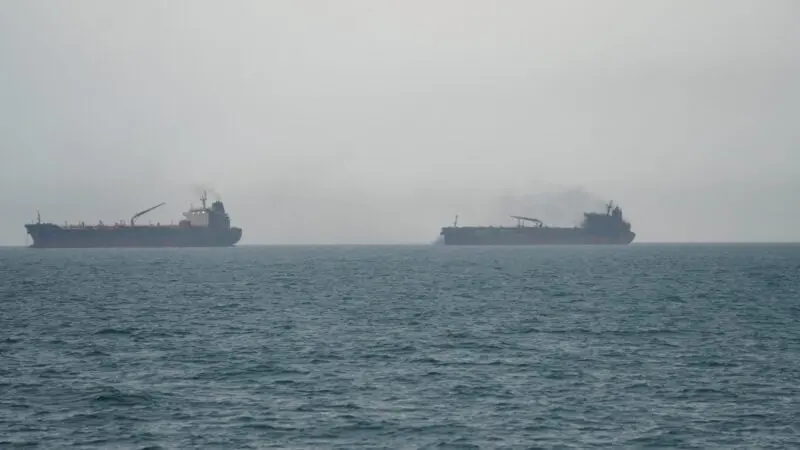
In a development that highlights the delicate balance of power in the Middle East, Iran has officially granted special permission for a select number of Iraqi crude oil tankers to transit the heavily contested Strait of Hormuz. The decision, reported by Iran’s state-run IRNA news agency, follows months of intensive, multi-channel diplomatic lobbying by Baghdad.
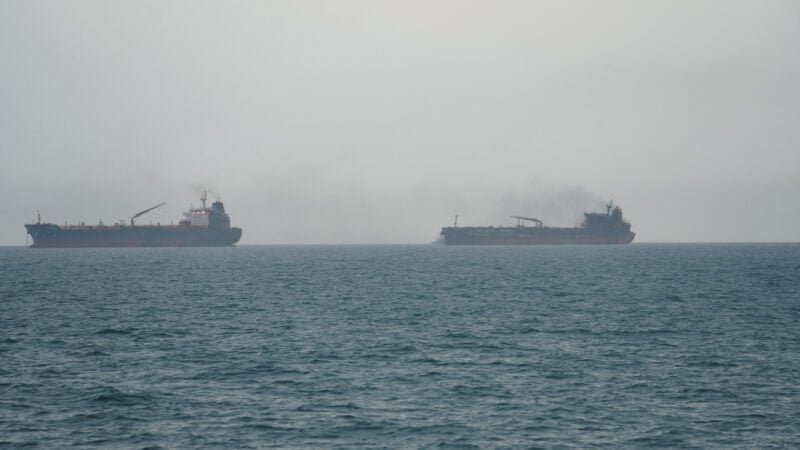
The Strait of Hormuz, a critical global maritime chokepoint through which approximately one-fifth of the world’s petroleum passes, has been under an effective blockade due to ongoing regional hostilities. This conflict has severely depressed commercial shipping volumes and left international vessels vulnerable to drone strikes, boardings, and missile attacks.
For Iraq—a nation whose economy is almost entirely dependent on hydrocarbon revenues—the choking of its primary maritime export artery has threatened state solvency and domestic stability. Prior to the escalation of the current conflict, Iraq was producing approximately 4 million barrels of oil per day (bpd), with the vast majority of its southern exports loading from terminals in the Persian Gulf.
By granting Baghdad a highly controlled, selective waiver, Tehran is leveraging its strategic position to project regional dominance while offering a vital economic lifeline to its western neighbor. However, Iraqi officials remain highly cautious. While welcoming the temporary relief, decision-makers in Baghdad view this concession not as a permanent solution, but as a stark reminder of their country’s dangerous vulnerability to Iranian geopolitical leverage.
Detailed Chronology
The diplomatic breakthrough that facilitated the passage of these tankers did not occur in isolation. It is the result of a coordinated, months-long diplomatic offensive by Iraqi officials aimed at mitigating the devastating economic impacts of the Persian Gulf blockade.
+---------------------------------------------------------------------------------+
|                               CHRONOLOGY OF EVENTS                              |
+---------------------------------------------------------------------------------+
|  • Phase 1: Escalation & Blockade                                               |
|    Hostilities lead to the effective closure of the Strait of Hormuz.           |
|    Commercial traffic drops, and shipping insurance premiums skyrocket.         |
|                                                                                 |
|  • Phase 2: The Diplomatic Offensive                                            |
|    Baghdad initiates multi-channel lobbying with Tehran. High-level meetings    |
|    culminate during Iranian Parliament Speaker Qalibaf's state visit to Iraq.   |
|                                                                                 |
|  • Phase 3: The Waiver Agreement                                                |
|    Iran grants selective transit permissions for Iraqi-flagged and contracted   |
|    tankers, establishing a highly monitored maritime corridor.                  |
|                                                                                 |
|  • Phase 4: Operational Implementation & Diversification                        |
|    The first tankers transit the Strait under heavy surveillance. Concurrently, |
|    Iraq accelerates overland trucking and pipeline expansion projects.          |
+---------------------------------------------------------------------------------+
The Catalyst: Qalibaf’s Visit to Baghdad
The diplomatic framework for the tanker exemptions was finalized during a high-profile visit to Iraq by the Speaker of the Iranian Parliament, Mohammad Baqer Qalibaf. Behind closed doors, Iraqi officials presented a grim picture of their national finances. With southern offshore terminals like the Al-Basra Oil Terminal (ABOT) operating at a fraction of their capacity due to shipowner reluctance and sky-high war-risk insurance premiums, Iraq’s fiscal deficit was expanding rapidly.
Sources close to the negotiations indicate that Iraqi representatives argued that an economically collapsed Iraq would destabilize the entire region—an outcome that would ultimately harm Iran’s own security interests. Qalibaf returned to Tehran with these urgent appeals, prompting a review of maritime transit policy by Iran’s Supreme National Security Council.

The Implementation Phase
Following Tehran’s green light, a highly coordinated protocol was established. Under the agreement:
- Iraq must submit detailed manifests, vessel names, registry details, and crew lists to Iranian maritime authorities well in advance of transit.
- Only approved vessels carrying certified Iraqi crude are permitted to enter the designated transit corridor.
- Iranian naval assets—specifically units of the Islamic Revolutionary Guard Corps Navy (IRGCN)—monitor the transiting tankers to ensure compliance and, ostensibly, to protect them from "unidentified hostile actors" in the Gulf of Oman and the Strait.
In recent days, the first convoy of these approved tankers successfully transited the Strait, bringing temporary relief to southern Iraqi storage facilities, which had been nearing their maximum holding capacities.
Supporting Context & Metrics
To understand the scale of the crisis facing Iraq, one must examine the stark contrast between the country’s pre-war maritime export capabilities and its current operational realities.
| Metric | Pre-War Baseline | Current Estimates (During Blockade) | Target Under Diversification Plan |
|---|---|---|---|
| Total Crude Production | ~4.0 Million bpd | ~2.5 Million bpd | 4.5 Million bpd |
| Strait of Hormuz Export Volume | ~3.4 Million bpd | ~800,000 bpd (including new waivers) | ~1.5 Million bpd (capped by security) |
| Overland Trucking Volume (Syria/Jordan) | Negligible (<50,000 bpd) | ~150,000 bpd | ~300,000 bpd |
| Average Maritime Insurance Surcharge | Standard Global Rates | +300% to +500% War Risk Premium | N/A (Overland/Pipeline focus) |
The Logistic Nightmare of Overland Trucking
With the Strait of Hormuz largely impassable for standard commercial charters, Iraq has had to rely on highly inefficient, environmentally damaging, and dangerous overland transport methods.
In a modern echo of the sanctions-busting tactics of the 1990s, thousands of oil tankers now form continuous convoys across the western deserts of Iraq. These trucks haul crude through Syria to the Mediterranean port of Baniyas, and through Jordan to the Red Sea port of Aqaba.
While this overland bridge has kept a minimal flow of oil moving to international markets, the logistics are staggering:
- Inherent Inefficiency: It requires thousands of individual truck journeys to match the volume of a single Very Large Crude Carrier (VLCC), which typically carries 2 million barrels of oil.
- Security Vulnerabilities: Convoys traveling through western Iraq and eastern Syria must pass through areas where Islamic State (ISIS) sleeper cells remain active. Furthermore, these routes are highly vulnerable to airstrikes and regional geopolitical flare-ups.
- Infrastructure Degradation: The sudden influx of heavy tanker traffic has severely damaged regional highway networks, leading to rising maintenance costs for both Baghdad and its transit partners.
Official Statements
The delicate nature of this geopolitical arrangement is reflected in the carefully measured statements of regional leaders, who must balance domestic economic desperation with international diplomatic posturing.
Speaking at the prestigious Baghdad Dialogue policy conference, Iraqi President Nizar Amedi confirmed the development but refrained from celebratory rhetoric, choosing instead to emphasize the precariousness of the situation.
"We can confirm that Iran has facilitated the safe passage of several vessels carrying Iraqi crude oil through the Strait of Hormuz over the last several days. While we welcome this cooperation, the fundamental issue of our export security remains highly complicated. A sovereign nation cannot rely on temporary, conditional waivers for its economic survival."
— Nizar Amedi, President of Iraq
President Amedi’s comments reflect the deep-seated anxiety within the Iraqi political establishment. There is a widespread understanding that what Tehran gives, Tehran can easily take away. This selective waiver system effectively gives Iran a veto over Iraq’s national budget.
On the administrative and logistical front, Iraqi Prime Minister Ali al-Zaidi addressed the nation’s long-term strategy to break free from this maritime dependency. During a press conference, al-Zaidi outlined a multi-pronged infrastructure diversification initiative designed to bypass the Persian Gulf entirely.
"Our immediate priority is the survival of our economy, which is why we have engaged in these difficult negotiations. However, our strategic priority is diversification. We are actively working to expand our export capacities northward through Turkey’s Ceyhan port, westward through Syria’s Baniyas terminal, and southward via pipeline projects to Jordan’s Aqaba port. Iraq will never again allow its economic sovereignty to be bottlenecked by a single maritime point of failure."
— Ali al-Zaidi, Prime Minister of Iraq
Future Outlook
The current crisis has forced a fundamental paradigm shift in how Iraq, and indeed the broader global energy market, views maritime logistics in the Middle East. The era of assuming uninterrupted transit through the Strait of Hormuz is over. Looking ahead, several key factors will determine whether Iraq can successfully navigate this crisis and secure its economic future.
                  +---------------------------------------+
                  |       IRAQ'S TRIPLE-AXIS EXPORT       |
                  |         DIVERSIFICATION PLAN          |
                  +---------------------------------------+
                                      |
         +----------------------------+----------------------------+
         |                            |                            |
         v                            v                            v
+------------------+         +------------------+         +------------------+
|  NORTHERN AXIS   |         |   WESTERN AXIS   |         |  SOUTHERN AXIS   |
|  Turkey (Ceyhan) |         |  Syria (Baniyas) |         |  Jordan (Aqaba)  |
|                  |         |                  |         |                  |
| • Repair Kirkuk- |         | • Expand desert  |         | • Fast-track the |
|   Ceyhan pipeline|         |   trucking routes|         |   Basra-Aqaba    |
| • Resolve treaty |         | • Rehabilitate   |         |   pipeline       |
|   disputes with  |         |   the legacy T3  |         |   project        |
|   Ankara & Erbil |         |   pipeline infrastructure| | • Establish Red  |
|                  |         |                  |         |   Sea terminals  |
+------------------+         +------------------+         +------------------+
The Feasibility of Alternative Routes
While Prime Minister al-Zaidi’s diversification plan is strategically sound, its execution faces massive geopolitical and financial hurdles:
- The Turkish Route (Ceyhan): The Kirkuk-Ceyhan pipeline has historically been plagued by political disputes between the Federal Government in Baghdad, the Kurdistan Regional Government (KRG) in Erbil, and the Turkish government in Ankara. Technical issues, combined with legal disputes over independent Kurdish oil sales, have kept this pipeline offline or underutilized for long periods. Reviving it to full capacity requires a comprehensive, binding treaty between all three entities.
- The Syrian Route (Baniyas): Beyond the security risks of operating in a war-torn country, exporting oil via Syria exposes Iraq to secondary sanctions from Western nations, notably under the U.S. Caesar Act. Baghdad must navigate these legal minefields carefully to avoid having its international bank accounts frozen.
- The Jordanian Route (Aqaba): The proposed Basra-Aqaba pipeline is perhaps the most politically stable option, but it is also the most capital-intensive. Building a pipeline across hundreds of miles of desert terrain will take years and billions of dollars in investment—resources that are currently scarce due to depressed oil revenues.
Geopolitical Implications of the Waiver
By granting these selective waivers, Iran has demonstrated that it controls the flow of energy in the Gulf. This move serves as a powerful signal to the international community: regional stability cannot be achieved without Tehran’s cooperation.
For Iraq, the short-term benefit of resumed oil exports is tempered by the long-term cost of increased political dependence on Iran. As long as the Strait of Hormuz remains closed to general shipping, Iraq’s economic heartbeat will remain under the direct monitoring—and ultimate control—of the naval forces of the Islamic Republic.


