





Executive Overview
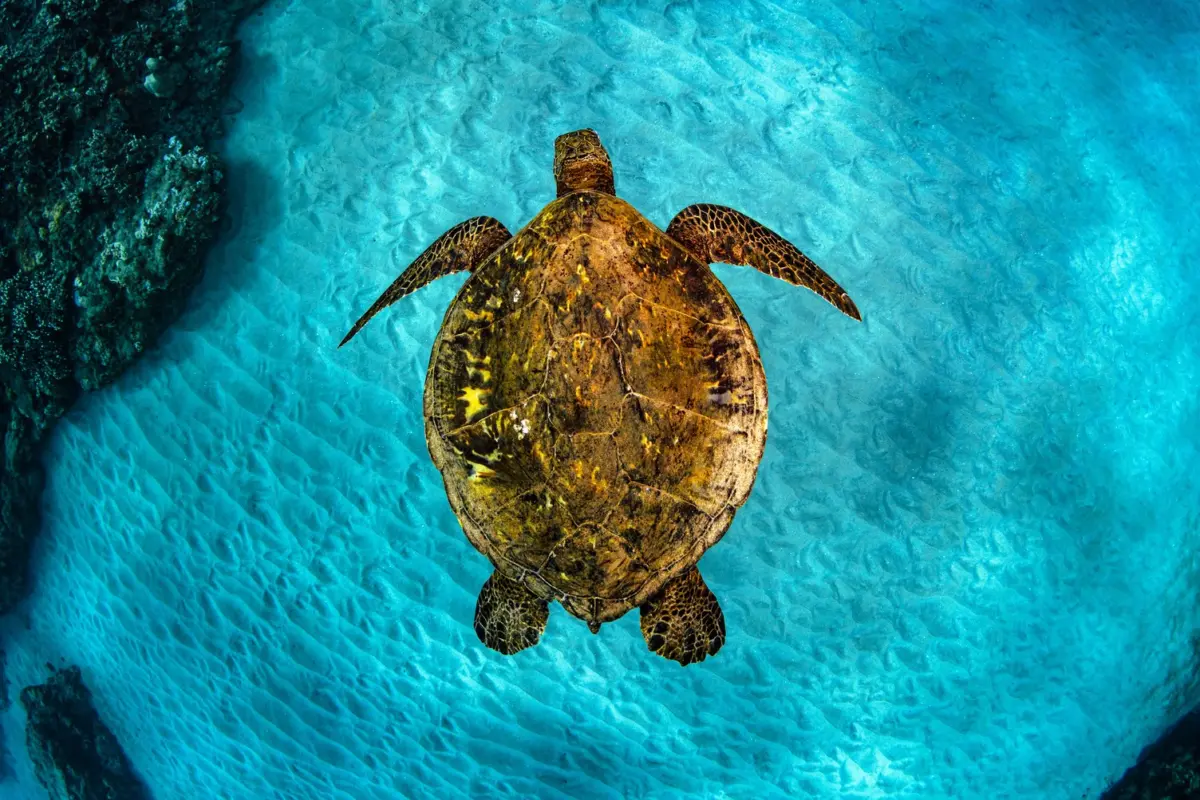
For more than 100 million years, sea turtles have traversed the planet’s oceans, surviving cataclysms that wiped out the dinosaurs and outlasting shifting tectonic plates. Among the most awe-inspiring phenomena in the natural world is the capability of female sea turtles to embark on solo odysseys spanning hundreds or even thousands of miles of open pelagic waters, only to return with pinpoint accuracy to nest on or near the exact beach where they hatched decades prior.
This behavior—known scientifically as natal homing—begs a profound question: How do these air-breathing marine vertebrates navigate uncharted waters without the aid of modern instruments or satellite mapping?
Recent breakthroughs in marine biology and behavioral ecology reveal that sea turtles possess a sophisticated biological "GPS," reading Earth’s invisible geomagnetic field lines to guide their way. Yet, this evolutionary masterpiece of navigation is increasingly failing them. Modern human activity has transformed their ancient migratory corridors and nesting grounds into a gauntlet of artificial light, deafening underwater noise pollution, coastal sprawl, and pervasive plastic waste. While sea turtles rarely get lost in nature, they are now running out of safe places to find their way home.
The Magnificent Migrations: Nature’s Ultimate Wayfarers
To understand the scale of sea turtle navigation, one must look at the sheer distances these animals cover over the course of their life cycles. While various species undertake remarkable journeys, the leatherback sea turtle (Dermochelys coriacea) pushes these boundaries to an astonishing extreme.
Pacific leatherbacks nesting along the tropical shores of Indonesia have been documented migrating more than 10,000 kilometers (over 6,200 miles) across the vast Pacific Ocean to reach the nutrient-rich waters of the West Coast of the United States. This monumental trek stands as the longest recorded migration of any air-breathing marine vertebrate on Earth.
Juvenile turtles enter the water mere moments after hatching and immediately embark on "lost years" spent drifting in oceanic gyres, developing across ocean basins before returning to coastal foraging grounds as sub-adults. Decades later, when sexually mature, these same individuals navigate back across thousands of miles of featureless open water to find the specific stretch of coastline where their lives began.
For centuries, naturalists and marine scientists theorized about how these animals achieved such precision. Were they following deep-sea currents, relying on celestial cues, or smelling the chemical signatures of their birthplace? While secondary cues certainly play a role, modern science has pointed to an even more remarkable mechanism embedded directly within the turtle’s biology.
Detailed Chronology: Unlocking the Biological Compass
The discovery of how sea turtles navigate is a triumph of decades of biophysical research, tracing how these creatures evolved to interface directly with the physics of the planet.
Phase 1: The Geomagnetic Map (Hatchling to Adult)
In pioneering studies led by researchers studying loggerhead and green sea turtles, science confirmed that sea turtles possess a magnetic sense—a form of magnetoreception. Earth functions as a giant spherical magnet, producing a magnetic field characterized by intensity and inclination angles that vary predictably across the globe, from shallow angles near the equator to steep, nearly vertical angles near the poles.
Hatchlings imprint on the unique magnetic signature of their natal beach. As they migrate through the open ocean, they read these localized magnetic variations like a biological coordinate system. This geomagnetic map allows them to determine their latitude and approximate longitude, keeping them on track even when ocean currents shift violently or storms obscure the sun and stars.
Phase 2: Natal Homing and the Final Approach
When a female sea turtle reaches reproductive maturity and prepares to lay eggs, her internal navigational system shifts gears. The broad, ocean-spanning geomagnetic map narrows down to a hyper-specific target: a narrow strip of sand.
As she nears the coast, other sensory modalities take over to complete the journey. Scientists believe that olfactory cues—the distinct chemical and organic scent profile of the coastal shelf, local vegetation, and estuary runoff—help her pinpoint the exact shoreline. By combining geomagnetism for long-distance transit with chemical and visual cues for the final landfall, the sea turtle achieves one of the most reliable homing feats in the animal kingdom.
Supporting Context & Metrics: The Human-Made Obstacles
Despite possessing an evolutionary compass refined over millions of years, sea turtles are increasingly falling victim to anthropogenic (human-caused) pressures. Their ancient navigation strategies are poorly equipped to handle the rapid, artificial transformation of the coastal and marine environment.
1. The Light Pollution Trap
For millions of years, newly emerged hatchlings relied on a simple rule of thumb: crawl toward the brightest horizon, which, on a pristine, undeveloped beach, was the open night sky reflecting off the ocean. Today, coastal development has upended this instinct.
Bright artificial lighting from beachfront condominiums, streetlamps, and parking lots outshines the natural horizon. Confused hatchlings crawl inland toward highways and buildings instead of the sea, where they face dehydration, exhaustion, and predation before the sun even rises. Furthermore, adult females seeking dark, quiet shores to nest are frequently deterred from coming ashore altogether by coastal glow.
2. A Symphony of Noise in the Deep
The marine environment is growing exponentially louder. Sea turtles possess internal ears capable of detecting low-frequency underwater sounds and vibrations. Human-generated noise from heavy vessel traffic, seismic airgun surveys for oil and gas exploration, coastal construction, and naval sonar permeates their habitats.
According to data compiled by federal fisheries and marine conservation bodies, this auditory pollution causes chronic stress, disrupts foraging and mating behaviors, and forces sea turtles to abandon preferred habitats or divert from ancestral migratory paths.
3. The Plastic Crisis: Evolution’s Blind Spot
Perhaps the most insidious threat to modern sea turtles is plastic pollution. Sea turtles evolved over millions of years to hunt soft-bodied, drifting prey—most notably, jellyfish. However, the commercial mass-production of synthetic plastics began a mere 60-plus years ago—a micro-second in evolutionary time.
To a hungry sea turtle, a floating plastic grocery bag, a deflated balloon, or soft plastic packaging looks identical to a jellyfish. When ingested, these non-digestible materials block the gastrointestinal tract, puncture internal organs, or cause a false sense of fullness that leads to starvation.
A landmark study by Ocean Conservancy analyzing more than 10,000 marine animal autopsies revealed a staggering statistic: nearly half of all sea turtles studied had ingested plastic. Even more alarming, researchers found that for adult loggerhead turtles, swallowing just one and a half times the volume of plastic found in a golf ball was enough to cause mortality in 50% of cases. Items manufactured for minutes of convenience are cutting short the lives of animals that have roamed the seas for over a century of millions of years.
Official Statements and Conservation Insights
Conservation organizations and government agencies stress that while the threats facing sea turtles are severe, they are fundamentally solvable through coordinated global action.
"Sea turtles may know where they’re going, but it’s our job to ensure the ocean and coastlines they depend on are safe when they get there," notes representatives from Ocean Conservancy. "Navigation is only part of the challenge. That’s why we are committed to protecting our entire ocean—and all the creatures that dwell there."
Marine biologists emphasize that protecting these ancient animals requires a two-pronged approach: safeguarding the terrestrial environments where they begin and end their lives, and cleaning up the pelagic environments where they spend the vast majority of their existence.
Governments and municipalities are increasingly enacting "lights-out" ordinances during nesting seasons, requiring turtle-friendly amber LED lighting along coastal developments. Simultaneously, international bodies are pressing for stricter regulations on single-use plastics and improved management of ocean dumping.
Future Outlook: A Shared Responsibility
The story of sea turtle navigation is a testament to the resilience and complexity of the natural world. These animals connect distant corners of the globe, serving as vital ecological links in marine food webs and maintaining the health of seagrass beds and coral reefs.
Yet, their future hangs in the balance. Surviving continental drift and prehistoric extinction events did not prepare them for the modern Anthropocene. Entanglement in commercial fishing gear, vessel strikes, degradation of nesting habitats due to shoreline armoring, and the relentless tide of plastic pollution continue to push populations toward the brink.
The encouraging reality is that these threats are not inevitable forces of nature—they are human choices that can be reversed. By taking concerted action to reduce plastic consumption, championing local and federal policies that protect coastal ecosystems, implementing dark-sky lighting initiatives, and supporting marine conservation action centers, humanity can secure a safer passage for these ocean wanderers.
Sea turtles have spent over 100 million years successfully finding their way across the globe. As we look to the future, the true test is whether we can make the destination worthy of the journey.