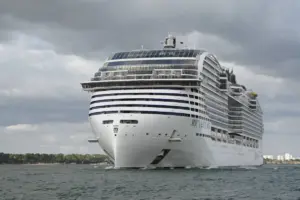







As Norwegian Cruise Line (NCL) charges forward into a new era marked by massive modern vessels like the Norwegian Luna and the upcoming Norwegian Aura, the company continues to redefine the contemporary cruising experience. However, the path to becoming one of the world’s largest and most popular cruise operators is paved with transitions.

As the cruise line welcomes cutting-edge hardware, older or strategically misaligned vessels are inevitably phased out. Across its nearly six-decade history, NCL has retired close to 20 ships through sales, corporate transfers, and eventual scrapping. Tracing the trajectory of these retired vessels reveals a fascinating history of corporate acquisitions, unexpected ship conversions, and shifting global cruise markets.

Executive Overview: The Lifecycle of NCL’s Fleet
The story of Norwegian Cruise Line is one of continuous reinvention. Founded in 1966 as Norwegian Caribbean Line, the enterprise began humbly with a repurposed car ferry. Over the decades, the brand evolved from operating a modest "White Fleet" of short-itinerary Miami-based ships into an international powerhouse.


This growth was fueled not only by commissioning groundbreaking new builds—such as the massive conversion of the legendary ocean liner France into the SS Norway—but also by aggressive corporate acquisitions. NCL absorbed major competitors like Royal Viking Line, Royal Cruise Line, and Majesty Cruise Line, temporarily inheriting diverse fleets before consolidating operations.

In recent decades, NCL streamlined its approach, slowing down the revolving door of secondhand acquisitions to focus on proprietary, purpose-built mega-ships. Yet, even as recently as 2025, the fleet downsizing trend continues, with classic vessels like the Norwegian Sun and Norwegian Sky slated for transfer to emerging markets.

Detailed Chronology: From Car Ferries to Modern Titans
The Pioneer Era: The White Fleet (1966–1980s)
- Sunward (1966): Before NCL was NCL, Norwegian Caribbean Line launched its inaugural vessel—not as a luxury cruise ship, but as a car ferry that previously shuttled vehicles between the UK and Spain. Transferred to the Caribbean, the 500-passenger Sunward featured air conditioning, a rare luxury for its time. It left the fleet in 1973, spending subsequent decades as a ferry, hotel ship, and cruise vessel before being scrapped in Bangladesh in 2004.
- Starward (1968) & Skyward (1969): Encouraged by early success, the line ordered its first purpose-built ships. While designed for cruising, they retained car-carrying spaces that were later converted into passenger cabins and public areas. Known affectionately as the "White Fleet" for their unpainted white hulls, these ships sailed short itineraries out of Miami. Skyward battled outbreaks of contaminated water and a 1979 fire before leaving NCL in 1991, eventually ending up as a casino ship and being scrapped in India in 2021. Starward served NCL until 1995, later acting as a U.S. government evacuation ship in 2006 before meeting the breakers in 2018.
- Southward (1971): Breaking from its predecessors, Southward was the first NCL vessel built without car-carrying capabilities. When it shifted from Caribbean routes to short itineraries out of Los Angeles, the name "Norwegian Caribbean Line" no longer fit, prompting a rebrand to Norwegian Cruise Line. It left the fleet in 1994 and was scrapped in 2013.
- Sunward II (1977): Acquired after the retirement of the original Sunward, this ship was formerly Cunard Line’s Cunard Adventurer. NCL operated it until 1991 for Greek Isle and Caribbean sailings before it changed hands multiple times and was scrapped in India in 2014.
The Megaliner and Expansion Era (1980–1999)
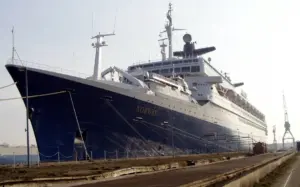
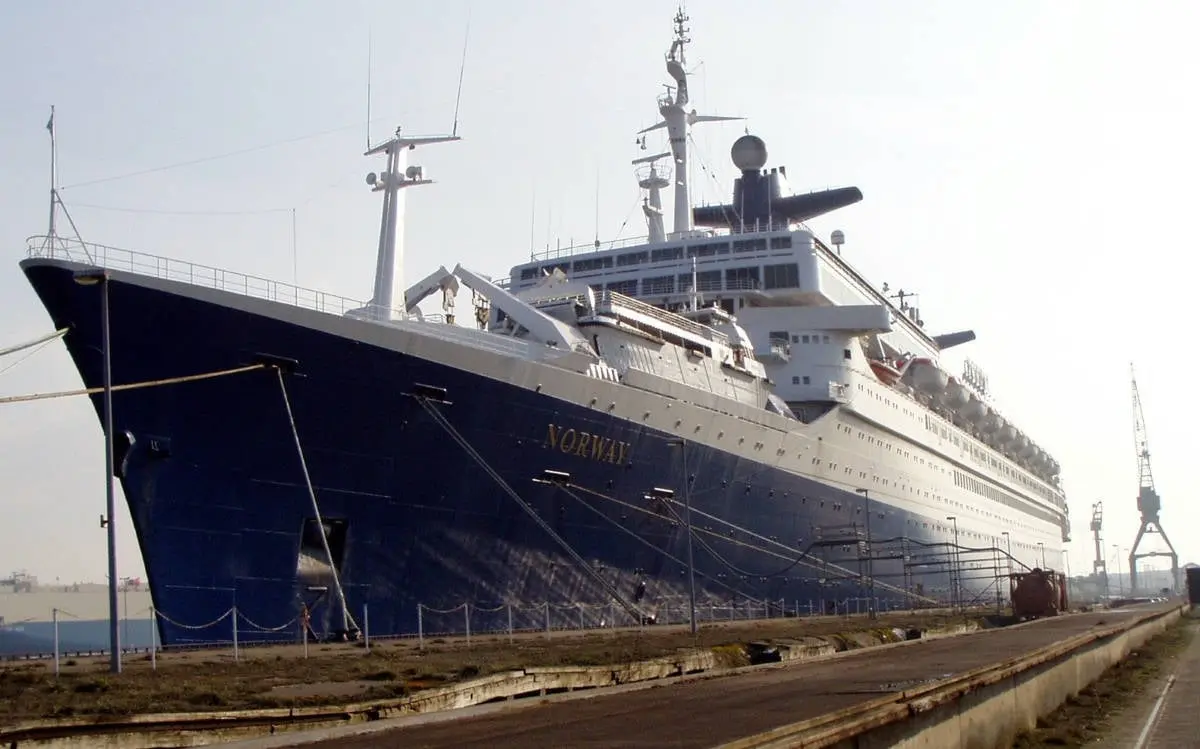
- SS Norway (1980): Originally the legendary transatlantic ocean liner France, this monumental acquisition cost NCL roughly $80 million to convert. At the time, it was the longest passenger ship ever built and one of the largest afloat. Because it was too massive for standard Caribbean ports, NCL famously utilized specialized tendering vessels (Little Norway I and Little Norway II) to transport guests ashore. Retired in 2003 following an engine room explosion, the ship’s scrapping was prolonged due to complex asbestos remediation.
- Seaward / Norwegian Sea (1988): After a botched 1970s project where an initial Seaward hull became P&O’s Spirit of London, NCL finally took delivery of a true new-build in Turku, Finland, costing $120 million. Renamed Norwegian Sea in 1997, it was transferred to Star Cruises in 2005 as SuperStar Libra, eventually serving as a hotel ship in Turkey before being scrapped in 2022.
- Westward (1991) & Sunward (1991): Acquired via NCL’s parent company’s purchase of Royal Viking Line, both vessels enjoyed brief stints under the NCL banner. Westward sailed New York-to-Bermuda routes before sailing as the Black Watch until its retirement and scrapping in 2022. The third ship to carry the name Sunward sailed for NCL for barely a year before enduring a decade-long rotation of international operators and being scrapped in 2021.
- Norwegian Star (1998): Another former Royal Viking Line vessel, this ship was briefly placed under the short-lived "Norwegian Capricorn Line," an Australian-market subsidiary of NCL’s parent company. It was later transferred to Star Cruises and ultimately scrapped in 2021.
- Dreamward / Norwegian Dream & Windward / Norwegian Wind (1992–1993): Built with mid-sections specifically engineered to be physically lengthened, both sister ships were jumboized in 1998. Despite this ambitious engineering, they were transferred to Star Cruises in the late 2000s, where they operated as SuperStar Aquarius and sister ships before meeting the breakers in 2022.
- Leeward (1995): Originally a hybrid ferry built in 1980, this ship endured a dramatic history of fires and partial sinkings before NCL acquired it. It spent five years in the fleet before moving to Star Cruises, eventually operating as Celestyal Cruises’ Celestyal Crystal until 2023, before being scrapped in Alang, India, in 2025.
- Norwegian Crown (1996) & Norwegian Dynasty (1997): Norwegian Crown (originally Royal Cruise Line’s Crown Odyssey) bounced between NCL and Orient Lines before joining Fred. Olsen Cruise Lines as the Balmoral, where it still sails today as the smallest ship in their fleet. Norwegian Dynasty (originally Crown Dynasty) was sold to Fred. Olsen after just two years with NCL; it later found new life with Villa Vie Residences offering multi-year residential world cruises.
- Norwegian Majesty (1997): Acquired via the Majesty Cruise Line buyout, this lengthened vessel served NCL for less than a decade. Today, it sails under Mano Cruise as the Crown Iris.
The Modern Consolidation & Recent Departures (2000–Present)
After the retirement of Norwegian Majesty, NCL dramatically pivoted away from the revolving door of secondhand acquisitions, choosing instead to focus heavily on modern, purpose-built mega-ships. For nearly two decades, no additional classic ships left the active fleet—until recent strategic announcements signaled a new round of retirements.

- Norwegian Sun (2001) & Norwegian Sky (1999): Marking the end of an era for NCL’s smaller, more modest tonnage, the cruise line announced the joint transfer of both Sun-class vessels to Cordelia Cruises, serving the rapidly expanding Indian cruise market. While Norwegian Sky completed its final voyage under the NCL banner with a 9-night Mediterranean sailing out of Barcelona, both vessels mark the definitive modernization of NCL’s deployment strategy.
Supporting Context & Fleet Metrics
To understand why NCL continuously evolves its fleet, one must look at capacity and operational efficiency. The early "White Fleet" ships averaged roughly 400 to 750 passengers, utilizing rudimentary amenities and occasionally sharing space with vehicular cargo.


By contrast, modern NCL vessels exceed 140,000 gross tonnage and accommodate upwards of 4,000 guests. The shift from smaller ships to mega-ships reflects broader economic pressures within the cruise industry: economies of scale dictate that larger vessels generate higher onboard revenue through specialty dining, casinos, and entertainment complexes.

| Ship Name | Years in NCL Fleet | Original Purpose / Line | Ultimate Fate |
|---|---|---|---|
| Sunward | 1966–1973 | Car Ferry (UK/Spain) | Scrapped (Bangladesh, 2004) |
| Starward | 1968–1995 | Purpose-Built Cruise/Ferry | Scrapped (2018) |
| Skyward | 1969–1991 | Purpose-Built Cruise/Ferry | Scrapped (India, 2021) |
| Southward | 1971–1994 | Purpose-Built Cruise Ship | Scrapped (2013) |
| SS Norway | 1980–2003 | Transatlantic Liner (France) | Scrapped (2006–2008) |
| Norwegian Star | 1997–2001 | Royal Viking Line | Scrapped (2021) |
| Norwegian Crown | 1996–2006 | Royal Cruise Line | Active (Balmoral, Fred. Olsen) |
| Norwegian Dynasty | 1997–1999 | Majesty Cruise Line | Active (Villa Vie Residences) |
| Norwegian Sky | 1999–2026 | New Build / Costa Order | Transferred to Cordelia Cruises |
Official Statements and Industry Perspective
Executives at Norwegian Cruise Line Holdings have consistently framed fleet modernization as a core pillar of passenger satisfaction and environmental compliance. Older tonnage inherently struggles to meet modern carbon-reduction targets, and retrofitting legacy propulsion systems rarely makes financial sense compared to integrating advanced LNG or hybrid-fuel technologies found in newer classes.

When discussing recent transitions, NCL representatives have emphasized that while loyal passengers frequently harbor nostalgia for classic ships like the Norwegian Sun and Norwegian Sky, the introduction of larger, amenity-rich vessels ensures the brand remains competitive.

"While bidding farewell to classic hardware is never easy, our commitment is to elevate the onboard experience," an NCL spokesperson noted during recent fleet transition announcements. "Replacing older tonnage with state-of-the-art ships allows us to offer the contemporary innovations, diverse dining, and spacious accommodations our guests expect."

Future Outlook: Looking Beyond the Classics
The retirement of NCL’s older vessels closes a colorful chapter of maritime history that began with a converted car ferry in 1966. From the glamorous yet cumbersome days of operating the legendary SS Norway to navigating complex corporate mergers that brought ships like the Norwegian Crown and Norwegian Majesty into the fold, NCL has continuously adapted to the demands of the global travel market.

As the cruise line integrates its newest classes of ships, passengers can expect a standardized, hyper-modern fleet experience. While historic vessels like the Skyward and Sunward live on only in maritime archives and the memories of seasoned cruisers, their legacy lives on in the foundation of an industry titan that refuses to stand still.