








Executive Overview
Maritime authorities have issued an urgent safety appeal to the recreational boating community following a thorough investigation into a catastrophic accident in Portsmouth Harbour, England. The incident, which occurred on August 14, 2025, involved the high-speed allision of a rigid inflatable boat (RIB)—appropriately or ironically named Peaky Blinder—with a fixed navigation beacon. The collision resulted in the tragic loss of two lives, sending shockwaves through the local maritime community and prompting national regulators to re-evaluate how safety standards, vessel operation, and personal flotation device (PFD) compliance are communicated to private mariners.
The publication of the official accident report has been accompanied by a targeted safety flyer directed specifically at leisure boaters, skippers, and water sports enthusiasts. Investigators emphasize that while the sea remains an environment of immense recreational potential, it demands absolute respect for navigation hazards, vigilant watchkeeping, and, above all, the consistent use of appropriate safety gear. This comprehensive report unpacks the findings of the marine investigation, explores the immediate and systemic factors that contributed to the tragedy, highlights the vital lessons regarding personal flotation devices, and outlines the broader implications for recreational boating safety in United Kingdom waters and beyond.
Detailed Chronology of the Event
The events of August 14, 2025, unfolded under conditions that initially appeared manageable for recreational navigation. Portsmouth Harbour, one of the United Kingdom’s busiest and most historically significant naval gateways, presents a complex matrix of commercial shipping lanes, high-speed passenger ferries, military installations, and crowded leisure zones. Navigating this dynamic aquatic highway requires continuous situational awareness, precise positioning, and an intimate familiarity with local navigational aids.
The Voyage and the Vessel
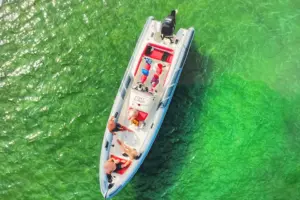
The vessel at the center of the tragedy was the Peaky Blinder, a high-performance rigid inflatable boat. RIBs are celebrated within the maritime community for their speed, agility, and buoyancy, making them exceptionally popular for both commercial operations and high-speed leisure cruising. However, their performance capabilities can sometimes foster a false sense of security, encouraging higher operating speeds that significantly narrow the margin for error.
On the afternoon of August 14, the Peaky Blinder was being operated within the confines of Portsmouth Harbour. While the exact details leading up to the final moments of the voyage are meticulously documented in the full accident report, the fatal sequence culminated when the vessel collided—or allided—with a stationary navigation beacon. In maritime terminology, an allision differs from a collision in that a moving vessel strikes a stationary object, such as a pier, a moored ship, or, in this case, a permanent navigational mark.
The Impact and Immediate Aftermath
The kinetic energy involved in a high-speed allision between a composite-hulled RIB and a rigid steel or concrete navigation structure is immense. When the Peaky Blinder struck the beacon, the sudden deceleration was catastrophic.
- Vessel Integrity: The forward section of the RIB suffered severe structural compromise, absorbing the brunt of the kinetic force and transmitting violent shockwaves through the deck.
- Occupant Dynamics: Without adequate physical restraints or, crucially, proper personal flotation equipment securely fastened, the occupants were violently thrown forward by the inertia of the sudden stop.
- Post-Impact Conditions: The severity of the impact resulted in fatal injuries to two individuals on board. Emergency response vessels and local harbour authorities were mobilized swiftly, but despite prompt medical intervention, the lives of the two victims could not be saved.
The incident triggered an immediate multi-agency response, bringing together local police, the coastguard, and marine accident investigators to secure the scene, recover the vessel for forensic examination, and begin the painstaking process of piecing together why a routine leisure trip ended in profound tragedy.

Supporting Context & Metrics: The Danger of the Unseen Hazard
To fully understand the significance of the Peaky Blinder incident, one must examine the broader landscape of recreational boating safety, the specific nature of navigation hazards in congested waters, and the statistical reality of personal flotation device utilization.
Navigational Hazards in Congested Waters
Portsmouth Harbour is characterized by narrow dredged channels flanked by extensive mudflats and shallows. To guide mariners safely through this labyrinth, the harbour authority maintains a dense network of lit and unlit navigation beacons, buoys, and transit marks. These structures are engineered for visibility and durability, typically constructed from robust materials capable of withstanding tidal currents, debris strikes, and harsh weather. Consequently, they are unforgiving obstacles for any vessel that strays outside the navigable channel or fails to maintain an effective visual watch.
Maritime safety experts point out that accidents involving stationary objects often share common causal threads:
- Distraction or Fatigue: The operator’s attention may be momentarily diverted from the helm by onboard conversations, electronic navigation displays, or external stimuli.
- Speed Inappropriate for Conditions: Operating at speeds that outpace the vessel’s stopping distance or the operator’s reaction time, particularly in restricted visibility or unfamiliar waters.
- Failure to Properly Utilize Electronics: Over-reliance on chart plotters and GPS units without cross-referencing visual landmarks and physical navigation aids.
The Lifesaving Role of Personal Flotation Devices (PFDs)
At the heart of the safety flyer accompanying the Peaky Blinder investigation report is a fervent plea regarding the wearing of personal flotation devices. In many marine accidents, death or serious injury is not caused by the initial impact alone, but by the subsequent immersion in water—often compounded by cold water shock, disorientation, or trauma sustained during the crash.
- Cold Water Shock: Even during the summer months, UK coastal waters can induce sudden gasping, hyperventilation, and cardiac stress upon immersion. A properly fitted PFD keeps the airway clear above the water line during these critical initial seconds.
- Unconscious Survival: If an occupant is rendered unconscious or semi-conscious during an allision, a traditional buoyancy aid or self-inflating lifejacket equipped with a harness and spray hood can literally mean the difference between life and death by automatically turning the wearer onto their back.
- Compliance Gap: Despite extensive public awareness campaigns by organizations such as the Royal National Lifeboat Institution (RNLI) and the Maritime and Coastguard Agency (MCA), a persistent minority of recreational boaters continue to treat PFDs as optional accessories—stowing them in lockers rather than wearing them while underway.
Official Statements and Regulatory Findings
The release of the accident report and the accompanying safety flyer represents a coordinated effort by marine safety authorities to translate a localized tragedy into widespread preventive action.
Insights from the Investigation Report
The detailed technical report into the Peaky Blinder allision breaks down the human, environmental, and mechanical factors that contributed to the disaster. Investigators scrutinized radar tracks, witness statements, tidal data, and the physical damage sustained by the RIB.
While the report highlights the specific navigational errors and environmental variables present on August 14, 2025, its overarching tone is educational rather than punitive. The goal is to ensure that the recreational boating community—a diverse group ranging from highly experienced skippers to novice weekend sailors—absorbs the hard-earned lessons of this event.
The Safety Flyer: Core Takeaways
Designed for wide distribution across yacht clubs, marinas, and digital platforms, the newly published safety flyer distills the investigation’s complex findings into actionable guidance. Key considerations highlighted in the document include:
- Wear It Always: Emphasizing that PFDs must be worn whenever the vessel is underway, particularly in open cockpits, high-speed RIBs, and small craft where the risk of ejection is elevated.
- Know Your Limits and Your Vessel: Urging skippers to match their speed to the prevailing visibility, traffic density, and navigational complexity of the waterway.
- Maintain Situational Awareness: Reminding all crew members that watchkeeping is a shared responsibility. A dedicated lookouts system can prevent disaster when the skipper’s attention is momentarily compromised.
- Pre-Departure Checks: Ensuring that all safety equipment—including kill cords, communication devices, and lifejackets—is inspected, serviced, and correctly fitted before leaving the slipway.
Future Outlook: Raising the Bar for Recreational Boating Culture
The tragedy of the Peaky Blinder serves as a sobering reminder that the aquatic environment is inherently unforgiving. As the recreational boating sector continues to grow in popularity—with more individuals investing in high-performance craft and exploring coastal waters—the challenge for safety authorities is to foster a proactive, safety-first culture that transcends regulatory mandates.
Changing the Mindset on Personal Safety Gear
Just as the mandatory wearing of seatbelts transformed road safety decades ago, maritime safety advocates are striving to make the wearing of PFDs an unwritten, unquestioned social norm across all sectors of recreational boating. Educational initiatives targeted at younger demographics, sailing schools, and boat rental companies are playing a pivotal role in shifting attitudes. When wearing a lifejacket or buoyancy aid becomes as automatic as putting on a helmet on a motorcycle, survival rates in unexpected immersion incidents rise dramatically.
Enhancing Infrastructure and Communication
Port authorities and harbour masters are also continually reviewing their infrastructure. While navigation beacons and buoys must remain robust to withstand marine forces, ongoing assessments examine whether additional lighting, radar reflectors, or high-visibility markings can make these stationary hazards more perceptible to high-speed leisure craft operating in low-light or high-glare conditions.
Furthermore, digital dissemination of safety flyers—such as the one issued for the Peaky Blinder incident—ensures that critical lessons reach grassroots mariners instantly. By leveraging online portals, social media channels, and direct partnerships with marine trade associations, regulators can bypass traditional bureaucratic delays and place vital safety insights directly into the hands of those on the water.
Conclusion
The loss of two lives in Portsmouth Harbour on August 14, 2025, is an irreparable tragedy that leaves a lasting scar on the families involved and the wider maritime community. By confronting the hard truths revealed in the investigation report, and by embracing the practical safety lessons championed in the new safety flyer, the recreational boating community can honor the memory of the victims. Through vigilance, respect for navigational hazards, and an unwavering commitment to wearing personal flotation devices, mariners can work together to ensure that such a preventable catastrophe is never repeated.