




Executive Overview
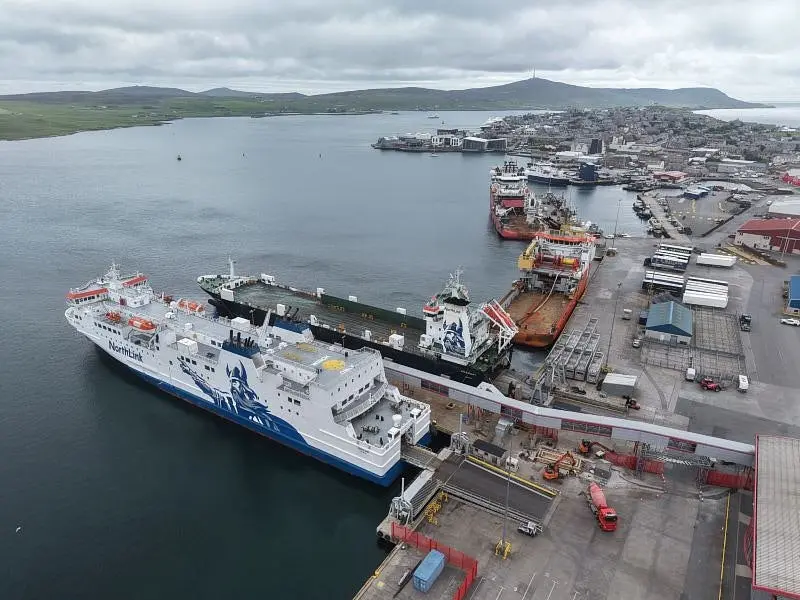
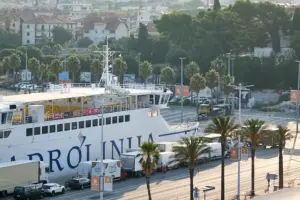
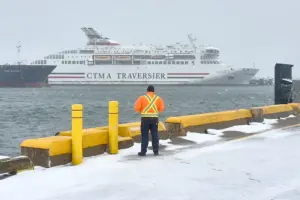
In a major advancement for Scotland’s maritime decarbonization strategy, ABB Marine & Ports UK has been awarded a turnkey contract to design, engineer, install, commission, and test a state-of-the-art shore power system at Holmsgarth Berth 3 within the Port of Lerwick. Located in the Shetland Islands, this critical infrastructure project marks a decisive operational shift for the NorthLink passenger and freight ferries that connect the archipelago with mainland Scotland.
Once operational, the installation will enable vessel operators to shut down auxiliary diesel generators while berthed, drawing clean electricity directly from the local onshore grid—a practice known in the industry as "cold ironing." This initiative builds upon the momentum of a complementary shore power infrastructure project commissioned in Aberdeen earlier in 2026. Together, these paired port investments establish a fully electrified maritime corridor between Aberdeen and Lerwick, allowing vessels servicing the 200-nautical-mile route to achieve zero-emission operations at both ends of their transit.
       ABERDEEN PORT                            LERWICK PORT
(Commissioned Early 2026)                  (Holmsgarth Berth 3)
   +------------------+                      +------------------+
   |  Grid Connection |                      |  Grid Connection |
   +--------+---------+                      +--------+---------+
            |                                         |
            v                                         v
   +------------------+   ~200 Nautical Miles  +------------------+
   |  NorthLink Vessel |======================>| NorthLink Vessel |
   |  (Berthed Power) |  Electrified Corridor |  (Berthed Power) |
   +------------------+                      +------------------+
The project represents a joint strategic development led by the Lerwick Port Authority in close technical and commercial alignment with Caledonian Maritime Assets Limited (CMAL). Funding for the capital infrastructure is anchored by CMAL and Transport Scotland, reflecting the Scottish Government’s overarching ambition to eliminate carbon emissions across domestic transport networks by 2045. Crucially, the system’s architecture is engineered not only to service the current NorthLink fleet but also to seamlessly integrate with the upcoming generation of "Northern Isles Freight Flex" ferries, ensuring long-term asset adaptability and future-proofed port capability.
Detailed Chronology & Project Scope
Timeline of Development
The execution of the Holmsgarth Berth 3 shore power installation is projected to span approximately 14 months from the formal contract award. This aggressive timeline encompasses comprehensive site surveys, high-voltage civil and electrical engineering design, equipment manufacturing, factory acceptance testing (FAT), site integration, and final operational commissioning.
| Project Phase | Estimated Milestone | Core Objectives |
|---|---|---|
| Phase 1: Engineering & Procurement | Months 1–4 | System architecture finalized; manufacturing of transformers, frequency converters, and cable handling equipment. |
| Phase 2: Civil Works & Site Prep | Months 5–8 | Groundwork at Holmsgarth Berth 3; trenching for high-voltage cabling; substation foundation installation. |
| Phase 3: Delivery & Installation | Months 9–11 | Positioning of modular substation units; connection to the Shetland distribution network; berth-side connection points installed. |
| Phase 4: Integration & Testing | Months 12–13 | System commissioning; safety interlocking checks; shore-to-ship interface testing with NorthLink vessels. |
| Phase 5: Commercial Operation | Month 14 | Final handover to Lerwick Port Authority; entry into regular commercial service. |
Technical Architecture and ABB’s Delivery Scope
As the principal system integrator, ABB Marine & Ports UK bears complete responsibility for delivering an end-to-end, high-voltage shore connection (HVSC) solution designed to operate under harsh North Sea environmental conditions. The engineering scope encompasses several complex domains:
- Substation & Transformer Infrastructure: Up-stepping or down-stepping power distribution units engineered to interface smoothly with the local Shetland electrical grid while matching the specific voltage and frequency demands of berthed vessels.
- Frequency Conversion Systems: Advanced static frequency converters capable of converting standard grid power (50 Hz) to shipboard requirements (often 60 Hz or standardized 50 Hz marine systems), mitigating grid harmonic distortion and ensuring power quality stability.
- Cable Management Systems (CMS): Dynamic, weather-sealed mechanical cable dispensers mounted at Holmsgarth Berth 3, capable of accommodating tide swings, ship movement, and varying vessel freeboards without placing physical stress on electrical couplers.
- Automation, Control, and Safety Interlocks: Fully integrated automation systems featuring safety interlocks compliant with IEC/IEEE 80005-1 standards. These protocols guarantee that high-voltage power transfers can only occur when landside and shipboard management systems establish a secure, verified handoff.
 +-------------------------------------------------------------------------+
 |                      ABB TURNKEY SCOPE OF SUPPLY                        |
 +-------------------------------------------------------------------------+
 |                                                                         |
 |  [Local Grid] ---> [Static Frequency Converter] ---> [Step-Down Trans]  |
 |                                                               |         |
 |                                                               v         |
 |  [Safety Interlocks (IEC 80005-1)] <---> [Cable Management System]      |
 |                                                               |         |
 |                                                               v         |
 |                                                      [NorthLink Vessel] |
 +-------------------------------------------------------------------------+
The Dual-Port Synergy: Closing the Loop with Aberdeen
A critical dimension of the Lerwick project is its direct alignment with the shore power system commissioned at the Port of Aberdeen earlier in 2026. Historically, ferries operating maritime routes of this distance were compelled to run their onboard auxiliary engines continuous during extended layovers to support essential hotel loads—heating, lighting, refrigeration, and ventilation.
By mirroring Aberdeen’s shore-side electrical capabilities at Holmsgarth Berth 3, the project completes a zero-emission berth corridor across the North Sea. When NorthLink passenger vessels conclude their overnight transits between mainland Scotland and Shetland, they can immediately suppress their main and auxiliary combustion engines upon docking at either terminal, creating an uninterrupted green energy loop while alongside.
Supporting Context & Technical Metrics
Operational and Environmental Impact
The technical rationale for shore power centers on replacing fossil-fueled auxiliary engine power with grid-derived electricity. In passenger-freight Ro-Pax vessels, auxiliary generator sets typically burn marine gas oil (MGO) or heavy fuel oil (HFO) to satisfy high electrical demands during port stays.
                                 PORT STAY EMISSIONS

   AUXILIARY DIESEL GENERATORS                    SHORE POWER CONNECTION
   (Conventional Operation)                      (Holmsgarth Berth 3)
   +-------------------------+                   +-------------------------+
   | Carbon Dioxide (CO2)    |                   | Zero Direct CO2        |
   | Nitrogen Oxides (NOx)   |   ===========>    | Zero Direct NOx         |
   | Sulfur Oxides (SOx)     |    TRANSITION     | Zero Direct SOx         |
   | Particulate Matter (PM) |                   | Zero Direct PM          |
   | Acoustic Noise & Vibe   |                   | Silent Port Layovers    |
   +-------------------------+                   +-------------------------+
The installation at Holmsgarth Berth 3 addresses several critical environmental metrics:
- Carbon Dioxide ($CO_2$) Mitigation: Eliminates thousands of metric tons of local carbon emissions annually across the vessel fleet by tapping into Scotland’s increasingly renewable grid power.
- Criteria Air Pollutant Elimination: Eliminates direct localized emissions of Nitrogen Oxides ($NO_x$), Sulfur Oxides ($SOx$), and fine Particulate Matter ($PM2.5$ and $PM_10$), providing immediate air quality improvements for the town of Lerwick and the surrounding harbor area.
- Acoustic and Vibrational Attenuation: Running auxiliary engines creates low-frequency engine noise and structural vibration continuous throughout the night. Disabling these engines substantially reduces ambient noise levels, benefiting both near-port urban residents and onshore marine wildlife within the harbor basin.
Island Grid Dynamic and Clean Power Sourcing
Integrating high-capacity maritime shore power into an island electricity network presents unique engineering challenges. Historically, the Shetland grid operated as an isolated network dependent on localized fossil generation. However, recent infrastructure upgrades—including major wind energy developments like the Viking Energy Wind Farm and the construction of a high-voltage direct current (HVDC) subsea link connecting Shetland to the National Grid on the Scottish mainland—have transformed the island’s energy profile.
       MAINLAND GB GRID                  SHETLAND LOCAL GRID
   +----------------------+             +-------------------+
   | Renewable Energy     |             | Viking Wind Farm  |
   +----------+-----------+             +---------+---------+
              |                                   |
              +--------------+   +----------------+
                             v   v
                   +---------------------+
                   | Shetland Electrical |
                   |     Distribution    |
                   +----------+----------+
                              |
                              v
                   +---------------------+
                   | Holmsgarth Berth 3  |
                   | Shore Power System  |
                   +---------------------+
The installation at Holmsgarth Berth 3 leverages this transformed grid architecture. By drawing power from a network rapidly decarbonized by onshore and offshore wind resources, the system ensures that the energy supplied to NorthLink ferries represents a net reduction in carbon footprint across its lifecycle, rather than merely transferring emissions from ship to shore.
Future-Proofing for "Northern Isles Freight Flex"
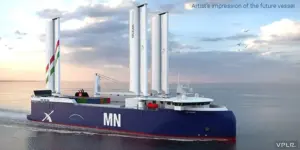
A pivotal strategic component of the Lerwick Port Authority and CMAL procurement strategy is accommodating future vessel profiles. Under CMAL’s fleet renewal program, plans are underway to introduce the "Northern Isles Freight Flex" ferries—a new generation of purpose-built vessels designed to handle evolving freight volumes with enhanced environmental efficiency.
+--------------------------------------------------------------------------+
|                       HOLMSGARTH BERTH 3 CAPACITY                        |
+--------------------------------------------------------------------------+
|                                                                          |
|   CURRENT FLEET                                FUTURE FLEET              |
|   +--------------------------+                 +---------------------+   |
|   |  NorthLink Passenger     |                 |  Northern Isles     |   |
|   |  & Freight Ferries       |                 |  Freight Flex       |   |
|   |  (Existing Ro-Pax)       |                 |  (Next-Gen Hybrid/  |   |
|   +------------+-------------+                 |   Electric Vessels) |   |
|                |                               +----------+----------+   |
|                v                                          v              |
|   +------------------------------------------------------------------+   |
|   |         Modular & Scalable Shore Power Distribution System       |   |
|   +------------------------------------------------------------------+   |
+--------------------------------------------------------------------------+
The shore power system engineered by ABB features a modular, scalable infrastructure capable of adjusting voltage output, power capacity, and connection interfaces. This design guarantees that when the Freight Flex vessels enter service, Holmsgarth Berth 3 will possess the electrical headroom and connection protocols required to plug in without needing major structural overhauls or landside re-engineering.
Official Statements & Stakeholder Perspectives
The realization of the Holmsgarth Berth 3 project involves a multi-stakeholder framework including technology providers, port operators, state procurement bodies, and government transport agencies.
ABB Marine & Ports UK
Key leaders at ABB Marine & Ports UK emphasize the technical integration and turnkey execution of the initiative:
"Delivering shore power to remote maritime hubs requires a deep understanding of both marine power systems and local grid dynamics. Our turnkey contract for Holmsgarth Berth 3 reflects ABB’s capability to deliver complete, robust, and future-proof solutions.
"By linking Lerwick into a continuous green transit corridor alongside Aberdeen, we are enabling ship operators to achieve true zero-emission port stays. This project proves that high-performance shore connection technology can be deployed effectively even in challenging North Sea island environments."
Lerwick Port Authority
Port officials highlight the long-term environmental benefits for the localized port ecosystem and the community of Lerwick:
"The expansion of shore power capability to Holmsgarth Berth 3 is a transformative milestone in our port sustainability master plan. Developed alongside CMAL, this initiative delivers an immediate reduction in harbor emissions and industrial noise.
"Our port users and local residents will benefit from cleaner air and quieter layovers. Furthermore, by building an adaptable system designed to support incoming vessel concepts like the Freight Flex fleet, Lerwick remains at the forefront of modern, environmentally responsible port operations."
Caledonian Maritime Assets Limited (CMAL) & Transport Scotland
Representatives from CMAL and Transport Scotland underscore the strategic public investment supporting Scotland’s overall Net Zero goals:
"Achieving Scotland’s target of Net Zero by 2045 demands decisive public investment in our essential maritime lifelines. Funding the installation at Lerwick Port alongside our partners at Transport Scotland demonstrates our commitment to modernizing ferry infrastructure.
"This system provides a reliable, clean energy interface for today’s NorthLink vessels while strategically building the core landside foundations required for the next generation of greener freight vessels."
Future Outlook & Industry Implications
The implementation of shore power at Lerwick Port signals a broader transformation taking place across Northern Europe’s maritime supply chains. As regulatory frameworks tighten—driven by the International Maritime Organization’s (IMO) revised GHG strategy and the European Union’s FuelEU Maritime regulations—ports and fleet operators are facing mounting pressure to eliminate reliance on fossil fuels during berthing periods.
       SCOTTISH MARITIME DECARBONIZATION MODEL

   POLICY GOALS                  PORT INFRASTRUCTURE           FLEET TRANSITION
+-----------------+            +--------------------+        +------------------+
| Net Zero 2045   |            | Paired Shore Power |        | NorthLink        |
| IMO GHG Targets |  =======>  | (Aberdeen-Lerwick) | =====> | Freight Flex     |
| FuelEU Maritime |            | HVSC Standardised  |        | Fleet Renewal    |
+-----------------+            +--------------------+        +------------------+
A Blueprint for Island Maritime Lifelines
Island communities rely on continuous, heavy-duty ferry operations for food security, medical access, trade, and passenger transit. Historically, these essential lifelines presented significant challenges for carbon reduction due to their high energy demands and harsh operating environments.
The dual-port electrification of the Aberdeen–Lerwick route serves as a practical model for remote maritime networks globally. It demonstrates that island ferry corridors can be systematically decarbonized through:
- Standardized Shore Power Connections: Utilizing universal high-voltage standards (IEC/IEEE 80005-1) so diverse vessel types can plug in without custom landside retrofits.
- Public-Private Funding Frameworks: Combining government funding agencies (Transport Scotland), asset owners (CMAL), port authorities (Lerwick), and technical integrators (ABB).
- Integrated Fleet Planning: Coordinating vessel construction cycles (Northern Isles Freight Flex) directly with landside civil engineering schedules.
Long-Term Strategic Value
When completed at the end of the 14-month construction and commissioning phase, the Holmsgarth Berth 3 installation will convert one of Scotland’s longest ferry routes into an operational model for green port connectivity.
By integrating landside utility access, marine electrical engineering, and future-proofed asset design, the project establishes a modern standard for maritime operations across the North Sea—delivering quiet berths, clean air, and reduced emissions for the Shetland archipelago for decades to come.