







Executive Overview
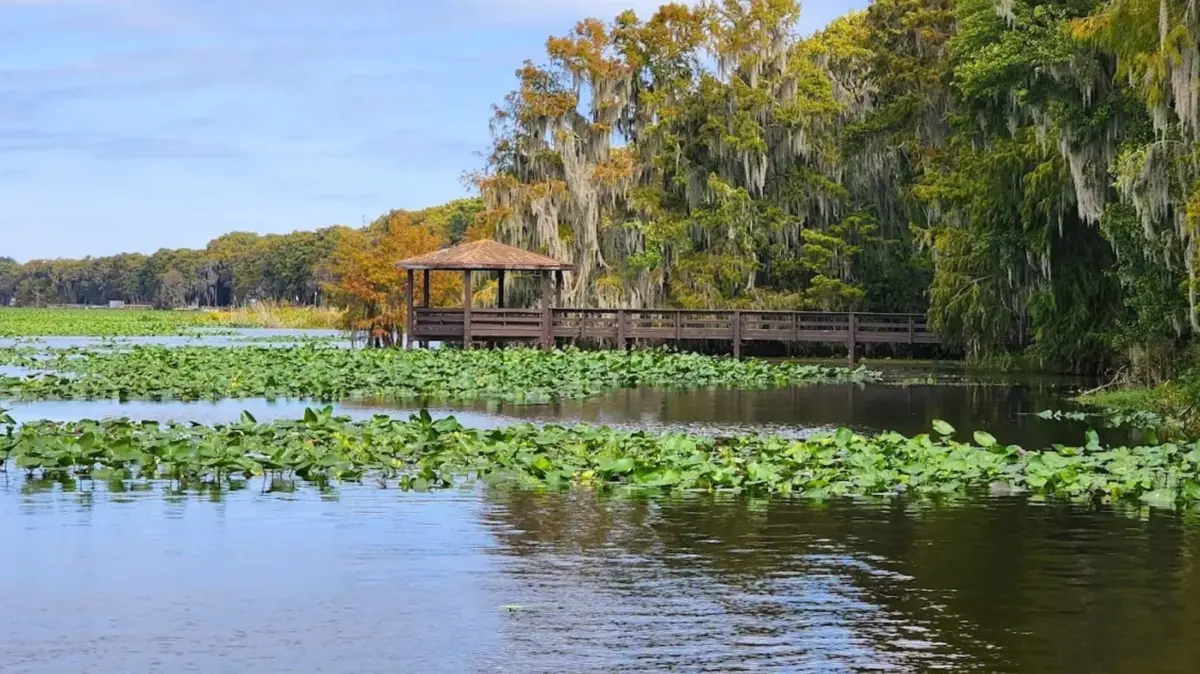
Tucked away approximately 20 miles southeast of Gainesville, just off the well-traveled asphalt of U.S. Highway 301, lies a sanctuary that defies the hyper-commercialized, theme-park-centric narrative often ascribed to the Sunshine State. Lochloosa Park—a modest yet ecologically vital 5,700-acre freshwater haven—offers a stark contrast to Florida’s bustling coastal destinations. Here, the landscape is defined by towering, old-growth cypress trees draped in heavy veils of Spanish moss, tannin-stained waters that mirror the shifting amber hues of the Florida sky, and an undisturbed marshland ecosystem that supports everything from apex avian predators to hidden reptilian residents.
Managed diligently by the Alachua County Parks and Open Space department and designated as a prime Fish Management Area by the Florida Fish and Wildlife Conservation Commission (FWC), Lochloosa Park represents a masterclass in localized conservation and low-impact recreation. While the park’s physical infrastructure is deliberately basic—consisting of a functional boat ramp, picnic benches, essential restroom facilities, and a dedicated boardwalk and gazebo—its ecological footprint and cultural value to the surrounding rural community are immense.
This comprehensive report examines the multifaceted identity of Lochloosa Park. By analyzing its historical context, ecological composition, regulatory frameworks, community impact, and future management outlook, we explore how this hidden gem balances the delicate dichotomy of public accessibility and environmental preservation in an era of rapid Central and North Florida development.
Detailed Chronology and Historical Context
To truly understand Lochloosa Park and its adjacent water body, one must look beyond its contemporary recreational utility and delve into the historical layers that shaped the region. Long before U.S. Highway 301 brought internal combustion engines and rubber tires to Alachua County, the watershed of Orange Lake and Lake Lochloosa was stewardship territory for indigenous peoples. The Timucua nation, who thrived throughout North-Central Florida, utilized the rich aquatic and terrestrial resources of the Lochloosa basin for hunting, fishing, and seasonal habitation. The very name "Lochloosa" echoes deep indigenous roots, connecting the modern landscape to a pre-Columbian ecology defined by vast, interconnected wetland corridors.
The Nineteenth and Twentieth Centuries: The Frontier and Logging Eras
As European and American settlers pushed into the interior of Florida during the Territorial and early Statehood periods (post-1845), the Lochloosa region transformed. The vast stands of old-growth cypress and longleaf pine that bordered the lake immediately drew the attention of the timber industry. Throughout the late 19th and early 20th centuries, logging operations targeted the cypress swamps. However, due to the challenging, swampy terrain surrounding much of Lake Lochloosa, certain tracts of old-growth trees survived the intensive clear-cutting that decimated other parts of the American South. These surviving titans—though distinct from ancient specimens like "Lady Liberty" near Orlando—now stand as living history, having endured centuries of hydrological fluctuations, severe weather events, and human encroachment.
By the mid-20th century, as Florida’s economy began shifting toward agriculture, phosphate mining, and eventually tourism, the local communities surrounding Lake Lochloosa (such as the historic settlement of Grove Park) established a quiet, localized identity centered around commercial and recreational freshwater fishing.
The Institutionalization of Conservation
The formal establishment of Lochloosa Park as a public county-managed asset marked a turning point for the area. Recognizing the rapid pace of development in neighboring Alachua and Marion counties, local government bodies and environmental advocates pushed to secure public access points along the lake’s southeastern shore. This acquisition—securing roughly 450 feet of pristine, undeveloped shoreline—prevented private, commercial overdevelopment of a critical littoral zone.
In tandem with county oversight, the Florida Fish and Wildlife Conservation Commission (FWC) stepped in to regulate the lake’s fisheries. By designating Lake Lochloosa as an official Fish Management Area, the state implemented monitoring protocols, creel limits, and habitat protection measures designed to sustain the lake’s legendary largemouth bass and panfish populations against the pressures of modern sportfishing.
Supporting Context and Metrics: Ecosystem, Geography, and Infrastructure
Hydrological and Ecological Profile
Lake Lochloosa is not an isolated puddle; it is a sprawling, shallow freshwater body encompassing approximately 5,700 acres. Hydrologically, it is interconnected with neighboring Orange Lake via the Lochloosa Slough, forming a massive, vital wetland ecosystem within the greater Ocklawaha River watershed.
The park itself sits strategically on the southeastern shore, anchoring the public to an aquatic wilderness characterized by:
- Littoral Zones: Expansive areas featuring dense patches of American lotus, spatterdock (lily pads), and emergent grasses that provide essential nursery grounds for juvenile fish and foraging habitats for wading birds.
- The Cypress Canopy: Old-growth baldcypress (Taxodium distichum) trees line the water’s edge, their buttressed trunks and knee-root systems stabilizing the shoreline against erosion while creating vertical habitat for cavity-nesting birds.
- Avian Biodiversity: The park is a premier destination for ornithologists and wildlife photographers. Regular sightings include bald eagles (Haliaeetus leucocephalus), ospreys (Pandion haliaetus), great blue herons, snowy egrets, and the iconic, bugling sandhill cranes (Antigone canadensis).
- Herpetofauna: The warm waters and muddy banks teem with American alligators (Alligator mississippiensis), Florida cooters, and various species of water snakes, serving as a reminder of the raw, untamed nature of inland Florida.
Infrastructure and Visitor Metrics
In alignment with Alachua County Parks and Open Space guidelines, Lochloosa Park intentionally maintains a low-development profile. The metric data regarding the park’s physical layout underscores this minimalist philosophy:
- Shoreline Access: Approximately 450 feet of permanently protected, undeveloped lakefront.
- Boating Facilities: One heavily utilized, concrete-paved boat ramp capable of handling motorized bass boats, pontoon boats, kayaks, and canoes.
- Land-Based Amenities: A network of elevated wooden boardwalks leading to a covered lakeside gazebo, designed to offer ADA-accessible wildlife viewing without disturbing the sensitive root zones and soils of the cypress swamp.
- Support Economy: Proximity to local enterprises, most notably Cassels Mobile Bait, which acts as an informal information hub for anglers navigating the lake’s complex underwater topography and submerged timber hazards.
Official Statements and Stakeholder Perspectives
The management of Lochloosa Park requires a delicate balancing act between public recreational access and ecological stewardship. Representatives from Alachua County Parks and Open Space, alongside state conservation officers, have consistently emphasized the community-centric value of the property.
"Lochloosa Park serves as a crucial ecological gateway and a peaceful community anchor," notes a regional parks administrator. "Our objective with this site is not to turn it into a high-capacity tourist attraction, but rather to protect its wild character while ensuring that local residents and mindful travelers have reliable, low-impact access to one of Alachua County’s most pristine aquatic environments."
The Florida Fish and Wildlife Conservation Commission (FWC) echoes this sentiment, particularly concerning the health of the lake’s fishery. In official fisheries management briefs, FWC biologists highlight Lake Lochloosa as a premier example of a naturally functioning, shallow-water fishery.
"Lake Lochloosa maintains exceptional habitat complexity due to its submerged vegetation and cypress margins," an FWC fisheries biologist stated in a regional assessment. "Cooperative management between state wildlife agencies and local county parks ensures that fishing pressure remains sustainable, protecting both the trophy bass populations and the structural integrity of the littoral zones."
Public sentiment mirrors institutional goals. Visitor logs and digital review platforms uniformly celebrate the park’s unpretentious atmosphere. As one frequent visitor summarized on Google Maps:
"A charming accidental find. Stopped for a rest with a view of the water. No entertainment, just a boat ramp and a soothing silence."
Another local photographer highlighted the aesthetic and psychological value of the location:
"The gorgeous sunset view over Lochloosa Lake is fantastic and unmatched. When the evening sky turns amber, the cypress silhouettes against the water offer a moment of pure, uninterrupted Florida peace."
Future Outlook: Preservation, Pressures, and Sustainable Tourism
As North-Central Florida continues to experience demographic growth—spurred by the expansion of the greater Gainesville metropolitan area and influxes of new residents seeking refuge from coastal congestion—the pressure on natural spaces like Lochloosa Park will inevitably increase.
Anticipated Challenges
- Urban Sprawl and Runoff: As agricultural lands and pine plantations surrounding the U.S. Highway 301 corridor face conversion pressures for residential and commercial development, maintaining water quality in Lake Lochloosa becomes paramount. Nutrient runoff from fertilizers and septic systems poses a persistent threat to the lake’s delicate ecological balance, potentially triggering algal blooms that could choke out submerged aquatic vegetation.
- Recreational Carrying Capacity: While the park’s basic infrastructure (limited parking and a single boat ramp) naturally caps daily visitor volume, peak weekend surges can strain facilities and increase shoreline erosion. Managing boat traffic without imposing overly restrictive regulations will require proactive oversight from county authorities.
- Climate Variability: Changing precipitation patterns and extended drought cycles in interior Florida directly impact shallow lakes like Lochloosa. Water level fluctuations affect fish spawning behaviors, navigate hazards for boaters, and alter the exposure of littoral wetlands.
Strategic Solutions and Management Recommendations
To safeguard Lochloosa Park for future generations, conservation strategists recommend several forward-thinking initiatives:
- Enhanced Water Quality Monitoring: Strengthening partnerships between Alachua County, the St. Johns River Water Management District, and the FWC to deploy continuous water-quality telemetry sensors across Lake Lochloosa.
- Habitat Restoration Buffers: Expanding protective riparian buffers around the lake’s perimeter by working with private landowners to implement conservation easements, thereby mitigating agricultural and urban runoff.
- Educational Outreach: Integrating interpretive signage along the park’s boardwalk and gazebo to educate visitors—particularly transient travelers stopping off U.S. 301—about the ecological importance of old-growth cypress swamps, catch-and-release fishing ethics, and responsible waste management.
The Broader Regional Synergy
For travelers exploring the region, Lochloosa Park acts as an ideal anchor point within a diverse regional itinerary. Located just a 30-minute drive from Gainesville—hailed as one of Florida’s premier collegiate and culinary hubs—the park offers a peaceful counterweight to the youthful vibrancy, museums, and diverse dining scene of the city. Visitors can spend a morning tracking bald eagles through the Spanish moss at Lochloosa and an evening enjoying farm-to-table cuisine in downtown Gainesville, experiencing the full spectrum of what Alachua County has to offer.
Ultimately, Lochloosa Park remains a testament to what is possible when government stewardship, community appreciation, and ecological respect intersect. It is not a place engineered for mass entertainment; rather, it is a living, breathing archive of old Florida—a quiet expanse of water and cypress where time slows down, and the wild heart of the state beats on undisturbed.