










Executive Overview
In an era defined by rapid technological disruption, algorithmic personalization, and constant corporate rebranding, the ultra-luxury hospitality sector faces a profound existential paradox. Guests who command immense wealth and expect frictionless modern conveniences simultaneously crave an anchor to the past—a tangible connection to timeless elegance, unhurried service, and deeply ingrained traditions.
Nowhere is this delicate balancing act more acutely felt than within the portfolio of the Dorchester Collection. Managing some of the most celebrated and historic properties on the planet—including London’s legendary The Dorchester, Paris’s shimmering Hôtel Plaza Athénée, and Los Angeles’s iconic The Beverly Hills Hotel—the group occupies a unique market position. Its core strategic challenge is not merely keeping pace with contemporary luxury trends, but rather knowing precisely when to innovate and when to leave well enough alone.
This journalistic investigation explores the intricate mechanisms of running a collection of storied grand hotels. By examining the delicate equilibrium between operational modernization and the preservation of an analog, intuition-driven service culture, we analyze how heritage hospitality brands maintain their emotional equity. The central thesis is clear: while operational efficiency, digital infrastructure, and sustainability metrics must be continuously tightened, the soul of an iconic hotel resides in its people—its concierges, barbers, head waiters, and housekeepers—whose human judgment and personal touch cannot, and should not, be entirely automated.
Detailed Chronology: The Evolution of Legendary Properties
To understand the modern operational philosophy of the Dorchester Collection, one must trace the historical lineages of its flagship assets. Each property was built not merely as a place to sleep, but as a cultural stage where history, high society, and architecture converged.
1. The Genesis of Grand Lodging (1800s – Mid-20th Century)
The roots of the ultra-luxury grand hotel trace back to the nineteenth century, an era epitomized by institutions like London’s Truefitt & Hill—established in 1805—where the ritual of service mattered more than speed. Customers returned not for novelty, but for certainty.
- 1911: Hôtel Plaza Athénée opens its doors on Avenue Montaigne in Paris, quickly embedding itself within the haute couture ecosystem. It becomes the Parisian home away from home for artists, writers, and royalty, setting a standard for sophisticated French art de vivre.
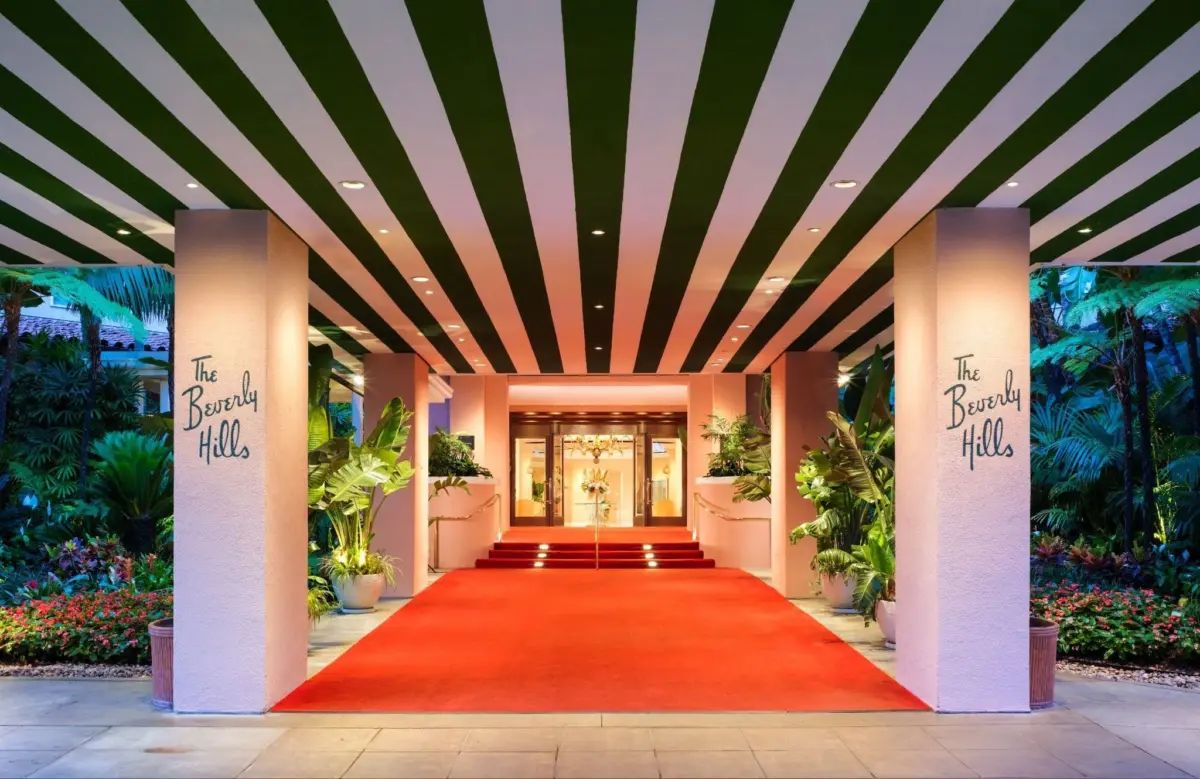
- 1912: The Beverly Hills Hotel opens on Sunset Boulevard, predating the incorporation of the city itself. Known colloquially as the "Pink Palace," it stands as a monument to early Hollywood glamour, hosting legends from Marilyn Monroe to Elizabeth Taylor in its secluded bungalows.
- 1931: The Dorchester opens on Park Lane in London. Art Deco in design and revolutionary in its construction—featuring a steel frame and advanced soundproofing—it immediately establishes itself as a sanctuary for British aristocracy, international diplomats, and literary icons.
2. Corporate Consolidation and the Birth of Dorchester Collection
For decades, these legendary properties operated under separate ownership structures, each cultivating its own distinct personality. However, the shifting economics of global real estate and hospitality in the late 20th and early 21st centuries necessitated a strategic grouping.
- 2006: Dorchester Collection is officially established as an independent luxury hotel management company. The vision is to unite a carefully curated stable of some of the world’s finest independent hotels under a shared operational umbrella while fiercely protecting their individual identities.
- 2010s: The group expands its footprint with properties like Hotel Bel-Air in Los Angeles, Coworth Park in Berkshire, and select European jewels such as Hotel Eden in Rome and Hotel Principe di Savoia in Milan. Each acquisition reinforces a strict criterion: the property must be an irreplaceable cultural landmark within its destination.
3. The Modern Era: Navigating the Post-Pandemic Landscape
The years following 2020 marked a watershed moment for ultra-luxury hospitality. Guests demanded hyper-cleanliness, contactless options, and flexible itineraries, yet simultaneously yearned for human connection more than ever before.

- 2021–2023: The Dorchester Collection embarks on multi-million-dollar, multi-year renovations across key properties. Notably, The Dorchester unveils a comprehensive redesign of its ground floor, entrance, and famed rooms by renowned designers like Pierre-Yves Rochon, carefully balancing 1930s glamour with contemporary functional needs.
- 2024–Present: The group focuses heavily on refining its operational backbone—enhancing back-of-house logistics, talent retention programs, and sustainable building practices—while doubling down on its "dial service culture," ensuring that technology serves the staff rather than replacing them.
Supporting Context & Metrics: The Economics of Iconic Hospitality
Operating an ultra-luxury hotel portfolio requires an intimate understanding of high-net-worth consumer psychology, capital expenditure management, and labor economics.
The Financial Architecture of Heritage Assets
Unlike select-service or lifestyle hotel brands that can be mass-produced via franchising, historic grand hotels are capital-intensive, low-density assets. The cost per square foot for restoration is extraordinarily high, governed by strict historic preservation laws, custom artisan sourcing, and bespoke material requirements.
- Capital Expenditure (CapEx): Industry data indicates that ultra-luxury historic hotels reinvest up to 15% to 20% of their gross operating revenues back into capital improvements annually—nearly double the rate of upper-upscale commercial hotels.
- Labor Ratios: A defining metric of Dorchester Collection properties is the staff-to-guest ratio, which frequently hovers between 2:1 and 2.5:1. This high labor intensity is necessary to deliver hyper-personalized service, from unpacking a guest’s luggage to remembering their preferred pillow firmness and morning newspaper.
Consumer Behavior and Emotional Return on Investment (EROI)
Market research within the ultra-luxury demographic reveals a fascinating shift in consumer values:
- The Desire for Fixed Points: In an increasingly unstable geopolitical and digital landscape, affluent travelers view iconic hotels as psychological safe havens. They seek what hospitality analysts term "Emotional Return on Investment" (EROI)—the comfort of knowing that the service rituals, physical aesthetics, and emotional warmth they experienced five or ten years ago remain intact.
- The Danger of Over-Standardization: Chain-style luxury often falls into the trap of homogenization—where a hotel in Tokyo feels indistinguishable from one in New York. The Dorchester Collection’s primary market advantage lies in its anti-standardization ethos. Hôtel Plaza Athénée feels unmistakably Parisian, rooted in French fashion and gastronomy, while The Beverly Hills Hotel breathes mid-century California leisure.
Official Statements and Leadership Perspectives
Maintaining the soul of historic properties while driving commercial success demands visionary leadership. Executives within the Dorchester Collection have consistently emphasized that operational excellence must amplify, rather than overshadow, human intuition.
"When a guest walks into The Dorchester or The Beverly Hills Hotel, they are not buying a room; they are buying a chapter in history and a feeling of absolute belonging. Our job is to modernize the plumbing, the Wi-Fi, and the sustainability behind the scenes so seamlessly that the guest never has to think about them. Upfront, it must always feel like an unhurried, human-to-human romance."
— Senior Corporate Leadership, Dorchester Collection
Reflecting on the balance between digital transformation and traditional analog touches, management notes:
"Technology should be a silent butler. It should anticipate a preference in the reservation system before the guest arrives, but it should never dictate how the concierge smiles, how the doorman greets returning families, or how a martini is poured at the bar. We refuse to let efficiency crowd out empathy."
Future Outlook: The Next Horizon for Ultra-Luxury Hotels
As the luxury hospitality industry looks toward the next decade, several critical trends and challenges will define the trajectory of the Dorchester Collection and its peers.
1. Harmonizing Tech with High-Touch Service
The integration of artificial intelligence and Internet of Things (IoT) devices in hospitality must be approached with extreme caution. While mobile key entry, digital room controls, and predictive preference tracking are expected by younger ultra-high-net-worth travelers, they must remain invisible. The future belongs to hotels that use data to empower their human staff—equipping a front desk agent with the intuitive knowledge that a returning guest prefers a quiet corner table without forcing the guest to interact with a screen.
2. Talent Acquisition and Artisan Craftsmanship
The greatest vulnerability of a dial-service culture is the global shortage of skilled hospitality professionals. Traditional crafts—from silver-service dining and master tailoring to classic concierge networking—are increasingly rare.
- The Dorchester Collection Academy: Investing heavily in internal training pipelines will be critical. Passing down unwritten service codes from veteran maître d’s to the next generation of hospitality leaders ensures that the institutional memory of these grand properties is preserved.
3. Sustainable Heritage: Greening the Grand Hotel
One of the most complex challenges facing historic properties is environmental retrofitting. Historic facades, listed architectural interiors, and century-old plumbing systems cannot easily be torn out to install modern geothermal heating or triple-glazed smart glass.
- The Path Forward: The group must continue pioneering innovative, non-invasive sustainability measures—such as advanced energy management systems hidden within historic walls, local organic sourcing for Michelin-starred kitchens, and comprehensive waste reduction programs—proving that heritage and environmental stewardship can coexist.
Conclusion
The enduring appeal of the Dorchester Collection lies in its understanding of a fundamental human truth: luxury is not about novelty; it is about resonance. Just as a gentleman returns to a 19th-century London barbershop for the comforting certainty of a leather appointment book and a traditional hot shave, travelers return to Park Lane, Avenue Montaigne, and Sunset Boulevard for the unscripted warmth of genuine human care.
By carefully refining operational basics without eroding the individual judgment of the people who bring each property to life, the Dorchester Collection secures its place not merely as a hotel operator, but as a timeless custodian of global culture.