








Executive Overview
In the global effort to combat climate change, carbon dioxide ($CO_2$) has long occupied the center stage. Climate models, corporate net-zero pledges, and governmental policies are almost universally anchored to the goal of decarbonization. However, a landmark study recently published in Communications Earth & Environment by researchers Konstantin Weber, Prof. Reto Knutti, and Dr. Cyril Brunner from ETH Zurich challenges this singular focus. The researchers argue that treating $CO_2$ in isolation—or lumping all greenhouse gases into a generalized "CO2-equivalent" ($CO_2e$) metric—obscures the critical, distinct role that methane ($CH_4$) plays in near-term global heating.
Methane is the second-largest contributor to human-induced global warming after $CO_2$. While it traps heat in the atmosphere with staggering efficiency, it also boasts a relatively short atmospheric lifespan, breaking down within a few decades compared to the centuries that $CO_2$ lingers. This dual nature makes aggressive methane mitigation the most powerful lever humanity possesses to limit near-term peak warming.
The new research demonstrates that even under the most ambitious national net-zero $CO_2$ pathways, a failure to aggressively cut methane emissions will inevitably drive peak global warming past 1.85°C above pre-industrial levels. To secure the Paris Agreement’s safer threshold of keeping warming "well below 2°C"—and to maintain a fighting chance at 1.5°C—net-zero $CO_2$ targets must be directly complemented by dedicated, stringent methane reduction policies. Decoupling the two gases and looking at climate targets through a peak-warming framework, the authors argue, is no longer optional; it is a scientific necessity.
Detailed Chronology: The Evolution of Climate Metrics and Methane Policy
To understand why methane has been sidelined in conventional climate modeling, one must examine how global emissions scenarios have historically been constructed. For decades, Integrated Assessment Models (IAMs) have served as the principal engines for projecting future climate pathways. These models are designed to find the most cost-effective routes to achieving climate stabilization, heavily relying on the "CO2-equivalent" metric to aggregate diverse greenhouse gases into a single ledger.
The Flaws of the "CO2-Equivalent" Paradigm
The conversion of methane emissions into $CO_2e$ has long been a matter of convenience rather than absolute physical equivalence. Comparing methane to $CO_2$ is conceptually akin to asking how many portions of spaghetti equal a single chicken: while both provide calories or protein, the underlying biological and chemical properties are fundamentally incomparable.
Because methane has a short atmospheric lifetime (roughly 12 years) and $CO_2$ persists for millennia, any conversion factor depends entirely on a chosen time horizon. Over a 100-year horizon, methane’s warming impact is severely understated compared to a 20-year horizon. Depending on how these accounting choices are baked into climate models, methane mitigation can either be prioritized as an emergency or dismissed as nearly inconsequential.
Furthermore, because IAMs force gases into a single $CO_2e$ pool driven by cost-optimization algorithms, the independent impact of methane emission cuts is entirely obscured. Real-world policy, however, is messy; it is rarely purely cost-effective, and it requires specific, targeted mandates for different industrial sectors.

The Shift Toward Decoupled Modeling
Recognizing these systemic blind spots, Weber and his co-authors adopted a fundamentally different methodological approach in their 2026 study. Rather than forcing methane into a conversion metric, they separated $CO_2$ and methane emissions entirely, treating them as independent physical drivers of the climate system.
The researchers established a back-casting framework: instead of starting with economic assumptions, they set specific global peak warming limits (1.7°C, 1.8°C, and 2.0°C) as the non-negotiable starting point. Using a simple, robust climate model combined with linear (steady) emissions reduction trajectories starting in 2025, they calculated the minimum methane cuts required to stay within those warming boundaries, given various timelines for achieving global net-zero $CO_2$.
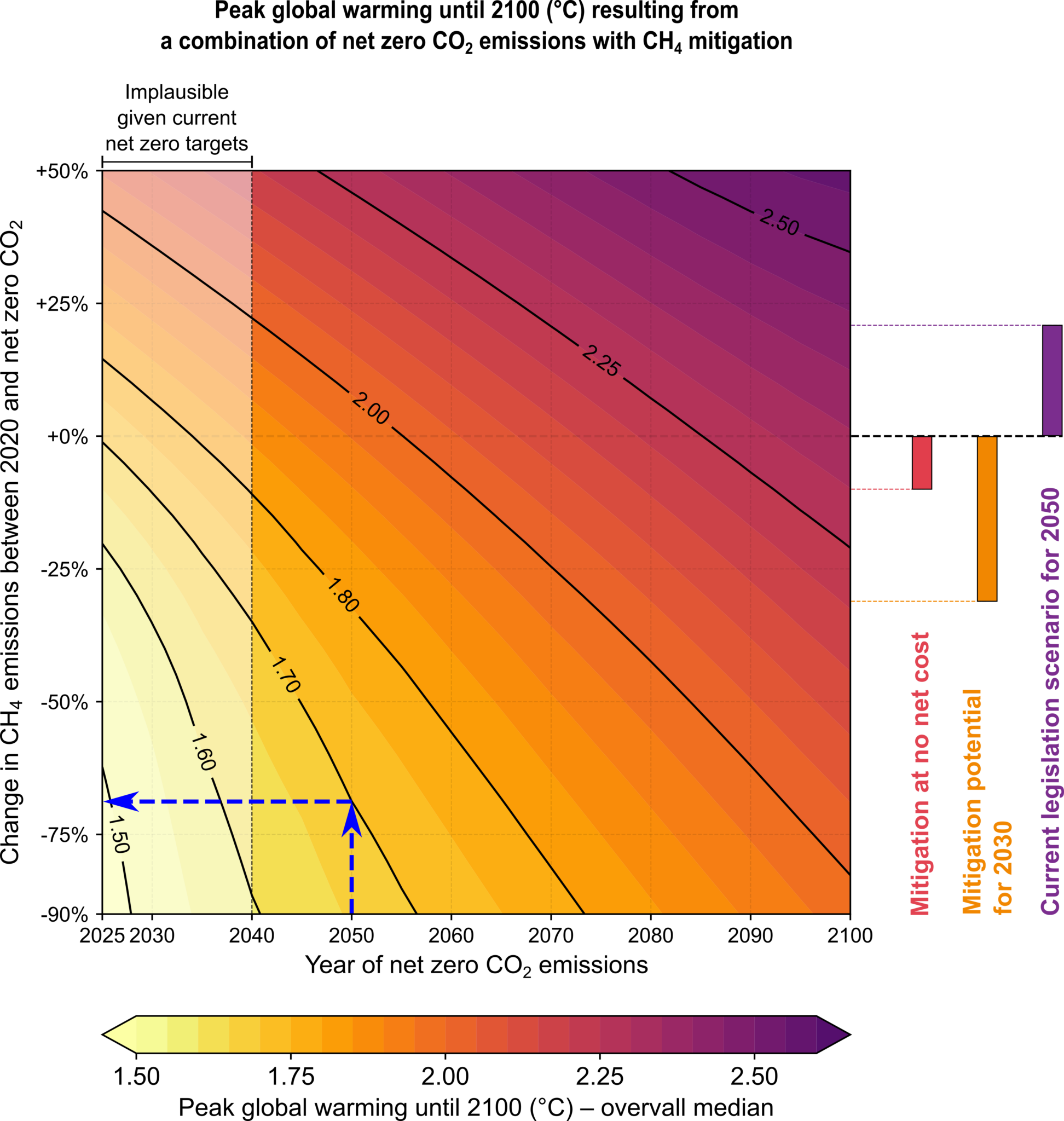
The results dismantle the comfortable assumption that decarbonizing the energy sector alone will suffice. Under current global policies, methane emissions are projected to rise by roughly 20% by 2050 relative to 2020 levels. The study shows that even if the world achieves absolute net-zero $CO_2$ emissions by 2050, allowing methane to follow this baseline trajectory will push peak global warming comfortably past 2.0°C.
Supporting Context & Metrics: What the Data Reveals
The quantitative findings of the ETH Zurich study provide stark clarity on the scale of methane reductions required across different climate scenarios.
Peak Warming and the 2050 Horizon
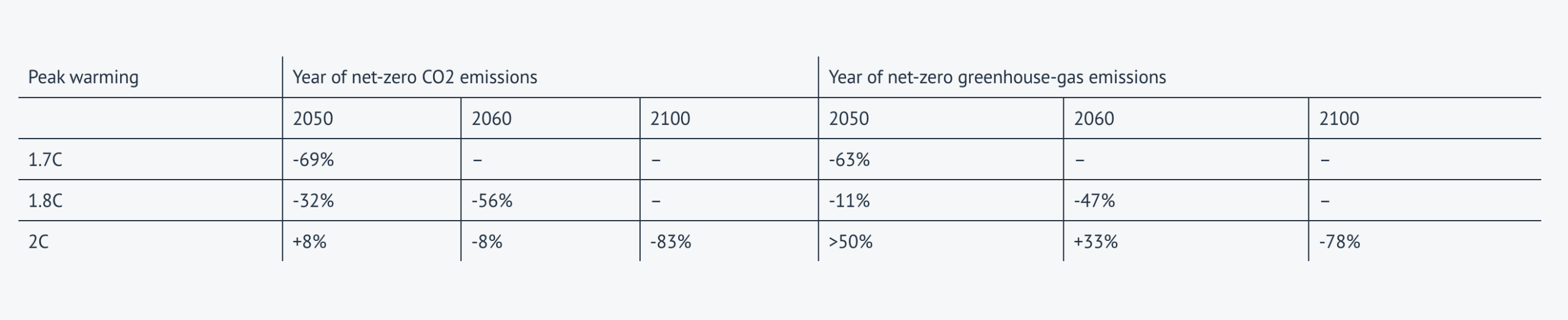
To limit peak warming to 1.7°C under a scenario where global $CO_2$ reaches net-zero by 2050, global methane emissions must plummet by at least 69% relative to 2020 levels. If an organization or nation relies on a broader greenhouse gas net-zero target (which often introduces accounting loopholes or delays), the required methane reduction shifts slightly to 63%.
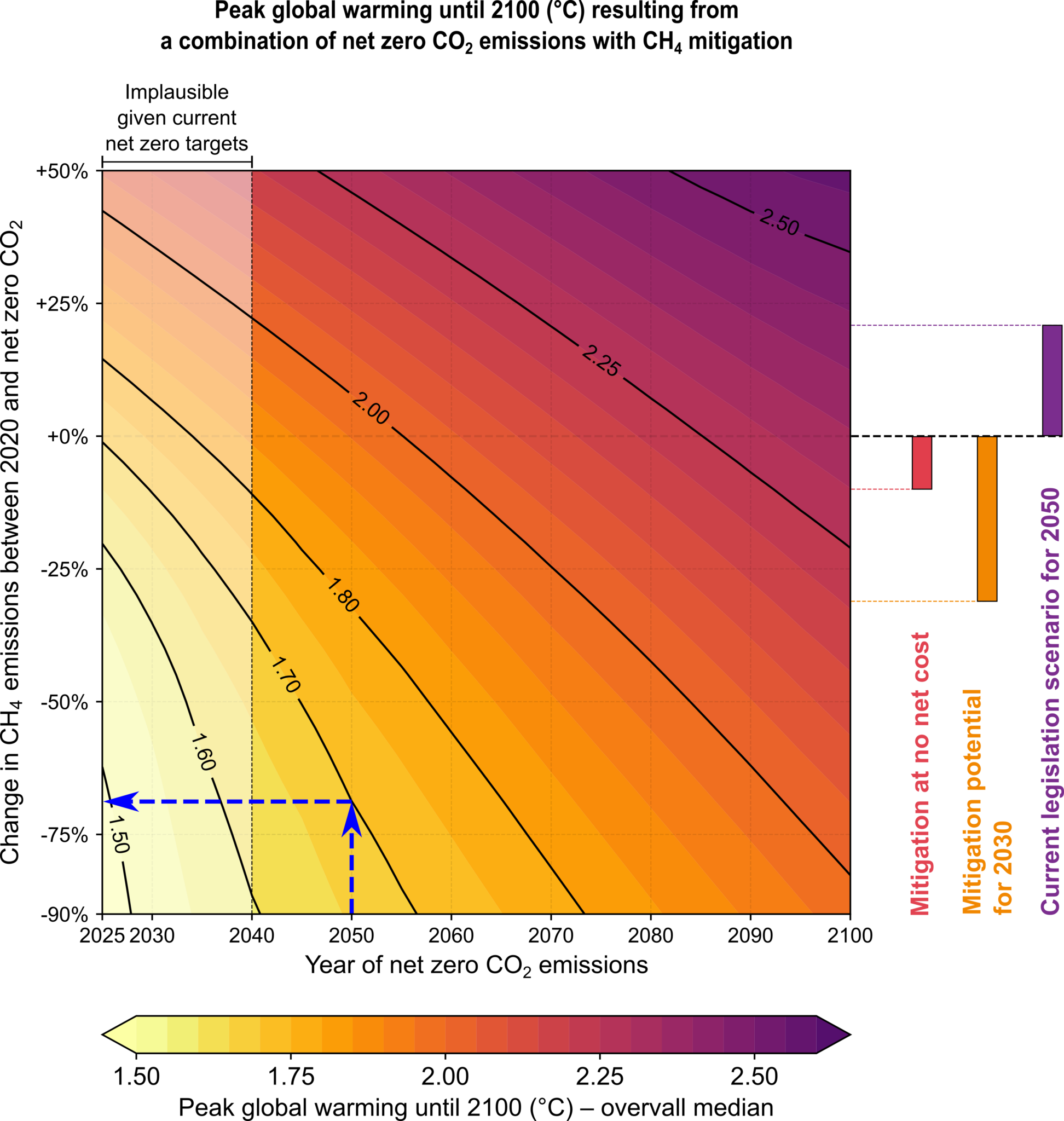
Conversely, if global methane emissions are allowed to flatline at 2020 levels while net-zero $CO_2$ is delayed until 2040 or later, warming will inexorably surpass 1.85°C. This level breaches the guardrails deemed consistent with the Paris Agreement.
| Peak Warming Target | Net-Zero CO2 Target Year | Required Methane Reduction (vs. 2020) | GHG Net-Zero Methane Reduction |
|---|---|---|---|
| 1.7°C | 2050 | 69% | 63% |
| 1.8°C | 2050 | 45% | 38% |
| 2.0°C | 2050 | — (Incompatible) | — (Incompatible) |
| 1.7°C | 2040 | 42% | 35% |
| 1.8°C | 2040 | 18% | — |
Note: Data adapted from Weber et al. (2026). Dashes indicate that under current physical constraints, reaching that specific peak warming level is mathematically unachievable for that net-zero timeline without extreme, unmodeled negative emissions.
The Low-Hanging Fruit: The Global Methane Pledge and Cost-Free Interventions
The picture is not entirely bleak. The study highlights that targeted methane interventions offer immediate, high-leverage relief. Cutting methane emissions by roughly one-third—aligning with the 2030 targets established under the international Global Methane Pledge—would shave 0.15°C off peak global warming.
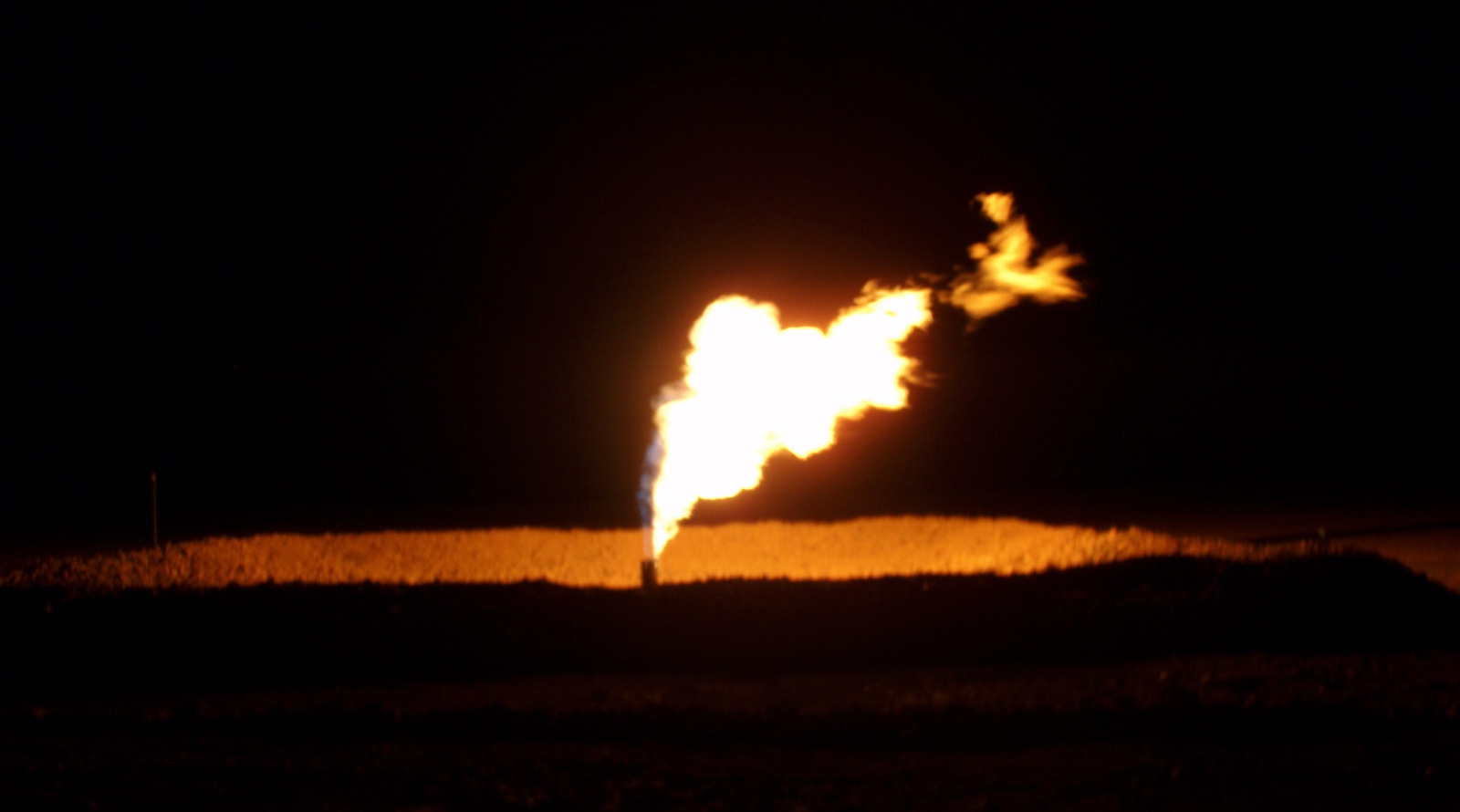
Crucially, a significant portion of this reduction is economically painless. According to data from the International Energy Agency (IEA) and the United Nations Environment Programme (UNEP), approximately 0.05°C of that warming reduction can be achieved through methane mitigation strategies that come at no net cost. These interventions primarily involve plugging leaks in oil and gas infrastructure, capturing fugitive emissions, and managing municipal waste—where recovered methane can often be monetized as natural gas.
Reassessing the Remaining Carbon Budget
The study also forces a fundamental recalculation of the world’s "remaining carbon budget"—the total cumulative volume of $CO_2$ humanity can emit before breaching specific warming thresholds.
Seminal assessments, including the IPCC’s Sixth Assessment Report and subsequent literature, estimated that by 2025, the remaining carbon budget for holding warming to 2°C sat between 1,000 and 1,150 billion tonnes of $CO_2$ ($GtCO_2$). However, Weber and his colleagues point out that these calculations implicitly bake in assumed methane reductions of 27% to 35% by 2050.
If humanity were to adopt the GWP* metric approach—where methane emissions are only cut enough to maintain "no additional warming"—the remaining carbon budget shrinks dramatically. Under this constraint, the best estimate for a 2°C budget collapses by roughly 30%, shrinking to approximately $750text GtCO_2$. More alarmingly, the study reveals that if future methane emissions are left completely unchecked, the remaining carbon budget for limiting warming to 1.7°C has already been exhausted.
Official Statements and Expert Perspectives
The academic community has increasingly rallied around the necessity of separating short-lived climate pollutants from long-lived carbon dioxide in policy frameworks.
Lead author Konstantin Weber emphasizes that current policy architectures create a false sense of security. "When countries wrap all their emissions into a single net-zero package, they hide the immense risks associated with methane," Weber notes. "Our research shows that carbon dioxide targets and methane targets are two sides of the same coin, but they operate on completely different biological and atmospheric timelines. Treating them interchangeably invites climate failure."
Co-author Professor Reto Knutti points out the disconnect between international climate diplomacy and real-world implementation. While thousands of corporations and dozens of nations boast net-zero carbon strategies, only a fraction—notably countries like Japan, Mexico, and South Korea—have codified specific, legally binding methane reduction targets into their nationally determined contributions (NDCs).
International bodies have echoed these concerns. UNEP’s Global Methane Status Report underscores that while fossil fuel operations, agriculture (particularly enteric fermentation in livestock), and landfills present massive technological hurdles, the tools to achieve a 30% reduction by 2030 are already commercially mature. The barrier is not technological; it is regulatory enforcement and political will.
Future Outlook: Integrating Methane into the Next Generation of Climate Targets
As the international community prepares for subsequent updates to the Paris Agreement’s Nationally Determined Contributions, the insights from Weber et al. (2026) provide an indispensable roadmap for policymakers, corporate sustainability officers, and climate scientists.

1. Moving Beyond "CO2e" in Corporate Pledges
For the private sector, relying on generalized $CO_2e$ accounting allows heavy-emitting industries—particularly in agriculture, oil and gas, and waste management—to hide behind long-term carbon offsets while short-term methane emissions continue to warm the planet. Corporate net-zero strategies must evolve to feature dual-target architectures: a strict, absolute decarbonization timeline alongside an aggressive, independent methane mitigation milestone.
2. Prioritizing Near-Term Interventions
Because methane fades from the atmosphere within decades, cutting emissions today produces an almost immediate cooling response. In contrast, halting $CO_2$ emissions stops further warming but does little to lower existing atmospheric temperatures in the near term. By pairing rapid methane cuts with steady decarbonization, humanity can temporarily suppress peak warming, buying vital time for fragile ecosystems—such as coral reefs and Arctic ice sheets—to adapt or survive tipping points.
3. Strengthening National Policies and Enforcement
Governments must move beyond voluntary agreements like the Global Methane Pledge and codify mandatory leak-detection-and-repair (LDAR) regulations, zero-flaring mandates, and agricultural reforms into domestic law. With cost-neutral abatement options readily available in the energy sector, failing to regulate methane is no longer just an environmental oversight; it is an economic and geopolitical liability.
Ultimately, the research makes it abundantly clear: winning the climate battle requires abandoning the illusion that all greenhouse gases can be managed with a single stroke of a calculator. To keep global warming well below 2°C, the world must aggressively choke off carbon dioxide at its source while simultaneously hunting down and eliminating every molecule of methane it can.