









Date: August 22, 2026
Author: Eldin Ganic (Adapted by Global Maritime & Infrastructure Desk)
Location: Karachi, Pakistan
Region: South Central Asia
Executive Overview
In a landmark development for Pakistan’s maritime and logistics sectors, the Karachi Port Trust (KPT) has officially awarded a high-profile dredging contract to National Dredging and Marine Services (NDMS). Announced on August 20, 2026, this venture marks a transformative step in upgrading the navigational capabilities of Pakistan’s premier commercial maritime hub.
The scope of the contract centers on capital and maintenance dredging across several critical channels within the port complex, notably the Approach Channel, the Tippu Sultan Channel, and the South Wharf. By systematically deepening these crucial arteries, KPT aims to eliminate long-standing navigational bottlenecks, safely accommodate a new generation of ultra-large container ships and deep-draft vessels, and drive down operational logistics costs across the nation.

Beyond immediate infrastructural benefits, the project represents a cornerstone in Pakistan’s broader geopolitical and economic strategy. NDMS—a synergistic joint venture formed by the National Logistics Corporation (NLC), Karachi Port, Port Qasim, and Gwadar Port—was originally conceived to fulfill the strategic recommendations of the Prime Minister’s Task Force on Maritime Reforms. This initiative is designed to build localized technical capacity, reduce reliance on foreign dredging conglomerates, and secure the long-term sustainability of Pakistan’s burgeoning blue economy.
Detailed Chronology of the Project
The awarding of this contract is the culmination of years of strategic planning, institutional restructuring, and policy formulation aimed at revitalizing Pakistan’s federal port infrastructure.
The Genesis of Maritime Reforms
The institutional framework enabling this agreement dates back to the strategic directives issued by the Prime Minister’s Task Force on Maritime Reforms. Recognizing that Pakistan’s economic growth was repeatedly throttled by high freight costs and maritime inefficiencies, the task force identified indigenous dredging capability as a critical missing link. Historically, Pakistani ports relied heavily on expensive international contractors for capital and maintenance dredging, resulting in massive capital outflows and vulnerability to global contractor availability.
To address this structural vulnerability, NDMS was established as an integrated joint venture combining the heavy logistics expertise of the National Logistics Corporation (NLC) with the operational authority of the nation’s three primary maritime gateways: Karachi Port, Port Qasim, and Gwadar Port.

Tender, Evaluation, and Award
Over the past year, KPT fast-tracked feasibility studies and environmental impact assessments to prepare for a comprehensive port modernization drive. The tender process attracted significant industry attention, evaluating technical proficiency, fleet readiness, and adherence to international maritime engineering standards.
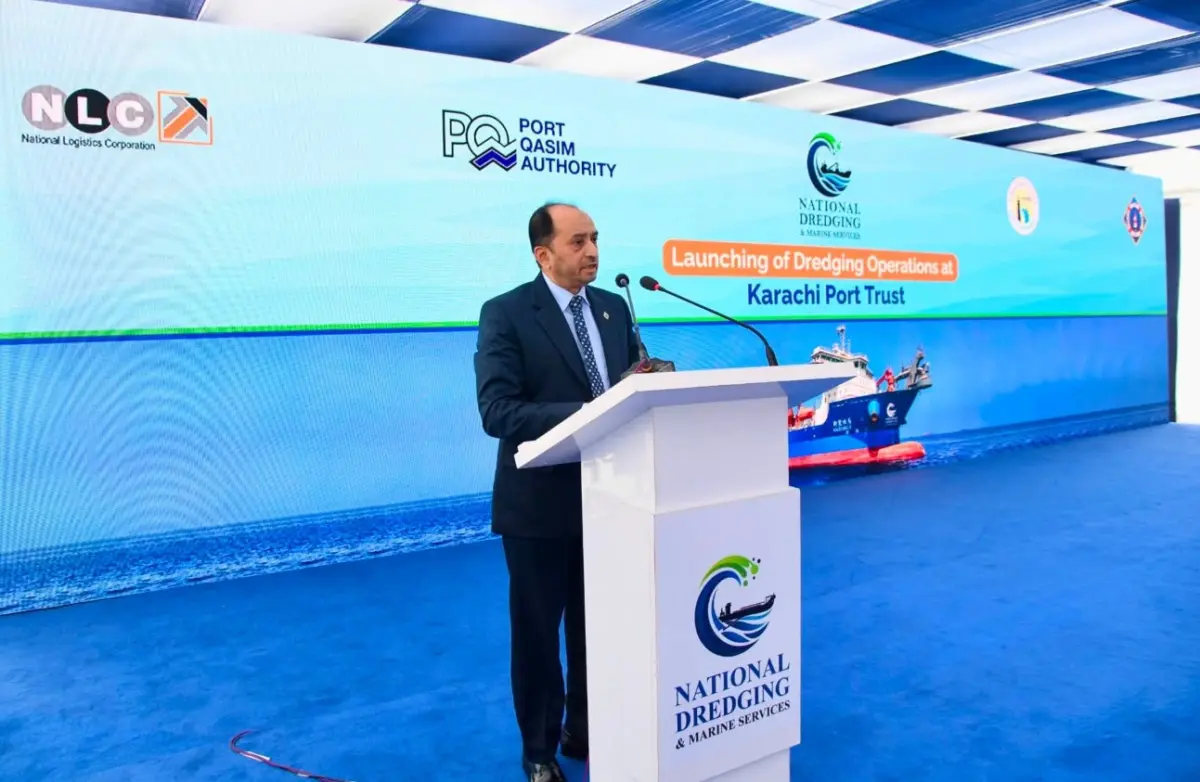
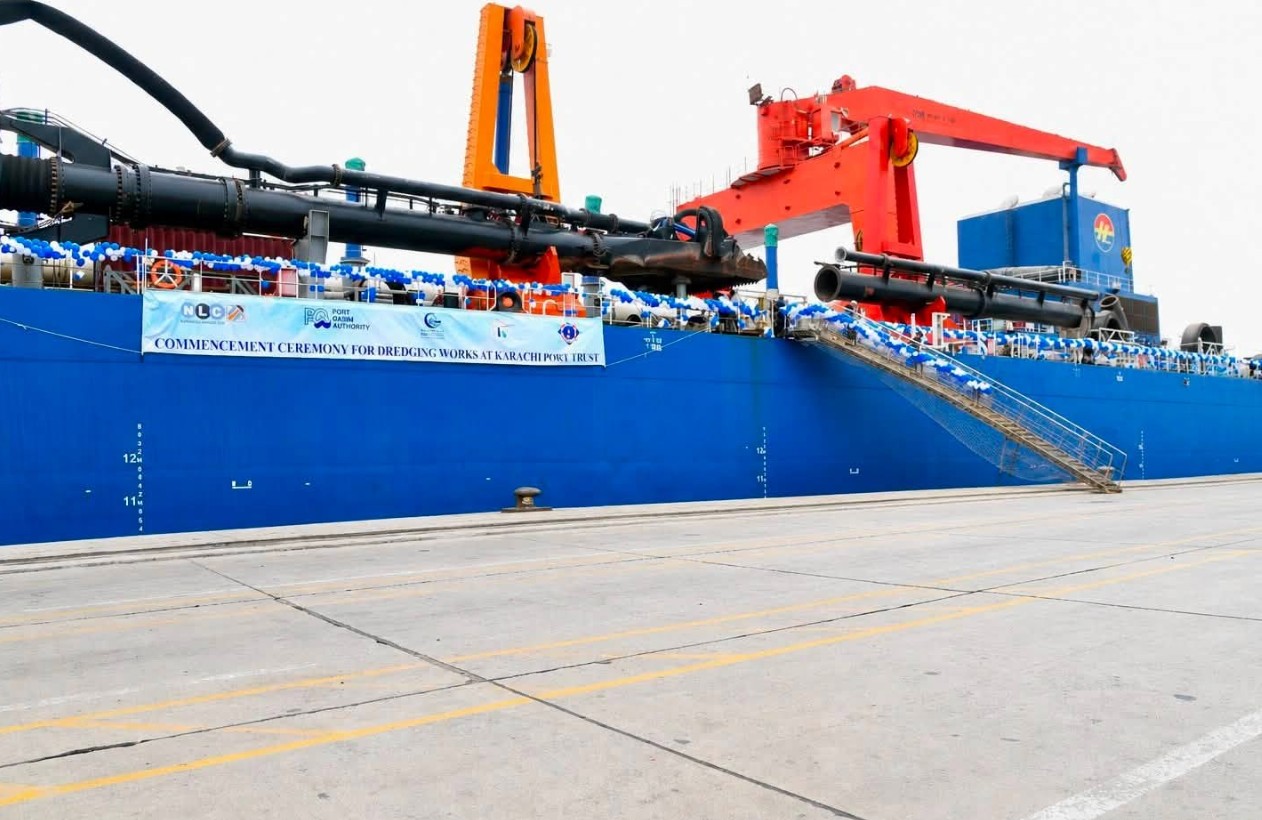
Following rigorous evaluations, NDMS secured the contract, validating the government’s vision of centralizing and empowering domestic marine engineering entities. The formal contract award ceremony, documented by KPT, highlighted the cooperative synergy between national defense logistics, port authorities, and commercial maritime operations. Operations are slated to commence immediately, with specialized trailing suction hopper dredgers (TSHDs) and cutter suction dredgers (CSDs) mobilizing to the site.
Technical Scope and Engineering Objectives
The technical parameters of the KPT dredging project are extensive, designed to radically alter the hydrographic profile of Karachi Port and ensure round-the-clock, unrestricted access for modern commercial fleets.
Target Areas and Depth Enhancements
The operational footprint of the NDMS dredging campaign encompasses three core zones:
- The Approach Channel: The main marine highway leading ships from the open Arabian Sea into the sheltered waters of Karachi. Deepening this channel is vital for mitigating tidal constraints and allowing larger vessels to enter safely.
- The Tippu Sultan Channel: A critical internal navigational channel that connects secondary berths and facilitates fluid internal vessel movement, reducing waiting times and harbor congestion.
- The South Wharf: Home to vital terminal infrastructure, this area requires targeted dredging to ensure that container and bulk carriers can berth fully loaded without grounding risks at low tide.
Overcoming Navigational Bottlenecks
For decades, the accumulation of silt carried by coastal currents and riverine runoff has restricted Karachi Port’s draft limits. These limitations historically forced major global shipping lines to either lighten their loads at regional transshipment hubs (such as Salalah or Colombo) before entering Karachi or bypass the port entirely in favor of deeper competing ports in the region.
By achieving greater depths across the Approach Channel, Tippu Sultan Channel, and South Wharf, KPT will remove these physical constraints. Deep-draft vessels will now be able to call directly at Karachi Port, maximizing cargo payloads and optimizing fuel efficiency for ocean-going carriers.
Economic Implications: Slashing Freight and Logistics Costs
The ripple effects of the KPT-NDMS contract extend far beyond marine engineering, offering profound macroeconomic relief to Pakistan’s import-dependent industrial base and export-driven manufacturing sectors.
Eradicating the "Karachi Port Penalty"
Logistics economists have long noted that high maritime transport costs and vessel turnaround times contribute to what is colloquially termed the "Karachi Port penalty." Because deep-draft vessels could not access berths fully laden, importers faced higher per-unit freight costs, demurrage charges, and secondary handling fees.
The execution of this dredging project directly targets these systemic inefficiencies. By allowing fully loaded mega-container ships and panamax bulk carriers to dock directly at Karachi Port, economies of scale will take effect. Lower shipping costs will inevitably translate into reduced landed costs for essential imported commodities, including energy products (crude oil and LNG), industrial raw materials, chemicals, and machinery.
Boosting Export Competitiveness
Conversely, Pakistani exporters burdened by high domestic logistics costs will gain a competitive edge on the global stage. Streamlined port operations reduce dwell times, accelerate turnaround speeds, and ensure predictable supply chain schedules. This reliability is particularly vital for Pakistan’s textile, agricultural, and light engineering sectors, which depend on timely international shipping routes to maintain global market share.
Supporting Context, Metrics, and the Blue Economy
The strategic significance of this project can only be fully appreciated within the framework of Pakistan’s national push to harness its maritime geography—commonly referred to as the Blue Economy.
Developing Indigenous Capacity
Historically, dredging projects of this magnitude required multi-million-dollar foreign exchange outlays paid to international marine dredging giants based in Europe or East Asia. By awarding this contract to NDMS, KPT is actively retaining capital within the domestic economy while fostering domestic technical know-how.
NDMS’s structural makeup—pooling the institutional assets of NLC, Karachi Port, Port Qasim, and Gwadar Port—creates a national champion in marine construction and maintenance. This localized capability ensures that Pakistan can maintain its maritime infrastructure autonomously, protecting critical supply lines during geopolitical shifts or global supply chain disruptions.
Environmental and Coastal Considerations
Modern dredging operations are subject to rigorous environmental monitoring to protect local marine ecosystems, fisheries, and coastal integrity. NDMS has integrated advanced hydrographic surveying and sediment management protocols into its operational playbook. Dredged material will be evaluated for beneficial use, such as coastal nourishment, land reclamation, or safe offshore disposal, ensuring minimal ecological disruption to the sensitive marine habitats surrounding the Karachi coastline.
Official Perspectives and Statements
While specific verbatim remarks from the ceremonial proceedings continue to be processed by institutional stakeholders, the overarching mandate communicated by the Karachi Port Trust emphasizes national self-reliance and economic optimization.
In official statements released via their channels, KPT representatives reiterated that the partnership with NDMS is a pivotal milestone in the modernization of Pakistan’s trade corridors. Management underscored that the integration of deep-draft vessel handling capabilities will revolutionize national trade logistics, aligning Karachi Port with international port standards and directly lowering the aggregate cost of doing business in Pakistan.
Similarly, leadership within NDMS and the National Logistics Corporation have framed the contract as a testament to the operational readiness of domestic institutions to execute mega-projects of national importance. The joint venture views this assignment as a stepping stone toward regional expansion, with the long-term vision of exporting Pakistani marine engineering and dredging services to neighboring maritime nations in South and Central Asia, as well as the Middle East.
Future Outlook: A New Era for Pakistani Ports
The award of the dredging contract to NDMS in August 2026 signals a permanent shift in how Pakistan manages and values its maritime infrastructure. As climate patterns, trade volumes, and vessel sizes continue to evolve globally, the ability to maintain deep, resilient navigational channels is no longer a luxury—it is an absolute prerequisite for national survival and economic prosperity.
Looking ahead, the successful execution of this dredging campaign is expected to trigger a cascade of secondary investments. With the Approach Channel, Tippu Sultan Channel, and South Wharf deepened to international standards, terminal operators are likely to invest in upgraded ship-to-shore gantry cranes, expanded container yards, and automated gate systems.
Furthermore, the operational success of NDMS at Karachi Port sets a powerful precedent for future works at Port Qasim and Gwadar Port, establishing an integrated national maritime network capable of driving Pakistan’s ambitions as a premier regional transshipment and trade corridor. Through strategic foresight, institutional collaboration, and a firm commitment to indigenous capability, KPT and NDMS are laying down the physical and economic foundations for Pakistan’s future maritime dominance.