








Executive Overview
On the morning of August 25, 2026, the tranquility of a four-night Baja Mexico voyage was abruptly interrupted aboard the Carnival Firenze. What was intended to be a relaxing getaway for thousands of vacationers transformed into a high-stakes maritime medical operation. Just hours after departing from the Port of Long Beach, California, the 135,156 gross-ton cruise liner was forced to coordinate an urgent at-sea evacuation for a critically ill passenger.
The incident, which unfolded near the Southern California coastline, required seamless cooperation between the ship’s onboard medical staff, the Long Beach Fire Department (LBFD) Marine Safety division, and local emergency medical services. While emergency at-sea evacuations are an inherent part of the modern cruise industry’s safety protocol, they invariably introduce operational complexities, schedule disruptions, and logistical hurdles for both the cruise line and its passengers.
In response to the early-morning crisis, Carnival Cruise Line’s operations team was forced to execute a swift itinerary adjustment to accommodate the life-saving detour without entirely depriving guests of their scheduled ports of call. This comprehensive report examines the chronology of the August 25 medical emergency, the operational protocols governing at-sea evacuations, the adjustments made to the Carnival Firenze’s voyage, and the broader context of the vessel’s deployment along the West Coast before its impending 2027 relocation.
Detailed Chronology of Events
The unfolding crisis on August 25, 2026, followed a rapid timeline that tested the readiness of both shipboard and shore-side emergency responders.
August 24: Departure from Long Beach
The voyage began the previous evening, August 24, as the Carnival Firenze slipped away from her home berth at the Port of Long Beach. The ship was carrying thousands of eager guests looking forward to a brief escape to Catalina Island and Ensenada, Mexico. The departure was routine, marked by the celebratory atmosphere typical of a Carnival Fun Ship departure. The vessel set a southward course along the Pacific coast, aiming for its first scheduled port stop at Catalina Island.
August 25: The Emergency Unfolds
As the ship navigated the coastal waters in the early morning hours, a passenger onboard experienced a sudden and severe medical emergency. Recognizing the gravity of the situation, the individual’s condition quickly surpassed the diagnostic and therapeutic capabilities available at the ship’s medical center—despite the facility being staffed by qualified physicians and emergency nurses equipped with advanced life-support technology.
At approximately 7:00 a.m., the ship’s command team initiated contact with shore-side authorities, signaling the need for an immediate medical evacuation (MEDEVAC). At the time of the distress call, the 135,000-ton vessel was positioning itself off the coast of Southern California, making it strategically feasible to coordinate a rendezvous with local marine rescue units before the ship ventured too far into open ocean waters toward Catalina Island.
The Rendezvous and Transfer
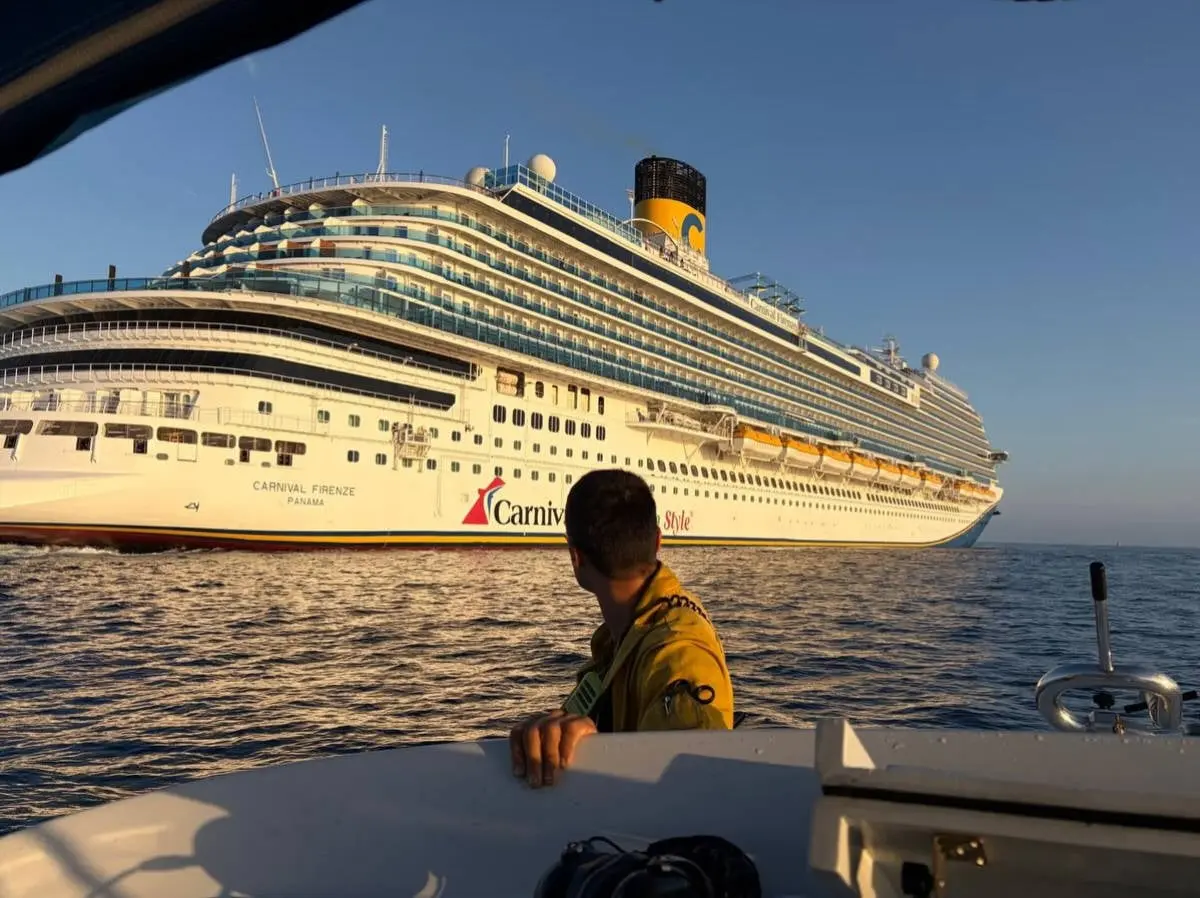
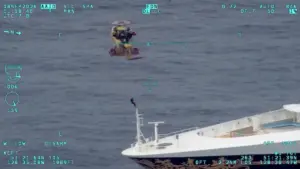
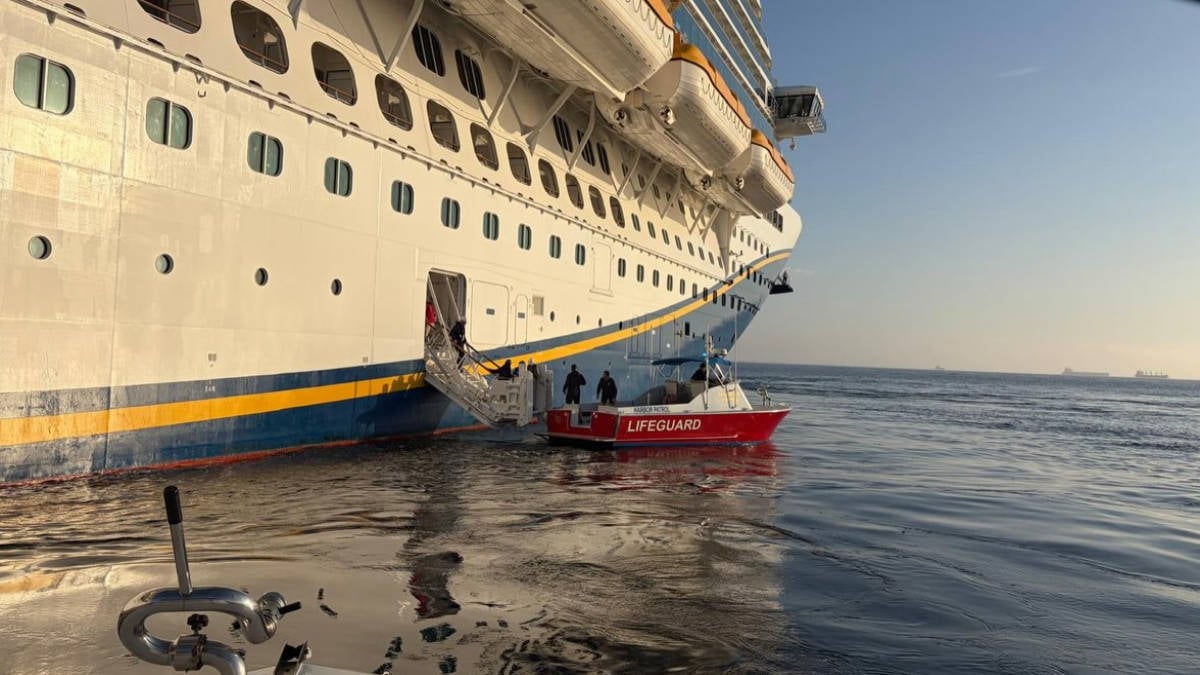
The Long Beach Fire Department mobilized its Marine Safety crews rapidly upon receiving the distress notification. Rescue personnel launched a specialized lifeguard rescue boat to intercept the cruise liner near the Long Beach Sea Buoy.
Navigating a small rescue vessel alongside a massive, multi-deck cruise ship requires exceptional seamanship, particularly in open coastal waters where swells and wind currents can create hazardous conditions. Photographic and video documentation later released by the LBFD via Instagram captured the delicate operation: the high-profile hull of the Carnival Firenze towering over the agile LBFD rescue craft as marine safety personnel secured the transfer of the patient.
Once the critically ill passenger was safely secured aboard the lifeguard boat, the rescue craft broke away and sped back toward the mainland. Concurrently, the Carnival Firenze resumed its forward momentum, though the morning’s unexpected detour had already fundamentally altered the trajectory of the cruise.
Shore-Side Reception and Hospitalization
Upon reaching the shore, the LBFD ground transport units were waiting at the dock to receive the patient. The individual, officially categorized by emergency responders as "critically ill," was immediately transferred to a local Southern California hospital for specialized, intensive medical care.
As of reporting, specific details regarding the exact nature of the medical emergency, the age or demographic of the passenger, and their subsequent medical prognosis have been withheld out of respect for patient privacy laws. However, maritime industry observers and cruise enthusiasts alike have echoed sentiments of goodwill, wishing the affected guest a complete and swift recovery.
Supporting Context & Metrics: Anatomy of a Cruise Ship Medical Evacuation
To fully understand the gravity of the August 25 incident aboard the Carnival Firenze, it is essential to examine the infrastructure, frequency, and logistical hurdles associated with medical emergencies in the contemporary cruise sector.
Onboard Medical Facilities vs. Shore-Side Hospitals
Modern mega-ships like the Carnival Firenze—which boasts a passenger capacity exceeding 4,000 guests—function essentially as floating municipalities. Consequently, their onboard medical facilities are far more advanced than a standard doctor’s office. Equipped with state-of-the-art diagnostic equipment, X-ray machines, ventilators, cardiac monitoring systems, and a dedicated pharmacy, the ship’s hospital is designed to stabilize patients suffering from acute trauma, cardiac events, respiratory failure, and other life-threatening conditions.
However, cruise ship hospitals are not intended to serve as long-term intensive care units (ICUs) or specialized surgical centers. When a patient presents with a condition requiring specialized intervention—such as advanced neurosurgery, specialized cardiac catheterization, or complex trauma care—evacuation to a land-based hospital becomes the only viable option.
Statistical Prevalence of At-Sea MEDEVACs
While medical evacuations make major news headlines, they are a statistical reality for major cruise lines operating massive fleets. Across the global cruise industry, thousands of medical interventions occur daily for minor ailments, seasickness, and routine injuries. However, critical evacuations requiring helicopter lifts or marine rescue boat intercepts occur with relative frequency across major lines like Carnival Cruise Line, Royal Caribbean, and Norwegian Cruise Line.
Factors influencing the frequency of these events include:
- An Aging Demographic: A significant percentage of cruise passengers are retirees, a demographic statistically more prone to chronic underlying health conditions such as cardiovascular disease, hypertension, and respiratory ailments.
- Extended Itineraries: Ships operating multi-week or transoceanic voyages face heightened risks because they are often hundreds or thousands of miles away from the nearest coastline, necessitating complex coordination with the United States Coast Guard (USCG) or international maritime rescue coordination centers.
- Environmental Stressors: Travel fatigue, changes in diet, and motion sickness can occasionally exacerbate pre-existing medical conditions among vulnerable travelers.
Logistical and Financial Implications
Executing an at-sea medical evacuation is an expensive and logistically intricate undertaking. Depending on the vessel’s location, weather conditions, and the severity of the illness, an evacuation can involve:
- Coordination with national search and rescue agencies (such as the USCG).
- Deployment of costly assets, including specialized marine fireboats or long-range rescue helicopters.
- Temporary deviation from the ship’s pre-charted course, resulting in increased fuel consumption and schedule compression.
Cruise lines maintain robust emergency response protocols to ensure that these variables are managed with minimal disruption to the safety and comfort of the remaining passengers, though minor operational adjustments are almost always unavoidable.
Official Statements and Institutional Response
In the wake of the August 25 incident, relevant authorities and corporate representatives issued official statements detailing their respective roles in the operation.
Carnival Cruise Line’s Official Stance
Carnival Cruise Line acted with transparency, issuing a formal statement to regional news outlets, including KTLA News, shortly after the rescue operation concluded. A company spokesperson emphasized the prompt response of the ship’s medical professionals:
"While sailing to Catalina Island, California, Carnival Firenze’s medical team immediately responded and provided care to a guest experiencing a medical emergency."
The statement underscored Carnival’s commitment to passenger safety, noting that the onboard medical staff acted in accordance with strict maritime health protocols to stabilize the patient before transferring them to shore-side authorities.
Long Beach Fire Department’s Documentation
The Long Beach Fire Department played an indispensable role in the successful outcome of the morning’s events. Utilizing their official social media channels, including an informative update on Instagram, the LBFD highlighted the precision required during the transfer near the Long Beach Sea Buoy.
By detailing the deployment of their Marine Safety rescue boats, the LBFD provided the public with a transparent look at the multi-agency coordination necessary to bridge the gap between maritime and land-based emergency medicine. Their classification of the passenger as "critically ill" highlighted the life-or-death nature of the intervention, validating the captain’s decision to alter the ship’s course immediately following the initial 7:00 a.m. distress call.
Itinerary Adjustments and Operational Impact
One of the most pressing concerns for the remaining passengers aboard the Carnival Firenze following a medical evacuation is how the diversion will impact their vacation schedule. Fortunately, Carnival’s operations management was able to implement a dynamic schedule modification that prevented total port cancellations.
The Original Itinerary
Prior to the disruption, the 4-night Baja Mexico cruise was mapped out with a traditional, highly efficient pacing:
- August 24: Departure from the Port of Long Beach, California (Evening).
- August 25: Scheduled port call at Catalina Island, California.
- August 26: Scheduled port call at Ensenada, Mexico.
- August 27: Dedicated day at sea.
- August 28: Scheduled return and disembarkation at Long Beach, California.
The Revised Itinerary
Because the emergency occurred in the early morning hours of August 25—just as the ship was navigating local coastal waters—the captain was able to execute a tactical turnaround to meet LBFD rescue assets without sacrificing the voyage’s core destinations. Instead of canceling ports entirely, Carnival exercised a flexible itinerary shift, moving both scheduled stops forward by one calendar day:
- Catalina Island Call Postponed by 24 Hours: The initial visit to Catalina Island, originally planned for August 25, was rescheduled. The Carnival Firenze successfully called upon the island on August 26, allowing guests to enjoy the scenic destination albeit a day later than anticipated.
- Ensenada Call Replaces Sea Day: The scheduled visit to Ensenada, Mexico, was moved up to August 27, seamlessly taking the place of what was originally designated as a day at sea.
- Return to Long Beach Unchanged: Despite the complex morning maneuvers and the subsequent shuffling of port days, the ship’s final arrival back at the Port of Long Beach on August 28 remained entirely unaffected, allowing guests to disembark on schedule.
Travel industry analysts have praised Carnival’s agility in managing the schedule revision. While some passengers experienced temporary confusion regarding shore excursion bookings or dining reservations tied to specific dates, the ability to retain both ports of call mitigated major passenger dissatisfaction.
Future Outlook: The Carnival Firenze in Southern California and Beyond
The August 25 medical evacuation unfolds against the backdrop of a transitional era for the Carnival Firenze, a vessel that has quickly become a cornerstone of Carnival’s West Coast operations.
Origins and Integration into the Carnival Fleet
Originally constructed and operated as the Costa Firenze under Carnival Corporation’s Italian-themed Costa Cruises brand, the vessel underwent an extensive rebranding and refitting process before formally joining the main Carnival Cruise Line fleet in 2024. Adopting the "Fun Italian Style" concept—which blends traditional Carnival entertainment with Italian architectural motifs, dining, and hospitality—the ship was immediately homeported in Southern California.
Displacing 135,156 gross tons and accommodating thousands of guests, the Carnival Firenze has spent its tenure operating short-duration 3- to 7-night itineraries to Baja Mexico and the Mexican Riviera. Sailing year-round from the Port of Long Beach Cruise Terminal, she has operated alongside fleetmates such as the Carnival Panorama and the Carnival Radiance, significantly expanding Carnival’s passenger capacity on the West Coast.
Upcoming Fleet Realignment and Relocation
Travelers and industry insiders tracking the deployment patterns of Carnival’s fleet should note that the Carnival Firenze’s tenure on the West Coast has a definitive expiration date.
The ship is scheduled to maintain its year-round deployment out of Long Beach through early 2027. Following that milestone, Carnival Firenze will undergo a major deployment shift. The vessel is slated to set its sights on the United States East Coast, embarking on a series of South America repositioning voyages before taking up new homeport assignments.
This impending departure underscores the significance of the ship’s current operations on the West Coast. Every voyage—even those interrupted by dramatic, life-saving medical emergencies like the one on August 25—contributes to the vessel’s rich operational history in Southern California before it transitions to new global waters in 2027.
Conclusion
The emergency medical evacuation aboard the Carnival Firenze on August 25, 2026, serves as a powerful reminder of the unpredictable nature of maritime travel and the robust infrastructure required to manage at-sea crises. Thanks to the rapid and decisive actions of the ship’s medical team, the captain, the Long Beach Fire Department Marine Safety division, and shore-side medical personnel, a critically ill passenger received the urgent, life-saving care they required.
While the incident necessitated a notable adjustment to the ship’s itinerary—shifting calls to Catalina Island and Ensenada by a 24-hour margin—Carnival’s operational dexterity ensured that guests did not miss out on their planned destinations. As the Carnival Firenze continues its popular run out of the Port of Long Beach toward its eventual East Coast and South American deployment in 2027, this event will stand as a testament to the seamless collaboration between commercial cruise operators and municipal emergency responders in safeguarding human life at sea.