






KHASAB, Oman — In a stark reminder of the persistent volatility plaguing the world’s most critical maritime energy chokepoints, a commercial tanker was struck by three unidentified projectiles on August 31, 2026, while transiting out of the Strait of Hormuz. The incident, which occurred approximately 17 nautical miles east of the Omani enclave of Khasab, has reignited urgent security concerns among international shipping syndicates, naval coalitions, and global energy markets.
According to the United Kingdom Maritime Trade Operations (UKMTO) agency, the vessel was targeted during its outbound journey from the Persian Gulf into the Gulf of Oman. While the attack caused immediate alarm across regional security networks, initial assessments indicate that the vessel suffered no casualties among its crew, and no environmental damage or cargo spillage has been reported. Nonetheless, the sophistication and location of the assault highlight a dangerous expansion of maritime threats in close proximity to Omani territorial waters.
Executive Overview
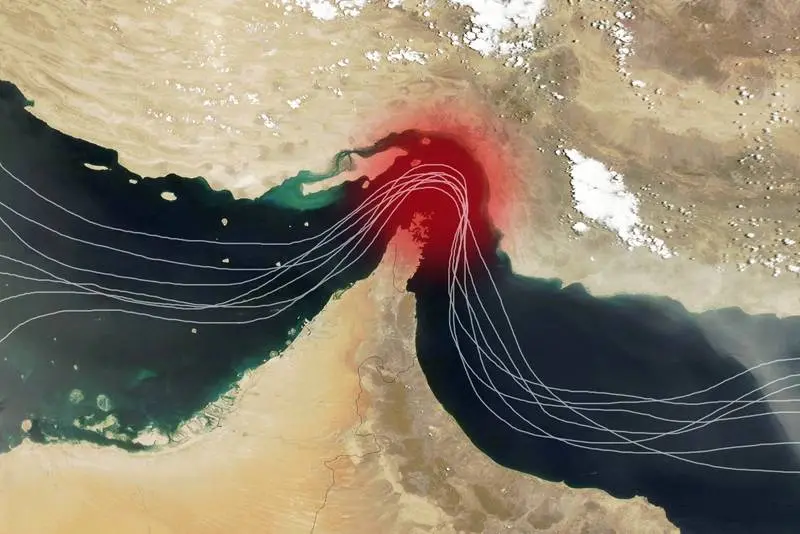
The attack on August 31, 2026, represents a highly concerning development in the strategic waters of the Middle East. Positioned just 17 nautical miles east of Khasab—located on Oman’s rugged Musandam Peninsula—the incident took place directly within the busy shipping lanes that facilitate the daily transit of roughly one-fifth of the world’s petroleum consumption.
Unlike previous incidents concentrated in the Red Sea or the Gulf of Aden, this attack targeted a vessel exiting the Persian Gulf itself, bypassing the heavily patrolled corridors of the southern Bab al-Mandeb strait and striking at the very gateway of Middle Eastern oil exports.
                    [ PERSIAN GULF ]
                           │
                           ▼
                    Strait of Hormuz
                           │
  [ Oman (Khasab) ] <── 17 NM ──> [ Attack Location ]
                           │
                           ▼
                    [ GULF OF OMAN ]
Preliminary reports from maritime intelligence sources suggest that the three projectiles may have been a combination of one-way attack unmanned aerial vehicles (UAVs) or sea-skimming anti-ship missiles. The choice of target and the precision of the strikes point to an adversary with sophisticated tracking capabilities, capable of identifying and striking moving commercial vessels in high-traffic lanes.
Although the vessel’s structural integrity remained intact enough to continue its voyage under its own power, the psychological impact on merchant mariners and the immediate financial impact on Lloyd’s of London war risk premiums were felt instantly across the global maritime sector.
Detailed Chronology of the Incident
The sequence of events unfolded during the late-night hours of August 31, 2026, under conditions of moderate visibility in the Strait of Hormuz.
1. Pre-Incident Transit (20:00 UTC)
The laden tanker, whose identity is currently being withheld by operators for security reasons, was navigating the outbound traffic lane of the Traffic Separation Scheme (TSS) in the Strait of Hormuz. Having departed a major loading terminal in the Persian Gulf hours prior, the vessel was traveling at a steady transit speed of approximately 13 knots, displaying its standard Automatic Identification System (AIS) data.
2. Detection and Impact (21:12 UTC)
The vessel’s bridge crew detected the rapid approach of low-flying aerial signatures. Within moments, three distinct impacts were felt along the vessel’s port quarter and superstructure. The crew reported hearing loud explosions, followed by localized fires and a temporary loss of auxiliary power in certain compartments.
Timeline of the Incident (August 31, 2026)

20:00 UTC ── Tanker enters outbound lane of the Traffic Separation Scheme (TSS).
21:12 UTC ── Bridge crew detects low-flying signatures; three projectiles strike the vessel.
21:18 UTC ── Damage control teams mobilize; Master issues distress call to UKMTO.
21:38 UTC ── UKMTO issues official warning to regional shipping.
22:45 UTC ── Coalition naval assets establish communication; vessel declared stable.
3. Emergency Response and Damage Control (21:18 UTC)
The Master of the vessel immediately initiated emergency response protocols. Damage control teams were deployed to assess hull integrity and extinguish minor localized fires caused by the kinetic impact of the projectiles. Simultaneously, the ship’s security officer sent an emergency distress broadcast, which was intercepted by the UKMTO and nearby coalition warships operating under the umbrella of the International Maritime Security Construct (IMSC).
4. Verification and Stabilization (21:38 UTC)
By 21:38 UTC, the UKMTO officially verified the incident and published a warning notice to all mariners in the vicinity, advising transit vessels to exercise extreme caution and report any suspicious activity. Following a comprehensive inspection by the crew, the tanker’s propulsion and steering gear were declared fully operational. The vessel continued its transit toward safer waters in the Arabian Sea, escorted remotely by regional naval monitoring centers.
Supporting Context & Metrics
To fully comprehend the gravity of the August 31 attack, it is necessary to examine the physical and economic dimensions of the Strait of Hormuz. As a narrow waterway separating Iran from the Oman enclave of Musandam, the strait is a vital artery for global energy security.
| Metric / Parameter | Value / Description |
|---|---|
| Narrowest Width of Strait | 21 nautical miles (39 kilometers) |
| Width of Shipping Lanes | Two 2-mile-wide lanes (one inbound, one outbound) |
| Buffer Zone | 2-mile-wide separation zone between lanes |
| Daily Oil Flow Volume | ~20.5 million barrels per day (bpd) |
| Global Petroleum Share | ~20% of global liquefied and crude consumption |
| Key LNG Transits | ~20% of global Liquefied Natural Gas (LNG) supply (primarily Qatar) |
The Geopolitical Landscape
The location of the attack—17 nautical miles east of Khasab—places it directly within a highly contested geopolitical fault line. While Oman has historically maintained a policy of strict neutrality and acted as a diplomatic mediator in regional conflicts, the waters surrounding the Musandam Peninsula are routinely patrolled by the Islamic Revolutionary Guard Corps Navy (IRGCN) of Iran.
The use of multiple projectiles in a coordinated strike is a tactical signature closely associated with regional state actors and their proxy networks, who have increasingly relied on asymmetric warfare tactics to project power without triggering a direct conventional military response.

    [Iran Coastline]
         │
         ▼  ~15-20 Nautical Miles
    [Shipping Lanes (TSS)]  <─── Location of Tanker Attack (Aug 31)
         ▲  ~17 Nautical Miles
         │
    [Oman (Khasab / Musandam)]
Economic Implications for Global Shipping
The immediate fallout of the attack was reflected in the maritime insurance markets. War risk insurance premiums for vessels transiting the Persian Gulf and the Gulf of Oman, which had stabilized in early 2026, experienced an immediate upward adjustment.
Security analysts note that even unsuccessful or low-damage attacks can increase the cost of operating a single Very Large Crude Carrier (VLCC) through the strait by upwards of $50,000 to $100,000 per transit, costs that are ultimately passed down to global consumers at the pump.
Official Statements and Industry Reaction
Following the confirmation of the attack, stakeholders from both governmental and private maritime sectors issued urgent assessments.
United Kingdom Maritime Trade Operations (UKMTO)
In its formal advisory notice, the UKMTO emphasized the need for heightened vigilance:
"Vessels transiting the Strait of Hormuz and the Gulf of Oman are advised to maintain a high state of alert, employ robust lookouts, and report any suspicious aerial or surface activity immediately. Cooperation with regional naval forces remains paramount to ensuring the safety of merchant shipping."
Maritime Security Analysis (Ambrey & Dryad Global)
Security intelligence firms quickly weighed in on the tactical implications of the three-projectile strike. A senior maritime risk analyst at Ambrey noted:
"The utilization of three distinct projectiles suggests a deliberate saturation tactic designed to bypass the ship’s localized defenses or physical structures. While the hull withstood the impact without causing an environmental disaster, this incident demonstrates a worrying precision in targeting commercial vessels near Omani waters, far outside the active Red Sea theater."
Shipping Association Response (BIMCO)
BIMCO, one of the world’s largest international shipping associations representing shipowners, issued a strong condemnation of the attack, calling for international state actors to secure global sea lines of communication (SLOCs):
"The attack on a commercial tanker near Khasab is an unacceptable violation of freedom of navigation. Merchant seafarers are civilian workers who play a critical role in keeping the global economy afloat. They must not be targeted under any circumstances. We call upon international naval coalitions to reinforce their presence in the Gulf of Oman to deter further aggression."
Future Outlook and Strategic Implications
The strike on August 31, 2026, is poised to reshape the security architecture of the Persian Gulf region in several profound ways.
┌──────────────────────────────────────────────────────────┐
│              POTENTIAL STRATEGIC OUTCOMES                │
└────────────────────────────┬─────────────────────────────┘
                             │
         ┌───────────────────┼───────────────────┐
         ▼                   ▼                   ▼
┌─────────────────┐ ┌─────────────────┐ ┌─────────────────┐
│ Increased Naval │ │ Re-routing and  │ │ Integration of  │
│ Escorts (IMSC / │ │ Pipeline Bypass │ │ Active Defense  │
│ US 5th Fleet)   │ │ Utilization     │ │ Tech on Tankers │
└─────────────────┘ └─────────────────┘ └─────────────────┘
1. Re-evaluation of Naval Escort Protocols
In response to the attack, coalition forces, including the US Navy’s Fifth Fleet and the European-led Maritime Awareness in the Strait of Hormuz (EMASOH), are expected to re-evaluate their escort protocols. While broad-area surveillance has been the norm, shipowners may increasingly demand direct, close-in naval escorts for high-value tankers navigating the narrowest bottlenecks of the strait.
2. Shift toward Alternative Export Routes
Continued instability in the Strait of Hormuz will inevitably force oil-producing nations to reconsider their reliance on this single maritime chokepoint.
- Saudi Arabia may increase the utilization of its East-West Pipeline, which diverts crude oil to the Red Sea port of Yanbu.
- The United Arab Emirates is likely to maximize the throughput of its Abu Dhabi Crude Oil Pipeline, which bypasses the strait entirely to deliver oil directly to the port of Fujairah on the Gulf of Oman.
However, these pipelines have finite capacities and cannot fully absorb the massive daily volumes that typically transit through Hormuz.
3. Technological Adaptation of Merchant Fleets
As asymmetric threats like loitering munitions and drone strikes become standard features of maritime conflict, the commercial shipping industry may be forced to adopt active defense measures. This could include the wider installation of military-grade jamming equipment, anti-drone netting around superstructures, and the deployment of specialized private maritime security teams trained in counter-UAV tactics.
Summary
The projectile strikes off the coast of Khasab serve as a stark warning that the safety of global trade cannot be taken for granted. As investigators work to identify the origin of the three projectiles, the international community remains on high alert, fully aware that a single miscalculation in these highly sensitive waters could trigger a broader geopolitical crisis with far-reaching economic consequences.