






Executive Overview
The intersection of consumer product innovation and environmental stewardship often begins in the most personal of spaces. For Joe Grez—an experienced consumer product developer, holder of a degree in physics, and seasoned holder of U.S. patents—that genesis moment occurred in 2008. While preparing to take his young granddaughter out for a day of fishing on their local waterway, Grez was required by regulatory standards to affix a mandatory carbon monoxide warning label to their small dinghy.
The warning served as a stark, sobering catalyst. It forced Grez to confront the invisible, toxic exhaust fumes and chemical byproducts hovering directly around the boat—fumes that his young granddaughter was directly inhaling while sitting mere feet from the traditional internal combustion outboard engine.
Driven by a grandfather’s concern and a technologist’s instinct for problem-solving, Grez embarked on a mission to rethink small-craft marine propulsion entirely. This journey culminated in the founding of EP Carry and the subsequent evolution of its flagship product: the newly unveiled EP Carry Gen2 Electric Outboard.
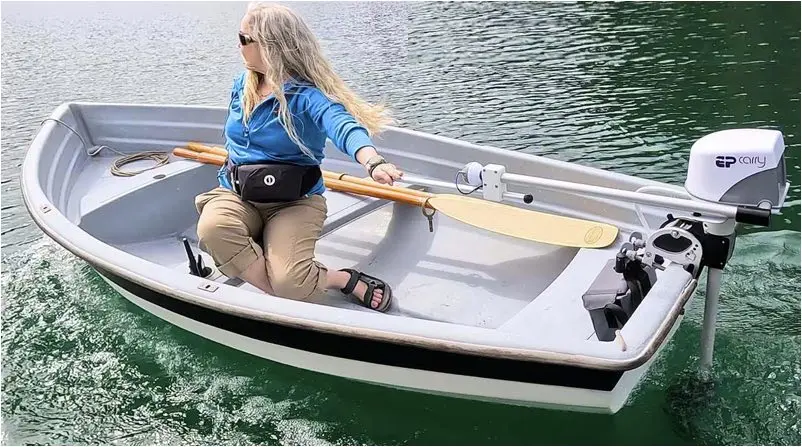
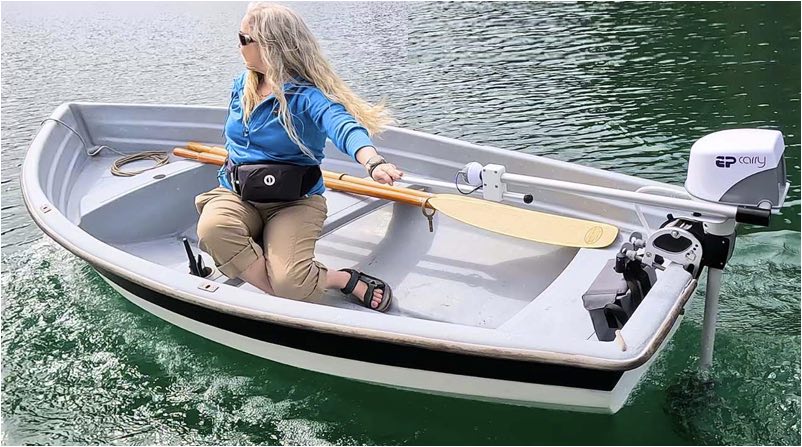
The Gen2 model represents a massive leap forward in micro-mobility on the water. Building upon a rugged foundation proven by hundreds of users across more than 73,000 cumulative hours of real-world testing, the Gen2 integrates cutting-edge Lithium Iron Phosphate (LFP) battery technology, smart Bluetooth connectivity, enhanced mechanical versatility, and an optimized controller system. Designed primarily for dinghies, tenders, and small watercraft up to 19 feet (5.8 meters) and 1,000 pounds (455 kg), the Gen2 balances ultra-lightweight portability with robust, reliable performance.
This comprehensive report explores the origins of the EP Carry system, the rigorous real-world testing that shaped its design, the granular engineering improvements found in the Gen2 release, and the broader implications of this technology for the future of sustainable, emission-free recreational boating.
Detailed Chronology: From a Grandfather’s Concern to Industry Innovation
The 2008 Catalyst
When Joe Grez stared at the mandatory CO2 warning label on his fishing dinghy in 2008, the traditional small-outboard market was stagnant. For decades, boaters utilizing tenders and small skiffs had simply accepted the noisy, smelly, and environmentally dirty nature of small two-stroke and four-stroke gas engines. These traditional engines were notoriously difficult to start when cold, required messy mixing of fuel and oil, leaked hydrocarbons directly into fragile marine ecosystems, and produced noxious exhaust fumes that lingered directly in the breathing zone of the passengers.
Recognizing that his engineering background—backed by a degree in physics and a career in consumer product development—was ideally suited to address this problem, Grez began researching alternative propulsion methods. He quickly realized that existing electric options on the market were often too heavy, awkwardly shaped, or overly complex for casual boaters using small tenders.
Assembling a World-Class Design Team
To bridge the gap between heavy industrial marine hardware and user-friendly consumer electronics, Grez assembled a formidable design team. This collective brought together hundreds of years of combined experience in electromechanical device technology and high-volume consumer product manufacturing. Crucially, team members had cut their teeth designing sophisticated everyday products for global heavyweights, including beauty care giant L’Oréal and high-frequency acoustic technology brands like Sonicare electric toothbrushes.
This pedigree in consumer-centric engineering fundamentally influenced the EP Carry design philosophy: the motor had to be intuitive, remarkably lightweight, exceptionally clean, and utterly dependable without requiring specialized technical knowledge to operate or maintain.
The 2017 Breakthrough and 73,000-Hour Field Test
After years of meticulous prototyping, testing, and refinement, the original EP Carry electric outboard officially launched in 2017. Rather than relying on laboratory simulations alone, the company allowed the market to act as its ultimate proving ground.
Over the subsequent years, hundreds of adventurous customers put the EP Carry through its paces across a wide variety of boats, navigating diverse waterways under nearly every conceivable weather and water condition. The cumulative result of this real-world deployment is staggering: over 73,000 hours of documented on-water use.
Founder Joe Grez himself has personally logged more than 800 nautical miles (approximately 920 statute miles or 1,500 kilometers) utilizing the EP Carry system during grueling Salish 100 cruises and solar-powered micro-cruiser expeditions. This punishing field testing provided the engineering feedback loop necessary to design the Gen2.
Supporting Context & Metrics: Engineering the Gen2
The introduction of the EP Carry Gen2 does not discard the core principles that made the original model successful; rather, it refines and enhances them using the latest advancements in electro-chemistry, wireless communication, and mechanical design.
Weight, Power, and the New Boost Feature
Maintaining ultra-portability was non-negotiable for the engineering team. At just 14 pounds (6.4 kg), the Gen2 motor matches the featherlight weight of its predecessor, ensuring that users can easily mount, dismount, and transport the outboard without straining their backs.
While the nominal base power output remains optimized at 220 watts, the Gen2 features a completely redesigned, intelligent controller system. This new controller is capable of delivering a 22% performance boost, pushing output to 280 watts when extra momentum is required to punch through a headwind or tidal current.
Comprehensive Performance Metrics
When configured with the EP Carry Gen2 Complete Integrated Package—which includes a specialized 24V Lithium Iron Phosphate (LFP) battery boasting 288 Watt-hours of energy storage—the system delivers impressive runtime and speed metrics. Tested on a standard 9-foot (2.75-meter) rowing dinghy, company benchmarks demonstrate the following capabilities:

- Half Power: 140 minutes of continuous runtime, achieving a cruising speed of 3.4 knots (3.9 mph / 6.3 km/h).
- Full Power: 70 minutes of continuous runtime, achieving a cruising speed of 4.0 knots (4.6 mph / 7.4 km/h).
- Boost Mode: 50 minutes of continuous runtime, achieving a peak speed of 4.2 knots (4.8 mph / 7.8 km/h).
Advanced Battery Flexibility and LFP Technology
Energy storage represents one of the most significant upgrades in the Gen2 ecosystem. The adoption of Lithium Iron Phosphate (LFP) chemistry provides transformative advantages over older lead-acid or early-generation lithium-ion chemistries, including dramatically improved safety profiles, a longer overall lifespan, reduced weight, and stable voltage delivery throughout the discharge cycle.
For users seeking extended expeditions, the platform offers multiple pathways to optimize range:
- Dual Battery Integration: Boaters can easily add a second battery to instantly double their operational range.
- Third-Party Compatibility: For maximum flexibility, the Gen2 motor can be purchased as a standalone unit and paired seamlessly with off-the-shelf 12V, 24V, or 36V LFP batteries from alternative suppliers.
Depending on the chosen boat geometry and battery configuration, cruising ranges—even when operated at aggressive full-throttle settings—can exceed 20 miles (32 km) on a single charge.
Official Statements & Technical Innovations
In technical briefings surrounding the launch, the EP Carry team emphasized that the Gen2 is a holistic overhaul touching every major subsystem of the outboard.
Smart Electronics and Smartphone Integration
In the modern era, physical controls are increasingly augmented by digital interfaces. The EP Carry Gen2 embraces this shift by incorporating wireless monitoring capabilities directly into its battery management systems.
Most proprietary and off-the-shelf LFP batteries compatible with the Gen2 now feature built-in wireless transceivers. These communicate directly with an optional wireless Bluetooth battery monitor, allowing users to view real-time state-of-charge levels, voltage drops, and consumption rates right on their smartphone screens. Furthermore, the smartphone interface acts as a conduit for wireless, over-the-air firmware updates, ensuring that the motor’s operating system can be continually optimized long after purchase.
Mechanical Versatility and Ergonomics
Recognizing that no two boats are identical, the engineering team introduced a suite of mechanical refinements:
- Shaft Options: Available in both long-shaft and short-shaft configurations to match varying transom heights.
- Transom Adjust System: Engineered specifically to accommodate boats featuring severe transom rakes.
- Pivot and Tilt Flexibility: Users can choose between a patented automatic release pivot clamp module or a traditional tilt latch fitting, depending on their preferred handling style.
- Detachable Tiller and Remote Options: The tiller handle is now fully detachable, accommodating an optional extension arm for operators who must sit further forward in smaller vessels. Additionally, a dedicated remote throttle kit is available for custom helm setups.
- Robust Connectivity: A newly designed snap-lock battery connector provides an exceptionally fast, secure, and physically robust cable attachment, minimizing wear and tear during frequent assembly and breakdown.
- Security: An integrated security lock prevents opportunistic theft at busy public dinghy docks.
Future Outlook: Sustainable Micro-Mobility on the Water
The launch of the EP Carry Gen2 arrives at a critical juncture for the marine industry. As municipal waterways increasingly implement strict bans on internal combustion engines to protect water quality and reduce air pollution, recreational boaters are actively seeking clean, quiet alternatives.

While massive investments are being made in high-powered electric inboard systems for luxury yachts and commercial vessels, the micro-mobility sector—represented by dinghies, tenders, inflatables, and small fishing skiffs—remains the daily lifeblood of coastal and lake communities worldwide.
The EP Carry Gen2 proves that sustainable propulsion does not require cumbersome infrastructure. The included 5-hour AC charger plugs directly into standard household outlets, but the system’s true potential shines in off-grid scenarios. Because of the high efficiency of the LFP batteries and the low power draw of the 280W motor, boaters can easily integrate lightweight solar panels for remote or dockside charging.
Founder Joe Grez routinely demonstrates this capability on his annual 100-nautical-mile (115-mile / 185-km) expeditions, where two small, lightweight onboard solar panels serve as the exclusive energy source for the entire journey. This closes the loop on truly zero-emission water travel.
Comprehensive Support and Warranty
To ensure consumer confidence, EP Carry backs the Gen2 Complete Integrated Package with a two-year manufacturer warranty. This is supported by direct, factory-expert troubleshooting assistance, complemented by comprehensive digital and printed instructional guides.
As consumer expectations shift permanently toward sustainable, low-maintenance, and health-conscious outdoor recreation, products like the EP Carry Gen2 point the way forward. By turning a regulatory warning label into a spark of inspiration back in 2008, Joe Grez and his team have successfully crafted an enduring legacy of clean, quiet, and reliable waterborne exploration.