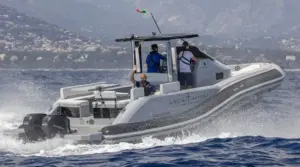
The global maritime industry stands at a critical crossroads. For over a century, recreational boating has been synonymous with the deep, throaty roar of internal combustion engines, the pungent scent of unburned diesel exhaust, and the persistent hum of fossil-fuel-powered generators. Today, however, environmental imperatives, shifting consumer expectations, and rapid advancements in energy storage are rewriting the rules of naval architecture.
At the forefront of this silent transformation is WIA Yachts, a visionary European boatbuilder that has spent the past decade and a half perfecting the art of luxury electric propulsion. Founded in 2009 along the shores of Hungary’s Lake Balaton—affectionately known as the "Hungarian Sea"—WIA Yachts has evolved from an ambitious local startup relying on repurposed forklift motors into a sophisticated boutique manufacturer of high-end, all-electric watercraft.
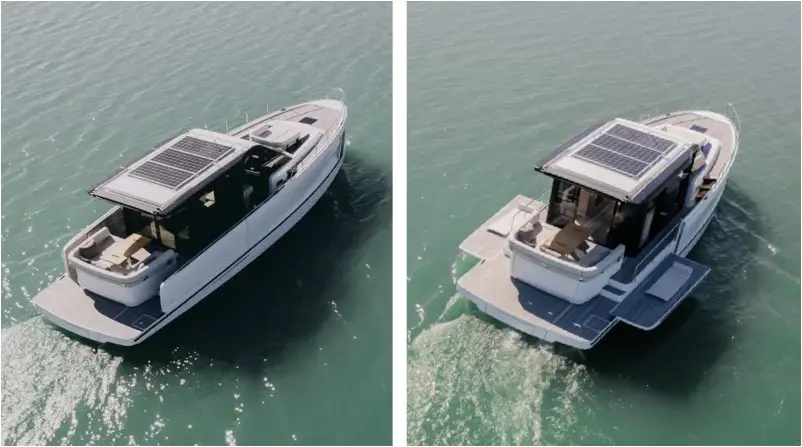
The company’s trajectory mirrors the maturation of the electric mobility sector as a whole. Its latest flagship introduction, the Hardtop version of the popular WIA 520, represents a watershed moment for sustainable luxury. Measuring 16.1 meters (52 feet) in length with an expansive 4.7-meter beam, the WIA 520 Hardtop merges zero-emission cruising with the generous, light-filled comforts of a high-end coastal apartment. Equipped with dual ePropulsion I-40 inboard electric motors and a robust 160 kWh battery bank, this floating home redefines what is possible for inland waterways, sheltered bays, and coastal exploration. This article examines WIA Yachts’ remarkable journey, the engineering triumphs behind its flagship model, and the broader cultural shift toward green navigation across Europe.
Detailed Chronology: From Lake Balaton Marinas to International Waters
The genesis of WIA Yachts is rooted in a unique blend of personal reinvention and strict environmental legislation. To understand how the company came to be, one must look to Lake Balaton, Central Europe’s largest freshwater body. Spanning approximately 75 kilometers by 14 kilometers (50 by 10 miles), Lake Balaton has served as a vital recreational sanctuary for Central Europeans for generations.
In the wake of post-World War II industrial expansion and the subsequent boom in recreational boating through the 1960s and 1970s, the lake experienced a dramatic surge in traffic. Recognizing the existential threat that combustion engines posed to the delicate ecosystem of the shallow, sun-drenched lake, local authorities enacted pioneering environmental regulations. Among the strictest was a total ban on internal combustion engines, making Lake Balaton one of the earliest large water bodies in Europe to prioritize water purity and acoustic tranquility over fossil-fueled convenience.
The Spark of Inspiration
Enter András Viszkei, a successful lawyer and advertising executive seeking an exit from the high-stress demands of his corporate career. Viszkei had nurtured a lifelong passion for water and boats, prompting him to acquire a struggling marina property on the shores of Lake Balaton. Alongside his family, Viszkei invested significant time, capital, and vision into transforming the site. They expanded the facility to accommodate more than 200 boats, integrated a hotel and a waterfront restaurant, and revitalized the local nautical infrastructure.
Because of the lake’s strict combustion-motor bans, the marina’s slips were occupied almost exclusively by sailboats. However, Viszkei observed a clear, unserved market gap: a growing demographic of visitors who desired the comfort, ease, and leisure of motorboats without the hassle of rigging sails, yet needed to comply with environmental regulations. Electric propulsion emerged as the ideal bridge between consumer desire and ecological preservation.
When WIA Yachts was officially established in 2009, the dedicated marine electric propulsion market was in its absolute infancy. Commercial off-the-shelf high-output electric marine motors and lithium-ion battery packs simply did not exist at scale. Undeterred, Viszkei and his early engineering team improvised.
The company’s earliest builds—compact 7-meter (23-foot) day cruisers that served as the philosophical and structural ancestors of today’s WIA 230 CC—relied on heavy, industrial-grade motors and battery configurations adapted from electric forklifts and golf carts. While primitive by today’s standards, these rugged powerplants proved remarkably resilient. Early adopters tested the boats, embraced the whisper-quiet handling, and provided invaluable feedback. This foundational period allowed WIA to refine hull designs, master weight distribution, and build deep institutional knowledge just as the global supply chain for electric vehicle (EV) components began to catch up.
Industrial Scaling and Model Line Expansion
By 2013, WIA Yachts had outgrown its makeshift operations. The company acquired an abandoned industrial factory building, repurposing it into a specialized shipyard capable of rigorous quality control and customized manufacturing. This expansion allowed WIA to push past the constraints of day boats and venture into larger cabin cruisers.
The introduction of a 34-foot model marked a major turning point, signaling to the market that electric propulsion was no longer restricted to short-hop tenders. Over the ensuing years, WIA systematically expanded its catalog into a comprehensive lineup of seven distinct all-electric models.
Today, the shipyard maintains a deliberate, quality-focused production capacity of approximately 15 custom-crafted boats per year. The portfolio ranges from the nimble 230 series and the 10-meter 330, to the 10.5-meter 350, the company’s former best-seller—the 14-meter 450 (available in Cabriole and Hardtop configurations)—and now, the crowning achievement of the brand: the 16.1-meter WIA 520, offered in both Open and Hardtop variants.
Supporting Context & Metrics: Engineering the WIA 520 Hardtop
To fully appreciate the engineering achievement represented by the WIA 520 Hardtop, one must examine its specifications and spatial architecture. Debuting to critical acclaim at major international exhibitions such as Boot Düsseldorf, the 520 series demonstrates how modern naval architects are breaking free from the design constraints imposed by traditional fossil-fuel machinery.
Specifications at a Glance
Metric
Measurement (Metric)
Measurement (Imperial)
Length Overall (LOA)
16.1 m
52 ft
Beam (Width)
4.7 m
15.5 ft
Draft
0.7 m
27 in
Total Motor Output
2 x 40 kW (80 kW total)
2 x 55 hp (110 hp total)
Standard Battery Capacity
160 kWh
Scalable/Expandable
Target Range (Inland/Coastal)
Up to 100 km
54 Nm / 62 mi
Propulsion and Power Delivery
Unlike its predecessors from 2009 that relied on industrial surplus, the WIA 520 Hardtop utilizes state-of-the-art marine electrification supplied by ePropulsion, a global leader in electric propulsion systems. The vessel is driven by twin 40-kilowatt I-40 inboard electric motors, delivering a combined output of 80 kW (equivalent to roughly 110 horsepower).
These motors draw clean energy from a standard 160-kilowatt-hour (kWh) lithium battery bank, with custom modular configurations available for owners desiring extended off-grid endurance. For inland lakes, protected archipelagos, river systems, and calm coastal cruising grounds, a 100-kilometer (62-mile) range per charge provides exceptional operational freedom. Because electric motors deliver peak torque instantly across a broad RPM band, low-speed maneuvering in tight marina slips is remarkably responsive and smooth, eliminating the hesitant lag typical of cold diesel inboards.
Furthermore, electric propulsion naturally encourages a more contemplative style of navigation. By scaling back cruising speeds by just a few knots, operators can exponentially increase their range, fully aligning with the vessel’s overarching design philosophy: unhurried, peaceful immersion in nature.
Spatial Architecture: The "Floating Home" Concept
The true genius of the WIA 520 Hardtop lies in its interior volume and layout flexibility. Traditional motor yachts of this length often sacrifice vast amounts of interior real estate to massive engine rooms, fuel tanks, exhaust routing, and mechanical ventilation shafts. Because the ePropulsion inboards and battery arrays have a significantly smaller physical footprint and require virtually no complex exhaust infrastructure, WIA’s designers reclaimed this valuable space for human comfort.
The vessel’s generous 4.7-meter beam allows for an expansive, single-level living area that blurs the boundary between indoor luxury and outdoor freedom.
The Hardtop Advantage: The hardtop architecture introduces a convertible salon and galley space. During pristine summer weather, large glass panels and doors slide away to create an open-air pavilion. In cooler or inclement weather, the space seals completely, supported by an advanced climate-control system including marine-grade air conditioning.
Hull Wings: Expanding the connection to the water, the hull walls feature drop-down side platforms—colloquially known as "hull wings." When deployed at anchor, these fold-out balconies dramatically increase the aft deck footprint, creating private swimming docks, sunbathing platforms, or tranquil spots to dangle one’s feet directly over the water.
Accommodations: Below deck, the master stateroom defies conventional yacht stereotypes. Boasting an impressive interior ceiling height, even tall guests (such as visitors standing over 1.9 meters or 6 feet 3 inches) can stand comfortably without feeling confined. The cabin layout feels less like a compromised marine berth and more like a luxury boutique hotel suite. Depending on the owner’s preference, the layout can be configured to comfortably sleep up to six guests across multiple cabins, complete with high-end en-suite bathroom facilities.
Official Statements and Industry Insights
The philosophy guiding WIA Yachts is deeply personal, shaped by a family that literally grew up alongside the evolution of electric mobility on the water. During a presentation at Boot Düsseldorf, Bence Viszkei—son of founder András Viszkei and now the company’s Director of Sales and Business Development—articulated the core mission driving the brand forward.
"We wanted to create a boat that feels like home, even if it’s for only a few days," Bence Viszkei explains. "I think the interior ceiling height makes a massive difference. People on board often don’t consciously realize it, but that generous vertical clearance is what helps create that home-like atmosphere—the ambiance of a very high-end apartment. The actual floor area isn’t inflated, but everything simply feels bigger, easier, and inherently more relaxing."
This sentiment highlights a crucial shift in modern yachting culture. For decades, powerboat marketing was dominated by metrics of raw speed, horsepower figures, and aggressive styling. WIA Yachts, by contrast, champions a philosophy of serenity. The absence of engine roar, vibration, and noxious diesel fumes transforms the cruising experience. Conversations no longer require shouting over a droning exhaust; meals served on the central galley island are undisturbed by the smell of burnt hydrocarbons; and wildlife can be approached without startling disruption.
Industry analysts note that WIA’s strategic pivot toward globally recognized component suppliers like ePropulsion marks a maturation point for the boutique builder. By utilizing standardized, globally supported marine-grade electric architectures, WIA provides international buyers with the ultimate peace of mind: a high-end luxury craft backed by a worldwide network of service technicians and spare parts availability.
Future Outlook: The Green Ribbon Regatta and Beyond
As WIA Yachts looks toward the horizon, the brand’s expansion extends far beyond its Hungarian roots. While the company started as a localized solution for an inland lake with strict environmental controls, its watercraft are now navigating the coastal waters of Western Europe, traversing intricate canal systems, and exploring Mediterranean archipelagos. The market demand for silent, emission-free luxury vessels is accelerating rapidly, driven by tightening municipal regulations in ecologically sensitive tourist zones across the continent.
Yet, the beating heart of the movement remains anchored where it all began: Lake Balaton. Each July, the Balatonfüred Yacht Club (BCYC) marina hosts the prestigious Green Ribbon Regatta (Zöld Szalag Regatta). Now celebrating its eleventh consecutive year, this landmark event has grown into one of Europe’s premier gatherings for alternative-energy vessels.
Attracting hundreds of environmentally conscious boaters, engineers, and maritime enthusiasts from across Central Europe and beyond, the multi-day regatta serves multiple vital functions:
Rigorous Field Testing: It acts as a live proving ground, testing the limits of battery chemistries, powertrain efficiency, and hull hydrodynamics under competitive conditions.
Community Building: It unites a thriving subculture of green mariners who share a passion for zero-emission water recreation.
Public Demonstration: It provides concrete proof that mature, reliable, high-performance electric technologies can fully support active, joyful navigation on historic inland seas without leaving a toxic footprint behind.
Conclusion
WIA Yachts’ journey from a quiet lakeside marina project to a celebrated European builder of 52-foot all-electric luxury hardtop yachts is a testament to perseverance, ecological foresight, and visionary design. By refusing to compromise on comfort, space, or aesthetic elegance, WIA has proven that the future of yachting does not require a tradeoff between luxury and sustainability.
As the WIA 520 Hardtop takes its place on the international stage—gliding silently across glass-calm lakes and rolling coastal swells alike—it carries with it a simple, powerful message: the most luxurious way to experience the water is also the most respectful of it.