







Executive Overview
San Miguel de Allende, the crown jewel of Mexico’s central highlands, is experiencing the most significant and transformative hospitality investment cycle in its modern history. Long celebrated for its cobblestone streets, soaring neo-Gothic colonial architecture, vibrant arts community, and UNESCO World Heritage status, the city has traditionally relied on an intimate ecosystem of independent boutique hotels, historic haciendas, and a revered luxury pioneer, the Rosewood San Miguel de Allende.
Today, however, the destination is undergoing a structural maturation. A confluence of massive capital investments, the arrival of heavy-hitting international hospitality giants—including Marriott, Hyatt, and Pueblo Bonito—and pioneering eco-luxury concepts like 1 Hotels are completely reshaping the upper tier of the local market. This wave is not characterized by the sprawling, cookie-cutter mega-resorts typical of Mexico’s coastal strips. Instead, San Miguel is successfully absorbing globally branded properties while fiercely retaining its distinct architectural integrity, human-scale urban geography, and hyper-personalized boutique ethos.
From a landmark $70 million investment by Pueblo Bonito to the eagerly anticipated 2027 arrival of 1 Hotel & Homes—featuring nearly 50 branded residences—San Miguel de Allende is proving that inland cultural capitals can command the same level of institutional luxury interest as the world’s most coveted coastal playgrounds.
Detailed Chronology: From UNESCO Recognition to the Branded Boom
To comprehend the current trajectory of San Miguel’s hospitality market, one must trace the timeline of key developments that transitioned the city from a haven for expatriates, artists, and weekend travelers into an international luxury powerhouse.
2008: The Catalyst of Global Recognition
Long before corporate boardrooms began underwriting multi-million-dollar development projects, San Miguel de Allende earned international validation. In 2008, the historic center of San Miguel and the nearby Sanctuary of Jesús Nazareno de Atotonilco were jointly inscribed as UNESCO World Heritage sites. This designation codified the city’s architectural and cultural importance on the global stage, drawing a steady stream of discerning travelers looking for authenticity paired with high-end comfort.
2011: Rosewood Sets the Modern Luxury Benchmark
The modern era of high-end hospitality in San Miguel officially commenced with the opening of the Rosewood San Miguel de Allende in 2011. Introducing a full-service international luxury resort to the historic center, Rosewood proved that the city did not require an oceanfront backdrop, a championship golf course, or hundreds of keys to support an institutional luxury asset. Featuring 67 keys set across expansive gardens and courtyards, alongside the iconic Luna rooftop bar overlooking the Parroquia de San Miguel Arcángel, Rosewood established the benchmark for what high-net-worth travelers could expect from the destination.
2019–2023: The Independent & Boutique Vanguard
While Rosewood anchored the high end, a parallel movement of sophisticated, design-forward independent properties defined the city’s creative pulse.
- Hotel Matilda emerged as a contemporary counterweight to the historic hacienda aesthetic, integrating cutting-edge contemporary art, a premier spa, and a celebrated culinary program across its 32 rooms.
- Casa Delphine redefined micro-luxury, offering an ultra-intimate five-room boutique experience that highlighted the profound appeal of residential-scale hospitality.
- NUMU Boutique Hotel opened its doors as part of The Unbound Collection by Hyatt, signaling the dawn of the branded boutique era. With 44 rooms, NUMU proved that global hotel groups could integrate seamlessly into San Miguel’s tight-knit urban fabric without disrupting its character.
2024–2025: The Institutional Surge
The current acceleration of investment has brought unprecedented capital deployment to the city:
- Cleviá, San Miguel de Allende, Autograph Collection made history by introducing Marriott Bonvoy to the destination. Comprising 74 rooms and 42 residential-style units, Cleviá provided Marriott loyalists with a luxury foothold in the city center.
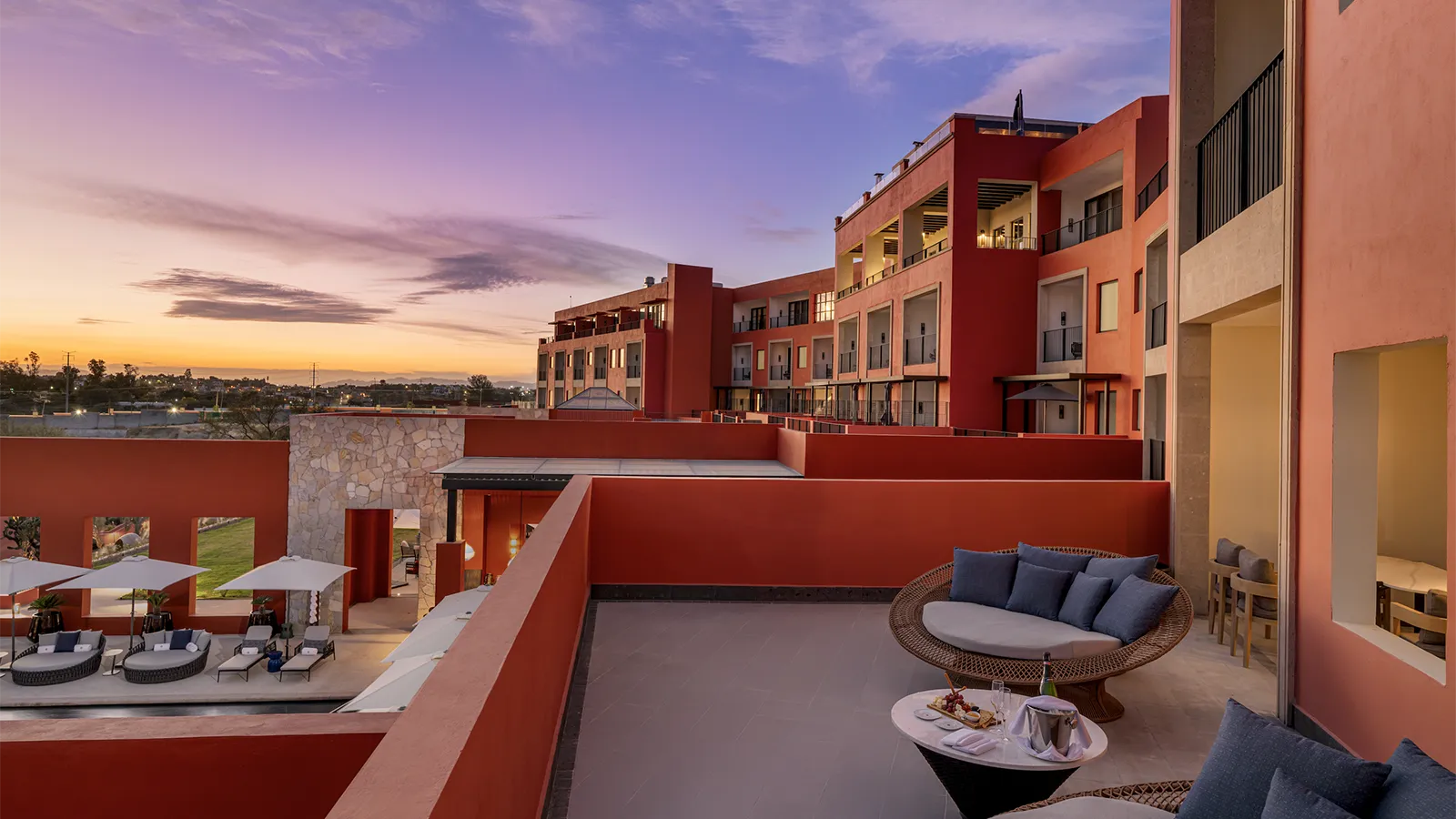
- Pueblo Bonito Vantage officially opened on June 5, following a staggering $70 million investment. Known primarily for coastal resort properties in Los Cabos and Mazatlán, Pueblo Bonito’s pivot to an inland cultural capital signaled immense corporate confidence in San Miguel’s economic resilience.
- Concurrently, historic properties like the La Puertecita Boutique Hotel—tracing its roots back to 1990—began preparations for a major high-profile return, signaling that heritage assets are being aggressively repositioned to compete with fresh capital.
2027 and Beyond: The Horizon
Looking forward, the pipeline continues to expand. The most anticipated upcoming project is 1 Hotel & Homes San Miguel de Allende, scheduled for 2027. Featuring roughly 97 hotel keys and 48 branded residences, this development represents a profound evolution toward sustainable, wellness-driven luxury real estate.
Supporting Context & Metrics: Decoding the Investment Wave
The mechanics driving this hospitality boom are rooted in structural shifts in traveler behavior, real estate convergence, and improved logistical access.
The Economics of Scale vs. Intimacy
The current market dynamic shatters the traditional dichotomy between cookie-cutter corporate resorts and mom-and-pop inns. San Miguel’s current market accommodates extremes across the financial spectrum:
- Ultra-Luxury Resorts & Branded Residences: Properties like Rosewood and the forthcoming 1 Hotels command top-tier nightly rates while offering extensive amenities, wellness facilities, and multi-bedroom real estate purchase options.
- Mid-to-Upper Branded Properties: Hotels such as Cleviá (Autograph Collection) and NUMU (Hyatt) bridge the gap, often trading around $270 to $400 per night while extending global loyalty points to a growing demographic of frequent corporate and leisure travelers.
- Micro-Boutiques: Intimate boltholes like Casa Delphine and Hotel Matilda thrive by offering hyper-curated, hyper-local experiences that corporate groups cannot replicate, maintaining strong pricing power through exclusivity.
Infrastructure and Access
Geographically, San Miguel de Allende remains an inland destination requiring deliberate transit. Visitors typically fly into León/Guanajuato (BJX) or Querétaro (QRO) airports. Enhanced air connectivity—including regular direct routes from major hubs like Dallas (averaging roughly 2 hours and 35 minutes of flight time) followed by a scenic 90-minute drive—has systematically lowered the friction of arrival. Furthermore, ongoing airline investments, such as expanded Delta Air Lines connectivity into the region, continue to funnel international travelers directly to the Bajío region.
Official Statements and Industry Insights
The convergence of global capital and local heritage has prompted prominent executives and hospitality leaders to articulate the strategic importance of San Miguel de Allende in modern luxury portfolios.
Reflecting on the vision behind their upcoming flagship property, Raul Leal, CEO of 1 Hotels, captured the emotional and strategic pull of the destination during the project announcement:
"The enchanting San Miguel de Allende is a perfect place to plant roots."
Leal’s sentiment underscores a core reality of the current boom: developers are no longer treating San Miguel merely as a transient vacation spot. Instead, they are banking on a robust, multi-generational lifestyle economy underpinned by a thriving second-home culture, a legendary wedding industry, and an elite class of cultural tourists who return year after year.
Industry analysts note that brands like Marriott and Hyatt are utilizing San Miguel as a testing ground for localized, design-forward urban properties that respect regional vernacular architecture over standardized corporate branding. By partnering with independent operators or utilizing soft brands like Autograph Collection and Unbound Collection, these multinational giants are effectively absorbing the local bohemian identity without diluting it.
Future Outlook: The Next Frontier of Luxury in San Miguel
As San Miguel de Allende looks toward the latter half of the decade, the overarching question is how the destination will manage its rapid scale without sacrificing the authentic charm that fueled its rise.
The integration of branded residences—exemplified by the 48 homes planned for 1 Hotel & Homes—signals a permanent blending of tourism and residential real estate. Wealthy buyers are increasingly seeking properties that offer turnkey hotel services alongside private, sustainable living spaces. This dual-demand model insulates developers against seasonal tourism fluctuations while cementing San Miguel’s status as a global residential sanctuary for creatives, entrepreneurs, and retirees.
At the same time, the resilience of independent properties like Hotel Matilda and Casa Delphine guarantees that the soul of the city will remain anchored in local artistry and personalized hospitality. Rather than a homogenous corporate takeover, the current investment wave is elevating the entire destination.
Fifteen years after Rosewood proved that the market could sustain international-grade luxury, San Miguel de Allende is entering its most sophisticated era. It is a city confident enough in its own identity to welcome the world’s largest hospitality brands, while remaining fiercely, beautifully, and unapologetically itself.