







Executive Overview
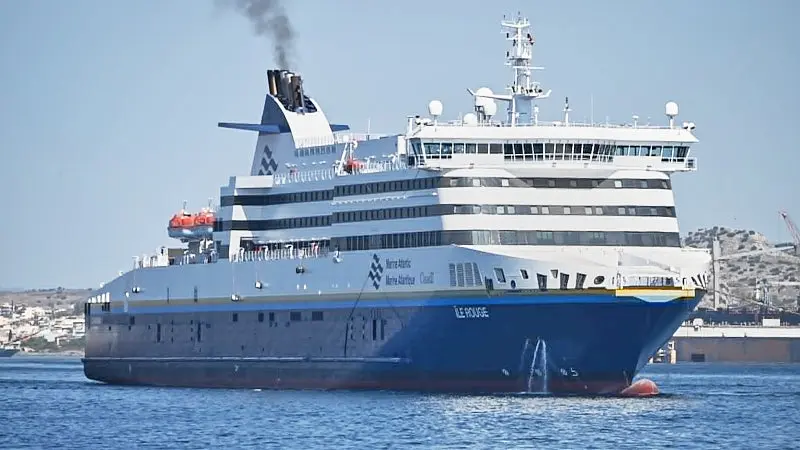
In a major development for Atlantic Canada’s vital maritime transport network, Marine Atlantic’s newly chartered Roll-on/Roll-off Passenger (RoPax) vessel, Île Rouge, has officially entered the final leg of her transatlantic voyage. Following an exhaustive refit and conversion program executed in the maritime repair hub of Perama, Greece, the vessel unmoored on August 20, setting a course westward toward Nova Scotia.
The vessel’s transit marks a pivotal moment in Marine Atlantic’s ongoing operational strategy to optimize passenger capacity, fleet flexibility, and freight throughput across the Cabot Strait. Navigating via Malta and clearing the Strait of Gibraltar on August 25, the Île Rouge is projected to make landfall at North Sydney, Nova Scotia, in early September.
Originally constructed in 2002 by the renowned Howaldtswerke-Deutsche Werft (HDW) shipyards in Kiel, Germany, the vessel possesses a rich operational pedigree. Having sailed under multiple guises—including Superfast X, SeaFrance Molière, Dieppe Seaways, Stena Superfast X, and most recently A Nepita—the ship brings proven sea-keeping capabilities and high-density RoPax performance to Canadian waters.
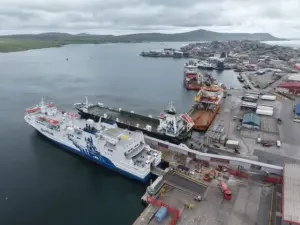
Once fully integrated, Île Rouge will accommodate up to 921 passengers and crew, featuring 150 modernized passenger cabins. Notably, this includes 48 dedicated pet-friendly cabins, reflecting an evolving emphasis on passenger convenience and modern travel preferences. Before entering commercial service on the essential route connecting North Sydney, Nova Scotia, with Port aux Basques, Newfoundland and Labrador, the ship will undergo an intensive regime of Canadian-flagging compliance, crew familiarization, and port alignment trials.
Detailed Chronology: From Baltic Origins to Transatlantic Transit
+---------------------------------------------------------------------------------------------------+
|                                 VESSEL EVOLUTION & TRANSIT TIMELINE                                |
+---------------------------------------------------------------------------------------------------+
| 2002         | Delivered by HDW (Kiel, Germany) as SUPERFAST X for Baltic/North Sea service.     |
| 2007–2020    | Operational stints as SEAFRANCE MOLIÈRE, DIEPPE SEAWAYS, and STENA SUPERFAST X.    |
| 2020–2024    | Operated in the Mediterranean by Corsica Linea as A NEPITA.                       |
| Mid-2024     | Secured under charter by Marine Atlantic; renamed ÎLE ROUGE.                      |
| Aug 20, 2024 | Departs Perama Repair Zone, Greece, following extensive interior/technical refit. |
| Aug 25, 2024 | Clears Gibraltar after bunkering at Malta; commences Atlantic crossing.           |
| Sept 2024    | Projected arrival in North Sydney, NS; commencement of Canadian flagging protocols. |
+---------------------------------------------------------------------------------------------------+
A Multi-Decade Lineage Across European Waters
The ship’s history represents a tour through modern European ferry operations. Delivered at the turn of the millennium by HDW, the vessel was engineered to high technical standards, designed for fast turnarounds, robust open-sea endurance, and high vehicle deck flexibility.
Over more than two decades, the vessel adapted to some of the world’s most demanding maritime passages:
- Superfast X (2002–2007): Launched during the peak of fast RoPax development, operating primary routes across the North Sea and Baltic waters.
- SeaFrance Molière & Dieppe Seaways (2007–2014): Serving the high-density Dover Strait crossing, engineered to withstand continuous harbor maneuvering and rigorous freight impacts.
- Stena Superfast X (2015–2020): Deployed on the Irish Sea between Holyhead and Dublin, proving her stability and operational resilience in severe weather environments.
- A Nepita (2020–2024): Operated by Corsica Linea in the Mediterranean, undergoing adaptations for extended warm-weather overnight voyages.
This operational history provided Marine Atlantic with an ideal candidate platform for chartering: a hull built to robust industrial standards with a proven track record across diverse operational environments.
The Perama Conversion
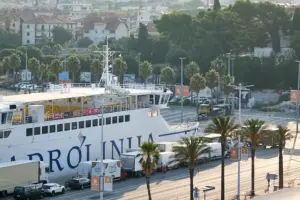
The vessel’s arrival at the Perama repair zone near Piraeus, Greece, marked the beginning of a complex structural, mechanical, and interior overhaul. Perama is globally recognized for its deep expertise in RoPax conversions, offering specialized naval architecture, steel fabrication, and marine interior fit-outs.
The refit scope focused on aligning the vessel’s interior architecture with Marine Atlantic’s operational requirements and regulatory frameworks mandated by Transport Canada. Passenger spaces were stripped and reconfigured to maximize comfort during the multi-hour Cabot Strait crossing.
Key technical focus areas during the Greek drydocking included:
- Passenger Accommodation Upgrades: Reconfiguring staterooms and public lounges to balance capacity with space efficiency.
- Navigational & Safety Systems: Upgrading bridge electronics, life-saving appliances (LSA), and firefighting arrangements to ensure rapid integration into Canadian maritime registry standards.
- Machinery Overhauls: Servicing main engines, auxiliary power units, and bow thrusters to maintain transit speeds and ensure precise station-keeping during berth maneuvers in harsh Atlantic winds.
The Transit Log: Greece to Cape Breton
Following sea trials to validate structural and propulsion integrity post-refit, Île Rouge officially departed Perama on August 20.
[Perama, Greece] ---> [Malta (Bunkering)] ---> [Gibraltar Passage] ---> [North Atlantic Crossing] ---> [North Sydney, NS]
   (Aug 20)                 (Mid-Aug)               (Aug 25)               (Late Aug)                 (Early Sept)
The transit plan required careful weather-routing management across the Mediterranean and into the North Atlantic:
- August 20: Departure from the Perama repair zone.
- Mid-Transit Stop: Technical call at Malta for fuel bunkering, provisioning, and final deep-sea readiness checks.
- August 25: Passage through the Strait of Gibraltar, transitioning from Mediterranean coastal routing to open North Atlantic sea lanes.
- Early September (Target): Scheduled arrival at the Marine Atlantic terminal facilities in North Sydney, Cape Breton.
Supporting Context & Technical Metrics
The deployment of Île Rouge is tailored to address specific operational challenges on the Cabot Strait route, where seasonal passenger surges intersect with year-round freight demands.
+------------------------------------------------------------------------------------+
|                         ÎLE ROUGE TECHNICAL & OPERATIONAL PROFILE                   |
+------------------------------------------------------------------------------------+
| Parameter                 | Specification / Details                                |
+---------------------------+--------------------------------------------------------+
| Vessel Type               | Roll-on/Roll-off Passenger (RoPax) Ferry               |
| Original Builder          | Howaldtswerke-Deutsche Werft (HDW), Kiel, Germany      |
| Year of Construction      | 2002                                                   |
| Total Passenger Capacity  | Approximately 921 (including crew)                     |
| Total Cabin Inventory     | 150 Cabins                                             |
| Dedicated Pet Cabins      | 48 Cabins                                              |
| Operational Route         | North Sydney, NS <--> Port aux Basques, NL             |
| Governing Operator        | Marine Atlantic Inc. (Charter Agreement)               |
+------------------------------------------------------------------------------------+
Capacity Breakdown and Passenger Experience
The interior layout of Île Rouge strikes a balance between commercial vehicle capacity and high-density passenger accommodations:
- Passenger Accommodations: With a total capacity of approximately 921 people, the vessel offers a wide range of seating and private accommodation options suited for both day and night sailings.
- 150 Passenger Cabins: The accommodation deck features 150 cabins, offering modern amenities, updated HVAC systems, and ergonomic arrangements designed to mitigate fatigue during long crossings.
- 48 Pet-Friendly Cabins: A notable operational upgrade is the inclusion of 48 pet-friendly staterooms. Historically, maritime carriers have faced challenges managing pets aboard long-distance ferries, often requiring animals to remain in vehicles or restricted kennel areas. By dedicating nearly a third of the onboard cabin inventory to pet-accessible facilities, Marine Atlantic directly addresses growing customer demand for humane and convenient pet travel.
Navigating the Cabot Strait Operational Environment
The 52-nautical-mile passage between North Sydney and Port aux Basques presents one of North America’s most challenging maritime operating environments. Marine Atlantic operates under a constitutional obligation to maintain a continuous, reliable physical link between the island of Newfoundland and the Canadian mainland.
                  +-----------------------------------+
                  |   Port aux Basques Terminal (NL)  |
                  +-----------------------------------+
                                    ^
                                    |  52 Nautical Miles
                                    |  Severe weather, gale force winds,
                                    |  pack ice, heavy swell conditions
                                    v
                  +-----------------------------------+
                  |     North Sydney Terminal (NS)    |
                  +-----------------------------------+
Operating in this marine area requires specific performance characteristics:
- High Maneuverability: Powerful bow thrusters and twin-screw propulsion systems are essential for berthing in Port aux Basques, where narrow channel entry and strong crosswinds present constant challenges.
- Sea-Keeping and Hull Integrity: The vessel’s HDW design provides effective roll stabilization and sea-keeping features essential for dealing with unpredictable North Atlantic swells.
- Vehicle Deck Versatility: Heavy-duty stern loading ramps and high-clearance main vehicle decks allow the vessel to carry a mix of commercial tractor-trailers, drop-trailers, standard passenger cars, and oversized industrial equipment.
Official Statements, Regulatory Procedures, and Integration Pipeline
While official charter costs and fine-grained financial terms remain confidential under commercial agreements, Marine Atlantic leadership has maintained a clear focus on modernizing service quality and securing operational redundancy.
Upon making landfall in Cape Breton in early September, Île Rouge will enter a multi-stage integration phase designed to meet Canadian regulatory standards and align with local port infrastructure.
+------------------------------------------------------------------------------------+
|                        POST-ARRIVAL INTEGRATION WORKFLOW                           |
+------------------------------------------------------------------------------------+
| Phase 1: Canadian Flagging                                                         |
|   ├── Inspection by Transport Canada Marine Safety and Security (TCMSS)           |
|   └── Registration under the Canadian Flag & Safety Management System alignment     |
|                                                                                    |
| Phase 2: Crewing & Familiarization                                                 |
|   ├── Marine Atlantic crew onboarding and vessel orientation                       |
|   └── Emergency response, evacuation, and firefighting drills                      |
|                                                                                    |
| Phase 3: Terminal Alignment & Berthing Trials                                      |
|   ├── Ramp physical matching tests at North Sydney & Port aux Basques              |
|   └── Moorings, fender contact checks, and dockside safety audits                  |
|                                                                                    |
| Phase 4: Commercial Entry                                                          |
|   └── Revenue service deployment on the Cabot Strait route                         |
+------------------------------------------------------------------------------------+
Phase 1: Canadian Flagging and Regulatory Compliance
Before launching commercial service in Canadian territorial waters, Île Rouge must complete formal re-flagging procedures under the authority of Transport Canada Marine Safety and Security (TCMSS).
This regulatory transition involves:
- Comprehensive vessel safety inspections to verify compliance with the Canada Shipping Act, 2001.
- Audits of life-saving equipment, marine evacuation systems (MES), and structural fire protection to ensure alignment with Canadian regulations.
- Operational certification under the International Safety Management (ISM) Code and Maritime Labour Convention (MLC).
Phase 2: Crewing and Operational Familiarization
Transitioning a complex RoPax ship to a new operational crew requires extensive training. Marine Atlantic personnel will undergo familiarization protocols focusing on:
- Bridge Systems and Automation: Training on ship-handling dynamics, integrated navigation bridges, and propulsion controls.
- Engine Room Management: Onboarding marine engineering teams to oversee the main engines, power distribution systems, and auxiliary machinery.
- Safety Drills: Rigorous testing of passenger evacuation, fire containment, and emergency response procedures under realistic conditions.
Phase 3: Dock Alignment and Linkspan Testing
Because RoPax vessels rely on tight dockside interfaces to load and unload rolling cargo safely, Île Rouge will complete shore-side integration trials at both terminal sites:
- North Sydney Terminal: Testing shore power connections, passenger boarding bridges, and stern-ramp clearance against existing linkspan structures.
- Port aux Basques Terminal: Conducting berthing maneuvers inside the harbor, verifying ramp slopes across varying tide levels, and ensuring alignment with shore infrastructure.
Future Outlook: Reinforcing Atlantic Canada’s Gateway
The integration of Île Rouge into Marine Atlantic’s charter fleet comes at a crucial time for regional transport infrastructure. The Cabot Strait service acts as a continuous commercial bridge, carrying a significant portion of all consumer goods, fresh food, industrial supplies, and medical resources destined for Newfoundland and Labrador.
                    REGIONAL ECONOMIC INTEGRATION

   Commercial Logistics               Tourism Industry
(Essential Supply Chain)           (Seasonal Demand Peak)
           │                                 │
           └───────────────┬─────────────────┘
                           │
                           ▼
             +---------------------------+
             |   Marine Atlantic Fleet   |
             |   Enhanced by Île Rouge   |
             +---------------------------+
                           │
                           ▼
          High-Reliability Cabot Strait Bridge
       (North Sydney <---> Port aux Basques)
Economic and Logistics Impact
- Supply Chain Resilience: Adding a vessel with proven operational reliability mitigates supply chain disruptions caused by severe weather mechanical delays or unexpected maintenance needs elsewhere in the fleet.
- Seasonal Tourism Support: Expanding passenger capacity with updated staterooms and 48 pet-friendly cabins allows Marine Atlantic to absorb peak summer and shoulder-season tourism surges, boosting economic activity throughout Newfoundland and Cape Breton.
- Fleet Strategy Flexibility: Using chartered tonnage allows Marine Atlantic to balance fleet capacity dynamically alongside long-term fleet procurement plans, ensuring service stability without committing to immediate capital newbuild costs.
A Modernized Maritime Link
When Île Rouge completes her transatlantic journey from Greece and finishes her Canadian-flagging process, she will enter service as a fully modern, highly versatile asset.
From her beginnings at the HDW yards in Kiel through decades of service across European sea routes and her recent refit in Perama, the vessel’s journey reflects the dynamic nature of international maritime logistics. Her arrival in North Sydney signals a new chapter—one dedicated to serving the communities, businesses, and travelers reliant on Canada’s Atlantic gateway.
(Photo credit: Ben Ayre)