



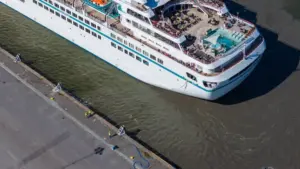



LONDON — In a formal statement released on August 12, 2026, the Marine Accident Investigation Branch (MAIB) announced that it has concluded its preliminary assessment into the tragic death of a crew member aboard the luxury coastal cruise vessel Hebridean Princess. Following a thorough review of the initial facts surrounding the June 2026 incident, the Chief Inspector of Marine Accidents determined that there is insufficient evidence linking the fatality to the direct operation, navigation, or machinery of the ship.
Consequently, under the statutory parameters outlined in the Merchant Shipping (Accident Reporting and Investigation) Regulations 2026, the inspectorate has formally decided not to launch a full safety investigation. While standard protocol dictates rigorous fact-finding for all deaths occurring within the maritime sector, the statutory threshold required to trigger an exhaustive MAIB probe was not met in this instance.
This comprehensive report explores the background of the incident, the strict legal framework governing maritime accident investigations in the United Kingdom, the operational profile of the vessel involved, and the broader context of occupational safety standards across Britain’s thriving coastal and high-end cruise sectors.

Executive Overview
Maritime safety is among the most heavily regulated sectors globally, overseen by a complex web of international conventions, national laws, and specialized inspectorates. In the United Kingdom, the Marine Accident Investigation Branch—an independent arm of the Department for Transport—operates as the ultimate arbiter when accidents, injuries, and fatalities occur at sea or aboard UK-flagged vessels worldwide.
The announcement regarding the Hebridean Princess highlights the meticulous filtering process that occurs immediately following any reported marine casualty. When a crew member loses their life, the MAIB is legally mandated to gather preliminary evidence, interview witnesses, review shipboard logs, and consult with medical examiners. However, not every tragedy at sea is a direct result of operational failure, structural defect, or navigational error.
According to the MAIB’s findings released on August 12, 2026, the preliminary assessment established a clear demarcation between a fatality occurring onboard a vessel and a fatality caused by the operation of that vessel. Because the initial inquiry could not establish a causal link to shipboard operations, safety systems, or equipment failure, the Chief Inspector exercised statutory discretion to close the preliminary file without initiating a prolonged, resource-intensive safety investigation.
While this decision brings legal closure to the investigative mandate of the MAIB regarding this specific event, it also casts a spotlight on the wider mechanisms of crew welfare, medical oversight, and incident reporting across the British maritime industry.

Detailed Chronology and Investigative Scope
The events leading to the MAIB’s August 2026 statement began in June 2026, when emergency services and maritime authorities were alerted to a critical medical incident aboard the Hebridean Princess. While specific personal details of the deceased crew member have been withheld to respect the privacy of the grieving family and comply with data protection standards, the maritime community was immediately shaken by the loss.
The Preliminary Assessment Phase
Upon receiving notification of the fatality, the MAIB deployed its procedural protocols for handling onboard deaths. The preliminary assessment phase involves several critical steps:
- Immediate Notification and Data Preservation: Ship operators and masters are legally required to report accidents and deaths immediately. In this case, the operators of the Hebridean Princess cooperated fully, preserving relevant logs, electronic surveillance data, and communication records.
- Evidence Gathering: MAIB investigators examine the physical location of the incident, review closed-circuit television (CCTV) footage where available, and analyze the working hours, fatigue management records, and training certificates of the affected personnel.
- Medical and Forensic Consultation: Investigators coordinate closely with coroners, pathologists, and medical experts to determine the physiological cause of death.
- Operational Analysis: A determination is made as to whether shipboard machinery, safety management systems (SMS), navigational safety, or procedural non-compliance played a contributing role.
By mid-August 2026, this multi-faceted preliminary review was complete. The evidence compiled by the inspectorate failed to demonstrate that any failure of the vessel’s equipment, unmanaged operational hazard, or breach of maritime safety regulations contributed to the crew member’s demise.
The Statutory Framework: Merchant Shipping Regulations 2026
The decision not to proceed with a full safety investigation is governed strictly by the Merchant Shipping (Accident Reporting and Investigation) Regulations 2026. These updated regulatory frameworks empower the Chief Inspector of Marine Accidents to exercise professional judgment.
Under these regulations, the MAIB is not tasked with investigating every single mortality that occurs within the maritime domain. Its primary statutory objective is to determine the causes and circumstances of marine accidents and hazardous incidents specifically to prevent future occurrences and improve the safety of life at sea. If an incident is determined to be entirely unrelated to ship operations—such as sudden natural medical events, pre-existing health conditions, or non-work-related incidents—launching a full safety investigation falls outside the statutory remit of the branch, as no operational safety lessons would be yielded for the wider maritime industry.
Supporting Context and Vessel Profile: The Hebridean Princess
To understand the operational environment in which this incident occurred, it is necessary to examine the vessel itself and its standing within the British maritime sector.
+-------------------------------------------------------------+
               VESSEL PROFILE: HEBRIDEAN PRINCESS
+-------------------------------------------------------------+
| Flag: United Kingdom                                        |
| Sector: Luxury Coastal Cruising                             |
| Operating Area: Scottish Highlands & Islands                |
| Operational Standard: High compliance, stringent UK         |
|                       Maritime and Coastguard Agency (MCA)  |
|                       oversight.                            |
+-------------------------------------------------------------+
A Crown Jewel of British Coastal Cruising
The Hebridean Princess is widely recognized as one of the most prestigious and luxurious small-scale cruise ships operating in British waters. Renowned for its exclusivity, impeccable service, and intimate scale, the vessel typically accommodates a small complement of discerning passengers while being managed by a highly trained, professional crew.
Operating predominantly in the remote, scenic waters of the Scottish Highlands and Islands, the ship represents a specialized niche of the maritime industry. Unlike massive ocean liners carrying thousands of passengers, small-ship coastal vessels foster close-knit crew environments where operational safety, teamwork, and adherence to strict safety management systems (SMS) are paramount.
Maritime Safety Culture and Crew Welfare
The UK maritime sector operates under some of the most stringent regulatory frameworks in the world, overseen by the Maritime and Coastguard Agency (MCA). UK-flagged vessels are subject to rigorous regular inspections, safety audits, and compliance checks covering everything from fire suppression systems and life-saving appliances to occupational health and crew accommodation standards.
Working at sea—even on luxurious vessels traversing tranquil lochs and coastal waters—remains an inherently demanding occupation. Seafarers routinely face challenges associated with long working hours, isolation from family, confinement in closed environments, and the physical demands of shipboard maintenance and hospitality operations.
In recent years, both international bodies like the International Maritime Organization (IMO) and national agencies have placed an increasingly sharp focus on crew mental health, physical well-being, and occupational health hazards. Employers in the British passenger shipping sector are expected to maintain comprehensive medical support systems, robust fatigue management policies, and clear channels for reporting health concerns.
Official Statements and Institutional Responses
The formal announcement by the MAIB on August 12, 2026, was succinct, reflecting the standard administrative language used when closing a preliminary assessment without further investigative action.
A spokesperson for the Marine Accident Investigation Branch reiterated the statutory basis of the decision:
"Following a thorough preliminary assessment into the circumstances surrounding the tragic death of a crew member from the Hebridean Princess in June 2026, the MAIB was unable to establish a connection between the fatality and the operation of the vessel. In strict adherence to the Merchant Shipping (Accident Reporting and Investigation) Regulations 2026, the Chief Inspector has concluded that a full safety investigation is unwarranted. Our thoughts remain with the family, friends, and colleagues of the deceased during this difficult time."
Operators of the Hebridean Princess have similarly expressed profound sorrow over the loss of their crew member, emphasizing that the welfare and safety of all onboard personnel remain their highest operational priority. Throughout the preliminary assessment process, ship management fully cooperated with investigators, providing unrestricted access to shipboard documentation, logs, and personnel.
Future Outlook: Implications for Maritime Safety and Reporting
While the closure of the MAIB preliminary assessment means no formal accident investigation report will be published for this incident, the case nevertheless offers important takeaways for the broader maritime community.
1. Transparency and Accountability in Non-Operational Fatalities
When a fatality occurs at sea that is ultimately determined to be non-operational, it often bypasses the public scrutiny of a formal safety bulletin or accident report. However, industry stakeholders emphasize that transparency remains vital. Ensuring that deaths—regardless of their direct link to vessel operations—are accurately recorded helps regulatory bodies and occupational health organizations track broader health trends within the seafaring workforce.
2. Continued Vigilance in Crew Health and Well-being
The incident underscores the ongoing necessity for ship operators to prioritize holistic crew welfare. As the maritime industry grapples with labor shortages, rising operational pressures, and the unique psychological strains of life at sea, proactive health monitoring, robust pre-employment medical screenings, and accessible onboard mental health resources are more critical than ever.
3. The Evolving Role of the MAIB
As maritime technology evolves and new regulations—such as the Merchant Shipping Regulations 2026—take effect, the MAIB continues to adapt its investigative methodologies. By focusing its finite resources on incidents where systemic safety lessons can be learned, the inspectorate maintains its efficiency as an independent guardian of maritime safety. At the same time, its rigorous preliminary assessments ensure that no incident goes unexamined, providing families, operators, and regulators with an objective, evidence-based determination of the facts.
Conclusion
The tragic loss of the Hebridean Princess crew member in June 2026 serves as a sombre reminder of the human element underpinning the maritime industry. While the MAIB’s decision to forgo a full safety investigation—substantiated by the Merchant Shipping (Accident Reporting and Investigation) Regulations 2026—confirms that the vessel’s operations were not at fault, the event leaves behind a grieving community of colleagues and loved ones.
As the British maritime sector looks ahead, the incident reinforces the enduring importance of rigorous safety standards, comprehensive crew health oversight, and the continuous commitment of regulatory bodies like the MAIB to uphold transparency, integrity, and safety across all UK-flagged vessels.