








Executive Overview
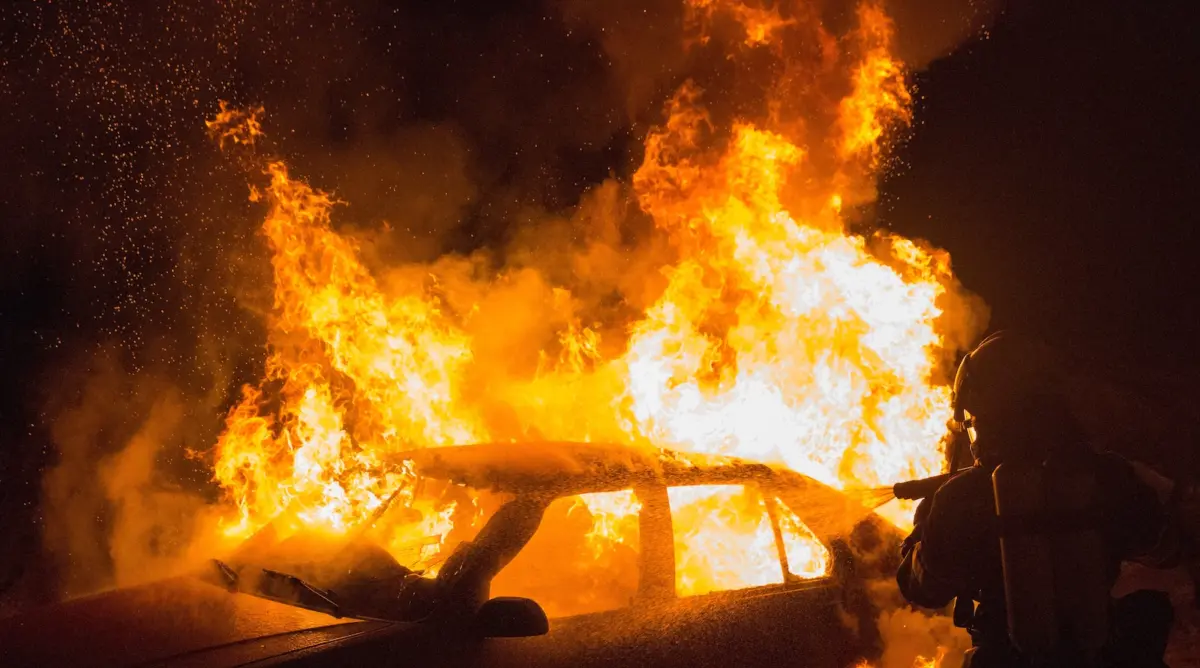
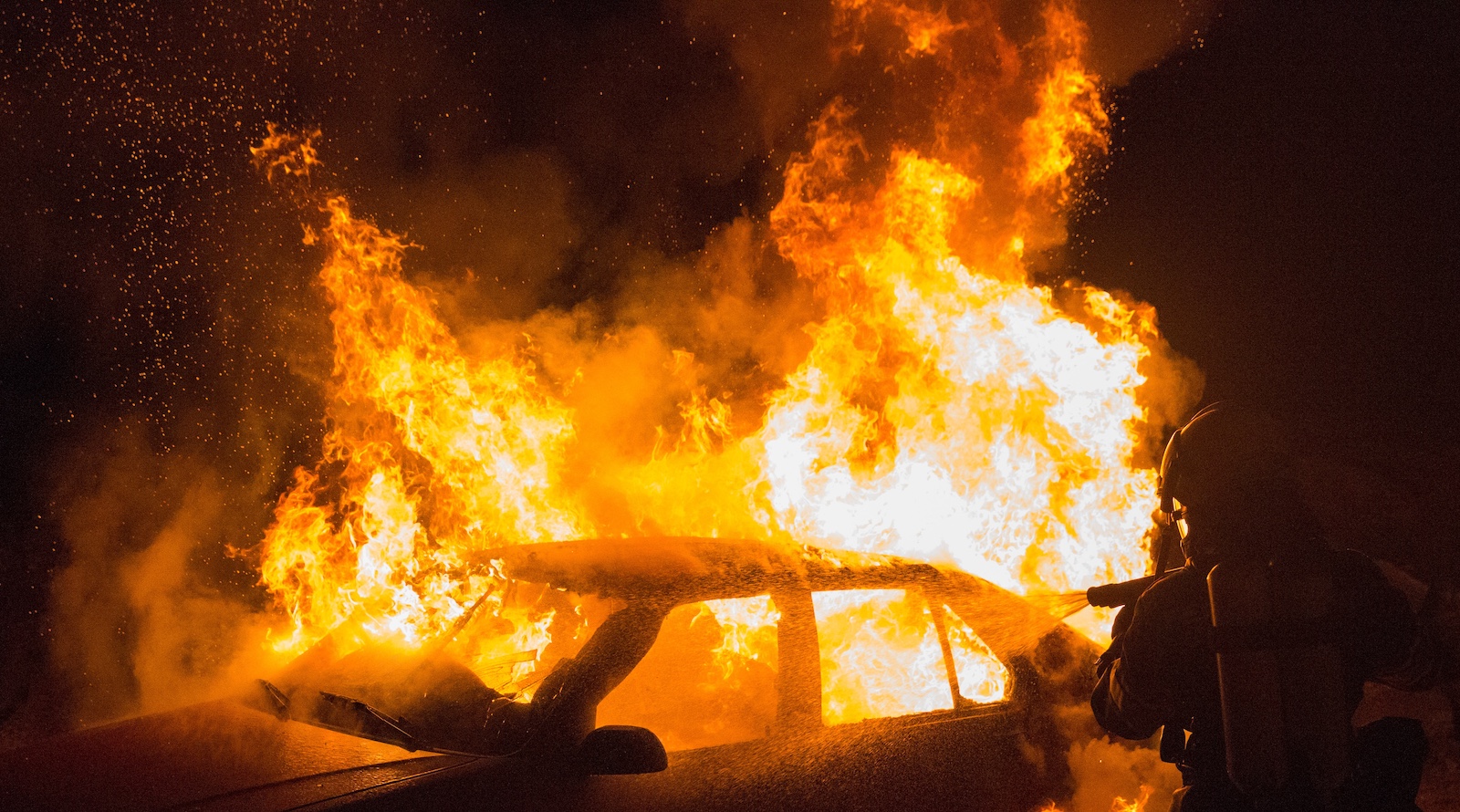
For over a decade, viral videos of burning electric vehicles have heavily influenced public perception, fueling a pervasive anxiety that electric cars are ticking time bombs. Blaring headlines detailing chaotic EV battery fires, panicked first-responder training sessions, and Homeowners Associations (HOAs) hastily banning EVs from their properties have created a deeply entrenched cultural narrative.
Yet, a rigorous examination of recent automotive safety data reveals a starkly different reality. According to a landmark analysis by the Washington Post using data from CarFax and the National Highway Traffic Safety Administration (NHTSA), millions of vehicles currently circulate on US roads with official "park outside" safety warnings. The vast majority of these vehicles are powered by conventional internal combustion engines (ICE), not lithium-ion battery packs.
The primary culprit behind this surge in parking warnings is not the energy density of electric propulsion, but rather the exponential proliferation of "always-on" automotive electronics. As modern vehicles evolve into computers on wheels, complex circuitry, seat-heater modules, anti-lock brake systems, and power-steering pumps remain energized long after drivers turn off the ignition and walk away.

Despite conventional vehicles accounting for roughly 94% of the light-duty market and suffering from significantly higher statistical fire rates—averaging approximately 1,500 fires per 100,000 vehicles sold compared to roughly 25 per 100,000 for EVs—public consciousness remains disproportionately focused on electric cars. This investigative report breaks down the mechanics of "key-off" fires, examines the shifting regulatory landscape, analyzes hard safety data, and dispels the persistent myths surrounding vehicle combustibility.
Detailed Chronology: The Evolution of "Park Outside" Recalls
To understand how vehicle safety warnings have evolved, it is necessary to retrace the timeline of regulatory interventions and major industry recalls that have shaped public perception over the past decade.
2015–2019: The Genesis of the "Park Outside" Designation
In 2015, the National Highway Traffic Safety Administration (NHTSA) formally established the "park outside" designation. This specialized safety warning was created to flag catastrophic defects capable of igniting a vehicle even when the engine is completely shut down and parked. In its early years, the designation was exceedingly rare. Manufacturers averaged only about one such recall per year between 2015 and 2019, as regulators and automakers grappled primarily with traditional crashworthiness and immediate mechanical failures.
2020–2023: The Inflection Point
The frequency of "park outside" orders began to accelerate as vehicles integrated more complex electronic architecture. A watershed moment arrived in September 2023, when federal safety regulators announced a massive wave of recalls affecting over 5.1 million vehicles with mixed and conventional powertrains.

Hyundai issued a recall for nearly 1.65 million vehicles, while sibling company Kia recalled more than 1.73 million vehicles due to an alarming fire risk. Investigators traced the defect to an anti-lock brake system (ABS) module that could leak brake fluid, triggering an electrical short circuit and an engine fire whether the car was actively driven or parked and turned off. Automakers issued blunt guidance: the safest place to park these vehicles was outside, far away from homes and structures.
2024–2026: A Surging Regulatory Burden
The pace of "park outside" alerts has reached historic highs in recent years. NHTSA logged 10 distinct "park outside" recalls in 2024 alone. By the first seven months of 2026, federal authorities had already announced 17 new recalls covering a staggering 1.7 million vehicles, cementing 2026 as the second-highest year on record for this specific class of warning since its inception.
Prominent campaigns in this timeframe highlight the widening scope of the problem. Earlier in 2026, Kia was forced to recall 463,000 Telluride SUVs because front power seat switches could overheat and ignite the seat material—a repeat defect stemming from an inadequate fix two years prior. Similarly, Ford issued safety alerts for over 66,000 Expeditions and Lincoln Navigators due to short-circuiting circuit boards in battery junction boxes, which sparked at least 16 documented fires while the vehicles were parked and inactive.
Supporting Context & Metrics: Unpacking the Fire Risk Disparity
The persistent fear surrounding electric vehicle fires stands in stark contrast to the empirical data compiled by safety organizations, insurance groups, and federal regulators.
The Math of Internal Combustion vs. Electric Propulsion
According to long-term tracking by the National Fire Prevention Association (NFPA), the United States experiences more than 170,000 vehicle fires annually. This breaks down to roughly one vehicle fire every three minutes. The NFPA notes that vehicle fires account for more deaths than non-residential structure fires or residential apartment fires, trailing only one- and two-family home structure fires in terms of fatality rates per fire incident. Because internal combustion engine (ICE) fires are so commonplace, they rarely make national news. Conversely, a single EV fire frequently dominates media coverage.
Statistical normalization reveals a dramatic safety advantage for electric vehicles:
- Internal Combustion Vehicles: Experience approximately 1,500 fires per 100,000 vehicles sold.
- Electric Vehicles: Average roughly 25 fires per 100,000 vehicles sold.
This means that, on a per-capita and per-sale basis, conventional gas and diesel cars are roughly 60 times more likely to experience a fire event than electric vehicles.
The Anatomy of "Key-Off" Fires
The public often assumes that vehicle fires require gasoline leaks or active driving dynamics. However, modern automotive recalls highlight the danger of "key-off" fires.
As automotive safety expert Frank Borris, a former NHTSA investigator, explained to the Washington Post, modern vehicles are packed with computerized modules, comfort accessories, and power systems that remain energized even when the key is removed. "The engine is off," Borris noted, "but the circuits are still hot and they stay hot all the time."
Sean Kane, president of Safety Research and Strategies, points to the sheer complexity of modern electronic systems. "It’s a mix of things causing this," Kane observed. "It’s messy. It doesn’t lend itself to simple description of what’s happening. But it boils down to growing electronic systems and the number of components."
From power-steering pump connections (such as Stellantis’s recent recalls of Jeep Wrangler and Gladiator models) to heated seat switches and infotainment control modules, the electronic load in contemporary vehicles creates numerous vectors for thermal runaway independent of the propulsion fuel source.

Official Statements and Regulatory Adjustments
For years, analyzing the precise comparative risk of vehicle fires in North America was hindered by a lack of granular, standardized reporting. Regulators traditionally collected fire incident data without consistently categorizing incidents by powertrain type.
Granular Data on the Horizon
This informational vacuum is finally closing. Adam Barowy, principal research engineer for the Fire Safety Research Institute, highlighted a major shift in reporting infrastructure: fire agencies nationwide transitioned to a new federal reporting system designed to capture precise data regarding vehicle powertrains.
"Right now, there’s pretty limited data on whether they are more likely to catch fire—at least for North American cars," Barowy acknowledged. "That is beginning to change."
International data provides valuable precedent. In Norway—where plug-in electric vehicles accounted for more than 97% of new car sales by the mid-2020s—comprehensive national transit data from 2016 to 2021 demonstrated that conventional gas and diesel vehicles had a fire incidence rate four times higher than their electric counterparts.
Debunking Parking Garage Myths
High-profile structural fires have historically intensified anti-EV bias. For instance, catastrophic parking structure fires—such as the New Year’s Eve blaze in 2017 that destroyed 1,400 cars in a Liverpool arena parking garage, and a 2020 fire that damaged hundreds of vehicles at Norway’s Stavanger airport—immediately triggered public speculation that electric vehicles were to blame.
Subsequent rigorous forensic investigations disproved these assumptions. The Liverpool garage fire was conclusively traced to an aging Land Rover with an internal combustion engine, while the Stavanger airport fire originated in a diesel-powered Opel. Compounding the damage in Norway was structural non-compliance: the facility lacked the necessary overhead clearance to allow modern fire suppression and rescue trucks to enter effectively.
Future Outlook: Overcoming FUD with Empirical Truth
The psychological barrier of "Fear, Uncertainty, and Doubt" (FUD) regarding EV battery fires remains a formidable obstacle to widespread cultural acceptance. Early high-profile thermal events involving first-generation vehicles—such as early Chevrolet Bolt battery issues that cost General Motors and LG Chem over $1 billion in remediation—left deep impressions on the public consciousness.
Yet, as the automotive industry transitions toward software-defined architectures and electrified platforms, safety oversight is undergoing a parallel evolution. The data demonstrates that the modern automotive fire risk is systemic across all powertrains, driven largely by complex electronics, high-draw auxiliary components, and manufacturing anomalies in wiring harnesses rather than lithium-ion chemistry alone.
Armed with emerging federal data reporting standards, transparent NHTSA recall metrics, and comparative international studies, consumers and policymakers are increasingly equipped to separate sensationalized anecdotes from statistical reality. As vehicle connectivity and electrification expand, transparency and rigorous engineering will remain the ultimate antidotes to fear—ensuring that safety standards protect motorists regardless of whether they drive past the gas pump or plug into the grid.