





Executive Overview
Rising 4,583 feet above the northern coastline of Martinique, Mount Pelée commands the horizon with a quiet, menacing majesty. Its verdant, jungle-draped slopes shelter a living community that exists in perpetual dialogue with one of the most violent geological chapters in human history. Saint-Pierre—once hailed as the "Paris of the Caribbean"—stands today as a haunting, remarkable monument to resilience, where the ruins of a 20th-century metropolis blend seamlessly into the rhythm of daily life.
More than a century has passed since the cataclysmic eruption of May 8, 1902, wiped the prosperous port city off the map in a matter of minutes, claiming nearly 28,000 lives. Yet, unlike ancient Pompeii, which was left to the silence of antiquity, Saint-Pierre was rebuked by abandonment. Its inhabitants returned, rebuilding their lives directly atop the ash-choked foundations of the fallen city.
As the winter travel season approaches, this destination in Martinique’s rugged volcanic north offers travelers an immersive, multifaceted experience. Here, visitors can trace the stone staircases of a century-old theater, dive among submerged shipwrecks in the shimmering bay, sip world-class rhum agricole at historic distilleries, and swim along striking black-sand beaches. This comprehensive examination explores the history, geology, and contemporary resurgence of the Caribbean Pompeii, offering an authoritative look at a destination where past and present are indelibly fused.
Detailed Chronology: The Fall and Rise of Saint-Pierre
The Zenith of the "Paris of the West" (Late 19th Century)
Before the dawn of the 20th century, Saint-Pierre was the undisputed economic, intellectual, and cultural heartbeat of Martinique. Boasting a population of approximately 30,000, the bustling port city was renowned for its sophisticated French character, opulent colonial architecture, elegant tree-lined boulevards, and a magnificent, ornate municipal theater modeled after the Grand Théâtre of Bordeaux.
Ships from across the globe docked in its deep-water harbor, offloading manufactured goods and luxury items while taking on vast shipments of cane sugar and rum. Culturally vibrant and financially flush, Saint-Pierre was considered the most modern and cosmopolitan urban center in the Lesser Antilles. Its citizens enjoyed electricity, an early tramway system, and a lively social scene that mirrored the metropolitan elegance of Europe. Yet, lurking directly above the city was a silent, sleeping giant: Mount Pelée.
The Warning Signs (April – May 1902)
For weeks leading up to the catastrophe, Mount Pelée began to awaken. Seismic tremors rattled the foundations of Saint-Pierre, and plumes of sulfurous smoke and ash billowed from the summit. Wildlife began fleeing the upper slopes, with venomous fer-de-lance vipers slithering down into the city streets, biting humans and domestic animals in a frantic bid for survival.
Despite the mounting geological unrest, local political and economic leaders downplayed the danger. With a gubernatorial election looming, authorities and local newspapers actively urged residents to remain calm, reassuring the populace that the mountain posed no immediate threat. Many families from the surrounding countryside even evacuated into Saint-Pierre, believing the city to be a safe haven.

The Cataclysm: May 8, 1902
At 8:02 a.m. on Ascension Thursday, May 8, 1902, the northern face of Mount Pelée ruptured catastrophically. Rather than a vertical column of ash, the volcano unleashed a lateral, high-velocity pyroclastic flow—a superheated avalanche of incandescent gas, pulverized rock, and toxic vapor exceeding 1,000°F (538°C).
Racing down the mountain slopes at hurricane speeds, the searing cloud slammed into Saint-Pierre within less than a minute. The destruction was absolute. Buildings were instantly incinerated or leveled, ships anchored in the harbor capsized and erupted into flames as their cargo ignited, and the entire urban fabric of the city was eviscerated.
Nearly 28,000 people perished almost instantaneously. The speed and intensity of the thermal blast left little room for escape, cementing the event as one of the deadliest volcanic disasters in recorded global history.
The Miraculous Exception: Louis-Auguste Cyparis
Amidst the sweeping devastation, a single, astonishing narrative of survival emerged. Louis-Auguste Cyparis, a local dockworker imprisoned for brawling, was confined to a subterranean, thick-walled stone cell in the town’s municipal jail.
While the extreme heat and ash severely burned him, the robust masonry of his cell shielded him from the direct force of the pyroclastic surge. Days later, rescue parties combing through the smoldering ruins heard his cries from beneath the rubble. Cyparis’s survival transformed him into an international symbol of endurance; he was later pardoned and toured globally with the Barnum & Bailey Circus as "The Man Who Survived Pompeii."
Rebuilding and Rebirth (Post-1902 to Present)
Unlike the ruins of Italy’s Pompeii, which remained untouched archaeological preserves, Saint-Pierre’s inhabitants and municipal leaders refused to let the city die. Over the ensuing decades, citizens returned to the volcanic slopes, clearing the debris and erecting new homes and businesses directly adjacent to, and often directly upon, the preserved stone skeletons of the past.
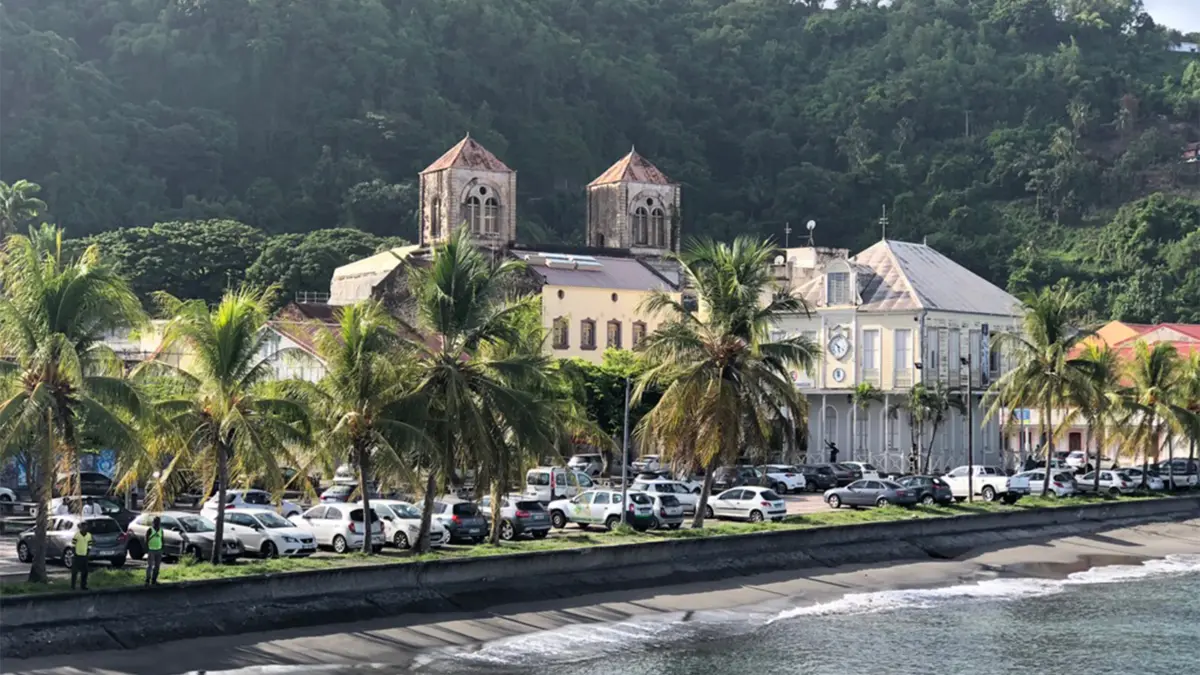
Today, modern Saint-Pierre coexists intimately with its harrowing history. Crumbling neoclassical facades, staircases leading to vanished stages, and scorched stone archways emerge organically between modern dwellings, establishing a landscape where historical tragedy and contemporary Caribbean life are inextricably bound.
Supporting Context & Metrics: Geography, Biodiversity, and Tourism
Geological Footprint and Biodiversity
Northern Martinique’s dramatic geography is entirely a product of ancient and ongoing volcanic activity. The region is defined by steep, emerald-green mountain chains, dense tropical rainforests, and nutrient-rich volcanic soils that support an astonishing array of endemic flora and fauna.
Recognizing its unique ecological and geological value, the Volcanoes and Forests of Mount Pelée and the Pitons of Northern Martinique were officially inscribed as a UNESCO World Heritage Site. This prestigious designation protects the area’s vital biodiversity, safeguarding rare species of ferns, orchids, and endemic birds while cementing the northern territory’s status as a premier destination for eco-tourism and geological research.
Tourism Metrics and Regional Integration
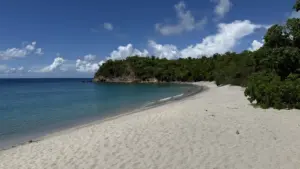
As the Caribbean tourism landscape shifts toward experiential, heritage-based travel, Martinique’s north has experienced a steady resurgence in visitor interest. While the southern stretches of the island—such as Sainte-Anne and Les Salines—continue to draw crowds with their classic white-sand resort beaches, the northern corridor attracts a more discerning traveler.
- Accessibility: Situated approximately one hour north of the capital city of Fort-de-France, Saint-Pierre is easily accessible via scenic coastal roadways that wind through increasingly mountainous terrain.
- Visitor Demographics: A significant percentage of international visitors to Saint-Pierre are cultural heritage tourists, scuba diving enthusiasts, and hikers drawn to the challenging ascent of Mount Pelée.
- Economic Impact: Heritage tourism centered around the 1902 disaster memorial, local rum estates, and underwater wreck diving serves as a vital economic engine for the northern communes, diversifying the island’s tourism portfolio away from mass resort models.
Official Statements and Cultural Legacy
Cultural preservationists, volcanologists, and local municipal leaders have long championed the unique historical value of Saint-Pierre, emphasizing its significance as a cautionary tale and a testament to human fortitude.
"Saint-Pierre is not merely a town with a history; it is a living archive where the earth’s raw power confronts the tenacity of the human spirit," notes a senior curator at the Memorial to the 1902 Disaster. "When visitors walk our streets, they are not stepping into a sanitized museum. They are walking through a living community built upon the ashes of a fallen world. The stones remind us that while we cannot master nature, we can always choose to rebuild."
Local historians frequently draw parallels between the hubris of pre-1902 Saint-Pierre and modern urban vulnerabilities in the face of natural hazards. The city serves as a permanent case study for modern vulcanology, prompting continuous monitoring by the Observatoire Volcanologique et Sismologique de Martinique (IPGP) to ensure that the inhabitants of the modern town and surrounding areas remain safe under the watchful shadow of Mount Pelée.
Future Outlook: Experiencing the New North
For travelers planning an excursion to Martinique in the upcoming winter season, Saint-Pierre and its surrounding northern municipalities offer an enriching itinerary that extends far beyond standard beach vacations.
Key Highlights for Explorers:
- The Memorial to the 1902 Disaster: Essential for contextualizing the ruins, the museum houses harrowing photographs, recovered artifacts, and detailed accounts of the final days of the old port city.
- The Old Theater and Prison Ruins: Visitors can wander among stone foundations that integrate seamlessly into modern streetscapes, standing where Louis-Auguste Cyparis survived his subterranean ordeal.
- Submarine Explorations: Beyond the land, Saint-Pierre’s deep bay shelters a submerged fleet of early 20th-century shipwrecks alongside the haunting Manman Dlo underwater sculpture, making it a premier destination for historical scuba diving.
- Rhum Depaz: Situated high on the slopes of Mount Pelée, this historic distillery offers tastings of world-class rhum agricole produced from fresh sugarcane juice, framed by panoramic views of the Caribbean Sea and the volcanic peak.
- The Black-Sand Coast: From the dark shores of Saint-Pierre to the adjacent volcanic strands of Le Carbet and Anse Latouche, travelers can experience the dramatic visual contrast of charcoal sands meeting crystal-clear turquoise waters.
As Saint-Pierre looks toward the future, it balances heritage preservation with sustainable tourism development. By honoring the victims of May 8, 1902, while celebrating the vibrant culture of its current residents, the Caribbean Pompeii promises an unforgettable journey into the heart of Martinique’s fiery and resilient soul.