



Executive Overview
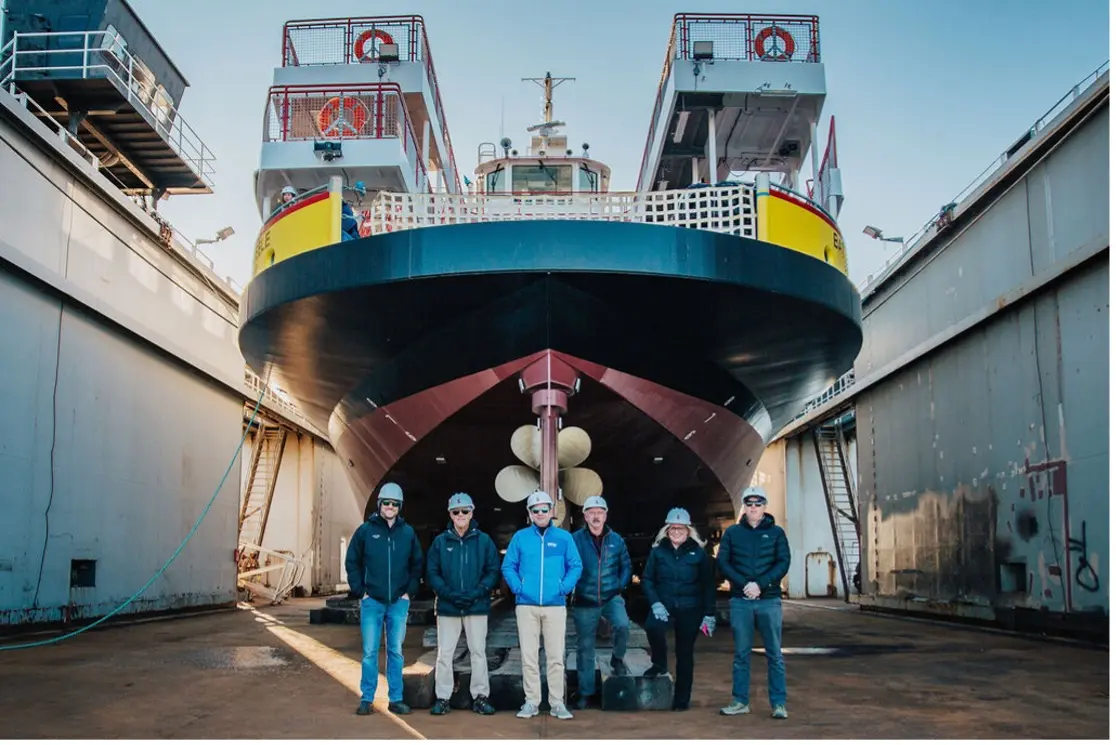
The maritime transportation landscape of the American Northeast is undergoing a quiet, yet profound, transformation. In the waters of the Atlantic Ocean, a sleek, 164-foot steel vessel is currently making its way northward along the New England coast toward its permanent home in Portland, Maine. This is the Battery Steele—the newest and most technologically advanced addition to the Casco Bay Lines fleet. Representing a monumental milestone for regional public transit, this highly anticipated ferry is poised to redefine standards for environmental stewardship, passenger comfort, and operational efficiency within the island communities of Casco Bay.
Scheduled to officially enter service this fall following a thorough phase of final commissioning, regulatory inspection, and comprehensive crew training, the Battery Steele will primarily service the vital commuter and tourist route between downtown Portland and Peaks Island. Once operational, it will step into the shoes of the dependable Machigonne II, a stalwart of the fleet, ushering in a new era defined by sustainability and modern engineering.
What sets the Battery Steele apart is not merely its aesthetic design or its role as a lifeline for island residents, but its pioneering propulsion system. As one of the very first public passenger ferries in the United States to utilize a cutting-edge diesel-electric hybrid system driven by advanced battery technology, the vessel stands as a beacon of progress. It demonstrates that heavy marine transport can successfully pivot away from conventional mechanical diesel systems without sacrificing reliability. By cutting up to 800 metric tons of carbon dioxide emissions annually, the Battery Steele is not just a mode of transportation; it is a floating testament to the future of eco-conscious maritime engineering, offering a cleaner, quieter, and more sustainable ride across the storied waters of Casco Bay.
Detailed Chronology: From Rhode Island Shipyards to the Atlantic Seaboard
The journey of the Battery Steele is a story of meticulous planning, expert naval architecture, masterful shipbuilding, and a carefully choreographed maritime transit. The project, which falls under the broader umbrella of the Casco Bay Lines Fleet Evaluation Project, has spent years on the drawing boards before taking physical shape.
Blueprint to Reality: Design and Construction
The genesis of the vessel began with careful conceptualization and design by the renowned naval architecture firm Elliott Bay Design Group. Tasked with creating a vessel that could handle the rigorous year-round demands of Casco Bay while drastically reducing environmental impacts, the designers integrated state-of-the-art hybrid architecture into a robust, 164-foot steel hull.
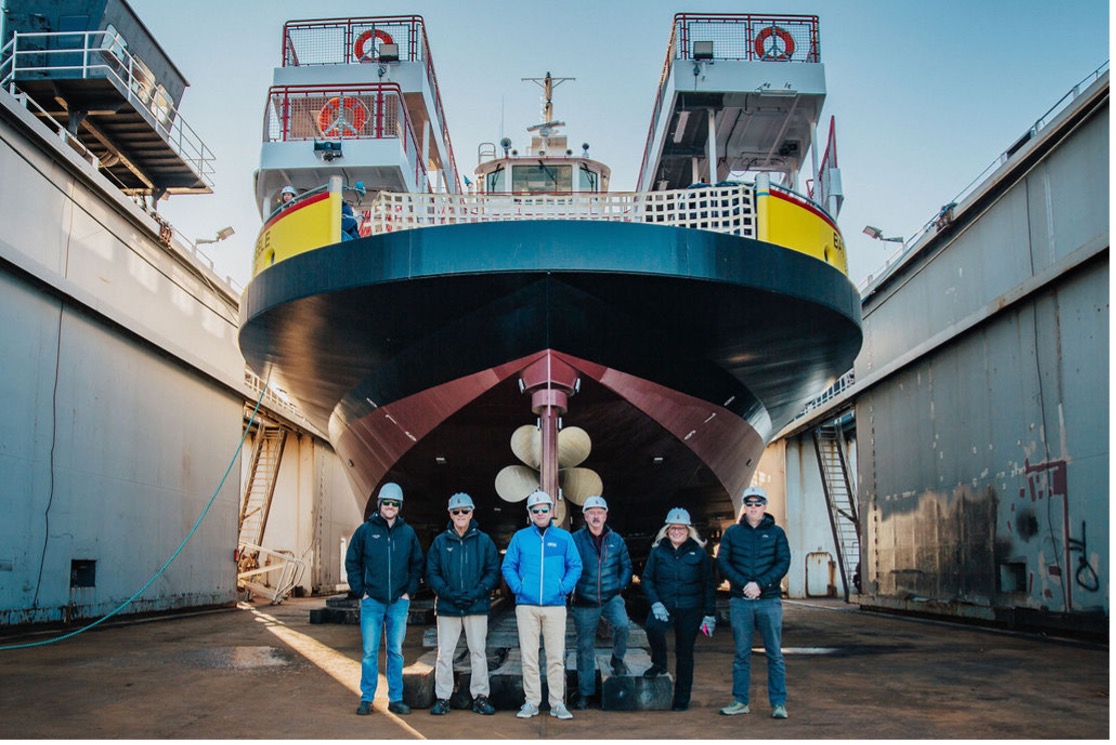
Construction was awarded to Senesco Marine, a premier shipbuilding facility located in North Kingstown, Rhode Island. Over months of intensive labor, skilled shipwrights, marine engineers, and technicians welded steel, installed complex electrical grids, and integrated the vessel’s sophisticated propulsion machinery.
The Milestone Launch in North Kingstown
The culmination of this rigorous construction phase arrived in early April, marked by a time-honored maritime tradition. Representatives from Casco Bay Lines traveled to Rhode Island to witness the vessel’s official launch. In a celebratory ceremony steeped in maritime heritage, a bottle of champagne was broken against the hull of the Battery Steele, formally welcoming the ship into existence and wishing her safe voyages in the years to come.
The Voyage North and Immediate Next Steps
Following its christening and initial dockside trials, the Battery Steele has now cast off from Rhode Island, entering the open waters of the Atlantic Ocean. Its current transit involves navigating the coastal waters of New England—a scenic and symbolic journey as the vessel sails closer to the community it was explicitly built to serve.
Upon its arrival in Portland later this summer, the vessel will transition into its final pre-service phase. This critical window will involve:
- Shoreside Integration: Testing and synchronizing the vessel’s battery management systems with the newly configured charging infrastructure at the Portland terminal.
- Regulatory Commissioning: Completing comprehensive safety, stability, and US Coast Guard inspections.
- Crew Training: Equipping captains, engineers, and deckhands with the specialized training required to operate a complex diesel-electric hybrid propulsion plant safely and efficiently.
If all goes according to schedule, commuters, locals, and visitors will step aboard the Battery Steele for their daily travels this autumn.
Supporting Context & Metrics: Engineering a Sustainable Marvel
To truly appreciate the significance of the Battery Steele, one must examine the technological machinery humming beneath its decks and the environmental mathematics that justify its creation.
Inside the Diesel-Electric Hybrid Propulsion System
Traditional passenger ferries rely on conventional diesel-mechanical propulsion, where diesel engines directly turn the shafts and propellers. While reliable, this setup generates continuous, heavy emissions, distinct diesel exhaust odors, and considerable mechanical vibration and noise.
The Battery Steele discards this outdated paradigm in favor of a sophisticated diesel-electric hybrid architecture:
- Primary Battery Operation: For the vast majority of its daily route between Portland and Peaks Island, the vessel will draw power directly from high-capacity marine-grade lithium-ion battery banks stored onboard.
- Shoreside Fast Charging: While docked at the Portland terminal, the vessel will plug into high-voltage shoreside charging infrastructure, replenishing its energy stores using electricity from the grid. This allows the ferry to complete its runs with zero tailpipe emissions during operation.
- Onboard Backup Generators: To ensure absolute year-round reliability—regardless of grid fluctuations, extreme weather, or extended operational hours—the vessel features efficient, modern backup diesel generators. These generators can provide supplemental power or recharge the batteries underway when necessary.
Environmental Impact and Emissions Reductions
The environmental metrics associated with the Battery Steele are both impressive and necessary for municipalities aiming to meet aggressive climate goals. According to projected operational data, the vessel’s hybrid-electric configuration is expected to prevent up to 800 metric tons of carbon dioxide ($CO_2$) emissions annually.
To put this figure into perspective, removing 800 metric tons of $CO_2$ from the atmosphere is roughly equivalent to:
- Taking nearly 170 passenger vehicles off the road for an entire year.
- The carbon sequestered by nearly 1,000 acres of US forests in a single year.
Beyond greenhouse gases, the transition away from continuous diesel combustion yields immediate local benefits. Passengers and residents living near the waterfront will experience a significantly quieter ride, as electric motors produce a fraction of the acoustic noise generated by traditional large diesel engines. Furthermore, particulate matter and sulfur oxide emissions in the immediate harbor environment will plummet, improving air quality for both passengers and the downtown Portland shoreline.
Architectural Harmony: Honoring the Past
While the engineering of the Battery Steele firmly plants Casco Bay Lines in the 21st century, its name pays deep, resonant homage to local history.
The vessel is named after Battery Steele, the historic former military installation located on Peaks Island. Constructed during World War II as one of the largest gun batteries in the United States, the massive concrete fortification was designed to protect the Portland harbor from potential naval attacks. Though it never fired a shot in anger during wartime, the installation became a monumental fixture of the island landscape.
Decades after its military abandonment, the site underwent a dramatic transformation. Thanks to dedicated preservation efforts that began in the 1990s by local organizations and community advocates, the former fortress shed its martial aura to become a cherished public space. Today, Battery Steele stands as a sanctuary for outdoor exploration, historical reflection, and community connection.
By naming their newest vessel after this iconic landmark, Casco Bay Lines bridges generations. The name reflects a core philosophy: honoring the deep-rooted heritage and resilience of the Casco Bay community while boldly embracing a sustainable, forward-thinking future.
Official Statements and Industry Significance
The introduction of the Battery Steele has sent ripples through the regional and national maritime community, positioning Casco Bay Lines as an undeniable leader in sustainable public transportation.
Maritime analysts and public transit advocates have closely monitored the project, noting that transitioning heavy-use passenger and vehicle ferries to hybrid-electric power is one of the most challenging hurdles in the green maritime transition. Ferries require high torque, immense reliability, rapid turnaround times at docks, and the capacity to handle heavy vehicular payloads in unpredictable coastal weather.
By partnering with Elliott Bay Design Group and Senesco Marine, Casco Bay Lines ensured that the vessel’s theoretical efficiency did not compromise its practical utility. Naval architects optimized the hull design to maximize hydrodynamic efficiency, ensuring that the battery power expended translates into maximum operational range per charge.
Leadership at Casco Bay Lines has emphasized that the Battery Steele is not merely an isolated capital improvement project, but a foundational blueprint for the future. As regulatory pressures mount and municipal climate action plans take center stage, ferry systems across the United States—from the Pacific Northwest to the Great Lakes and the Gulf Coast—are looking to Portland, Maine, as a living laboratory for successful green technology integration.
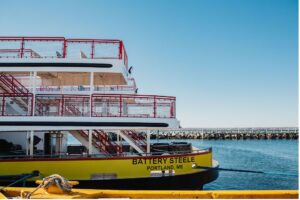
When the vessel officially joins the active fleet this autumn, it will carry far more than the daily influx of commuters, school children, tourists, and service vehicles; it will carry the collective ambition of a regional transit authority proving that public infrastructure and ecological preservation can work in seamless harmony.
Future Outlook: The Road Ahead for Casco Bay Lines
As the Battery Steele continues its historic journey up the Atlantic seaboard toward Portland Harbor, stakeholders are already looking toward the horizon. The arrival of the vessel marks the completion of a major milestone, but it also signals the beginning of a new chapter for Casco Bay Lines and the communities it serves.
Fleet Modernization and Expansion
The retirement of the Machigonne II once the Battery Steele is fully commissioned represents a generational turnover in the fleet. For decades, older diesel vessels have faithfully served the Peaks Island corridor. However, as maintenance costs rise and environmental standards tighten, the introduction of the Battery Steele establishes a new benchmark for what island residents can expect from their public transit provider.
The success of this project is expected to pave the way for broader evaluations of the remaining Casco Bay Lines fleet. Insights gained from the operation, maintenance, and charging cycles of the Battery Steele will inform future fleet modernization strategies. Should the hybrid-electric model perform up to or beyond expectations—as current modeling suggests it will—similar green technologies could eventually find their way into future vessel acquisitions servicing other islands in the bay, such as Chebeague, Long Island, Great Diamond, and Little Diamond.
Community Integration and Passenger Experience
When regular service commences this fall, passengers stepping onto the Battery Steele will notice an immediate upgrade in their daily commute. Beyond the environmental benefits, the modern interior layouts, enhanced accessibility features, improved passenger amenities, and whisper-quiet electric cruising will radically elevate the ferry-riding experience.
For the Peaks Island community—a vibrant, tight-knit enclave that deeply values its natural surroundings—having a zero-emission (in operation) ferry servicing their shores is the ultimate alignment of community values and public utility.
A Call to Action and Continued Engagement
Casco Bay Lines remains committed to transparency and community involvement as the project enters its final home stretch. Residents, frequent travelers, and maritime enthusiasts interested in tracking the final stages of the vessel’s preparation are encouraged to visit the official Fleet Evaluation Project page on the Casco Bay Lines website. There, the public can access detailed architectural breakdowns, construction photo galleries, and continuous updates regarding the commissioning timeline.
As the Battery Steele rounds Cape Cod and sets its sights on the Gulf of Maine, it brings with it a message of innovation, resilience, and hope. Casco Bay has always been defined by its deep connection to the water; with the arrival of this revolutionary hybrid ferry, that connection is healthier, cleaner, and brighter than ever before.