









By the Environmental & Travel Desk
Published: October 2023
Executive Overview
In an era defined by hyper-urbanization, digital connectivity, and the relentless hum of metropolitan life, the human psyche increasingly yearns for sanctuary. While England is globally celebrated for its sprawling national parks and dramatic coastal vistas, the daily commute rarely affords city dwellers the hours required to reach the Lake District or the Yorkshire Dales. For residents anchored in the bustling hubs of Liverpool, Blackpool, and Manchester, the quest for a genuine wilderness experience has historically demanded compromise.
Enter the Mere Sands Wood Nature Reserve—a 106-acre oasis of dense woodlands, placid lakes, and thriving biodiversity situated squarely in Lancashire. Just a one-hour drive from major urban centers, this protected sanctuary offers a masterclass in ecological restoration. Once scarred by industrial-scale silica sand quarrying, the land has undergone a remarkable metamorphosis, reclaiming its status as a haven for rare wildlife, botanical wonder, and human respite.
This investigative feature explores the intricate history, logistical accessibility, rich biodiversity, and ongoing conservation efforts that make Mere Sands Wood a blueprint for modern rewilding. Far from a mere patch of green space, the reserve represents a vital ecological corridor bridging urban populations with the raw, untamed beauty of the English countryside.
Detailed Chronology: From Ancient Waters to Industrial Extraction and Ecological Rebirth
To fully appreciate the serene ambiance of Mere Sands Wood today, one must look backward through the strata of time. The landscape’s current topography is the result of thousands of years of geological evolution, human intervention, and eventual conservation triumph.
Pre-Industrial Origins and Martin Mere
Centuries ago, the geography of this region was dominated by Martin Mere, historically recognized as the largest inland freshwater lake in England. Fed by local river systems and providing an abundant wetland ecosystem, Martin Mere was a haven for vast flocks of migratory waterfowl and a cornerstone of local biodiversity.
However, as agricultural demands shifted and human populations expanded throughout the eighteenth and nineteenth centuries, large swaths of the original mere were systematically drained to create fertile farmland. The footprint of this ancient aquatic giant still ghosts the local topography, influencing the water tables and soil compositions that sustain modern reserves like Mere Sands Wood.

The Era of Industrial Extraction
During the mid-to-late 20th century, the land that now constitutes the nature reserve entered an industrial chapter. The area was heavily mined for silica sand—a high-purity resource essential for glass manufacturing, foundry work, and construction. Heavy machinery stripped away the native topsoil, felled ancient stands of timber, and excavated deep, sterile pits into the earth.
Ecologically, the extraction process was catastrophic. The complex web of flora was obliterated, native fauna was displaced, and the water table was radically altered. By the time commercial mining operations concluded, the landscape was left scarred by open, industrial water pits surrounded by barren earth. Left to nature alone, recovery would have taken centuries. Instead, visionary conservation planning stepped in to redirect the land’s destiny.
The Lancashire Wildlife Trust Intervention
The turning point for the site arrived when the The Wildlife Trust for Lancashire, Manchester and North Merseyside (commonly known as the Lancashire Wildlife Trust) recognized the latent ecological potential of the abandoned sand quarries. Acquiring the land, the Trust initiated an ambitious, multi-decade restoration project.
Rather than attempting to erase the scars of industry entirely, conservationists worked with the newly formed topography. The steep-sided sand extraction pits were allowed to fill naturally with rainwater and groundwater, transforming them into deep, clear lakes. Native broadleaved trees were planted systematically to accelerate forest regeneration, while wetland margins were contoured to encourage the return of aquatic plants.
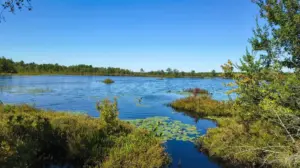
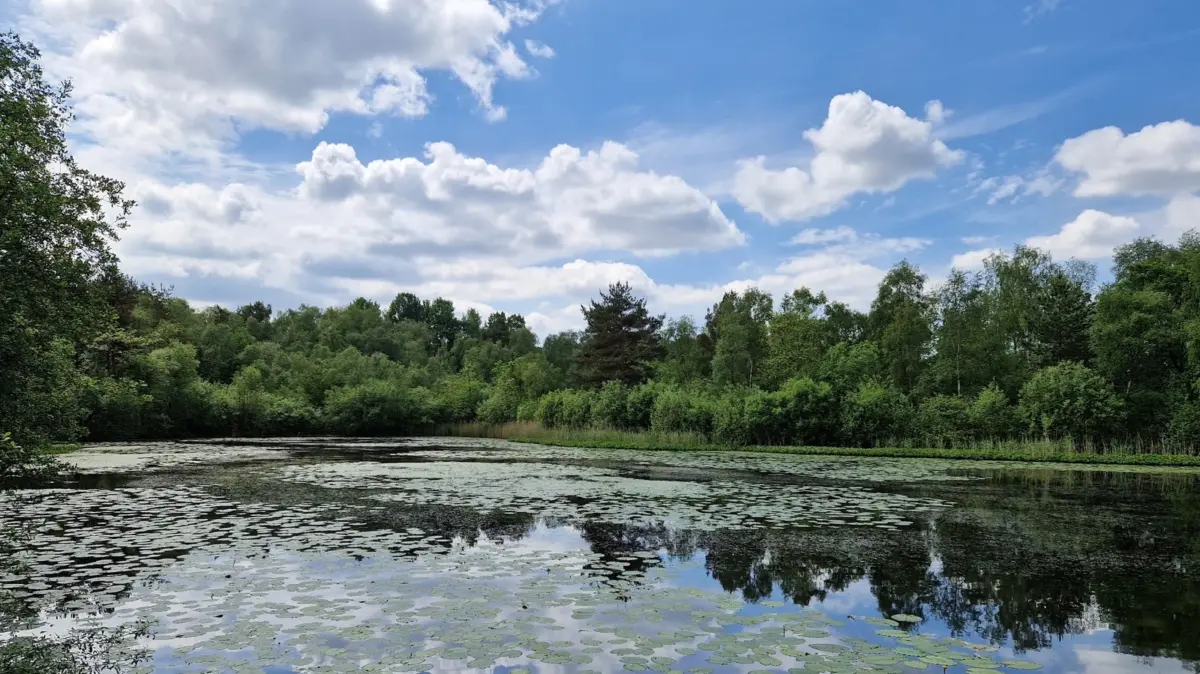
Over the decades, natural succession took hold, supercharged by active habitat management. Today, the industrial past is virtually undetectable to the casual observer. The steep quarry drop-offs have softened into verdant slopes, and the water bodies are choked not with industrial runoff, but with thick blankets of water lilies and teeming populations of freshwater fish. Mere Sands Wood stands as a shining testament to the efficacy of post-industrial ecological reclamation.
Supporting Context & Metrics: Logistics, Accessibility, and Infrastructure
A wilderness area is only as valuable as its accessibility to the public it seeks to serve. Mere Sands Wood strikes a delicate balance between welcoming human visitors and protecting sensitive wildlife habitats through thoughtful, low-impact infrastructure.
Geographic Proximity and Transit Metrics
Strategically positioned in Lancashire, the reserve acts as a natural pressure valve for surrounding urban density:
- From Blackpool: Approximately a 45-to-60-minute drive south, making it an ideal half-day trip for coastal residents looking to trade the sea breeze for the scent of pine and damp earth.
- From Liverpool: Roughly a one-hour drive north. For urbanites seeking an alternative to London’s chaotic pace, Liverpool’s proximity to such unblemished natural escapes offers a profound lifestyle advantage.
- From Manchester Airport (MAN): An effortless one-hour drive, positioning the reserve as a viable first or final stop for international ecotourists flying into northwest England.
Arrival and Visitor Facilities
Upon arrival, visitors are greeted by a modest parking fee system that directly funds ongoing conservation efforts on the site. For frequent visitors, annual parking passes are available through the Lancashire Wildlife Trust, ensuring that local nature enthusiasts can integrate the reserve into their weekly routines without financial friction.
The centerpiece of the visitor infrastructure is a welcoming visitor center, equipped with modern amenities:
- Restrooms and Vending: Providing essential comforts for families and hikers before or after hitting the trails.
- On-Site Gift Shop and Cafe: Offering light refreshments to stave off hunger after a long trek, alongside environmentally themed trinkets and local crafts that financially support the reserve.
- Accessibility Initiatives: Nearly all walking pathways within the reserve have been meticulously engineered to be fully accessible for wheelchair users, strollers, and those with mobility impairments. Nature, in this instance, is designed to be inclusive.
The Trail Network: Immersive Routes Through Wood and Water
Mere Sands Wood is organized around a network of short, manageable, and exceptionally scenic trails. Because the terrain is generally flat and well-maintained, hikers of all physical fitness levels can explore the reserve without fear of strenuous exertion.
1. The Mere Sands Heath Lake Circular (Western Sector)
Clocking in at just over one mile, this trail focuses primarily on the western half of the reserve and its dramatic water features.
- The Route: The path guides walkers along the perimeter of Heath Lake, a direct legacy of the old silica sand quarries.
- The Experience: Walkers are treated to uninterrupted views of placid, mirror-like water surfaces framed by overhanging birch and willow trees. Mallards glide effortlessly across the surface, entirely unbothered by human spectators. The trail provides an intimate look at how industrial scars can mature into breathtaking aesthetic assets.
2. The Mere Sands Wood Nature Reserve Circular (Eastern Sector)
Covering the eastern half of the reserve, this one-mile loop shifts the sensory emphasis from open water to deep, immersive forest bathing.
- The Route: Hikers traverse paths blanketed by a lush underbrush of ferns, bracketed overhead by a soaring canopy of mature deciduous and evergreen trees.
- Key Features: The trail features strategically placed wooden viewing platforms extending over the water’s edge, as well as enclosed bird hides. These hides allow amateur naturalists and professional ornithologists alike to sit in absolute silence, observing avian life at close quarters without causing disturbance.
3. The Mere Sands Wood Loop (The Complete Circuit)
For those desiring a comprehensive immersion, the two-mile Mere Sands Wood Loop circumnavigates the entirety of the reserve.
- Dog-Friendly Policy: Leashed dogs are permitted on this loop, making it a favorite for local canine owners.
- Seasonal Transformation: The loop offers a dynamic sensory experience that shifts dramatically with the calendar:
- Spring and Summer: The forest floor erupts into a dynamic tapestry of native wildflowers, while the lakes buzz with dragonflies and damselflies.
- Autumn: The canopy transitions into a rich palette of gold, rust, and amber, accompanied by a staggering variety of fascinating fungi, mushrooms, and intricate lichens carpeting decaying logs.
Biodiversity and Wildlife Metrics: An Ecological Hotspot
Despite its relatively compact footprint of 106 acres, Mere Sands Wood punches far above its weight class in terms of ecological richness. The convergence of mature woodland, deep-water lakes, and managed wetlands creates overlapping microhabitats that attract an astonishing array of flora and fauna.
Avian Abundance: Over 170 Species Recorded
For birdwatchers, Mere Sands Wood is nothing short of a paradise. The reserve has documented over 170 distinct bird species utilizing its airspace, waters, and forests.
- Common Residents: Mallards, Tufted Ducks, and Great Cormorants are ubiquitous fixtures of the lakes.
- Courtship Displays: Spring visitors frequently bear witness to the hypnotic, synchronized courtship dance of the Great Crested Grebe as pairs glide across the water in an intricate mating ritual.
- Coastal Visitors: Black-headed Gulls regularly commute inland from nearby coastal havens such as Southport, injecting a touch of maritime energy into the freshwater ecosystem.
- Specialist Species: Kingfishers flash like sapphire streaks along the water margins, hunting small fish with lightning speed, while the secretive and heavily camouflaged Bittern occasionally makes a rare, prized appearance among the reed beds.
Mammalian Residents and Nocturnal Life
While birds dominate the daytime atmosphere, the reserve’s mammalian populations offer quiet thrills for the observant visitor:
- Red Squirrels: Unlike the aggressive gray squirrels that have dominated much of the English mainland, specific conservation zones and woodland management practices provide a secure stronghold for native red squirrels, which can occasionally be spotted leaping agilely between pine branches.
- Water Voles: These shy, endangered semi-aquatic rodents find a vital refuge along the reserve’s undisturbed ditch banks and lake edges—reminiscent of the rare habitats found along England’s southern coasts.
- Roe Deer and Foxes: Cautious roe deer utilize the deep cover of the woods for shelter, while red foxes silently navigate the underbrush during twilight hours, safe from the pressures of hunting.
- Bats and Moths: As dusk descends, a specialized bat roost comes alive. Visitors lingering into the evening hours are treated to the aerial acrobatics of multiple bat species emitting high-frequency sonar chirps to capture flying insects. Simultaneously, the night shift of moths unfurls, displaying breathtaking, complex wing patterns that rival any butterfly in visual complexity.
Future Outlook: Conservation Challenges and Long-Term Preservation
As Mere Sands Wood looks toward the future, its continued success relies on adaptive management, community engagement, and rigorous ecological stewardship by the Lancashire Wildlife Trust.
Combating Climate Change and Habitat Fragmentation
Modern nature reserves do not exist in a vacuum. Changing weather patterns, characterized by increasingly erratic rainfall and prolonged summer heatwaves, pose subtle threats to the water levels of the reserve’s artificial lakes. Conservationists are actively monitoring hydrological data to ensure that water retention strategies remain robust, safeguarding both aquatic species and lakeside flora against drought conditions.
Furthermore, as urban sprawl continues to nibble at the edges of Lancashire’s green belts, maintaining ecological corridors is paramount. Ensuring that wildlife can safely move between Mere Sands Wood and neighboring green spaces prevents genetic stagnation among animal populations and secures long-term biodiversity.
Education and Community Science
A core pillar of the reserve’s future strategy involves expanding its educational outreach. By partnering with local schools, universities, and community groups, Mere Sands Wood serves as an outdoor laboratory. Programs focused on citizen science—such as bird-counting initiatives, moth trapping evenings, and fungal surveys—actively enlist the public in monitoring the health of the ecosystem.
This hands-on engagement fosters a deep-seated generational commitment to environmental conservation. When children and adults alike witness the recovery of an industrial sand quarry into a thriving, multi-species paradise, they carry that lesson of environmental hope back into their daily urban lives.
Conclusion
Mere Sands Wood Nature Reserve is far more than a convenient weekend diversion for the residents of Liverpool, Blackpool, and Manchester. It is a living, breathing monument to resilience—a place where the ravages of industrial extraction have been systematically undone by human care, patience, and ecological science.
Whether one seeks the therapeutic silence of a fern-drenched woodland path, the quiet tension of waiting in a bird hide for a kingfisher to strike, or simply a safe space to walk a leashed dog beneath an autumnal canopy, Mere Sands Wood delivers. It stands as a vital reminder that nature is never truly gone for good; given the right stewardship, it is always ready to return, waiting just an hour down the road.