







Executive Overview
The Ports of Stockholm has officially unveiled its financial and operational performance data for the first half of 2026, revealing an impressive, unblemished trajectory of positive growth across every single cargo segment. Amidst a complex macroeconomic backdrop characterized by lingering supply chain adjustments, geopolitical friction, and shifting global trade routes, Sweden’s primary maritime hub has managed to outperform expectations. Compared to the corresponding period in 2025, the port authority noted substantial volume increases spanning containers, bulk cargo, roll-on/roll-off (RoRo) ferry-borne freight, and intermodal rail transport.
This broad-based surge highlights the critical role that the Ports of Stockholm plays in regional supply chain security, economic vitality, and environmental sustainability. Most notably, containerized traffic experienced a double-digit leap, while rail-borne freight achieved historic milestones even before the close of the reporting cycle. Industry analysts attribute this sustained upward momentum to a combination of systemic efficiency gains, strategic long-term infrastructure investments—most notably the integration of advanced warehousing at Stockholm Norvik Port—and a deliberate corporate shift toward modal shift initiatives that favor maritime and rail transport over congested road networks.
As metropolitan Stockholm continues to expand rapidly, placing unprecedented demands on local logistics networks, the performance of the port serves as a vital economic barometer. This report provides an exhaustive, multi-dimensional analysis of the Ports of Stockholm’s performance in H1 2026, dissecting the primary drivers behind the numbers, evaluating the leadership perspective, contextualizing recent capital expenditures, and projecting the long-term outlook for the Baltic Sea trade corridor.
Detailed Chronology: The Road to H1 2026 Performance
To fully understand the weight of the figures recorded in the first half of 2026, it is necessary to examine the foundational steps and sequential developments that set the stage for this operational milestone. The success observed in 2026 is not an isolated phenomenon; rather, it is the cumulative result of strategic planning, phased infrastructure rollouts, and targeted investments executed over preceding years.
The Foundation: Late 2024 to Mid-2025
Throughout late 2024 and the first half of 2025, the Ports of Stockholm focused heavily on resolving capacity bottlenecks and improving turnaround times for cargo vessels. Global supply chains were still adapting to post-pandemic normalization and emerging environmental regulations enforced by the International Maritime Organization (IMO). Recognizing the necessity to future-proof its facilities, port management prioritized the integration of digital port community systems, streamlining customs declarations, and enhancing intermodal connectivity.
During this phase, stakeholder discussions frequently centered on how to draw more cargo away from long-distance European trucking routes and onto maritime feeder services and rail links. The strategic positioning of Stockholm Norvik Port—designed from its inception to accommodate modern mega-vessels and heavy intermodal traffic—began to yield dividends as cargo owners sought out resilient alternative routes that bypassed congested continental European ports.
The Catalyst: September 2025 Infrastructure Milestone
A pivotal moment in the chronology leading directly to the 2026 surge occurred in September 2025, when the Ports of Stockholm officially inaugurated a state-of-the-art facility at Stockholm Norvik Port. This multi-functional complex integrated a specialized control point for regulatory authorities with advanced, scalable warehouse management systems.

By centralizing customs inspections, phytosanitary checks, and secure storage under one roof, the port drastically reduced dwell times for imported and exported goods. Shippers could now seamlessly transition containers from vessel to secure storage or rail wagons without navigating fragmented administrative hurdles. This structural upgrade directly enhanced the port’s value proposition, attracting new shipping lines and logistics operators who required guaranteed speed and compliance transparency. Consequently, the groundwork was laid for the exponential volume growth recorded across container and bulk segments as international freight forwarders consolidated their operations through Stockholm.
The H1 2026 Reporting Window
As the calendar turned to 2026, initial operational logs from January through June indicated a departure from the sluggish growth patterns seen in other European maritime regions. While several major European ports reported stagnant or declining volumes due to weakened consumer demand and industrial contraction, the Ports of Stockholm maintained an aggressive upward trajectory.
By the end of the second quarter, compiled data confirmed that growth was not isolated to a single dominant sector, but was instead democratically distributed across the entire portfolio. Containerized freight, heavy bulk commodities, RoRo ferry networks, and rail-associated cargo all registered net gains year-on-year. This synchronized expansion validated the port’s diversified service model, proving its ability to cater simultaneously to high-frequency consumer goods supply chains and heavy industrial manufacturing inputs.
Supporting Context & Metrics: Breaking Down the Numbers
A granular examination of the statistical data released by the Ports of Stockholm for H1 2026 reveals the precise contours of this growth wave. Every metric underscores a structural shift in how goods flow into and out of the greater Stockholm economic region.
+------------------------+-------------------+---------------------------------------+
| Cargo Segment          | H1 2026 Growth    | Key Volume / Milestone Indicators     |
+------------------------+-------------------+---------------------------------------+
| Container Traffic      | +14% YoY          | Significant surge in box handling     |
| Ferry-Borne Freight    | +3.4% YoY         | Reached approx. 3.1 million tonnes    |
| Bulk Cargo             | +6% YoY           | Steady industrial input growth        |
| Rail Wagons            | +17% YoY          | Reached nearly 3,400 wagons (early)   |
+------------------------+-------------------+---------------------------------------+
Containerized Traffic Surge
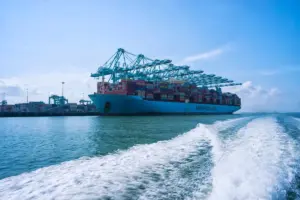
Container traffic recorded a remarkable 14 per cent increase year-on-year, establishing itself as one of the fastest-growing segments within the port’s portfolio. This double-digit expansion reflects both an organic rise in consumer goods imports driven by Stockholm’s expanding population and an increase in export volumes from Swedish forestry, manufacturing, and technology sectors. The ability of the container terminals—particularly at Stockholm Norvik—to efficiently process larger container ships without encountering landside congestion has been a decisive factor in securing market share within the Baltic region.
Ferry-Borne Freight (RoRo) Volumes
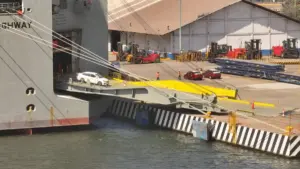
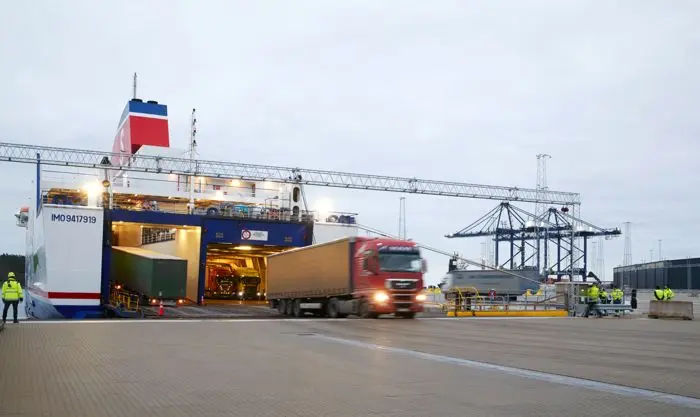
Ferry-borne freight, commonly referred to as Roll-on/Roll-off (RoRo) traffic, demonstrated steady and reliable expansion. Volumes increased by 3.4 per cent, reaching approximately 3.1 million tonnes for the first half of the year. Given that RoRo transport represents the lifeblood of fast-moving consumer goods and time-sensitive industrial components circulating between Sweden, Finland, the Baltic States, and continental Europe, this volume growth highlights resilient consumer purchasing power and stable intra-regional trade relationships. The high frequency of ferry sailings ensures that supply chains remain agile, minimizing the need for excessive localized inventory holding.
Bulk Cargo Expansion
Bulk cargo volumes grew by 6 per cent compared to the same period in 2025. Bulk handling—encompassing construction materials, agricultural products, and industrial raw materials—serves as a direct indicator of domestic economic activity, particularly infrastructure development and housing construction within the Stockholm region. Despite broader economic headwinds affecting the European construction sector, the local demand for bulk inputs has remained robust, driven by ongoing municipal transit projects and urban expansion initiatives.
Intermodal Rail Performance
Perhaps the most striking operational statistic from the H1 2026 report is the performance of rail logistics. The number of rail wagons handled by the port surged by 17 per cent, approaching almost 3,400 units. Crucially, this milestone figure was recorded even before the complete data sets for the final month of the quarter had been fully aggregated and reported.
This surge validates the heavy capital investments made in recent years to expand on-dock rail sidings and connect port terminals directly to Sweden’s national rail network. By removing the equivalent of thousands of heavy trucks from regional highways, the port’s intermodal strategy has successfully combined volume scaling with carbon emission reduction.
Official Statements and Leadership Perspectives
The empirical success of the first half of 2026 has prompted reflection from the executive leadership at the Ports of Stockholm, who emphasize that these metrics are the byproduct of intentional, long-term strategic alignment.
Johan Wallén on Maritime Efficiency and Modal Shift
Johan Wallén, Chief Commercial Officer (CCO) at the Ports of Stockholm, offered a comprehensive assessment of the H1 performance, contextualizing the numbers within the broader framework of sustainable supply chain engineering:
"The positive development in both container and RoRo traffic demonstrates the important role of shipping in supplying goods to the region. Transporting more freight by sea creates the conditions for efficient and sustainable transport flows to and from Stockholm."
Wallén’s remarks underscore a fundamental tenet of modern port management: economic viability and environmental stewardship are no longer mutually exclusive goals. By scaling maritime and rail throughput, the Ports of Stockholm actively mitigates urban traffic congestion, reduces wear and tear on regional road infrastructure, and slashes overall greenhouse gas emissions per tonne-kilometer transported.
Furthermore, the CCO’s emphasis on supply security highlights the strategic importance of maintaining open, high-capacity maritime corridors. In an era where global trade routes are frequently disrupted by geopolitical instability, climate events, and labor disputes, the redundancy and resilience offered by Stockholm’s multi-modal infrastructure provide local businesses with an essential competitive shield.
Future Outlook: Strategic Horizon and Sustainability Goals
As the Ports of Stockholm looks past the midpoint of 2026 and gazes toward the horizon, the focus shifts from celebrating current milestones to cementing long-term structural resilience. The leadership team is acutely aware that sustained growth brings operational challenges, requiring proactive capital allocation and technological modernization.
Scaling Intermodal Capacities
Building upon the 17 per cent increase in rail wagon handling, future infrastructure planning will prioritize further integration between maritime terminals and rail networks. Plans are currently underway to optimize terminal layout designs to allow for longer, heavier block trains, thereby increasing the throughput efficiency of inland freight distribution. This focus on rail, combined with ongoing investments in electric and hybrid cargo-handling equipment, aligns with the municipality’s ambitious goal of achieving fossil-free operations across all port facilities well ahead of national deadlines.
Expanding Digitalization and Automation
The successful integration of the bonded warehouse and authority control point at Stockholm Norvik Port in late 2025 has set a new operational benchmark. Moving forward, the Ports of Stockholm plans to accelerate its digitalization roadmap. By implementing advanced predictive analytics, Internet of Things (IoT) sensor arrays, and automated gate systems, the port aims to further compress vehicle and vessel turnaround times. Digital twin technology is also being evaluated to simulate traffic flows within the port estate in real-time, preemptively identifying potential bottlenecks before they impact cargo owners.
Environmental Compliance and Shore Power
With the European Union tightening maritime emissions regulations—including the expansion of the EU Emissions Trading System (ETS) to the shipping sector—ports must provide the necessary infrastructure to support green vessel operations. The Ports of Stockholm continues to expand its shore-side electricity infrastructure, allowing berthed vessels to shut down their auxiliary diesel engines and plug into local, renewable power grids. This initiative not only reduces local air pollution within the metropolitan airshed but also enhances the port’s attractiveness to environmentally conscious shipping lines seeking to minimize their carbon compliance costs.
Conclusion
The performance of the Ports of Stockholm in the first half of 2026 tells a story of strategic foresight, operational excellence, and unwavering commitment to sustainable logistics. By recording broad-based growth across containers, ferry freight, bulk commodities, and rail transport, the port has cemented its status as an indispensable engine of regional prosperity. Backed by visionary leadership, modern infrastructure like the Stockholm Norvik Port facilities, and an unyielding focus on modal shift efficiency, the Ports of Stockholm is exceptionally well-positioned to navigate future market uncertainties while continuing to power the economic heartbeat of Sweden’s capital region.