







By Blake Aued
Published August 25, 2026
Executive Overview
Across the globe, urban planners and environmental scientists share a remarkably uniform consensus: low-emissions zones (LEZs), ultra-low-emissions zones (ULEZs), and targeted congestion pricing schemes are among the single most effective policy instruments available for reducing vehicle miles traveled (VMT), curbing carbon emissions, and clearing toxic urban air. Empirical evidence from pioneering implementations—most notably London’s congestion charge and its subsequent ULEZ expansion—demonstrates indisputable success in changing commuter behavior, boosting public transit ridership, and mitigating respiratory illnesses linked to particulate pollution.
Yet, despite this sterling track record of empirical success, these policies remain political lightning rods. Elected officials from London to New York, and across various metropolitan hubs in North America and Europe, often shrink from embracing or expanding low-emissions zones. The root cause of this hesitation is not technical or logistical, but intensely political: virulent public backlash.

When drivers are asked to internalize the true social, environmental, and infrastructure costs of automobile usage through tolls or restricted access, the immediate response is frequently populist outrage. This article explores the mechanics behind low-emissions zones, examines the deep political anxieties they trigger, and evaluates what it will take to build durable public acceptance for policies that are vital to the future of sustainable urban transit.
Detailed Chronology: The Evolution and Expansion of Urban Pricing
To understand the current political deadlock surrounding low-emissions zones, it is necessary to trace how these policies evolved from radical urban experiments into sophisticated, data-driven municipal networks.
The Early Experiments (2000–2010)
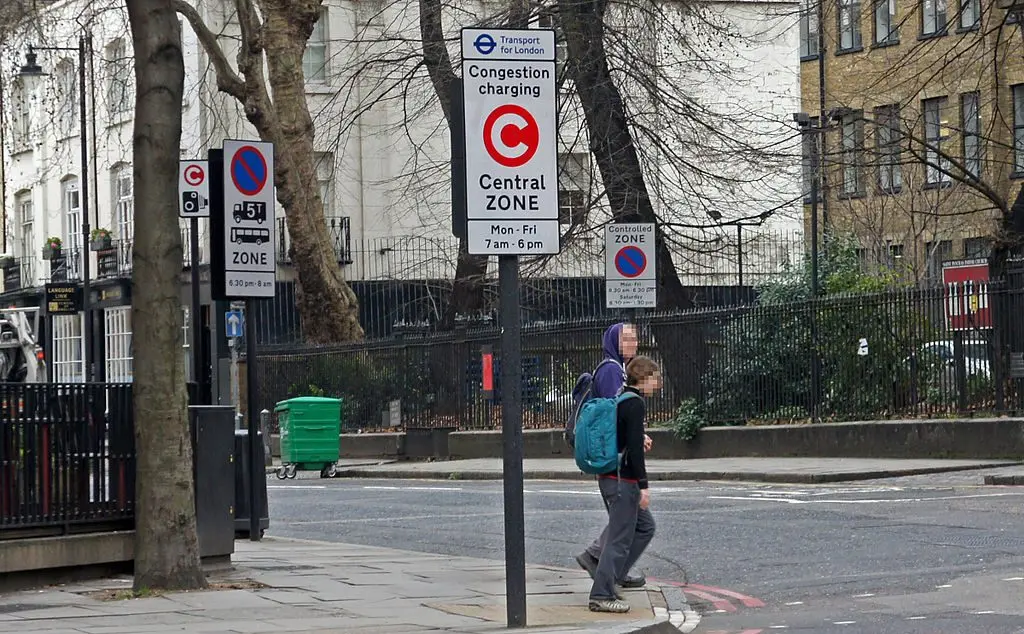
The modern era of congestion pricing and emissions management truly began at the turn of the millennium. Singapore had long operated a successful area licensing scheme, but London’s introduction of its central congestion charge in February 2003 served as the Western blueprint. Under Mayor Ken Livingstone, London levied a flat daily fee on most motor vehicles operating within the designated central zone during peak hours.
Despite initial skepticism, fierce protests, and predictions of economic doom from local businesses, the policy immediately achieved its primary goals. Traffic congestion dropped precipitously, bus speeds increased, and millions of pounds in revenue were funneled directly back into the city’s public transport network. Stockholm followed suit with a permanent congestion tax system in 2007, proving that public referendums could be won if the revenues were demonstrably tied to transit improvements.
The Shift to Emissions-Based Restrictions (2010–2020)
As scientific understanding of particulate matter ($PM_2.5$) and nitrogen dioxide ($NO_2$) toxicity advanced, cities realized that reducing sheer vehicle volume was only half the battle. They also needed to purge the most polluting vehicles from urban cores.
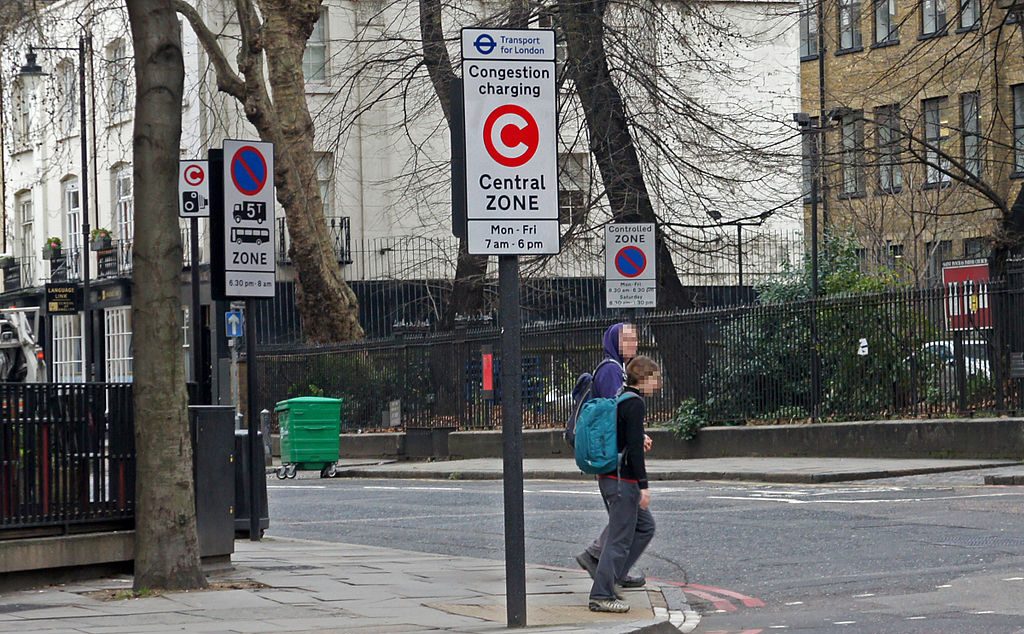
European cities pioneered Low-Emissions Zones (LEZs), where older diesel and high-emission petrol vehicles were banned outright or heavily penalized. London raised the stakes dramatically with the rollout of its Ultra Low Emission Zone (ULEZ) in 2019, which operated 24 hours a day, 365 days a year, charging drivers of non-compliant vehicles a steep daily fee. Similar frameworks proliferated across Germany, Italy, and France, transforming urban traffic management from a purely fiscal tool into an explicit public health mandate.
The Global Reckoning and Current Landscape (2020–2026)
By the mid-2020s, the debate had crossed the Atlantic with renewed urgency. Cities in North America—long defined by car-centric urban planning—began seriously evaluating cordon pricing and low-emissions frameworks to meet aggressive climate targets and fund crumbling mass transit infrastructure.
However, as these plans moved from theoretical whitepapers to legislative agendas, they encountered fierce resistance. The recent spotlight on London’s ULEZ expansion up to the capital’s outer boundaries demonstrated both the immense environmental yields of scaling the policy and the volatile political backlash it could unleash. Today, urban leaders find themselves caught in a high-stakes standoff between the undeniable scientific necessity of low-emissions zones and the immediate electoral perils of enacting them.
Supporting Context & Metrics: The Science and Economics of VMT Reduction
The argument for low-emissions zones rests on a mountain of quantitative data. When properly designed, these policies alter travel behavior in ways that traditional infrastructure expansion—such as highway widening—can never hope to achieve.
Impact on Vehicle Miles Traveled (VMT) and Traffic Speeds
Recent meta-analyses of cordon pricing and LEZs highlight their superior efficiency as VMT reduction strategies. London’s original congestion charge instantly reduced traffic entering the charging zone by roughly 15 to 20 percent, while simultaneously smoothing out traffic flow. When vehicles move at consistent, moderate speeds rather than sitting in endless idle stop-and-go traffic, tailpipe emissions drop exponentially.
Furthermore, economic studies confirm that charging for road space shifts commuters away from single-occupancy vehicles (SOVs) and toward high-capacity alternatives. Public transit networks, commuter rail, and active transportation modes (cycling and walking) absorb the displaced commuters, creating a positive feedback loop that justifies further investment in sustainable mobility.
Public Health Dividends
The health argument for low-emissions zones is perhaps their most bulletproof feature. Urban air pollution is a silent crisis, linked directly to cardiovascular disease, asthma, developmental issues in children, and premature mortality.
Data gathered following the implementation of strict European LEZs reveals rapid, measurable improvements in air quality:

- Reduction in $NO_2$ Levels: Concentrations of nitrogen dioxide routinely drop by 20 to 40 percent within months of a zone’s activation.
- Drop in Particulate Matter: Fine particulate matter, which penetrates deep into human lungs and bloodstreams, sees sustained downward trends.
- Hospital Admissions: Pediatric and geriatric admissions for respiratory distress consistently decline in neighborhoods adjacent to well-enforced low-emissions zones.
The Equity Equation
Critics often attack low-emissions zones as "regressive taxes" that disproportionately harm low-income drivers who cannot afford brand-new electric or hybrid vehicles. However, comprehensive demographic studies reveal a more nuanced reality: lower-income urban residents are actually the least likely to own cars and the most likely to rely on walking, cycling, and public transit. Consequently, they reap the immediate health and safety benefits of cleaner air and faster bus routes.
To address legitimate equity concerns, successful jurisdictions pair their LEZ policies with robust scrappage schemes—financial incentives that allow lower-income households to trade in polluting vehicles for transit passes, electric bicycles, or cleaner cars.
Official Statements and Political Realities
The chasm between policy success and political courage is starkly illustrated by the rhetoric surrounding low-emissions zones. While urban planners present charts showing plummeting pollution levels, politicians look at opinion polls and see electoral peril.
The Voices of Urban Planners and Advocates
Proponents of low-emissions zones argue that the status quo—subsidizing unlimited, polluting car travel through free public parking and unpriced roads—is economically and environmentally unsustainable.
"We have mountains of empirical data proving that low-emissions zones alter travel behavior, clear the air, and save lives," notes urban policy researcher Dr. Elena Vance. "The science is settled. The real crisis is political cowardice. Politicians are treating public health policies like trial balloons, ready to cut them loose the moment a vocal special interest group or tabloid newspaper manufactures outrage."
Advocacy groups like Streetsblog have long pointed to international models, such as London, Stockholm, and Singapore, as proof that Americans and Western citizens can adapt to pricing mechanisms—provided the political leadership is willing to weather the initial storm and clearly communicate where the money goes.
The Anatomy of Political Retuctance
Conversely, elected officials facing re-election often view low-emissions zones through the lens of self-preservation. Implementing a toll or restricting vehicle access touches a deeply emotional nerve in car-dependent societies where driving is viewed not as a utility, but as an inalienable right.
Populist opponents frequently frame these policies as a "war on the motorist" orchestrated by out-of-touch urban elites. This rhetoric resonates powerfully with suburban commuters who work in cities but live outside tax jurisdictions, as well as blue-collar workers who rely on commercial vans and older vehicles for their livelihoods.

Fearing backlash at the ballot box, moderate and conservative politicians—and occasionally progressive ones lacking a secure majority—routinely dilute, delay, or outright cancel proposed LEZ and congestion pricing projects. They calculate that the long-term, invisible benefits of clean air and reduced traffic cannot compete with the immediate, visceral anger of drivers forced to pay an extra fee for their daily commute.
Future Outlook: What Will It Take for Broad Acceptance?
As global temperatures continue to break records and urban congestion chokes metropolitan productivity, cities cannot afford to abandon low-emissions zones. The question is no longer whether these policies work, but how modern democracies can build enduring public coalitions to support them.
1. Radically Transparent Revenue Recyling
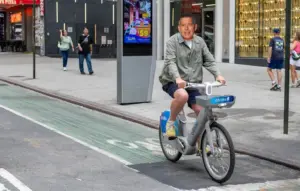
Public skepticism often stems from the suspicion that congestion charges and LEZ fines are merely covert tax grabs designed to fill municipal coffers. To overcome this, cities must implement ironclad legislative guarantees that 100 percent of net revenues are ring-fenced for public transit improvements, sidewalk expansion, bike infrastructure, and direct tax relief for working-class residents. When citizens can step off a congested road and onto a free, modern, electric bus funded by the very toll they just paid, the psychological resistance begins to dissolve.
2. Phased Implementation and Generous Transition Support
Shock therapy rarely works in democratic politics. Successful rollout strategies often utilize a phased approach:
- Announcing zones years in advance.
- Introducing introductory or discounted pricing tiers.
- Providing generous, accessible scrappage grants and targeted exemptions for essential service vehicles, caregivers, and low-income residents.
By softening the initial blow and demonstrating empathy for vulnerable populations, cities can neutralize the most effective arguments wielded by political opponents.
3. Reframing the Narrative: Freedom from Car Dependency
Ultimately, winning the political battle requires reframing what "freedom" means in an urban environment. Car-centric policies do not create freedom; they create perpetual gridlock, parking scarcity, high personal debt, and dangerous streets that restrict the independence of children and the elderly.
Low-emissions zones, by contrast, liberate urban space from the tyranny of the private automobile. They return streets to people, quiet neighborhoods, accelerate commutes via rapid transit, and restore the human right to breathe clean air.
For politicians willing to look past the next election cycle, low-emissions zones offer a legacy of healthier, more vibrant, and truly sustainable cities. The tools are proven, the metrics are clear—now, it is a matter of summoning the political will to use them.