The geopolitical landscape of the Middle East stands at a critical juncture as the United States and Iran navigate a highly volatile mix of economic warfare, backchannel diplomacy, and active maritime conflict. Six months into a devastating war that began in February 2026 with joint U.S. and Israeli airstrikes on Iranian territory, Washington has deployed a new round of targeted financial sanctions. Unveiled by U.S. Treasury Secretary Scott Bessent, these measures aim to further isolate the Iranian economy. However, the sanctions deliberately stop short of maximum pressure, conspicuously sparing major Chinese financial institutions to preserve fragile global supply chains and avoid disrupting an upcoming bilateral summit between U.S. President Donald Trump and Chinese President Xi Jinping.
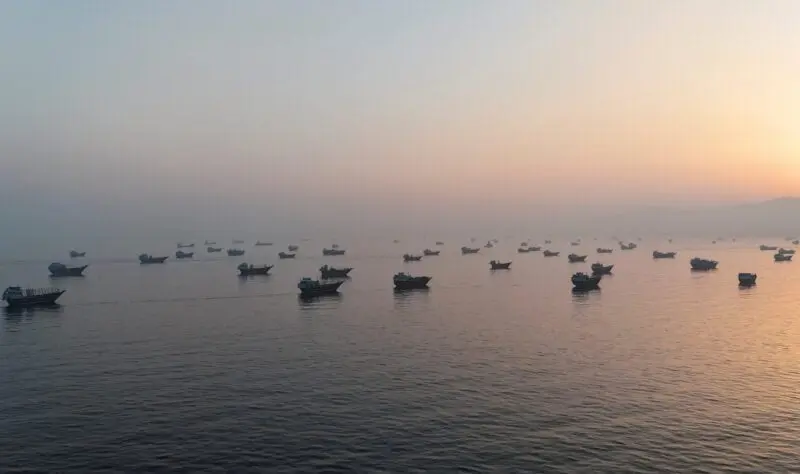
Even as Washington tightens the economic vice, a parallel diplomatic drama is unfolding behind closed doors. Pakistan has emerged as a key intermediary, with its military and civilian leadership delivering a sensitive U.S. message to Tehran aimed at reviving a stalled political process. This diplomatic overture occurs against a backdrop of ongoing physical insecurity in the world’s most critical energy chokepoint. Just hours after the sanctions were announced, an unidentified projectile disabled an oil tanker near the entrance to the Strait of Hormuz, underscoring Iran’s lingering capacity to disrupt global commerce despite suffering severe degradation to its conventional military forces and the loss of its Supreme Leader, Ayatollah Ali Khamenei, earlier in the conflict.
As oil transit volumes through the Strait of Hormuz languish at a fraction of pre-war levels, the international community faces a dual reality: a U.S. administration eager to find a diplomatic off-ramp ahead of crucial domestic elections, and an Iranian regime that remains defiant, warning of impending retaliation while keeping the door open to structured negotiations.
The current phase of the conflict is the culmination of a rapidly shifting series of military and diplomatic maneuvers that began in early 2026. To understand the significance of the latest sanctions and the Pakistani-led mediation efforts, it is necessary to trace the timeline of the crisis:
[Feb 2026] U.S. & Israeli Airstrikes on Iran -> [June 2026] Interim Peace Deal Signed -> [Mid-July 2026] Deal Collapses; U.S. Port Blockade Renewed -> [Aug 24, 2026] U.S. Announces Sanctions on 60 Targets -> [Aug 25, 2026] Tanker Attacked; Pakistani Delegation Visits Tehran
February 2026: The Outbreak of War
The conflict erupted with a series of high-intensity, preemptive military strikes conducted by U.S. and Israeli forces against Iranian nuclear facilities, conventional military infrastructure, and command-and-control centers. The strikes severely degraded Iran’s conventional defense capabilities and resulted in high casualties, including the death of Supreme Leader Ayatollah Ali Khamenei.
June 2026: The Faltering Interim Deal
Recognizing the potential for a prolonged global economic shock, Washington and Tehran signed a temporary interim agreement in June. The deal aimed to halt hostilities, freeze further development of Iran’s nuclear program, and ease maritime tensions in the Persian Gulf. However, the agreement was short-lived. Disagreements over verification protocols and continued low-level skirmishes prevented a permanent treaty from taking root.
Mid-July 2026: The Maritime Blockade Reimposed
Following the collapse of the interim agreement, Iran resumed asymmetric attacks on commercial shipping in the Gulf. In response, the Trump administration renewed a strict maritime blockade of Iranian ports, aiming to cut off Tehran’s remaining crude oil exports, which had primarily been flowing to independent refineries in China.
August 24, 2026: The Rollout of Expanded Sanctions
Treasury Secretary Scott Bessent formally announced a new sanctions package targeting 60 individuals, entities, and shipping vessels accused of facilitating Iran’s illicit trade networks. While Bessent warned that foreign entities continuing to trade with Iran risked exclusion from the dollar-based financial system, he notably withheld immediate penalties against major Chinese banks, offering a grace period for compliance. On the same day, Pakistan’s Army Chief, General Asim Munir, arrived in Tehran, carrying a confidential message from Washington.
August 25, 2026: Maritime Strike and Diplomatic Debriefs
A commercial oil tanker was struck and disabled by an unidentified projectile nine nautical miles northeast of Oman’s Ash Shishah, near the entrance to the Strait of Hormuz. Concurrently, details of General Munir’s mediation began to surface, with Iranian parliamentarians confirming that the U.S. had offered to reverse the newly imposed sanctions either before or during a projected new round of peace negotiations. Oman’s Foreign Minister also arrived in Tehran to hold urgent talks regarding security arrangements for the Strait.
Supporting Context & Metrics
The economic and human toll of the six-month conflict has reshaped global energy markets and altered domestic political calculations in both Washington and Tehran.
The Strait of Hormuz Chokepoint
The Strait of Hormuz, which lies between the Persian Gulf and the Gulf of Oman, is widely regarded as the world’s most sensitive energy transit artery.
Pre-War Transit Volume: Prior to the outbreak of hostilities in February 2026, more than 20 million barrels per day (bpd) of petroleum liquids flowed through the Strait, representing approximately 20% of global daily oil consumption.
Current Transit Volume: Provisional data from maritime tracking firm Vortexa indicated that by late August 2026, flow rates had plummeted to just 5 million bpd—a 75% reduction.
Despite this massive drop in transit volume, global oil prices fell for a second consecutive day following the sanctions announcement. Market analysts attribute this counterintuitive price action to traders pricing in a prolonged conflict, weak global demand, and anticipation of a diplomatic breakthrough facilitated by Pakistan.
Strait of Hormuz Oil Transit (Barrels per Day)
=========================================================
Pre-War:      ████████████████████ 20M bpd
Current:      █████ 5M bpd (75% reduction)
=========================================================
Sanctions Architecture and the Chinese Dilemma
The Treasury Department’s new blacklist targets 60 specific assets and actors, focusing heavily on the "ghost fleet" of tankers used to transport Iranian crude under flags of convenience. However, the strategic exclusion of Chinese financial institutions highlights a delicate balancing act for the Trump administration:
The Mineral Trade: Washington remains highly dependent on Chinese exports of critical minerals essential for defense manufacturing, advanced electronics, and energy transition technologies. Aggressive secondary sanctions on Chinese banks could trigger retaliatory export restrictions from Beijing.
The Trump-Xi Summit: With President Trump scheduled to host Chinese President Xi Jinping next month, U.S. diplomats are eager to maintain a stable negotiating environment.
The Maritime Reality: While the U.S. naval blockade has successfully curtailed large-scale shipments from Iranian terminals since mid-July, China remains Iran’s primary economic lifeline, purchasing heavily discounted crude through complex, non-dollar-denominated barter systems.
Human and Political Toll
The human cost of the conflict has been catastrophic, with thousands of casualties reported, primarily concentrated in Iran and southern Lebanon, where Iranian-aligned proxy forces have engaged in intense exchanges with Israeli and coalition forces.
In the United States, public support for the military campaign has eroded. According to a Reuters/Ipsos poll, public approval of the war has fallen to its lowest level since February. This decline in public backing has dragged President Trump’s personal approval ratings to record lows, presenting a significant political vulnerability for his party ahead of the critical congressional midterm elections in November.
Official Statements and Diplomatic Reactions
Washington’s Calculated Pressure
In a press conference detailing the measures, Treasury Secretary Scott Bessent emphasized the administration’s resolve to isolate Iran while leaving room for diplomatic compliance:
"These sanctions are designed to dismantle the financial architecture that funds Iran’s destabilizing activities in the region. To those nations and institutions that continue to facilitate this illicit trade: you face a clear choice. You can participate in the global dollar-based financial system, or you can do business with Tehran. However, we are providing a window for compliance. Our goal is behavior change, not collateral economic damage to our allies and partners."
Simultaneously, a leaked State Department document obtained by The New York Times revealed that U.S. diplomats, who had been evacuated from key embassies in the region at the start of the war, are preparing to return to their posts as early as this week, signaling a shift toward diplomatic engagement.
Tehran’s Defiant Warnings
The response from Tehran was characterized by a mixture of military defiance and economic confidence. Iranian Economy Minister Ali Madanizadeh dismissed the impact of the U.S. measures during a state television broadcast:
"Our enemies should prepare themselves for a response. The United States believes it can force us to our knees through financial terrorism, but our major trading partners, including Russia and China, have not accepted these unilateral dictates. We have survived decades of sanctions, and we will resist these as well. The global energy market cannot survive without Iranian oil, and the consequences of further aggression will be felt in the capitals of the West."
Adding weight to these economic warnings, Brigadier General Hossein Mohebbi, a spokesperson for the Islamic Revolutionary Guard Corps (IRGC), cautioned that any threat to Iran’s core infrastructure would meet an asymmetric military response:
"If our national assets and energy infrastructure are targeted, we will deliver heavy, decisive blows to American interests and global energy chokepoints. No vessel in the region will find safety if Iran is denied its sovereign rights."
Islamabad’s Mediation Efforts
Pakistan has played a visible role as a diplomatic bridge between the warring parties. Abbas Golroo, head of the foreign relations committee in the Iranian parliament, confirmed the receipt of a U.S. proposal via Pakistani military channels:
"The message delivered by General Asim Munir on behalf of the United States indicates a strong desire in Washington to revive the political process that stalled after the collapse of the June agreement. We have expressed our general willingness to engage in constructive dialogue, but we have made it clear that economic coercion must cease."
A Pakistani government official, speaking on the condition of anonymity, provided further details on the assurances offered to Tehran:
"We have conveyed to the Iranian leadership that the United States is prepared to reverse these newly announced sanctions. This relief could occur either as a pre-negotiation gesture of good faith or during the formal rounds of a new peace conference."
Following these high-level meetings, Pakistani Interior Minister Mohsin Naqvi characterized the discussions in Tehran as "constructive," while Mehdi Tabatabaei, an official in the Iranian president’s office, posted on social media that the visit had "yielded highly valuable diplomatic achievements, the results of which will soon be revealed."
Beijing’s Legal Shield
Beijing quicky criticized the unilateral nature of the U.S. sanctions. A spokesperson for the Chinese Foreign Ministry defended China’s ongoing economic ties with Iran:
"Cooperation between China and Iran is conducted strictly within the framework of international law. It is legitimate, reasonable, and completely legal. It does not harm the interests of any third party and must not be interfered with, disrupted, or subjected to unilateral American sanctions."
Future Outlook
The coming weeks will determine whether the Middle East transitions toward a fragile de-escalation or descends into a wider, more destructive regional conflict. Several key variables will shape the trajectory of this crisis:
The Viability of the Pakistani Backchannel
The "significant progress" claimed by Pakistani mediators suggests that both Washington and Tehran are seeking an honorable exit from a war that has exhausted their respective resources. For President Trump, a diplomatic breakthrough before the November elections could reverse his declining poll numbers and pacify an electorate weary of foreign military engagements. For Iran, an agreement offers a desperate lifeline to an economy suffering from hyperinflation, infrastructural damage, and a leadership vacuum following the death of Ayatollah Khamenei.
Tactical Miscalculation in the Strait of Hormuz
Despite the diplomatic overtures, the situation on the water remains highly unstable. The attack on the tanker near Oman’s Ash Shishah demonstrates that local military commanders or rogue proxy elements retain the capability to launch disruptive attacks. A single high-casualty strike on a commercial vessel or a Western naval asset could instantly derail backchannel negotiations and trigger a fresh round of retaliatory military strikes.
The upcoming meeting between Donald Trump and Xi Jinping is a critical variable. If Beijing can secure assurances that its financial institutions will remain exempt from secondary sanctions, it may use its considerable leverage to pressure Tehran into accepting a verified freeze on its nuclear and missile programs. Conversely, if bilateral trade tensions between the U.S. and China flare over critical minerals or broader economic tariffs, Beijing may choose to actively bypass the U.S. blockade, providing Iran with the economic backing needed to resist Western pressure indefinitely.
Ultimately, while the new sanctions package represents a continuation of the economic warfare that has defined the 2026 conflict, the accompanying diplomatic activity suggests that both sides are preparing for a pivot. The success of this transition depends on whether the quiet diplomacy brokered by Islamabad can outpace the volatile military realities of the Strait of Hormuz.