






Executive Overview
The Trump administration has launched a sweeping, aggressive economic campaign aimed at systematically severing Iran’s remaining lifelines to the global financial and maritime trade systems. Dubbed "Operation Economic Outcast," the initiative represents a major escalation in Washington’s use of secondary sanctions. By targeting the maritime sector alongside other critical industries, the administration is signaling an era of zero tolerance for foreign entities that facilitate Iranian trade.
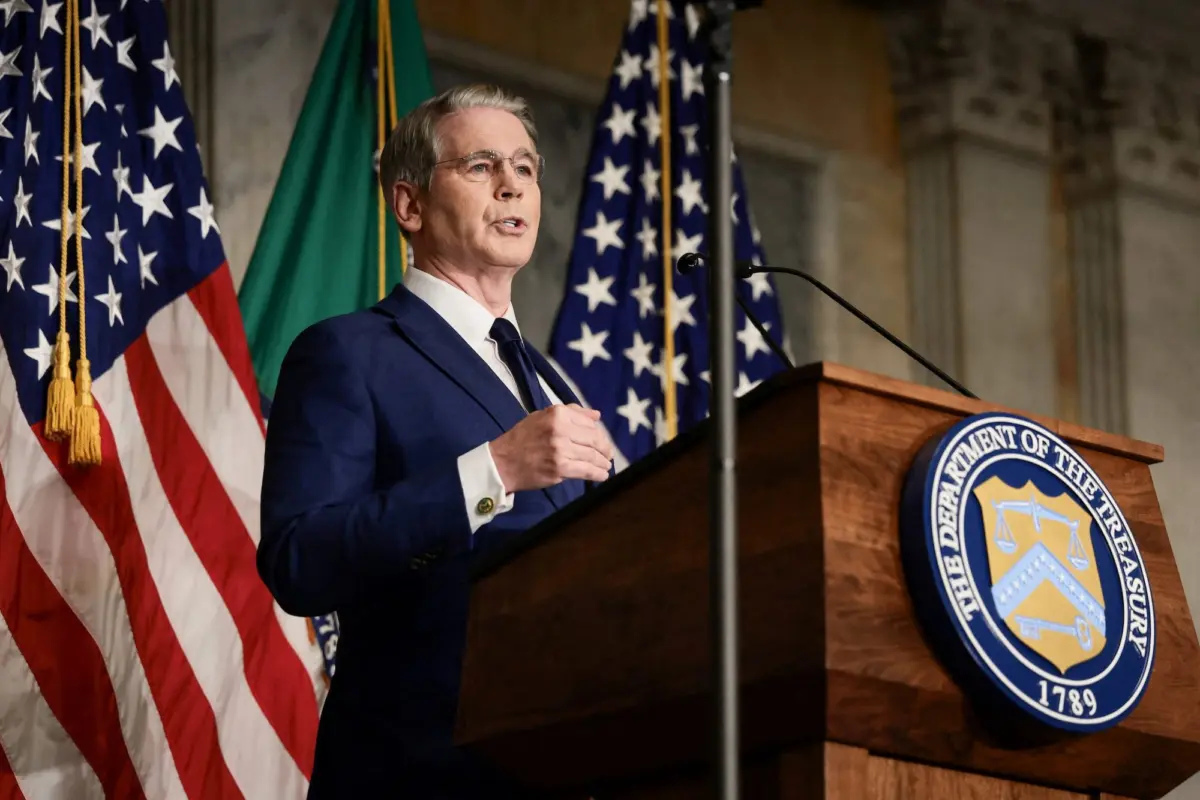
The campaign, announced by the U.S. Department of the Treasury, significantly expands the scope of secondary sanctions, effectively presenting foreign governments, financial institutions, and maritime service providers with a stark choice: cease all transactions with Iranian interests or face complete exclusion from the U.S. financial system. Treasury Secretary Scott Bessent has described the initiative as an economic "D-Day," designed to permanently disrupt the revenue streams that fund Tehran’s regional proxy networks, military apparatus, and state institutions.
+-----------------------------------------------------------------+
|                   OPERATION ECONOMIC OUTCAST                    |
+-----------------------------------------------------------------+
|                                                                 |
|  [Five New Sectoral Sanctions]                                  |
|  ├── Digital Assets                                             |
|  ├── Technology                                                 |
|  ├── Gold                                                       |
|  ├── Aviation                                                   |
|  └── Shipping (Primary Focus)                                   |
|                                                                 |
|  [Key Target Sectors & Mechanisms]                              |
|  ├── National Shipping Line (IRISL)                             |
|  │   └── Accused of moving weapons & missile precursors         |
|  ├── National Tanker Service (NITC)                             |
|  │   └── Accused of moving oil for military/state revenue       |
|  └── Shadow Fleet Operations                                    |
|      └── 60+ entities, individuals, and vessels blacklisted     |
|                                                                 |
|  [Global Enforcement Reach]                                     |
|  └── UAE • Hong Kong • China • Singapore • Switzerland • Europe  |
|                                                                 |
+-----------------------------------------------------------------+
This aggressive policy shift follows months of escalating maritime friction in the Middle East, characterized by disruptions in the Strait of Hormuz, state-sponsored ship seizures, and proxy attacks on commercial shipping. By attacking the logistics networks, shell companies, bunkering agents, and financial intermediaries that comprise Iran’s "shadow fleet," Washington is attempting to render the transport of Iranian oil too costly, risky, and logistically difficult to sustain.
The Blueprint of "Operation Economic Outcast"
At the core of Operation Economic Outcast lies a series of five new sectoral sanctions determinations issued by the U.S. Treasury. These determinations significantly broaden the federal government’s legal authority to target foreign entities operating within, or providing vital services to, key sectors of the Iranian economy:
- Shipping & Maritime Commerce
- Aviation
- Gold & Precious Metals
- Technology
- Digital Assets (Cryptocurrency)
By formalizing these sectoral determinations, the Office of Foreign Assets Control (OFAC) can now impose sanctions on foreign companies and individuals without needing to prove a direct link to a previously designated terrorist entity or weapons-proliferation program. Merely operating in or providing material support to these sectors is now grounds for blacklisting.
Targeting the State Carrier Networks
The Treasury Department’s immediate focus is on dismantling the dual-use logistics capabilities of Iran’s state-owned transport giants:
- The Islamic Republic of Iran Shipping Lines (IRISL): Washington has accused Iran’s national shipping line of using its commercial fleet to transport weapons components, missile precursors, and military-grade technology. By integrating IRISL into the broader sanctions framework, the U.S. aims to deny Iranian commercial vessels access to international ports, dry docks, and maritime insurance.
- The National Iranian Tanker Company (NITC): Long the backbone of Iran’s energy export strategy, the NITC is accused of operating as a logistical arm of the government and the Islamic Revolutionary Guard Corps-Quds Force (IRGC-QF). The new measures target NITC’s ability to charter vessels, secure classification services, and engage in ship-to-ship (STS) transfers.
Detailed Chronology: Deep Dive into the Shadow Fleet and Sanctioned Targets
The enforcement actions under Operation Economic Outcast target a complex network of shell companies, maritime brokers, and logistical facilitators spanning multiple jurisdictions, including the United Arab Emirates (UAE), Hong Kong, Singapore, Switzerland, and various European maritime hubs.
   [IRGC-QF / National Iranian Oil Company]
                   │
                   │ (Crude Oil Sales & Logistics)
                   ▼
     [Mohammad Ahmed Suhil Fattouh] (Broker)
                   │
         ┌─────────┴─────────┐
         ▼                   ▼
  [Ivan Obukhov]     [Azure Shipping]
   (Foscom FZE)        (Singapore)
         │                   │
         │ ($100M+ Crypto)   │ (Ship-to-Ship Services)
         ▼                   ▼
  [Global Buyers]     [Sanctioned Tankers] <─── [Shipoil / Ship Fuels]
                       (e.g., MEDNA,             (Bunkering Network)
                        QUANTUM HOPE)
The Middlemen: "Captain Hamzah" and Ivan Obukhov
Among the most prominent individuals designated by OFAC is Mohammad Ahmed Suhil Fattouh (also known as "Captain Hamzah"), a UAE-based Syrian national. According to the Treasury, Fattouh has operated for years as a critical broker for the shadow fleet, acquiring and managing tankers on behalf of the National Iranian Oil Company (NIOC) and the IRGC-QF. His network specialized in purchasing aging vessels under flags of convenience, which were then used to transport sanctioned crude through deceptive maritime practices.
In tandem with Fattouh, Treasury targeted UAE-based Ukrainian national Ivan Obukhov and his company, Foscom FZE. Obukhov is accused of managing maritime logistics for Iranian military oil shipments. Crucially, Treasury revealed that Obukhov facilitated the processing of more than $100 million in cryptocurrency payments since 2023. These digital asset transactions were designed to bypass the traditional SWIFT banking network, directly funding the regional operations of the IRGC-QF.
The Logistics and Bunkering Web: Singapore, Hong Kong, and Dubai
Sanctions evasion requires a highly coordinated network of maritime service providers. OFAC’s designations have targeted several key nodes in this logistical chain:
- Azure Shipping Pte. Ltd. (Singapore): Sanctioned for its close cooperation with the NITC. Azure Shipping allegedly arranged critical ship-to-ship (STS) transfer services, allowing sanctioned Iranian tankers to transfer crude oil to secondary vessels in international waters, thereby masking the oil’s origin before it reached final destination ports.
- The Shipoil Bunkering Network (Hong Kong & Dubai): A network of fuel suppliers consisting of Shipoil Limited, Shipoil FZCO, and Ship Fuels and Trade DMCC was designated for coordinating directly with sanctioned Iranian entities. These companies provided fuel (bunkering services) to vessels carrying Iranian crude and petroleum products, enabling the shadow fleet to operate continuously without docking at major international ports where they would face arrest or inspection.
Case Study: The Tanker MEDNA (IMO 9281683)
The Treasury’s enforcement documentation highlights the tanker MEDNA (IMO 9281683) as a clear example of how these evasion networks operate. In 2026, the Shipoil network coordinated bunkering services for the MEDNA, despite the vessel’s well-documented history of carrying crude oil on behalf of Iran’s Armed Forces General Staff.
+------------------+--------------------------------------------------------+
| Vessel Name      | MEDNA                                                  |
+------------------+--------------------------------------------------------+
| IMO Number       | 9281683                                                |
| Primary Function | Transport of crude oil for Armed Forces General Staff  |
| Key Infraction   | Received illicit bunkering services from Shipoil group |
+------------------+--------------------------------------------------------+
By blacklisting both the vessel and the service providers that kept it operational, the U.S. is signaling that any entity involved in fueling, provisioning, or repairing these ships will be locked out of the global economy.
Blocked Tankers Carrying Crude to Asia
OFAC has identified and blocked five specific tankers accused of transporting Iranian crude oil, liquefied petroleum gas (LPG), and refined petroleum products. Among these vessels are:
- QUANTUM HOPE
- VOYAGE ELITE
According to Treasury data, both the QUANTUM HOPE and VOYAGE ELITE have transported millions of barrels of Iranian crude directly to Chinese refineries since early 2026. The remaining blocked tankers have primarily targeted Southeast Asian markets, using falsified bills of lading and disabling their Automatic Identification Systems (AIS)—a practice known as "going dark"—to hide their movements.
Supporting Context & Industry Metrics
The launch of Operation Economic Outcast comes at a time of unprecedented disruption in global maritime trade. The shipping industry is currently navigating a high-risk environment characterized by geopolitical conflict, supply chain re-routing, and escalating operational costs.
The Scale of the Shadow Fleet
Industry analysts estimate that the global "shadow fleet" (or "ghost fleet") comprises between 600 and 800 vessels, representing approximately 10% to 12% of the world’s total tanker capacity. These vessels are typically:
┌────────────────────────────────────────────────────────┐
│             ANATOMY OF A SHADOW FLEET TANKER           │
└────────────────────────────────────────────────────────┘
  │
  ├── Age Profile: Typically 15+ years old (near retirement)
  │
  ├── Insurance: Lacks legitimate P&I (Protection & Indemnity) coverage
  │
  ├── Registry: Frequently hops flags of convenience (e.g., Gabon, Panama, Comoros)
  │
  └── Operations: Disables AIS transponders; utilizes frequent STS transfers
Because these tankers operate outside of mainstream maritime regulations, they pose severe environmental and safety hazards, including the risk of catastrophic oil spills for which there is no valid insurance coverage.
Financial and Operational Impacts on Shipping
The systemic risk of operating in proximity to Iranian trade has driven maritime operational costs to historic highs:
+----------------------------+-------------------------------------------------+
| Metric                     | Industry Impact / Trend                         |
+----------------------------+-------------------------------------------------+
| War Risk Insurance         | Premiums in the Red Sea and Gulf of Aden have   |
|                            | surged up to 1.0% to 2.0% of vessel value.      |
+----------------------------+-------------------------------------------------+
| Freight Rates              | Suezmax and VLCC rates have experienced extreme |
|                            | volatility due to rerouting around Africa.      |
+----------------------------+-------------------------------------------------+
| Compliance Overhead        | Maritime firms have increased spending on AIS  |
|                            | tracking, cargo testing, and ownership audits.   |
+----------------------------+-------------------------------------------------+
By imposing secondary sanctions on bunkering networks, the U.S. is intentionally driving up the cost of operating shadow tankers. Without access to standard maritime fuel and port services, shadow fleet operators must rely on black-market bunkering, which can carry premiums of 20% to 30% above market rates.
Official Statements: The Geopolitical Rhetoric
The public messaging surrounding the launch of Operation Economic Outcast underscores the Trump administration’s intent to return to a policy of "maximum pressure" on Tehran.
Treasury Secretary Scott Bessent framed the initiative as a decisive, structural campaign to dismantle Iran’s economic foundations:
"Operation Economic Outcast is our economic D-Day against the financial networks sustaining the Iranian regime. We are launching a sustained, aggressive effort to sever Iran’s commercial connections to the global economy. Our objective is simple: to cut off the revenue streams that Tehran uses to fund regional instability, terror proxies, and military aggression. To those who continue to facilitate this trade: you can do business with the United States, or you can do business with Iran, but you cannot do both."
President Donald Trump echoed this stance, warning third-party nations of the immediate economic consequences of ignoring U.S. sanctions:
"We have been very clear: any country, any company, any port that continues to trade with or facilitate the movement of Iranian oil will face total economic isolation. We are shutting down the networks, we are blocking the ships, and we are cutting off the money. There will be no loopholes, and there will be no exceptions."
Future Outlook & Compliance Imperatives
Operation Economic Outcast marks a significant shift in international sanctions enforcement. For the maritime industry, the expansion of secondary sanctions means that standard compliance protocols must be thoroughly overhauled.
                  [U.S. TREASURY DEPARTMENT]
                              │
                              ▼
               [Operation Economic Outcast]
                              │
         ┌────────────────────┴────────────────────┐
         ▼                                         ▼
[Compliance Imperatives]                 [Market Consequences]
 ├── Enhanced AIS Monitoring              ├── Higher Shadow Fleet Costs
 ├── Comprehensive UBO Audits             ├── Exclusion of Non-Compliant Banks
 └── Rigorous Fuel Supplier Checks        └── Increased Sanctions Enforcement
The Ultimatum to Foreign Jurisdictions
Unlike previous iterations of sanctions, which focused primarily on direct enforcement, the Treasury Department is now engaging directly with foreign governments, providing them with defined timelines to shut down known Iranian front companies and shipping activities within their borders. Jurisdictions that fail to act risk having their domestic financial institutions cut off from the U.S. dollar clearing system. This "comply-or-perish" approach is expected to put significant diplomatic and economic pressure on maritime hubs in the Middle East and Southeast Asia.
Key Compliance Takeaways for Maritime Operators
To mitigate the risk of accidental exposure to designated entities, maritime operators, financial institutions, and insurers should implement the following compliance measures:
- Continuous AIS Tracking & Spoofing Detection: Legitimate operators must employ advanced maritime intelligence platforms to monitor for "dark activity" or location-spoofing among counterparties. Any unexplained gaps in a vessel’s AIS history should trigger immediate compliance reviews.
- De-layering Ownership Structures: Shipowners, charterers, and cargo traders must perform exhaustive Ultimate Beneficial Ownership (UBO) audits. As demonstrated by the designations of Captain Hamzah and Ivan Obukhov, shadow fleet operators frequently hide behind multiple layers of shell companies registered in low-regulation jurisdictions.
- Strict Bunkering and Service Provider Due Diligence: Marine fuel suppliers and port agents must verify that they are not providing services to vessels that have engaged in ship-to-ship transfers with unsanctioned or suspicious tankers. Under the new guidelines, providing fuel to a designated vessel—even indirectly—can lead to immediate sanctions.
- Financial Transaction Screening: Foreign financial institutions (FFIs) must scrutinize transactions involving maritime commerce, particularly those utilizing digital assets or non-traditional payment corridors, to ensure they do not involve blocked property or designated individuals.
By closing the regulatory gaps that have allowed the shadow fleet to operate, Operation Economic Outcast is set to reshape the economics of global energy shipping, forcing the maritime industry to adapt to an era of strict sanctions enforcement.