









Executive Overview
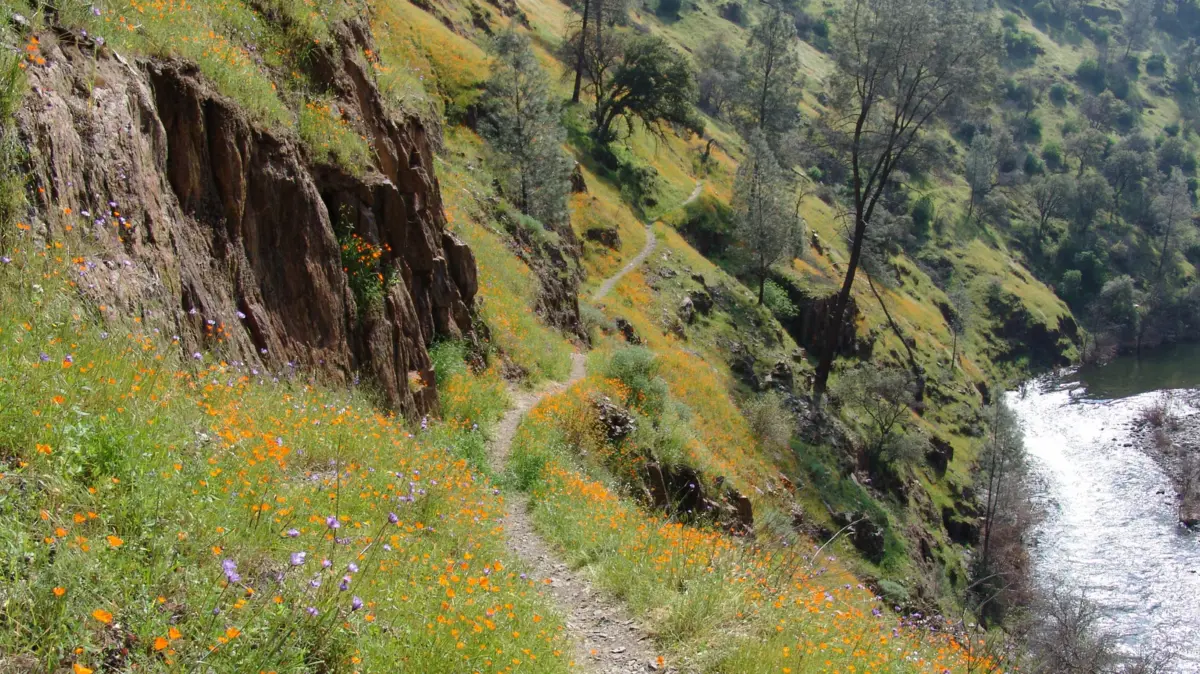
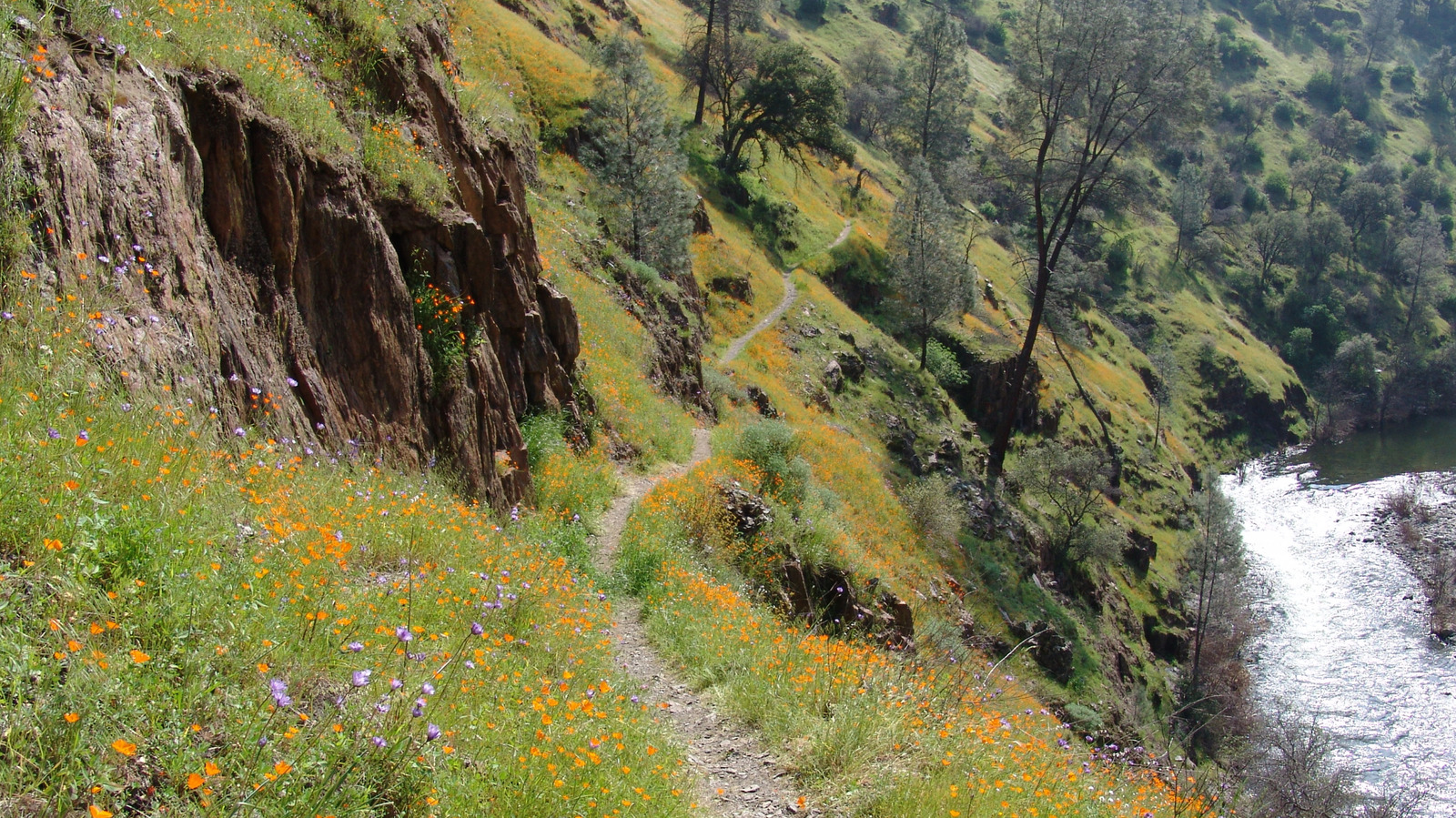
Tucked away in the rugged foothills of the Sierra Nevada, just outside the bustling tourist corridors of Yosemite National Park, lies one of California’s most spellbinding and historically rich alpine routes: the Hite Cove Trail. Running approximately 8.5 miles out-and-back alongside the southern fork of the Merced River, this moderately challenging path offers an intoxicating blend of natural splendor and 19th-century history. While it serves as a premier destination for botany enthusiasts—boasting a staggeringly dense seasonal display of over 50 wildflower species, dominated by millions of brilliant orange tufted poppies—the trail culminates at a forgotten relic of the American Gold Rush: the abandoned mining camp of Hite Cove.
Unlike the heavily trafficked granite monoliths and valley floors of Yosemite proper, the Hite Cove Trail provides a quieter, more contemplative wilderness experience. Its low elevation makes it an ideal early-season escape, allowing hikers to witness vibrant spring blooms while higher-altitude park regions remain locked in winter’s grip. Yet, beneath its postcard-worthy aesthetics of rushing whitewater, emerald hillsides, and cascading floral carpets lies a turbulent industrial past. Active during the peak of California’s mid-nineteenth-century mining mania, Hite Cove was once a bustling, albeit remote, community complete with mills, a hotel, and a dance hall. Today, the trail offers modern adventurers a rare portal into the past, seamlessly merging untamed natural geography with the haunting echoes of California’s frontier history.
Detailed Chronology: From Native Stewards to Gold Rush Boom and Ruin
To truly appreciate the Hite Cove Trail, one must understand the layers of human history embedded in the canyon walls of the Merced River. Long before European prospectors scoured the riverbanks for precious metals, the region was stewarded by indigenous communities who utilized the river canyons for seasonal migration, hunting, and foraging. The mild microclimate of the southern fork made it a hospitable environment long before the advent of industrial extraction.
The 1860s: Discovery and the Rise of a Frontier Settlement
The modern history of the cove began in earnest during the height of the California Gold Rush, earning its moniker from John Hite, an enterprising prospector who identified one of the region’s richest and most lucrative gold veins. During the 1860s and 1870s, Hite Cove transformed overnight from a remote wilderness pocket into a bustling industrial encampment.
At its zenith, approximately 100 residents—comprising miners, mill workers, and entrepreneurs—inhabited the narrow valley. To support this isolated population, the settlement evolved beyond crude tents into a functioning frontier town. Historical records and archaeological remnants indicate the presence of a local hotel, a blacksmith’s workshop, and even a social dance hall designed to alleviate the grinding isolation of mountain life. Ores extracted from the deep quartz veins were processed locally in stamping mills, utilizing the relentless power of the adjacent Merced River.
The 20th Century: Resurgence, Fire, and Abandonment
Mining operations at Hite Cove were not a fleeting flash in the pan; the site experienced subsequent periods of renewed extraction well into the early 1900s as technological advancements made deeper vein mining economically viable. However, the golden era of the camp could not outlast shifting economic landscapes and the ravages of time.
The definitive end of the settlement’s built environment arrived in 1924, when a devastating fire swept through the canyon, consuming the remaining wooden structures of the camp. What the flames spared, the relentless encroaching wilderness reclaimed. Over the following century, the roofs collapsed, timber frames rotted away, and the once-vibrant streets were swallowed by chaparral and undergrowth.

Supporting Context & Metrics: Flora, Fauna, and Geography
The geographic and ecological profile of the Hite Cove Trail sets it apart from typical Sierra Nevada hikes. Spanning roughly 8.5 miles round-trip with an undulating profile, the trail tests hikers with an initial steep descent and narrow, winding paths that demand respect and careful footing.
Botanical Abundance
According to regional trail authorities and wilderness registries, the Hite Cove Trail boasts one of the densest and most diverse wildflower displays in the central Sierra Nevada. Botanists and casual observers have cataloged over 50 distinct floral species along the route.
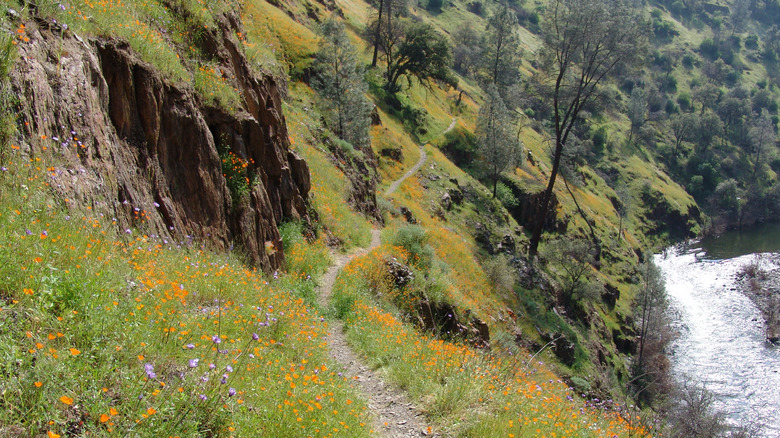
- The Orange Poppies: The undisputed stars of the show are the millions of orange tufted poppies that blanket the steep, south-facing hillsides during peak spring months.
- Accompanying Flora: Hikers are treated to vibrant pops of color from blazing stars (Mentzelia), bluedicks (Dipterostemon capitata), and western redbuds (Cercis occidentalis), which paint the grassy slopes in a mosaic of purple, yellow, and magenta.
- Proximity to the Trailhead: Notably, the densest concentrations of poppies appear within the first half-mile of the trek, making the trail accessible even for those who choose not to complete the entire 8.5-mile journey.
The Merced River Corridor
Flowing directly beneath the trail is the south fork of the Merced River, a federally designated Wild and Scenic River. The waterway serves as a constant companion for hikers, providing a soothing acoustic backdrop of rushing whitewater throughout the journey. The river carves through a dramatic, steep-walled canyon, offering striking visual contrasts between the dark, rugged rock outcroppings, the emerald pine forests of the surrounding Sierra National Forest, and the brilliant floral carpets on the hillsides above.
Wildlife and Ecological Hazards
The trail’s unique microclimate—characterized by exposed, sun-drenched south-facing slopes—creates an ideal habitat for local fauna.
- Reptiles and Amphibians: Hikers frequently report spotting western pond turtles, Pacific treefrogs, and various newt species along the damper river margins. Crucially, the sun-worshipping tendencies of local reptiles mean that rattlesnakes are commonly observed basking directly on the warm dirt paths.
- Flora Hazards: The trail is lined with sharp native foliage and harbors significant patches of poison oak, prompting seasoned outdoor guides to strongly recommend wearing long trousers rather than shorts.
Official Guidelines, Expert Insights, and Trail Logistics
Navigating the Hite Cove Trail requires careful preparation due to its specific geographic and seasonal constraints. Local park rangers, search-and-rescue teams, and seasoned outdoor journalists have compiled essential guidelines to ensure a safe and rewarding excursion.
Access and Parking Logistics
The trailhead is situated just off Yosemite’s Highway 140, roughly 8.5 miles east of the El Portal park boundary.
- Limited Infrastructure: Parking infrastructure is severely restricted, consisting primarily of limited roadside pullouts near the historic Redbud Lodge and Savage’s Trading Post.
- Early Arrival Strategy: Because of the immense popularity of the spring wildflower bloom, parking spaces fill up rapidly by the early morning hours. Visitors are strongly advised to arrive at dawn to secure a legal and safe spot off the highway.
- Trailhead Identification: While the trailhead is officially signed, its unassuming nature amidst the highway curves means drivers can easily overshoot it if they are not monitoring their odometer closely.
Seasonal Timing and Weather Considerations
- The Optimal Window: The premier window for visiting Hite Cove spans from March through May. During these months, the lower elevation of the canyon (hovering well below the snowline of upper Yosemite) allows wildflowers to peak while higher-altitude park sectors remain inaccessible or deeply snow-covered.
- The Heat Factor: Because the trail tracks along the north side of the canyon on exposed, south-facing slopes, shade is critically scarce during the afternoon hours. Hikers must pack an abundance of water, wear wide-brimmed hats, and apply heavy sunscreen to combat radiant heat bouncing off the rocky canyon walls.
Expert Recommendations from the Trail Community
Hikers logging their journeys on platforms like AllTrails consistently emphasize the duality of the experience. Reviewers frequently describe the path as a "glorious, sensory-rich immersion," noting that the combination of the auditory backdrop of the Merced River and the visual overload of the poppy blooms creates a world-class outdoor itinerary.
For those looking to extend their historical exploration beyond the trail, travel experts recommend making a brief 30-minute detour to the nearby town of Mariposa. Widely recognized as the "Gateway to Yosemite," Mariposa is a remarkably preserved Gold Rush-era town featuring authentic 19th-century architecture, local museums, antique shops, and specialized dining options that contextualize the industrial heritage seen in the ruins of Hite Cove.
Future Outlook: Preservation, Tourism Pressures, and Conservation
As social media and outdoor recreation platforms continue to democratize access to lesser-known wilderness routes, the Hite Cove Trail faces a delicate balancing act between public accessibility and ecological preservation.
Managing Visitor Impact
The fragile ecosystem of the Hite Cove canyon—particularly its delicate floral hillsides—is highly susceptible to human degradation. Conservationists and land management agencies in the Sierra National Forest express ongoing concern regarding off-trail trampling. When visitors step off the established path to capture photographs amidst the poppy fields, they inadvertently crush delicate root systems and compact the soil, stunting future growth cycles. Future outlooks for the trail hinge heavily on implementing stricter "Leave No Trace" educational campaigns and potentially deploying seasonal volunteer trail stewards to monitor high-impact wildflower zones during peak March and April weekends.
Climate Variability and Bloom Forecasting
Another critical factor shaping the future of the Hite Cove Trail is the increasing volatility of California’s precipitation patterns. The density and timing of the legendary wildflower superblooms are entirely dependent on sequential seasonal events: sufficient winter rainfall followed by gentle, warming spring temperatures. Extended drought cycles can significantly dampen or entirely delay the emergence of the poppy fields, shifting visitor patterns and prompting land managers to adopt more dynamic, real-time public communication strategies regarding bloom forecasts.
Infrastructure and Community Integration
Discussions regarding the expansion of parking infrastructure along Highway 140 remain contentious. While improved parking would alleviate dangerous roadside congestion and pedestrian hazards along the narrow highway corridor, conservation groups argue that increased parking capacity could trigger unsustainable surges in foot traffic, degrading the tranquil, remote character that defines the Hite Cove experience.
Ultimately, the Hite Cove Trail stands as a timeless monument to the overlapping layers of California’s natural and human history. Whether sought out for its botanical brilliance, its rushing river vistas, or its quiet communion with the ghosts of the Gold Rush, this hidden Yosemite-adjacent gem demands—and rewards—the utmost respect from every traveler who walks its winding path.