






Executive Overview
As the late summer harvest of 2026 reaches its peak, the geopolitical struggle between Ukraine and the Russian Federation has converged on a critical maritime choke point: the Black Sea. In a diplomatic bid to safeguard global food supplies and stabilize its war-torn economy, Kyiv recently proposed a targeted truce aimed at halting all military hostilities against commercial agricultural shipping. However, this diplomatic initiative has stalled. Moscow rejected the proposal, demanding a far broader concession: absolute immunity for its domestic energy infrastructure from Ukrainian drone strikes.
This development highlights a major shift in the dynamics of the conflict. Ukraine’s asymmetric campaign of long-range drone strikes against Russian oil refineries and export terminals has severely impacted Moscow’s economic engine. In response, the Kremlin is leveraging its naval and missile capabilities in the Black Sea to demand relief for its energy sector, effectively holding global food security hostage.
Simultaneously, Ukrainian President Volodymyr Zelenskyy is navigating a complex domestic landscape. While managing a volatile maritime security crisis, Zelenskyy has ruled out holding wartime elections—a proposal championed by recently ousted Defense Minister Mykhailo Fedorov. Zelenskyy warned that holding elections under current conditions would act as a "tsunami" that could fracture national unity.
As winter approaches, the intersection of energy security, maritime trade, and domestic political stability presents Kyiv with its most complex challenge since the 2022 invasion.
Detailed Chronology of the Black Sea Escalation
The current maritime crisis is the result of a series of escalatory military actions and political shifts that occurred throughout July and August 2026.
[Late July 2026]         [Early August 2026]       [Mid-August 2026]        [August 22, 2026]
Fedorov ousted as        Ukrainian drones strike   Russia retaliates with   Zelenskyy proposes
Defense Minister;        Novorossiysk terminals;   strikes on Yuzhny port;  shipping truce;
Kyiv protests erupt      grain exports plummet     Fedorov calls for vote   Putin rejects deal
The Ouster of Mykhailo Fedorov and Domestic Unrest
The political backdrop to the current shipping crisis began in July 2026 with the sudden dismissal of Ukraine’s popular Defense Minister, Mykhailo Fedorov. Fedorov, widely credited with modernizing Ukraine’s drone forces, was removed following internal policy disagreements. His ouster triggered significant public demonstrations in Kyiv and other major urban centers.
Although these protests have since subsided, the political fallout continues. In mid-August, Fedorov publicly advocated for holding presidential and parliamentary elections, arguing that a renewed democratic mandate was necessary to sustain the war effort.
The Drone Campaign and the Novorossiysk Strike
In early August, Ukraine intensified its long-range drone campaign against Russian economic targets. The most significant operation targeted the port of Novorossiysk, a vital terminal for both Russian crude oil and grain exports.
Three of Russia’s largest agricultural terminals in the port sustained major damage, forcing a temporary halt to operations. This strike demonstrated Ukraine’s ability to disrupt Russian trade deep within the Black Sea, prompting Russia to seek a diplomatic solution to protect its energy assets.
The Rejection of the Agricultural Truce
On August 22, 2026, President Zelenskyy revealed that Kyiv had offered Moscow a localized truce: both nations would cease attacks on civilian vessels transporting agricultural commodities through the Black Sea.
The Kremlin rejected the proposal. Russian President Vladimir Putin characterized the terms as "unacceptable" and "exotic," insisting that any halt to maritime attacks must be tied to a complete cessation of Ukrainian strikes on Russian oil refineries, power grids, and fuel depots.
Retaliatory Strikes on Yuzhny Port
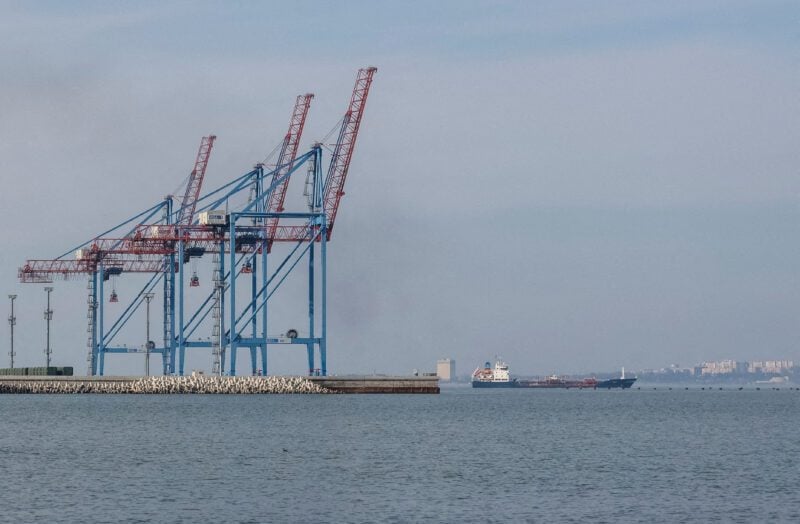
Immediately following the rejection of the truce, the Russian Ministry of Defense announced targeted strikes on Ukraine’s Yuzhny port, located in the Greater Odesa region. Russian missiles struck five critical fuel storage tanks and damaged loading infrastructure. This strike sent a clear signal that Moscow intends to keep Ukrainian ports under constant threat unless its own energy infrastructure is spared.
Supporting Context & Metrics: The Economic Toll of Maritime Warfare
The economic consequences of this stalemate extend far beyond the Black Sea basin. Together, Ukraine and Russia supply more than 25% of the world’s wheat exports. The current escalation directly threatens global food security and commodity price stability.
The Collapse of Ukrainian Grain Exports
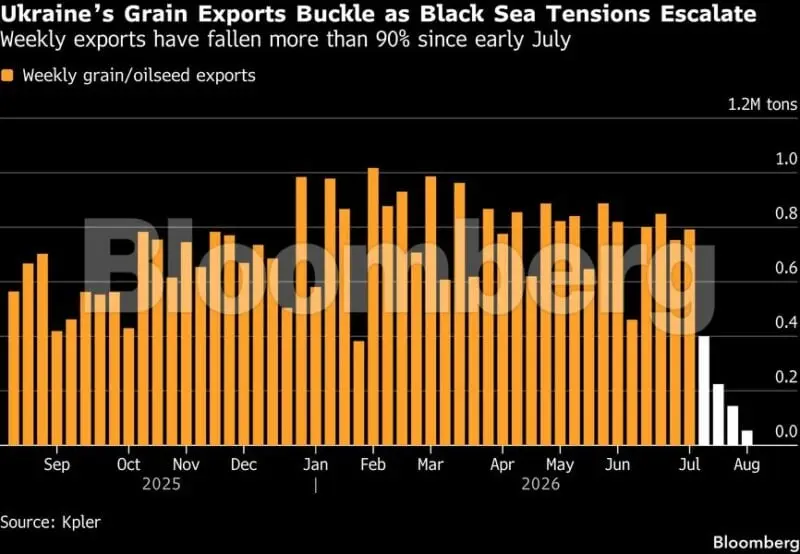
The Greater Odesa port network—comprising Odesa, Chornomorsk, and Pivdennyi (Yuzhny)—historically handles approximately 90% of Ukraine’s agricultural exports. Due to the recent wave of Russian missile and drone attacks, these facilities are operating at a fraction of their capacity.
- August 2026 Export Volume: According to Agriculture Minister Taras Vysotskyi, Ukraine exported approximately 500,000 tons of grain in the first three weeks of August.
- Capacity Deficit: This volume represents barely 20% of the country’s monthly export potential, leaving millions of tons of harvested grain stranded in inland silos.
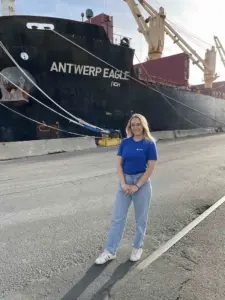
- Civilian Shipping Toll: Ukrainian authorities report that Russian forces targeted and struck 52 civilian vessels over a six-week period spanning July and August, creating a high-risk environment for international shipping registries and insurers.
| Metric | Pre-Escalation Potential (Monthly) | August 2026 Actuals | Percentage of Capacity |
|---|---|---|---|
| Grain Export Volume | ~2,500,000 Tons | 500,000 Tons | 20% |
| Active Shipping Corridors | 3 Primary Routes | 1 Highly Restricted Route | 33% |
| Insurance Premium Surge | Baseline | +300% War Risk Premium | N/A |
Russia’s Domestic Export Disruptions
While Russia’s military continues to strike Ukrainian ports, its own export infrastructure is facing unprecedented vulnerabilities. The Ukrainian drone strikes on Novorossiysk disrupted oil loading operations and forced the Russian Agriculture Ministry to seek alternative, less efficient export routes. These alternatives include rail corridors to Baltic ports and transit routes through the Caspian Sea.
President Putin acknowledged that these drone strikes have caused notable economic damage. This admission highlights why Moscow is determined to link any Black Sea shipping agreement to the protection of its domestic energy sector.
Official Statements and Diplomatic Posturing
The public statements from both leaders reveal a deep diplomatic divide, with each side attempting to frame the other as the primary obstacle to peace.
President Volodymyr Zelenskyy’s Position
Speaking from his office in Kyiv, President Zelenskyy expressed frustration over Moscow’s refusal to separate humanitarian grain corridors from broader military objectives:
"It looks like their position is that they will not attack our grain corridor only if we stop attacking their energy sector. If you are ready to talk on equal terms, then let’s talk. If it’s about agriculture, then agriculture; if it’s about energy, then energy. If it’s about a full ceasefire, then a full ceasefire."
Zelenskyy also addressed the domestic political debate, firmly rejecting Mykhailo Fedorov’s calls for wartime elections. He emphasized that the logistics of holding a vote under martial law are currently impossible:
"If we want to tear the country apart, then we can move toward elections in the middle of a war like this. It would be a tsunami for Ukraine."
He noted that Ukraine’s constitution explicitly prohibits elections during martial law, which has been in place since the February 2022 invasion. Critics of the election proposal also point out the practical impossibility of ensuring ballot access for millions of internally displaced persons and refugees scattered across Europe.
President Vladimir Putin’s Position
In an interview with Russian state television, President Putin maintained a firm stance, rejecting Kyiv’s proposals while framing Russia as open to negotiation on its own terms:
"We are always open to dialogue about peace, but only on the basis of the realities on the ground. The proposals we received were unacceptable and, in some cases, exotic."
Although Putin did not define what he meant by "exotic," Russian state media suggested that Kyiv’s proposal for third-party neutral vessels to manage exports of both Ukrainian and Russian grain under international flags was viewed by Moscow as an infringement on its sovereignty.
Future Outlook: A Winter of Strategic Decisions
As autumn approaches, the conflict appears to be entering a highly volatile phase, defined by critical infrastructure challenges and pressing military requirements.
                      [Winter 2026-2027 Challenges]
                                    |
         +--------------------------+--------------------------+
         |                                                     |
[Energy Security]                                      [Air Defense Needs]
- Continued strikes on grids                           - Kyiv requests 300 Patriots
- High dependency on local heating                     - Focus on protecting Odesa ports
- Vulnerable grain storage facilities                  - Crucial for surviving winter
The Campaign Against Energy Infrastructure
The coming winter is expected to center around infrastructure protection. Russia’s refusal of the agricultural truce suggests it will continue targeting Ukraine’s energy grid.
At the same time, Ukraine’s domestic drone production has reached a scale where it can consistently strike targets deep within Russian territory. Unless a reciprocal agreement is reached, both nations face the prospect of a winter marked by power outages, heating failures, and disrupted fuel supplies.
The Request for Patriot Missiles
To counter Russian missile attacks on its ports and cities, Ukraine is focusing on securing advanced air defense systems. President Zelenskyy announced that Kyiv is actively seeking at least 300 Patriot interceptor missiles specifically to defend its infrastructure this winter.
Securing these systems is critical. Without them, Ukraine’s remaining port infrastructure in Greater Odesa remains highly vulnerable to Russian Onyx and Kalibr cruise missiles, which could halt the country’s maritime trade entirely.
Alternative Export Corridors
With the Black Sea remaining a high-risk combat zone, Ukraine is forced to rely on more expensive land-based export routes. These include transit via the Danube River ports of Izmail and Reni, as well as rail and road corridors through Poland, Romania, and Slovakia.
However, these land routes lack the capacity to handle Ukraine’s massive agricultural output. This bottleneck will likely keep global grain prices volatile, leaving vulnerable nations in the Global South exposed to supply disruptions.
The rejection of the Black Sea truce demonstrates that the maritime trade route is no longer just a commercial channel; it has become a central lever in a broader war of attrition. As both nations prepare for a difficult winter, the shipping lanes of the Black Sea will remain a key front line, where economic survival and military strategy are deeply intertwined.