








Executive Overview
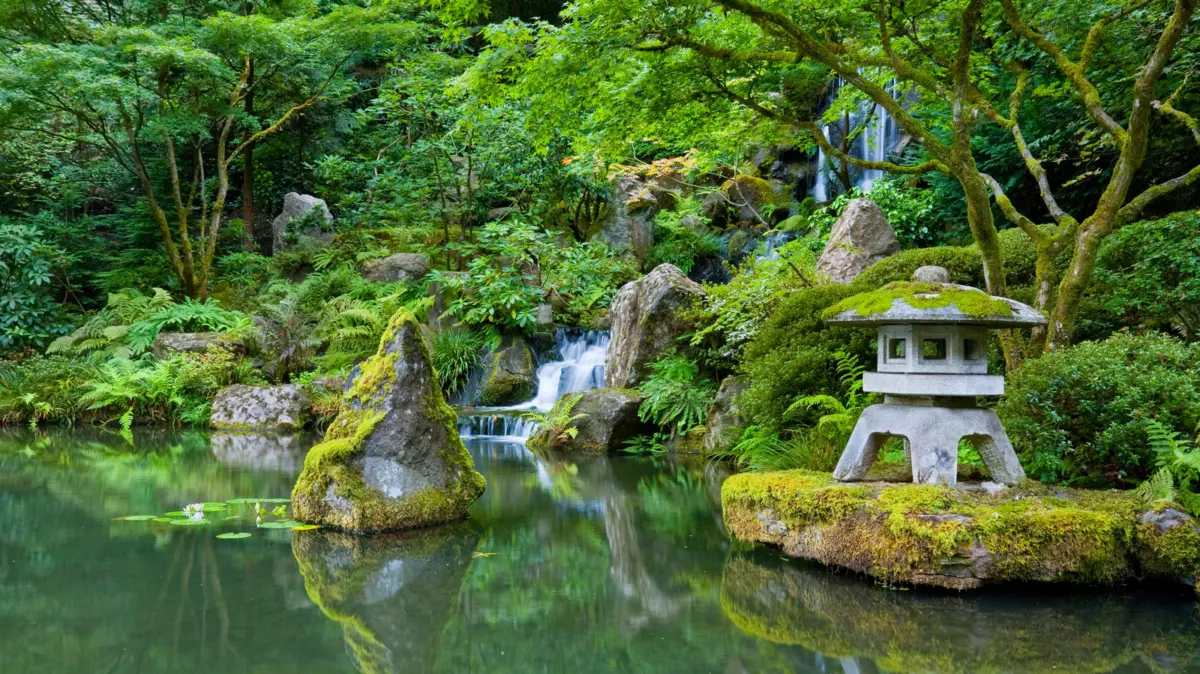
The renowned Japanologist Lafcadio Hearn once observed that the ultimate artistic purpose of a traditional Japanese garden is to "convey the real impression that a real landscape communicates." Hearn further noted, "It is therefore at once a picture and a poem; perhaps even more a poem than a picture." More than a century after these words were penned, their profound truth remains undiminished. Today, however, experiencing this unique intersection of horticulture, philosophy, and spatial architecture no longer requires a transpacific journey.
Due to a rich, centuries-long history of Japanese immigration and an enduring Western fascination with Japanese design principles—sparked largely during the Meiji era (1868–1912)—breathtaking Japanese gardens have taken root across the United States. Many of these sanctuaries were conceived by legendary Japanese garden architects, bridging cultural divides through the universal language of living art.
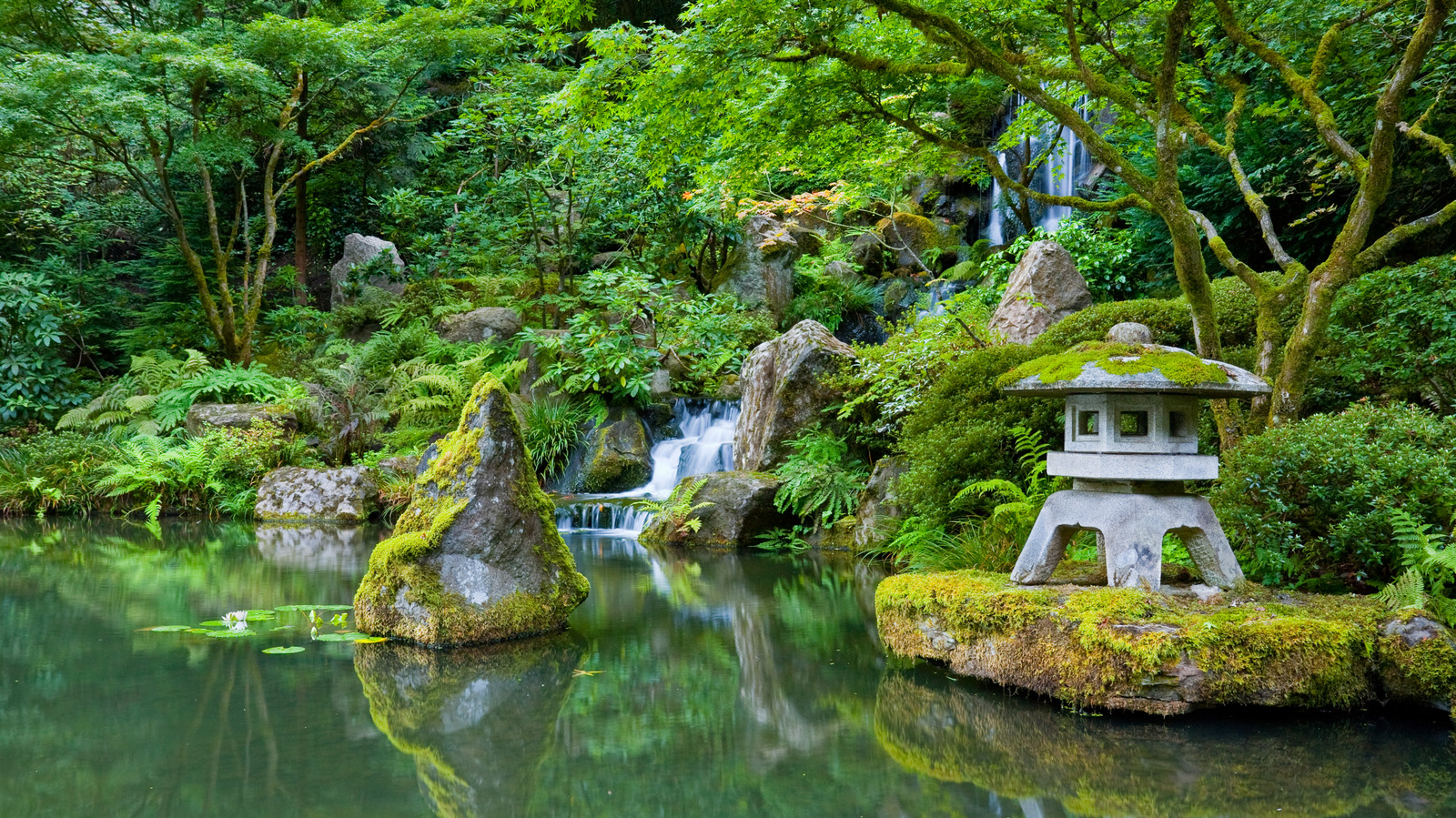
Far from being mere collections of exotic flora, Japanese gardens operate as physical manifestations of philosophical discipline, aesthetic restraint, and psychological communication. Whether through the minimalist stillness of a karesansui (dry landscape garden) or the dynamic pacing of a strolling garden utilizing the principle of miegakure ("hide and reveal"), these spaces are engineered to evoke deep contemplation. This comprehensive review examines the ten finest Japanese gardens in America, alongside an honorable mention, mapping their regional significance, architectural provenance, and enduring cultural impact.
Detailed Chronology: The Evolution of Japanese Landscape Architecture in America
The integration of Japanese landscape design into the American cultural landscape did not occur overnight. It evolved in distinct waves, moving from fleeting international expositions to permanent, civic-backed cultural touchstones.
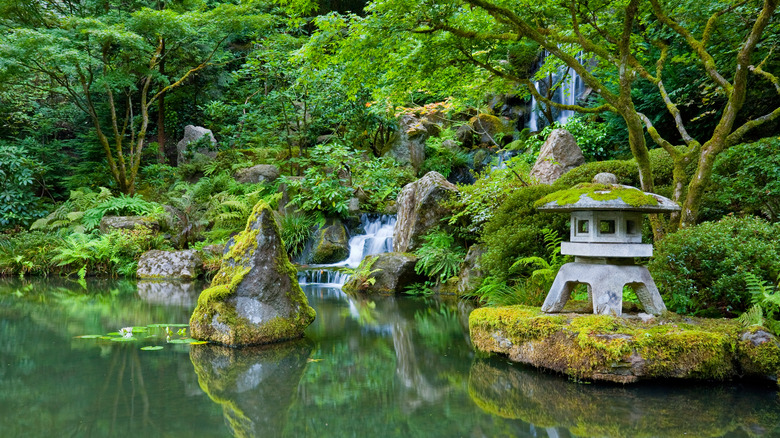
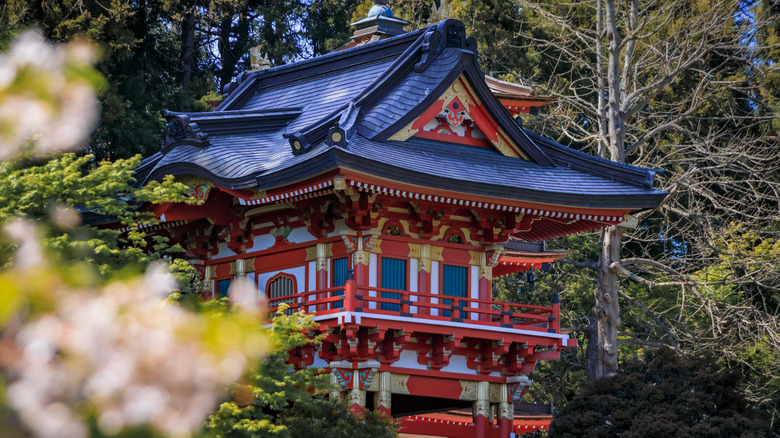
- 1894: San Francisco hosts the California Mid-Winter International Exposition, introducing the American public to authentic Japanese structural design and tea ceremony culture with the creation of the Japanese Tea Garden in Golden Gate Park—marking the oldest operating public Japanese garden in the country.
- 1915: The Brooklyn Botanic Garden constructs its Japanese Hill-and-Pond Garden under the direction of visionary designer Takeo Shiota, cementing the style’s viability on the East Coast.
- 1953–1958: In a striking act of cultural diplomacy, the Shofuso Japanese House is constructed in traditional style in Nagoya, Japan, exhibited briefly at the Museum of Modern Art (MoMA) in New York, and ultimately permanently installed in Philadelphia’s Fairmount Park.
- 1963: The Portland Japanese Garden is established, later setting a gold standard for authenticity outside of Japan and earning high praise from international diplomats and landscape authorities alike.
- 1976–1980s: Master designer Hoichi Kurisu begins his transformative work across the United States, lending his genius to properties such as Roji-en in Florida and the Anderson Japanese Gardens in Illinois, marrying traditional Japanese techniques with regional American topographies.
- 1988–2002: The establishment of civic partnership gardens, such as Rohoen (the Japanese Friendship Garden of Phoenix) built alongside sister city Himeji, proves that authentic Japanese landscape principles can flourish even within extreme arid climates.
Supporting Context & Metrics: The Anatomy of a Masterpiece
To fully appreciate these American sanctuaries, one must understand the lexicon and typology of traditional Japanese gardening. Unlike Western gardens, which often prioritize symmetrical grandeur, botanical variety, and vibrant floral displays, Japanese gardens frequently treat flowers as "glorified weeds." Instead, the focus shifts to architectural lines, textural contrasts, and symbolic abstraction.
Key Horticultural & Structural Elements
- Pines and Pruning: Pine trees are meticulously clipped and pruned over decades so their boughs mimic sculptural, low-hanging green clouds.
- The Dry Landscape (Karesansui): Utilizing raked gravel or sand in concentric circles around carefully chosen boulders, these spaces represent bodies of water and impart lessons in mental restraint and clarity.
- Acoustics and Aromas: The auditory landscape is carefully managed via the shishi-odoshi (a rocking bamboo fountain that makes a rhythmic clacking sound), while olfactory notes are anchored by the earthy scent of hinoki (Japanese cypress).
- Symbolic Iconography: Turtles and cranes frequently appear as rock formations, serving as traditional representations of longevity and good fortune.
By the Numbers: Scale and Visitation
- Portland Japanese Garden: Spans 12.5 acres across eight distinct garden spaces, attracting hundreds of thousands of international visitors annually.
- Seattle Japanese Garden: Welcomes roughly 100,000 visitors per year into its meticulously manicured 3.5-acre enclave within the Washington Park Arboretum.
- The Japanese Tea Garden (San Francisco): Encompasses approximately 5 acres of Golden Gate Park, serving as one of the most heavily trafficked municipal garden spaces in California.
The 10 Most Gorgeous Japanese Gardens in America
1. Portland Japanese Garden (Portland, Oregon)
It is a tenet of Japanese landscape design that these spaces look their absolute best when viewed through a veil of drizzling rain. It is fitting, therefore, that Portland—renowned for its overcast skies and temperate maritime climate—hosts what many international diplomats have proclaimed to be the most authentic Japanese garden outside of Japan.
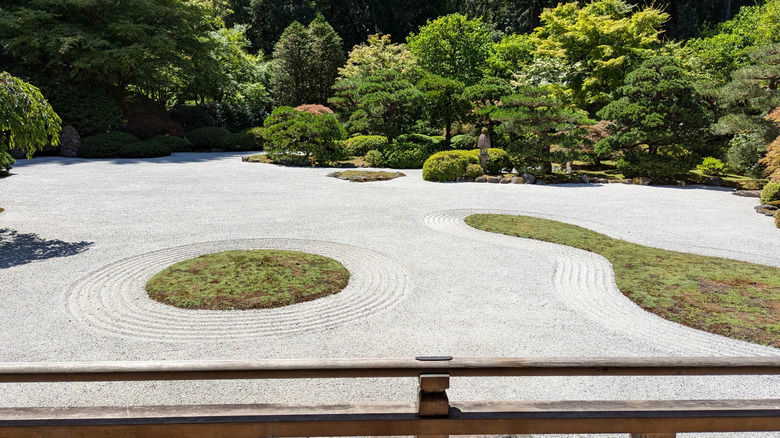
Established in 1963 across 12.5 lush acres in the West Hills, the Portland Japanese Garden features eight distinct zones, including a traditional dry landscape garden, an authentic tea garden complete with a hand-hewn wooden tea house, and an intimate courtyard-style tsubo-niwa. Publications like Country Living regularly rank it among the top destinations in the country, citing its seamless integration into the damp, forested Pacific Northwest environment.
2. Seattle Japanese Garden (Seattle, Washington)
Nestled discreetly within a sprawling arboretum just east of Capitol Hill, the Seattle Japanese Garden draws approximately 100,000 visitors annually. Designed as a classic strolling garden, it incorporates every hallmark of the style: a serene central pond teeming with koi, an intricate network of winding paths, artificial rolling hills, and expertly engineered sightlines that rely on miegakure to continually surprise the observer. While Kubota Garden in Rainier Beach offers its own unique regional charm, the Seattle Japanese Garden remains the city’s most formally accomplished public outdoor space.
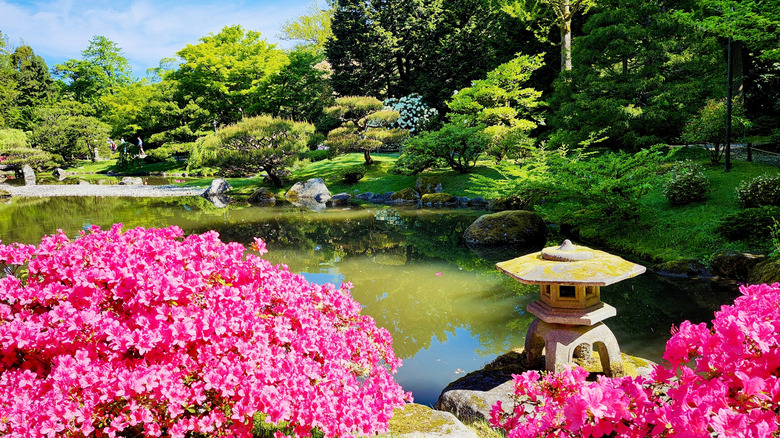
3. Japanese Tea Garden (San Francisco, California)
As the oldest operating public Japanese garden in the United States, San Francisco’s Japanese Tea Garden originated as a temporary Japanese village for the 1894 California Mid-Winter International Exposition. Occupying a prime slice of Golden Gate Park, the garden has evolved into a premier cultural destination. Visitors traverse arched drum bridges, stroll beneath blooming cherry trees, and navigate intricate stone pathways before pausing at the historic tea house, where matcha is whisked and served alongside traditional sweets near a sunken irori hearth.
4. Tenshin-en (Boston, Massachusetts)
While Western garden design encourages active participation—inviting visitors to wander through beds and fountains—traditional Japanese dry landscape gardens are occasionally conceptualized strictly as "living paintings" to be viewed from a singular perspective. Tenshin-en (the "Garden of the Heart of Heaven") at the Museum of Fine Arts, Boston, designed by master Kinsaku Nakane, exemplifies this philosophy. Admired entirely from its perimeter, the garden utilizes precise rock placements to evoke abstract natural phenomena, such as a turtle and a crane navigating a symbolic sea.
5. Shofuso Japanese House and Garden (Philadelphia, Pennsylvania)
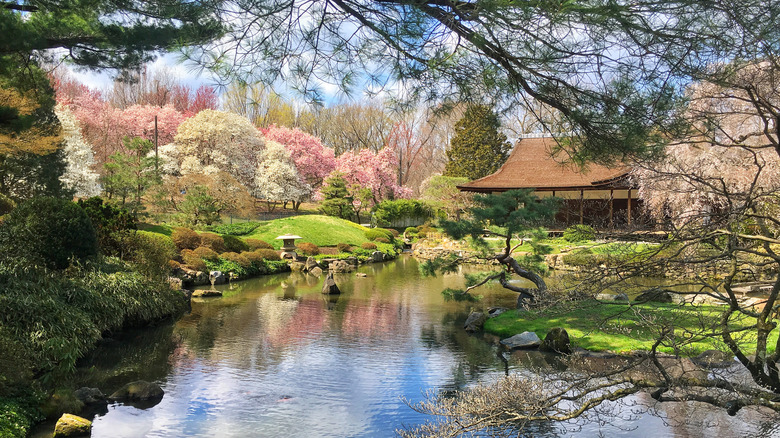
Located within Philadelphia’s sprawling Fairmount Park, Shofuso boasts a remarkably well-traveled history. The traditional shoin-style house was constructed in Japan in 1953, exhibited briefly at the Museum of Modern Art in New York City, and permanently relocated to Philadelphia in 1958. Surrounded by mature weeping maples, towering pines, and a tranquil koi pond, Shofuso shines brightest during the spring cherry blossom (sakura) season, when delicate petals drift across the manicured moss and stone footbridges.
6. The Huntington Japanese Garden (San Marino, California)
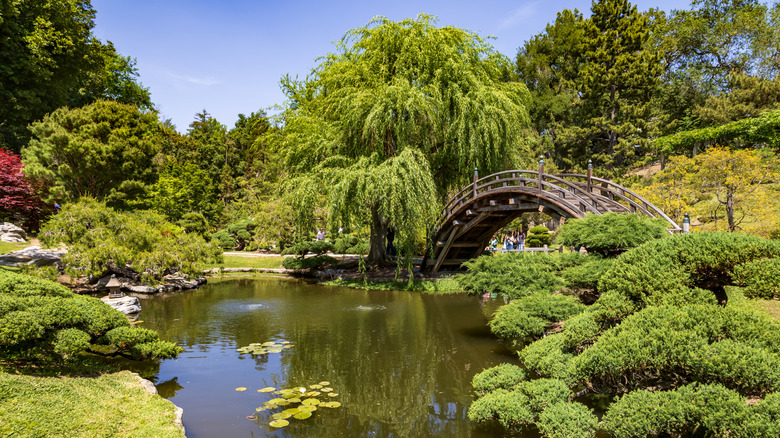
The Huntington Japanese Garden offers an immersive step back into feudal-era Japan. Entering through a dramatic, temple-style gate, visitors encounter iconic half-moon bridges, dense bamboo groves, and historic structures relocated from abroad—including a residence dating back to 18th-century Marugame. Widely celebrated by horticulture experts as one of the premier landscape installations in the American West, it balances grand architectural scale with intimate, contemplative garden rooms.
7. Japanese Hill-and-Pond Garden (Brooklyn, New York)
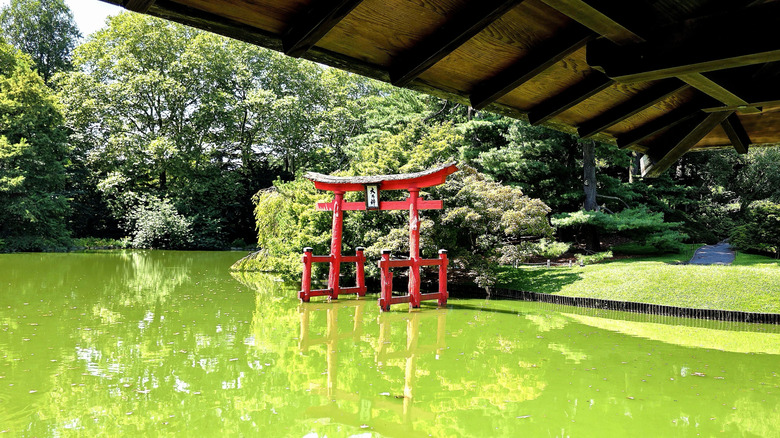
Constructed in 1915 by designer Takeo Shiota, the Japanese Hill-and-Pond Garden within the Brooklyn Botanic Garden is one of the oldest and most beloved public Japanese gardens in the United States. A striking vermilion torii gate rises from the center of the main pond, mirroring the aesthetic of Hiroshima’s famous Itsukushima Shrine. The garden masterfully synthesizes multiple design traditions, offering elevated viewing pavilions, rustic wooden bridges, and dynamic framing that borrows the surrounding urban parkland into its artistic composition.
8. Roji-en (Delray Beach, Florida)
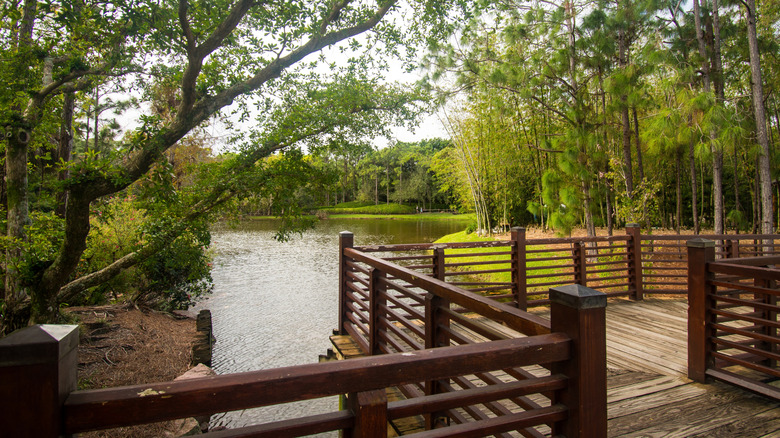
Translated poetically as the "Garden of the Drops of Dew," Roji-en at the Morikami Museum in Delray Beach is a masterclass in adaptation. Designed by visionary landscape architect Hoichi Kurisu, the property comprises six distinct gardens that trace the historical evolution of Japanese landscape design. From the Heian-period Shinden Garden—featuring zigzag bridges designed to ward off wandering evil spirits—to contemporary interpretations adapted for subtropical Florida flora, Roji-en bridges ancient heritage with modern sensibilities.
9. Rohoen (Phoenix, Arizona)
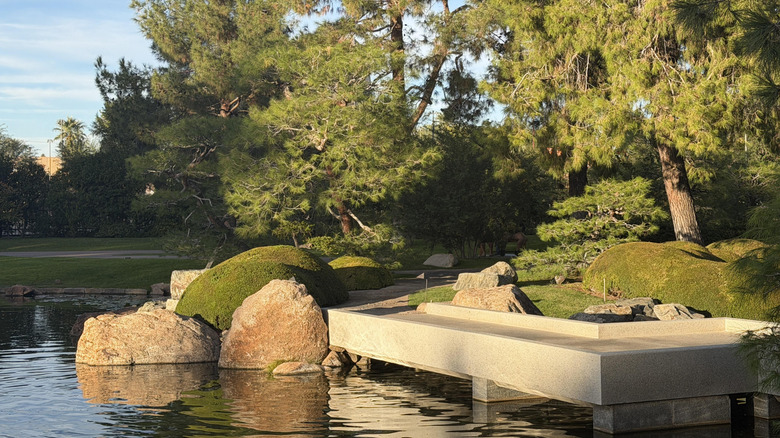
Establishing a thriving, moss-laden Japanese strolling garden in the heart of the Sonoran Desert might sound like an impossible horticultural challenge. Yet, Rohoen (the Japanese Friendship Garden of Phoenix) succeeds brilliantly. Born out of a cultural partnership with Phoenix’s sister city, Himeji, the garden was built with direct contributions from more than 50 Japanese landscape experts. Featuring imported stone lanterns, cascading waterfalls, and a central koi pond, Rohoen serves as a cool, tranquil oasis amidst the arid Arizona climate.
10. Anderson Japanese Gardens (Rockford, Illinois)
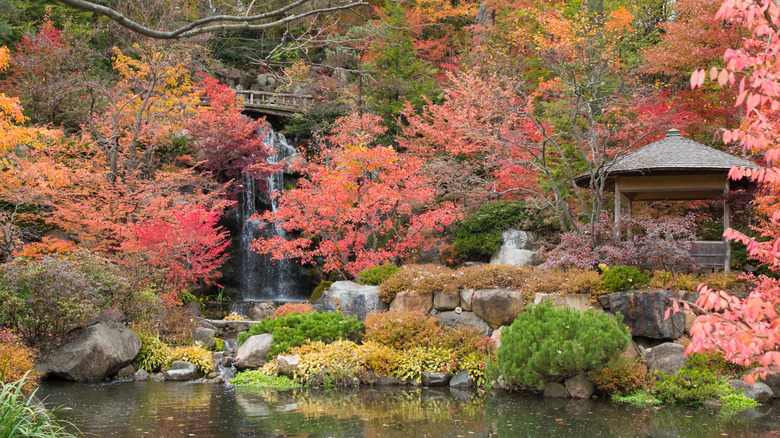
Frequently ranked among the absolute finest Japanese gardens in North America by specialty publications like Sukiya Living, the Anderson Japanese Gardens in Rockford, Illinois, represent the pinnacle of Midwestern landscape artistry. Also designed by Hoichi Kurisu, the 12-acre property is characterized by rushing waterfalls, winding streams, weathered boulders, and pristine wooden pavilions. The gardens stand as a prime example of "controlled nature"—nature imbued with architectural manners and spiritual intentionality.
Honorable Mention: National Bonsai and Penjing Museum (Washington, D.C.)
While technically an institutional museum rather than a traditional walk-through landscape, the National Bonsai and Penjing Museum in Washington, D.C., deserves distinct recognition. Bonsai—the ancient Japanese art of cultivating miniature trees in containers—operates as a garden in micro-scale. Potted in living soil, topped with delicate moss, and occasionally paired with viewing stones (suiseki), these living sculptures are displayed within serene pavilions backed by subtle Japanese garden elements, offering an intense concentration of botanical artistry.
Official Statements and Expert Perspectives
The enduring appeal of these spaces lies in their psychological and philosophical resonance. Landscape historians and cultural ambassadors frequently emphasize that these gardens serve a dual purpose: preserving ancient Japanese traditions while offering modern urbanites a vital psychological retreat.
"A Japanese garden is not merely an arrangement of plants and rocks; it is an exercise in mindfulness. Every stone is placed with intent, and every path is designed to slow the human pace down to the rhythm of nature."
— Horticultural Archivist, North American Japanese Garden Association
Furthermore, international diplomatic figures have repeatedly lauded American municipal gardens for their exceptional fidelity to traditional craftsmanship. Upon visiting the Portland Japanese Garden, a former Ambassador of Japan noted it to be "the most beautiful and authentic garden found outside of Japan," highlighting the rigorous standards maintained by American curators and master gardeners.
Future Outlook: Preservation and Global Cultural Exchange
As urban density increases across the United States, the demand for restorative green spaces has accelerated. Japanese gardens, with their emphasis on acoustic isolation, understated elegance, and spatial economy, are uniquely positioned to meet this psychological need.
Looking forward, curators and landscape architects across America face unique challenges, including adapting traditional water-reliant systems to modern climate change pressures, managing increased tourist foot traffic without compromising structural integrity, and sourcing authentic materials and artisan labor from Japan. Nevertheless, institutions such as the North American Japanese Garden Association continue to foster cross-cultural training programs, ensuring that the ancient arts of pruning, rock placement, and landscape composition are passed down to new generations of American horticulturists.
Ultimately, these ten sanctuaries stand as living testaments to the power of cross-cultural dialogue. Far from static tourist attractions, they remain breathing, evolving ecosystems—poems written in stone, water, and green light—inviting every visitor to pause, reflect, and rediscover tranquility.