








In the early, ink-black hours of 14 October 2025, the rugged coastline of north-west Scotland witnessed yet another preventable maritime disaster. At approximately 0238 local time, the commercial fishing vessel Silver Cloud II piled at full speed onto uncharted rocks just outside the picturesque port of Lochinver. The violent impact breached the hull, ultimately sealing the fate of the vessel, which was lost to the sea.
Miraculously, the human toll was zero. The three-man crew, jolted awake by the catastrophic crunch of metal and stone against the seabed, executed a textbook evacuation into their liferaft. They were subsequently rescued without physical injury—a fortunate coda to an event that could easily have added three more names to the fishing industry’s tragic maritime death toll.
Yet, as detailed in the official Accident Investigation Report 17/2026 released by the Marine Accident Investigation Branch (MAIB), this incident is far from an isolated stroke of bad luck. The root cause of the grounding is as mundane as it is lethal: the skipper simply fell asleep at the helm.
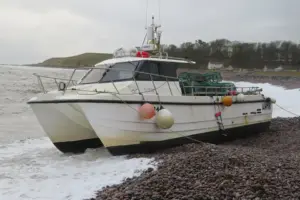
While the physical rescue was a success, the administrative and safety conclusions drawn by investigators strike a deeply pessimistic tone. In an extraordinary measure highlighting systemic stagnation, the MAIB issued zero new recommendations. The reason? The causal factors behind the loss of the Silver Cloud II are an exact carbon copy of findings from decades of previous maritime accident investigations. Fatigue, overwork, solitary watchkeeping, and a pervasive cultural tolerance for dangerous sleep deprivation continue to plague the commercial fishing sector.
This in-depth investigative report examines the sequence of events leading up to the disaster, the broader socioeconomic context of modern fishing in the Scottish Highlands, the psychological mechanics of operational fatigue, and why the maritime regulatory framework continues to struggle against an industry-wide crisis of human endurance.
Detailed Chronology: The Final Voyage of the Silver Cloud II
To understand how a modern, equipped fishing vessel ends up stranded on a jagged Scottish shore, one must reconstruct the final 24 hours of the Silver Cloud II’s operational cycle. While the MAIB report outlines the bare framework of the accident, the anatomy of such maritime incidents follows a chillingly predictable trajectory of cumulative exhaustion.
The Buildup: Operations Prior to the Incident
Commercial fishing is rarely a 9-to-5 enterprise; it is an unrelenting test of endurance dictated by tides, quotas, fish stocks, and weather windows. In the days leading up to 14 October 2025, the Silver Cloud II had been operating under high-tempo conditions. The crew—comprising the skipper and two deckhands—had endured irregular sleep patterns, broken rest cycles, and the physical battering inherent to operating off the turbulent north-west coast of Scotland.
As is standard practice on many smaller commercial fishing vessels, the burden of navigation and watchkeeping frequently falls disproportionately—or entirely—on the skipper. While modern technology offers advanced navigational aids, it cannot replace human vigilance. When a lone skipper takes the watch after a grueling day of hauling, sorting, processing, and maintenance, they enter a physiological danger zone.
The Approach to Lochinver
In the dark hours of 14 October, the Silver Cloud II was transiting toward the vicinity of Lochinver. The weather, typical for the region in mid-autumn, presented dark nights and localized patches of reduced visibility, compounding the strain on any individual attempting to maintain a visual and radar lookout.
At some point prior to 0238, the skipper—alone in the wheelhouse—succumbed to profound sleep deprivation. The human body’s circadian rhythms reach a biological trough between 0300 and 0500, a period widely recognized in transport safety as the "window of circadian low." During this time, the brain’s demand for sleep becomes physiologically overwhelming, capable of overriding even the strongest willpower.
Without an active watchkeeper to monitor the electronic chart plotters, cross-reference visual bearings, or respond to navigational alarms, the Silver Cloud II continued on a steady, uncorrected heading toward the shore.
The Impact and Abandonment
At 0238, the vessel struck the rocks near Lochinver. The transition from silent transit to catastrophic grounding was instantaneous. The violent deceleration threw gear across the wheelhouse and immediately awakened the resting crew members below deck.
Assessing the situation with practiced urgency, the crew recognized that the vessel’s structural integrity had been critically compromised. Water ingress was rapid, and the rocks held the hull fast in a precarious position. Demonstrating sound emergency preparedness, the three crew members abandoned the ship into a liferaft, escaping the sinking hull before the situation deteriorated further.
Local rescue assets responded swiftly to the distress alerts, pulling the uninjured crew from the liferaft. However, despite salvage assessments, the environmental conditions and structural damage meant the Silver Cloud II could not be saved. The vessel subsequently slipped beneath the waves, joining a long line of marine casualties claimed not by mechanical failure, but by human exhaustion.
Supporting Context & Metrics: The Chronic Crisis of Fatigue at Sea
The loss of the Silver Cloud II is not an anomaly. To view it as a standalone navigational error is to misunderstand the structural reality of the commercial fishing industry. Across the United Kingdom and international waters alike, fishing remains statistically one of the most dangerous occupations in the world—and fatigue is its silent reaper.
The Physiology of Watchkeeper Fatigue
Fatigue is frequently underestimated by mariners and shore-based managers alike. Unlike alcohol impairment, which has clear legal thresholds and societal stigma, fatigue is insidious. It impairs cognitive function, slows reaction times, degrades situational awareness, and induces "microsleeps"—brief, involuntary episodes of sleep lasting from a fraction of a second to several seconds, during which a person is completely unresponsive to external stimuli.
When a skipper experiences a microsleep in the wheelhouse, a vessel moving at standard cruising speed can cover a dangerous amount of open water—or close the distance to a shoreline—in mere seconds.

Single-Handed Watchkeeping: A Systemic Hazard
A major factor highlighted by historical MAIB data is the prevalence of single-handed watchkeeping on smaller commercial fishing vessels. Economic pressures, coupled with small crew sizes, often make it unfeasible to maintain a two-person watch system, especially during transit phases when fish are not being actively caught.
When one person is tasked with steering, navigating, watching for other traffic, and monitoring weather while dealing with accumulated sleep debt, disaster is merely a matter of time. Regulatory frameworks often mandate rest hours, but in the fast-paced world of commercial fishing, these regulations can be difficult to monitor, enforce, or reconcile with the biological realities of catching fish.
The Economic Realities of the Scottish Fishing Fleet
Ports like Lochinver are vital hubs for the Scottish fishing economy, supporting coastal communities that rely heavily on maritime trade and seafood harvesting. However, independent vessel owners and skippers operate on razor-thin margins. Fuel costs, fluctuating market prices for catch, and expensive equipment maintenance create an environment where working longer hours is often seen as the only way to remain economically viable.
This financial pressure directly contributes to poor risk management regarding sleep. Skippers push through exhaustion because every hour spent sleeping is perceived as an hour lost earning revenue. Consequently, safety margins are quietly eroded until a hard reality—such as a rocky coastline—forcibly halts operations.
Official Statements and Regulatory Stagnation: The "Groundhog Day" of Marine Safety
Perhaps the most striking aspect of Accident Investigation Report 17/2026 is what it omits: recommendations.
In traditional accident investigation reports, safety bodies issue targeted directives to vessel owners, maritime authorities, training boards, and regulatory bodies to prevent a recurrence of specific failures. The absence of recommendations in this report is a stark indictment of the maritime safety landscape.
Why No Recommendations Were Made
The MAIB operates under a mandate to improve safety at sea through rigorous, independent investigations. When an investigation uncovers a hazard that has been addressed, analyzed, and warned against repeatedly over decades, issuing yet another recommendation can feel redundant.
The official stance reflected in the report highlights a frustrating reality: the findings of Report 17/2026 are an exact repetition of previous investigations.
- How many times must a skipper fall asleep at the helm before watchkeeping structures change?
- How many vessels must be lost to rocks before single-handed night transits are fundamentally reevaluated?
- How many safety bulletins must emphasize the lethal nature of chronic fatigue before the industry culture shifts?
By declining to issue new recommendations, the MAIB is implicitly signaling to the maritime community, regulators, and vessel owners that the solutions are already well-known, widely published, and continuously ignored. The problem is not a lack of knowledge; it is a lack of implementation and cultural change.
The Regulatory Dilemma
Regulators face a difficult balancing act. Imposing overly rigid, bureaucratic watchkeeping rules on small fishing vessels can alienate independent operators and prove economically ruinous. Yet, maintaining a laissez-faire approach permits unsafe working conditions to persist unchecked.
Maritime safety agencies have continually pushed educational campaigns, distributed fatigue guides, and encouraged better bridge resource management. Yet, as long as the underlying economic pressures and small crew sizes remain unaddressed, individual skippers will continue to push past their biological limits.
Future Outlook: Charting a Safer Course for Commercial Fishing
As the maritime industry looks toward the future, the loss of the Silver Cloud II must serve as more than just a footnote in an investigative archive. Preventing future groundings of this nature requires a multi-faceted approach involving technological innovation, cultural transformation, and regulatory evolution.
1. Technological Solutions to Human Exhaustion
While human error is cited as the primary cause, technology can act as a crucial safety net against total cognitive failure.
- Bridge Navigational Watch Alarm Systems (BNWAS): These systems require the watchkeeper to acknowledge their presence at regular intervals. If a skipper falls asleep and fails to press the reset button, an escalating alarm sounds to alert the crew or trigger external warnings. While BNWAS are increasingly mandated on larger vessels, wider adoption and integration into smaller commercial fishing fleets must be accelerated.
- Advanced Proximity and Collision Avoidance Alarms: Modern chart plotters can be programmed with shallow-water alarms and waypoint deviation warnings that sound loud audio alerts well before a vessel enters dangerous waters. However, such systems are only effective if alarms are set correctly and not muted by fatigued operators seeking quiet.
2. Cultural Shift Within the Fishing Community
Safety at sea cannot be legislated entirely from a desk in Whitehall or Edinburgh; it must be embraced from the wheelhouse outward. The fishing industry must work to dismantle the romanticized notion of the "heroic, tireless skipper" who works around the clock.
- Peer Mentorship: Experienced skippers must mentor younger crew members not just in catching fish, but in risk assessment, crew rotation, and recognizing the early signs of mental and physical burnout.
- Open Dialogue on Fatigue: Creating an environment where a crew member—regardless of rank—can voice concerns about a skipper’s exhaustion without fear of professional repercussions is vital.
3. Economic and Structural Support
Governments and industry associations must examine the structural pressures driving excessive work hours. If safety is a collective priority, support mechanisms—such as grants for safety equipment upgrades, subsidized training in fatigue management, and insurance incentives for vessels maintaining robust rest schedules—must be prioritized.
Conclusion
The crew of the Silver Cloud II walked away from the rocks near Lochinver on 14 October 2025. They were fortunate. The vessel, however, is gone, swallowed by the sea as a direct consequence of a human biological limitation that society has known about for centuries.
Until the commercial fishing industry—backed by regulators, owners, and fishers alike—confronts the silent epidemic of watchkeeper fatigue with more than just advisory reports, the ghosts of past investigations will continue to haunt the jagged coasts of the British Isles.