






Executive Overview
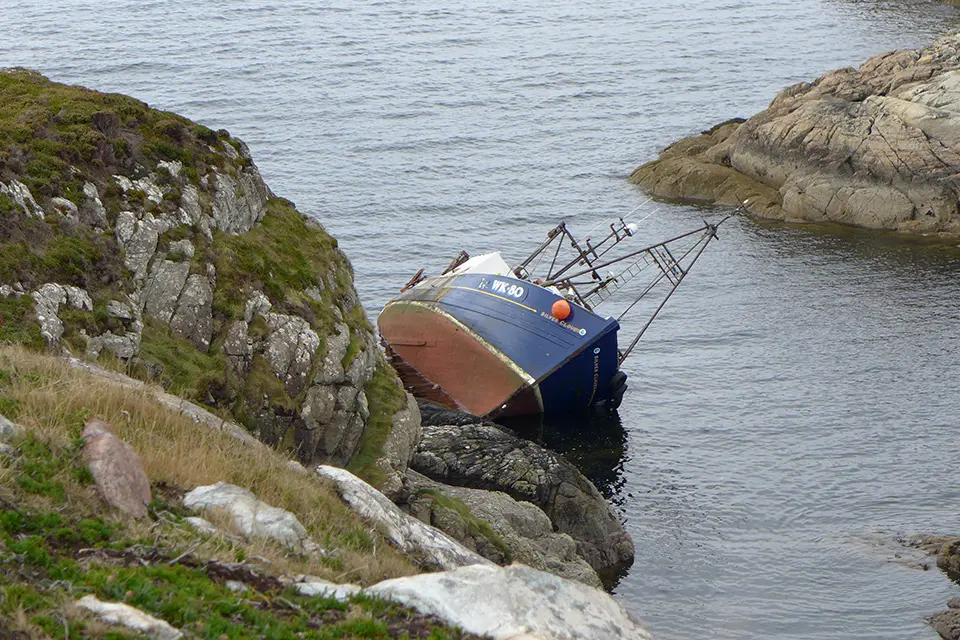
Maritime authorities have released their official accident investigation report concerning the catastrophic grounding and subsequent total loss of the commercial fishing vessel Silver Cloud II (WK 80). The incident, which unfolded on October 14, 2025, near Rubha Rodha in Lochinver, Scotland, serves as a stark reminder of the unforgiving nature of the North Atlantic coastal waters and the relentless challenges faced by modern commercial fishing operations.
While the vessel itself could not be saved—ultimately succumbing to the sea following the impact—the primary focus of the comprehensive safety probe has been to dissect the sequence of events that led the vessel off course. Investigators from the Marine Accident Investigation Branch (MAIB) have meticulously reconstructed the final hours of the voyage, analyzing everything from navigational watchkeeping practices and bridge resource management to environmental conditions, electronic chart usage, and human factors.
The sinking of the Silver Cloud II not only represents a significant economic blow to its operators and the local Scottish fishing community but also highlights critical vulnerabilities inherent in coastal navigation. By examining the systemic causes behind the disaster, marine safety experts hope to prevent similar tragedies. This report delves into the intricate findings of the official investigation, exploring the chronology of the accident, the broader context of UK fishing vessel safety metrics, and the vital lessons the maritime industry must heed to protect vessels operating in hazardous coastal zones.
Detailed Chronology
The Voyage Plan and Departure
To understand how the Silver Cloud II met its fate on the jagged coastline of Rubha Rodha, investigators had to retrace the vessel’s operational timeline leading up to the accident on October 14, 2025. Like many whitefish and shellfish vessels operating out of Scottish ports, the Silver Cloud II was engaged in a routine commercial fishing trip, navigating waters well-known for their complex bathymetry, strong tidal currents, and rapidly changing weather patterns.
In the hours preceding the casualty, the vessel was making way along the northwest coast of Scotland. The initial passage plan had been drawn up under standard operating procedures, taking into account the vessel’s intended fishing grounds and safe transit corridors. However, as maritime investigators note, a passage plan is only as effective as its active execution and real-time adaptation to changing environmental variables.
The Approach to Lochinver Waters
As October 14 progressed, the Silver Cloud II found itself navigating the coastal approaches near Lochinver. The area around Rubha Rodha is characterized by intricate rock formations, hidden reefs, and shallow patches that demand unyielding vigilance from the navigational watch.
According to the MAIB findings, a combination of operational pressures, environmental factors, and subtle degradations in situational awareness began to align in the hours leading up to the grounding. Navigational watchkeeping standards—designed to provide redundant checks against positioning errors—faced severe challenges. Whether through fatigue, distraction, or over-reliance on automated navigation systems, the bridge team failed to recognize the subtle set of the vessel toward the hazard.
The Impact at Rubha Rodha
The moment of impact occurred suddenly, leaving the crew with minimal time to react before the structural integrity of the hull was fatally compromised. When the Silver Cloud II struck the rocky shoreline at Rubha Rodha, the force of the collision breached the hull compartments, instantly flooding engine and storage spaces.
Immediate emergency protocols were initiated by the crew, who recognized the gravity of their predicament. Distress signals were transmitted, alerting local rescue coordination centers and nearby vessels. The swift response of search and rescue assets ensured the physical safety of the crew, a testament to modern maritime communication systems and the professionalism of regional rescue services.
However, despite frantic efforts to stabilize the vessel and mitigate the ingress of water, the severity of the structural damage rendered salvage impossible in the immediate term. Exposed to heavy swells and relentless wave action against the jagged rocks of Rubha Rodha, the Silver Cloud II suffered progressive structural failure. Within hours of the initial grounding, the vessel slipped beneath the surface, resulting in a total loss of the asset and bringing a dramatic end to the operational life of WK 80.
Supporting Context & Metrics
The Safety Landscape of the UK Fishing Industry
The loss of the Silver Cloud II does not occur in a vacuum; it is part of a broader, ongoing statistical narrative concerning safety within the United Kingdom’s commercial fishing sector. For decades, maritime safety authorities have identified commercial fishing as one of the most hazardous land- or sea-based occupations in the world.
Data compiled by safety agencies consistently reveals that fishing vessel incidents—ranging from slips, trips, and falls to man-overboard events, stability losses, and groundings—account for a disproportionate number of serious injuries and fatalities relative to the total number of active workers. While technological advancements in electronic charting, radar, and satellite communications have theoretically made navigation easier, they have also introduced new psychological phenomena, such as "automation complacency," where mariners place absolute trust in digital displays while occasionally neglecting traditional visual and cross-referencing techniques.
Navigational Risks in Scottish Coastal Waters
The geography of the Scottish Highlands and its surrounding islands presents an exceptionally challenging environment for mariners. Waters such as those around Lochinver feature narrow channels, blind passages, and dramatic tidal shifts.
- Bathymetric Complexity: The sea floor rises abruptly in many coastal sectors, leaving little margin for error if a vessel drifts even a few hundred meters off its intended track.
- Meteorological Volatility: Rapidly forming squalls, heavy fog, and persistent low-visibility conditions frequently plague the northwest coast of Scotland, reducing reaction times for bridge teams.
- Fatigue and Workload: Commercial fishing is a relentless endeavor. Crew members often endure gruelling work-rest cycles, particularly during peak seasons or when striving to meet economic quotas. Fatigue remains a persistent underlying factor in maritime casualties, eroding cognitive function, slowing reaction times, and impairing risk assessment abilities.
Technological Factors in Modern Groundings
The MAIB report into the Silver Cloud II sheds light on how electronic navigation systems are utilized aboard smaller commercial fishing vessels. Electronic Chart Display and Information Systems (ECDIS) and standalone GPS chartplotters offer incredible precision. Yet, investigators frequently find that human-machine interface issues contribute to groundings:
- Incorrect Alarm Settings: Critical safety contours and boundary alarms are sometimes muted or set improperly to avoid "nuisance alarms" during routine operations.
- Scale and Detail Oversight: Navigators occasionally fail to zoom in sufficiently on electronic charts to notice localized hazards that only appear at high-resolution map scales.
- Failure to Cross-Fix: Over-reliance on a single electronic positioning source without verifying position visually or via traditional radar bearings leaves the vessel vulnerable to uncalibrated system errors or subtle GPS spoofing/drift.
Official Statements
The publication of the accident investigation report has prompted statements from maritime authorities, safety advocates, and industry representatives, underscoring the necessity of transparency and continuous learning within the maritime community.
A senior spokesperson for the Marine Accident Investigation Branch emphasized the core mission of the findings:
"The primary objective of our investigation into the grounding and loss of the Silver Cloud II is not to apportion blame or liability, but to establish the exact chain of events and causal factors that led to this unfortunate incident. By sharing these insights with the wider maritime industry, we aim to foster an environment of continuous safety improvement. Every commercial vessel operator, skipper, and crew member must treat this report as a vital learning opportunity to review their own bridge procedures, passage planning, and watchkeeping routines."
Local fishing associations and community stakeholders in Lochinver have also expressed deep concern over the incident, while offering immense relief that all personnel survived the ordeal. A representative for regional fishing interests noted:
"The loss of a vessel like the Silver Cloud II is felt deeply across our close-knit coastal community. These boats are more than just working platforms; they are livelihoods, built on generations of maritime heritage. While we are profoundly thankful that the crew returned safely to their families, the sudden disappearance of WK 80 from our harbor is a sober reminder of the risks our fishermen face every single day at sea. We will carefully study the MAIB recommendations to ensure our fleets continue to adapt and prioritize safety above all else."
Future Outlook
Regulatory and Operational Recommendations
The definitive value of the MAIB report on the Silver Cloud II lies in its forward-looking recommendations. While the physical hull of WK 80 cannot be recovered, the lessons derived from its final voyage are already shaping future safety advisories. The report outlines specific directives for vessel skippers, owners, and training organizations:
- Rigorous Passage Planning Execution: Emphasizing that passage plans must not merely be administrative checkboxes required for port departure, but dynamic tools updated and monitored continuously throughout a voyage.
- Enhanced Bridge Resource Management (BRM): Encouraging smaller commercial vessels to adopt structured communication protocols on the bridge, ensuring that any crew member—regardless of rank—feels empowered to question the vessel’s heading or proximity to hazards.
- Fatigue Management Protocols: Urging vessel operators to critically evaluate work schedules to ensure crews receive adequate restorative rest, thereby mitigating the cognitive degradation associated with chronic exhaustion.
Industry Transformation and Technological Safeguards
Looking ahead, the commercial fishing sector is at a crossroads. As regulatory bodies push for higher safety standards—including mandatory stability assessments, improved tracking systems, and enhanced crew certification—incidents like the grounding of the Silver Cloud II serve as catalysts for change.
Manufacturers of marine electronics are likewise reviewing interface designs to minimize user error, developing smarter alarm systems that differentiate between routine navigational warnings and imminent grounding threats. Furthermore, maritime training providers are incorporating case studies from reports like this one directly into skipper certification syllabi, ensuring that the next generation of mariners understands the real-world consequences of small navigational oversights.
Ultimately, the story of the Silver Cloud II (WK 80) is one of loss, resilience, and education. While the sea has claimed the vessel, the exhaustive work of the accident investigators ensures that its final voyage will not be forgotten. By confronting the uncomfortable truths of human error, environmental adversity, and operational pressures, the maritime community takes another vital step toward safeguarding those who make their living upon the waves.
Media Enquiries & Further Information
For those seeking further technical details, statistical breakdowns, or official documentation regarding the incident, the complete MAIB accident investigation report can be accessed online via the official government report portal.
For accredited press and media representatives wishing to make inquiries regarding this investigation or broader maritime safety policies:
- Office Hours Media Enquiries (Telephone Only): 01932 440015
- Out of Hours Media Enquiries (Telephone Only): 0300 7777878