









Executive Overview
In a significant strategic evolution, major metropolitan public transit systems across the United States are fundamentally rewriting the playbook on passenger safety, community outreach, and institutional transparency. Moving past an era defined solely by heavy-handed, traditional law enforcement models, the Chicago Transit Authority (CTA) and the Maryland Department of Transportation Maryland Transit Administration (MTA) have rolled out comprehensive, multi-faceted initiatives. These programs pair conventional policing with non-law enforcement interventions, professional crisis response teams, specialized rider assistance, and public-facing data dashboards.
At the heart of this paradigm shift is a growing consensus among transit administrators: modern urban mobility networks cannot simply arrest their way out of complex socio-economic challenges such as homelessness, untreated mental illness, and substance-use disorders. Instead, agencies must "meet people where they are." By deploying specialized personnel trained in trauma-informed care, de-escalation, and community violence intervention alongside traditional security resources, systems like the CTA and MTA are working to foster environments that feel genuinely welcoming, accessible, and secure for millions of daily commuters.
This report provides an in-depth examination of the newly launched programs—highlighting Chicago’s $9.6-million Safe Ride Specialists pilot and expanded homelessness outreach, alongside Maryland’s CARE Ambassador Team and digital Safety and Security Dashboard. Furthermore, it explores the broader implications of these strategies, detailing how urban transit authorities are balancing law enforcement, social services, and public accountability to redefine the very concept of safety in public spaces.

Detailed Chronology of the New Safety Initiatives
The rollout of these contemporary safety protocols did not happen overnight; rather, they represent the culmination of years of targeted workshops, stakeholder roundtables, and shifting public expectations regarding municipal governance and public safety.
The Path to Chicago’s Safe Ride Pilot
Chicago’s journey toward a layered safety ecosystem gained significant momentum following a pivotal Transit Community Safety workshop held in August 2025. This collaborative forum convened more than 30 mental health and social-service experts, community-based organizations, labor union partners, and everyday transit riders. The core objective was to diagnose the root causes of friction on the system and design interventions tailored to the specific vulnerabilities observed across the CTA network.
Building directly on recommendations from the August 2025 workshop—and subsequently authorized by the Chicago Transit Board—the CTA engineered its landmark $9.6-million Safe Ride Specialists pilot program. Scheduled to deploy in September, this one-year initiative introduces specialized, non-law-enforcement personnel onto the agency’s primary rail arteries: the Blue, Red, and Green lines.
To execute the pilot, the CTA partnered with four established community organizations whose staff possess deep ties to Chicago neighborhoods. Operating in targeted stations, on moving trains, and aboard buses, these specialists provide a continuous, proactive presence. Their operational toolkit moves far beyond punitive measures; they carry outreach materials, hygiene kits, and crucially, Narcan to combat opioid overdoses.

The workforce is split into two distinct, highly focused functions:
- Crisis Intervention Specialists: Professionals specifically trained to interact with individuals experiencing acute mental health episodes and substance-use disorders.
- Community Violence Intervention Specialists: Personnel tasked with engaging youth and young adults, building localized trust, and mitigating interpersonal conflicts before they spiral into physical violence.
All specialists undergo rigorous training in trauma-informed care, conflict de-escalation, anti-bias principles, and crisis resolution.
Maryland’s Synchronized Rollout
Meanwhile, the Maryland Transit Administration structured its contemporary safety strategy around customer navigation and radical transparency, establishing a firm launch date of September 1 for its core initiatives.
MTA’s approach introduces the CARE (Customer Assistance and Rider Experience) Ambassador Team onto the Metro Subway and Light Rail networks. Rather than focusing strictly on crisis intervention, these ambassadors serve as the primary human touchpoint for everyday operational challenges. They assist riders with complex trip planning, explain dynamic fare and payment structures, and answer general navigation queries.

Crucially, however, the CARE Ambassadors are not merely customer service representatives. They receive specialized de-escalation training, empowering them to address minor antisocial behaviors, enforce the agency’s Code of Conduct through positive communication, and prevent minor disputes from escalating into safety hazards.
Simultaneously, the MTA launched its public Safety and Security Dashboard. Designed to demystify transit safety for the riding public, this digital resource publishes granular data regarding serious crimes and police clearance rates, giving stakeholders a clear, real-time look at security trends across a system that facilitates nearly four million trips annually.
Supporting Context, Metrics, and Multi-Agency Partnerships
The success of these localized programs relies heavily on robust institutional partnerships and clear, data-driven evaluation metrics designed to measure performance beyond mere arrest counts.
Expanding Wraparound Services in Chicago
The CTA’s Safe Ride Specialists do not operate in a vacuum; they function as a vital bridge to a broader web of city services. The agency has significantly amplified its existing partnership with the Chicago Department of Family and Support Services (DFSS). Under an expanded agreement backed by up to $4.2 million annually for the next two years, the CTA and DFSS are supercharging outreach efforts across the around-the-clock Red and Blue lines while securing at least 30 dedicated shelter beds for transit-dependent unhoused individuals.
The structural enhancements of this partnership are comprehensive:
- 24/7 Blue Line Coverage: The addition of a third dedicated outreach team guarantees round-the-clock presence along the corridor.
- Specialized Medical Support: A licensed nurse has been integrated directly into the existing Red Line outreach team, providing immediate, on-site triage and health assessments.
- Comprehensive Resource Connections: Outreach workers actively link vulnerable individuals to emergency shelters, comprehensive healthcare, behavioral health services, substance-use rehabilitation, meals, clothing, and hygiene facilities.
According to agency impact metrics, the CTA-DFSS partnership—which originated in 2023—has already successfully connected thousands of vulnerable individuals with long-term shelter placements, housing opportunities, and critical social services.
Measuring Success: The CTA Evaluation Framework
Because the Safe Ride Specialists program represents a substantial financial and social investment, the CTA has established a stringent, multi-variable framework to evaluate the one-year pilot. Success will not be measured exclusively by traditional metrics like fare evasion citations or police dispatches. Instead, the evaluation parameters include:
- The volume of critical incidents successfully de-escalated without the intervention of law enforcement.
- Quantifiable reductions in service delays caused by passenger altercations or medical emergencies.
- Enhanced safety outcomes and perceived security for both front-line transit employees and everyday riders.
- The volume and quality of successful connections made to wraparound social services.
- Long-term stability outcomes for vulnerable individuals engaged by the specialists.
Maryland’s Data-Driven Transparency
In Maryland, the deployment of the CARE Ambassador Team is supported by hard statistical tracking showcased on the new Safety and Security Dashboard. By making Part 1 violent crime data—including robbery, aggravated assault, and homicide—publicly accessible, the MTA is addressing rider perception head-on with empirical reality.
MTA data indicates that Part 1 violent crimes declined across both 2024 and 2025. Furthermore, the MTA Police department maintained a robust clearance rate of 76% for serious crime cases over the past two-year period. By publishing these figures alongside rising ridership numbers, the agency demonstrates that safety indicators are steadily improving even as system utilization rebounds toward pre-pandemic levels.
The MTA Police continue to coordinate these efforts with an extensive coalition of external partners, including the Baltimore City Police Department, Baltimore City School Police, the Maryland Department of Juvenile Services, the Mayor’s Office of Youth Violence, and various community organizations across participating jurisdictions.
Official Statements and Institutional Vision
Agency leaders across both states have emphasized that these modern programs represent a philosophy of inclusion, empathy, and organizational evolution rather than a retreat from security.
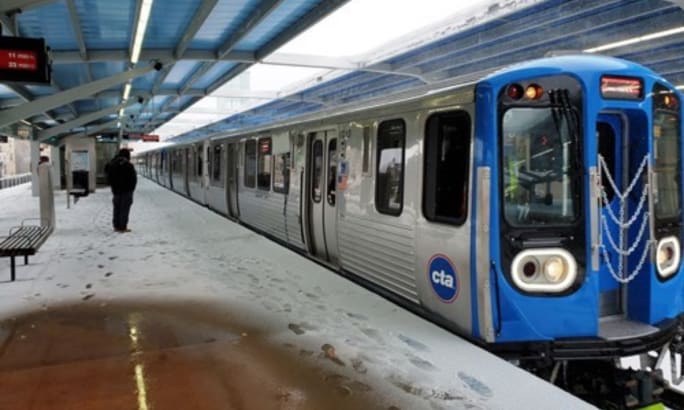
Announcing the launch of the Safe Ride Specialists, CTA Acting President Nora Leerhsen articulated the core ethos driving the Chicago initiative:
"Safety is really about meeting people where they are. This program will help every rider feel welcome, connect vulnerable riders to the support they need, and complement our recent investments to increase law enforcement resources."
Leerhsen’s remarks underscore a crucial policy nuance: these social interventions are explicitly designed to supplement, not supplant, traditional police presence. The CTA has simultaneously fortified its reliance on the Chicago Police Department and the Cook County Sheriff’s Office, ensuring that armed law enforcement remains readily available for violent criminal acts while non-violent behavioral issues are diverted to trained specialists.
Echoing this sentiment in Maryland, Transit Administrator Holly Arnold emphasized the synergy between customer service, accountability, and security infrastructure:
"The safety of our riders and employees will always be our top priority. The CARE Ambassadors and Safety dashboard work together with other agency tools, including the Code of Conduct and See Say app, to provide a comprehensive safety approach across the transit system."
Arnold highlights how the CARE teams and the digital dashboard integrate into Maryland’s existing security framework, which includes the See Say mobile app launched in October 2025. This app allows riders to discreetly report suspicious activity or safety concerns directly to transit police, ensuring that technological reporting tools and human-centric ambassadors work in tandem.
Future Outlook: The Evolution of Layered Transit Safety
As urban transit systems nationwide grapple with post-pandemic ridership shifts, economic pressures, and changing social dynamics, the initiatives launched by the CTA and MTA serve as a blueprint for the future of public transportation security.
By dismantling the false dichotomy between strict law enforcement and total permissiveness, agencies are proving that a layered safety model is both viable and effective. In Chicago, data and qualitative feedback gathered from the one-year Safe Ride Specialists pilot will directly inform broader regional safety strategies championed by the Northern Illinois Transit Authority (NITA). Similarly, Maryland’s combination of visible, approachable customer service representatives and transparent, web-based crime reporting establishes a new standard for public accountability.
Ultimately, these programs illustrate a fundamental broadening of what public transit agencies view as their core mission. By investing in de-escalation, mental health crisis intervention, homelessness outreach, and open data, the CTA and MTA are recognizing that a truly safe transit system is one that protects its riders not only from physical harm, but also connects them to the systemic care, stability, and dignity they deserve.