











Executive Overview
The release of the official accident investigation report by the United Kingdom’s Marine Accident Investigation Branch (MAIB) lays bare a cascade of operational, structural, and procedural failures that led to the catastrophic foundering of the St Helena-registered fishing vessel Argos Georgia. The disaster, which occurred on July 22, 2024, approximately 190 nautical miles east of Port Stanley in the Falkland Islands, claimed 13 lives, leaving an indelible scar on the global commercial fishing community and prompting intense scrutiny of safety protocols in the world’s most perilous maritime frontiers.
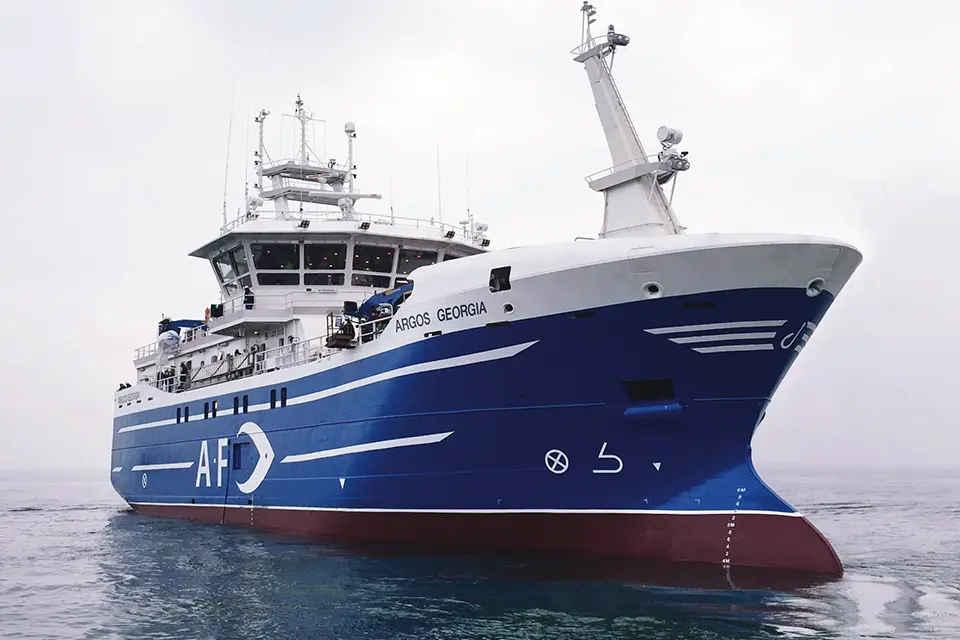
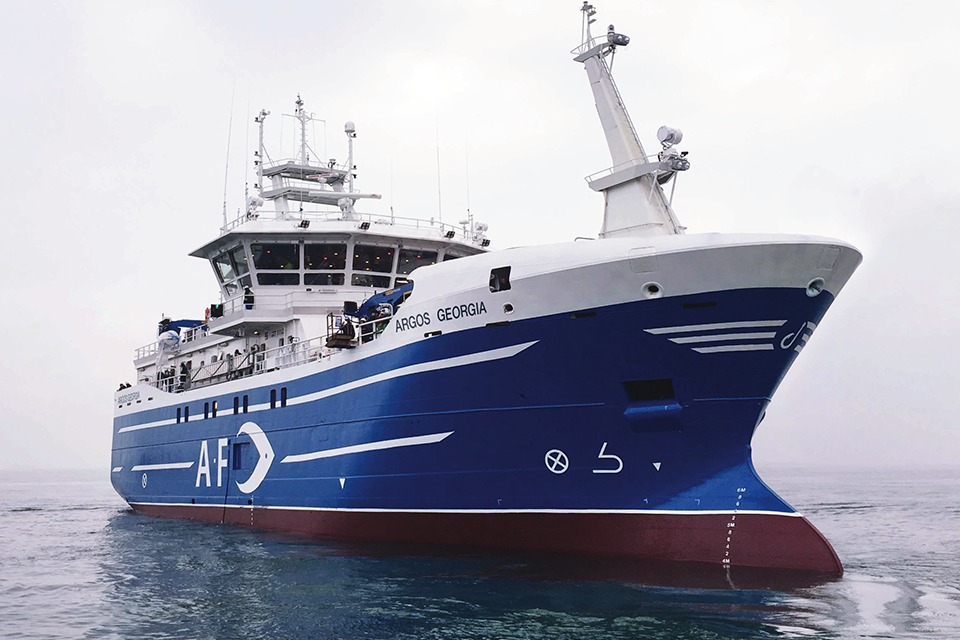
Operated by Argos Froyanes Limited, the Argos Georgia was a modern, well-equipped longliner designed to harvest toothfish in the unforgiving, storm-battered waters of the South Atlantic. Yet, as the MAIB’s exhaustive investigation reveals, advanced engineering and corporate pedigree proved no match for the insidious combination of progressive flooding, compromised watertight integrity, and delayed emergency response mechanisms.
Carried out on behalf of the St Helena Government under the framework of the Category 2 Red Ensign Group Memorandum of Understanding, the report transcends a mere accounting of a single shipwreck. It serves as an urgent wake-up call for the deep-sea fishing industry, highlighting how the degradation of fundamental safety habits—such as the rigorous maintenance of watertight boundaries and the flawless execution of emergency drills—can turn a manageable marine incident into an unmitigated catastrophe.
As maritime authorities, vessel operators, and regulatory bodies digest the findings, the sinking of the Argos Georgia stands as a grim reminder that commercial fishing remains one of the most hazardous occupations on Earth, demanding unwavering vigilance, unyielding adherence to safety management systems, and a culture that prioritizes human life above economic output.
Detailed Chronology of the Disaster
To understand how the Argos Georgia transitioned from a routine commercial fishing voyage to a scene of desperate survival and tragic loss, one must reconstruct the final hours leading up to its abandonment. While the complete minute-by-minute timeline forms the core of the MAIB’s formal documentation, the overarching sequence of events paints a chilling picture of a vessel overwhelmed by the relentless elements of the sub-Antarctic.
The Setting and Initial Operations
On the fateful day of July 22, 2024, the Argos Georgia was operating in the remote, high-latitude waters east of the Falklands. Meteorological conditions in the region were characteristically hostile, marked by freezing temperatures, high winds, and heavy, turbulent seas. Despite the harsh environment, the vessel was engaged in routine longline fishing operations, a sector known for round-the-clock labor cycles and intense operational tempos.
The Breach of Watertight Integrity
The genesis of the disaster lay in the compromise of the vessel’s watertight envelope. In the open ocean, particularly in sea states typical of the sub-Antarctic, a ship relies entirely on its ability to keep the sea on the outside. When water began to ingress into spaces that should have remained dry and sealed, the vessel’s stability profile immediately began to deteriorate.

Whether driven by structural vulnerability, cargo shifting, green water impact, or downflooding through unsealed access points, the ingress quickly outpaced the vessel’s fixed bilge-pumping capacities. In modern naval architecture, watertight integrity is not maintained by a single barrier, but by a system of interlocking compartments, watertight doors, and automatic alarms. As the MAIB report underscores, the failure to recognize the insidious nature of progressive flooding in its earliest stages proved fatal.
The Breakdown in Emergency Execution
As water accumulated, the Argos Georgia began to list, severely impacting its maneuverability and operational readiness. In such critical moments, the difference between survival and disaster hinges on the execution of a quick, clear, and efficient emergency plan. Crew members must transition instantly from routine fishing duties to damage control and abandonment stations.
However, the investigation points to critical friction points in the emergency response. Time is the most precious commodity during a maritime casualty, and any hesitation in sounding alarms, mustering the crew, donning immersion suits, and deploying life-saving appliances dramatically diminishes the window for survival. As the situation onboard deteriorated beyond the point of effective damage control, the master made the inevitable decision to abandon ship.
The Abandonment and Aftermath
Abandoning a sinking vessel in 190 nautical miles of open, freezing sub-Antarctic water is an ordeal of the highest order. The crew was forced into life rafts amidst towering seas and bitter cold, relying entirely on personal protective equipment and the swiftness of international search and rescue (SAR) coordination. While rescue assets ultimately mobilized to the scene, saving several members of the complement, the environment exacted a devastating toll. By the time the operation concluded, 13 lives had been lost—a tragedy that reverberated across nations, as the vessel’s multinational crew left behind grieving families worldwide.
Supporting Context & Metrics: The Anatomy of High-Sea Risk
The loss of the Argos Georgia cannot be viewed in a vacuum. It sits within a broader, troubling matrix of global maritime safety data, commercial pressures, and the unique geographical challenges associated with sub-Antarctic fishing.
The Sub-Antarctic Hazard Profile
Fishing in the remotest parts of the world’s oceans presents logistical and meteorological hazards that dwarf those found in coastal or tropical waters. The Falklands and adjacent southern ocean sectors are characterized by:
- Extreme Sea States: Unpredictable swells and wind-driven waves that can rapidly destabilize medium-sized commercial vessels.
- Hypothermic Thermal Regimes: Water temperatures in the region hover near freezing, meaning that unprotected immersion leads to physical incapacitation within minutes and death within a fraction of an hour.
- Isolation and Response Latency: At nearly 200 nautical miles from the nearest port of refuge (Port Stanley) and far outside the immediate umbrella of urban emergency services, rescue assets face immense transit times. In the event of a rapid sinking, the crew is entirely on their own for critical hours.
Vessel Specifications and Regulatory Oversight
The Argos Georgia was a St Helena-flagged vessel, placing its regulatory oversight under specific international and regional frameworks. Operating under the Category 2 Red Ensign Group Memorandum of Understanding, the ship was subject to standards intended to ensure that British Overseas Territory-flagged ships meet rigorous safety conventions.
Yet, as maritime safety experts frequently note, statutory compliance on paper does not automatically translate to operational safety in practice. The commercial pressures of the toothfish industry—often referred to as "white gold" due to its high market value—can inadvertently foster a culture where maintenance schedules are compressed, rest periods are curtailed, and safety margins are quietly eroded in the pursuit of catch quotas.
Comparative Safety Metrics in Commercial Fishing
According to data compiled by agencies such as the International Labour Organization (ILO) and the Food and Agriculture Organization (FAO), commercial fishing remains the most dangerous civilian occupation globally.
- Fatality Rates: Fishing-related mortality rates are exponentially higher than those in standard construction or manufacturing.
- Primary Causes: Historically, the leading causes of death in the sector are not mechanical failures per se, but rather vessel capsizing and foundering due to loss of stability, followed by falling overboard.
- Human Element: Over 80% of marine casualties involve the "human element"—a broad category encompassing training deficiencies, fatigue, communication breakdowns, and failure to follow established safety management systems (SMS).
Official Statements and Institutional Reflection
The gravity of the Argos Georgia disaster is fully reflected in the official response from the UK Marine Accident Investigation Branch. The findings have elicited sharp, authoritative commentary from the highest levels of maritime safety administration.
In his published statement accompanying the report, Rob Loder, Chief Inspector of Marine Accidents, did not mince words regarding the systemic failures that enabled the tragedy:
"This was a tragic accident resulting in the loss of 13 lives. Fishing in the remotest and most hostile parts of our oceans requires strict adherence to the maintenance of a vessel’s watertight integrity. Should a problem arise a quick, clear and efficient emergency plan should be executed. Training and safety drills provide the best chance of survival in such extreme circumstances."
Loder’s statement strikes at the twin pillars of marine safety: prevention (watertight integrity and maintenance) and mitigation (emergency planning, drills, and training).
- The Sanctity of Watertight Integrity: In modern ship design, watertight boundaries are engineered to compartmentalize potential flooding, ensuring that the vessel retains positive buoyancy even when compartments are compromised. When crew members fail to maintain, inspect, or properly secure these boundaries—whether through unlatched doors, compromised gaskets, or modified structural drainage—the foundational safety architecture of the ship is undermined.
- The Imperative of Drills: Loder’s emphasis on training and safety drills addresses the psychological and procedural friction of an emergency. In a crisis, human beings do not rise to the occasion; they sink to the level of their training. Regular, realistic drills ensure that donning immersion suits, launching life rafts, and transmitting distress signals become instinctive muscle memory rather than exercises in panic-induced improvisation.
Representatives from Argos Froyanes Limited and the St Helena Government have also faced the heavy burden of the report’s conclusions, prompting institutional introspection across the corporate and territorial management structures linked to the vessel.
Future Outlook: Lessons, Recommendations, and Industry Reform
The ultimate value of an accident investigation report lies not in assigning retrospective blame, but in shaping a safer future. The MAIB’s findings on the Argos Georgia are expected to trigger a cascade of safety recommendations aimed at vessel operators, flag states, and international regulatory bodies.
1. Overhauling Watertight Management Systems
Maritime operators across the global fishing fleet must review their Safety Management Systems (SMS) with a renewed focus on watertight boundaries. Recommendations stemming from this report will likely mandate:
- More frequent and rigorous inspections of hull penetrations, doors, hatches, and air pipes.
- Enhanced crew awareness programs regarding the subtle signs of progressive downflooding.
- Zero-tolerance policies regarding the propping open or bypassing of watertight closure devices for operational convenience.
2. Elevating Training and Simulation Standards
The industry must move away from "tick-box" compliance exercises regarding safety drills. Regulatory bodies are under increasing pressure to ensure that:
- Crews operating in polar and sub-Antarctic waters undergo specialized survival training tailored to extreme cold-water environments.
- Companies conduct unannounced or scenario-based safety drills that test the command structure’s ability to react to compound emergencies (e.g., simultaneous flooding and electrical failure).
3. Technological Enhancements in Stability Monitoring
As naval architecture evolves, the integration of real-time stability and flood-detection monitoring systems must become standard, rather than optional, equipment on high-risk commercial fishing vessels. Early-warning sensors in void spaces and bilges can provide masters with vital minutes to initiate counter-measures before stability parameters cross the point of no return.
4. Cultural Shift in Commercial Fisheries
Ultimately, the most profound takeaway from the Argos Georgia disaster is cultural. The romanticized notion of the hardy fisherman battling the sea at all costs must be replaced by a modern, safety-first paradigm where the refusal to sail or fish under compromised conditions is not only protected but actively encouraged by management.
As the global maritime community processes the MAIB’s sobering report, the 13 souls lost on July 22, 2024, must not become mere statistics in an annual safety review. Their memory demands systemic reform, unsparing accountability, and an absolute commitment to ensuring that no other crew faces such a preventable tragedy in the icy wastes of the South Atlantic.


