






Executive Overview
For decades, international defense analysts and military planners focusing on the cross-strait conflict have directed their attention toward the Taiwan Strait—the narrow, highly sensitive body of water separating the island of Taiwan from mainland China. Long considered the primary flashpoint for potential conflict, the strait has seen a constant rotation of warships, air defense identification zone (ADIZ) incursions, and high-stakes military maneuvers.
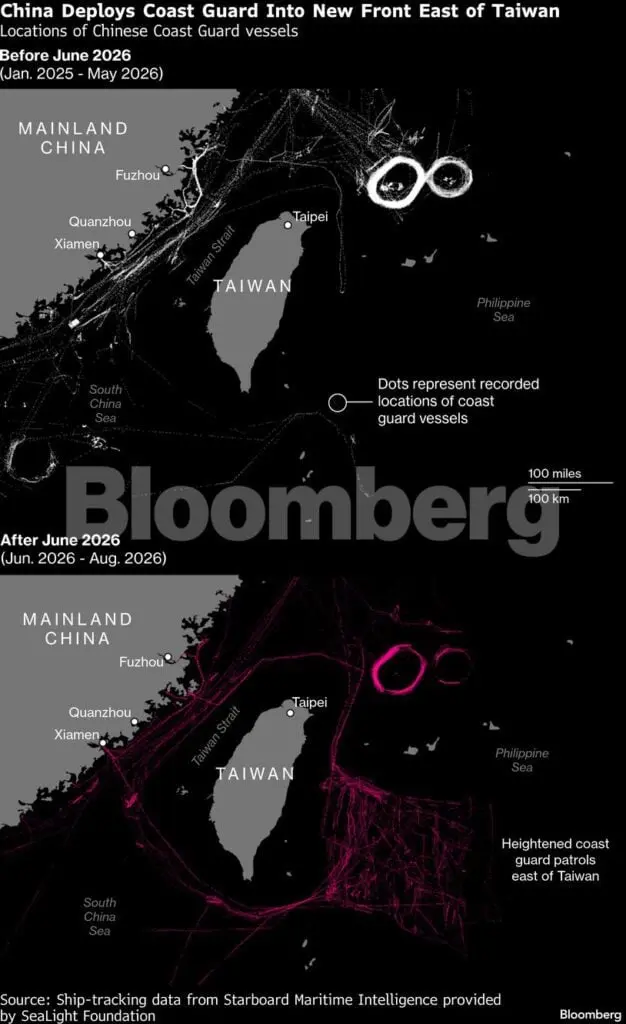
However, a quiet but profound strategic shift is underway. Beijing has systematically expanded its maritime pressure campaign to Taiwan’s eastern Pacific coast. This region, historically viewed as Taiwan’s secure "back door" and its primary geographic lifeline to the United States and its regional allies, is now the target of persistent, aggressive patrolling by the Chinese Coast Guard (CCG).
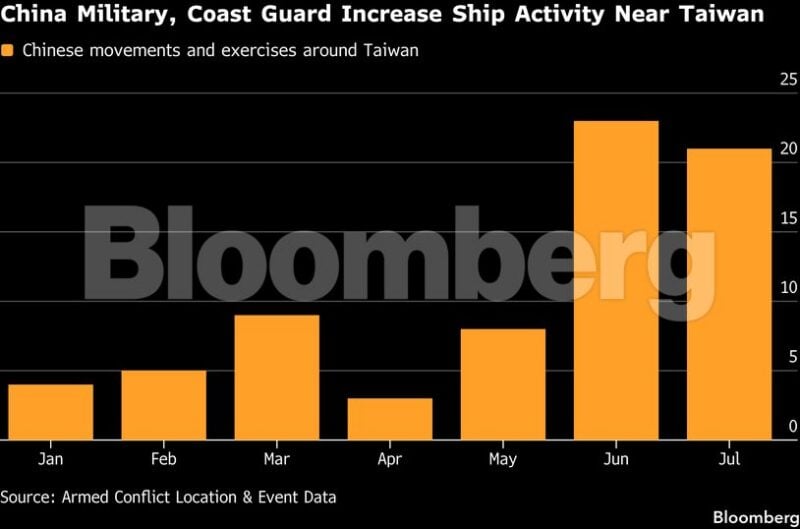
Data compiled through mid-2026 reveals an unprecedented surge in Chinese maritime operations off the eastern coast of Taiwan. Since June 2026, Beijing has deployed an average of two heavy Coast Guard cutters per month to these waters, representing the first sustained, documented presence of its kind since comprehensive maritime tracking began in January 2025.
By utilizing coast guard vessels rather than frontline People’s Liberation Army Navy (PLAN) warships, Beijing is executing a classic "gray-zone" strategy. This tactic asserts administrative jurisdiction over international waters, establishes a de facto "new normal," and lays the operational groundwork for a future naval blockade—all while keeping the threshold of confrontation just below the level of open military conflict.
The implications of this shift are global. The deep waters of Taiwan’s east coast are not only critical for submarine warfare and international communication cables but are also increasingly vital to global trade. In June 2026, cargo traffic through these eastern waters actually surpassed that of the Taiwan Strait, highlighting the immense economic vulnerability of this newly contested maritime corridor.
                  GEOPOLITICAL LANDSCAPE: TAIWAN EAST COAST

  [ Japan / Ryukyu Islands ]
             │
             ▼   ~30 NM Buffer Zone
  [ TAIWAN ] ══════════════════════► [ CCG Patrol Area: 27,100 Sq NM ]
             ▲                       (Deep Pacific Waters / Submarine Corridors)
             │
  [ Philippines / Luzon Strait ]
Detailed Chronology
The transformation of Taiwan’s eastern waters from a secure maritime buffer into an active theater of geopolitical friction did not occur in a vacuum. It was triggered by a series of diplomatic alignments and executed through a carefully choreographed escalation of maritime deployments.
2026 CHRONOLOGY OF ESCALATION
┌─────────────────────────────────────────────────────────────────────────┐
│ MAY 2026                                                                │
│ Japan and Philippines announce maritime boundary negotiations           │
└────────────────────────────────────┬────────────────────────────────────┘
                                     ▼
┌─────────────────────────────────────────────────────────────────────────┐
│ JUNE 1, 2026                                                            │
│ CCG deploys cutters "Daishan" & "Baita" east of Taiwan                  │
└────────────────────────────────────┬────────────────────────────────────┘
                                     ▼
┌─────────────────────────────────────────────────────────────────────────┐
│ LATE JUNE 2026                                                          │
│ Deployment of 10,000-ton "Haixun 09" & 198 vessel "inspections"         │
└────────────────────────────────────┬────────────────────────────────────┘
                                     ▼
┌─────────────────────────────────────────────────────────────────────────┐
│ MID-JULY 2026                                                           │
│ Taiwan conducts live-fire drills on Orchid & Green Islands             │
└────────────────────────────────────┬────────────────────────────────────┘
                                     ▼
┌─────────────────────────────────────────────────────────────────────────┐
│ AUGUST 2026                                                             │
│ China holds joint passing exercises with Indonesia east of Taiwan       │
└─────────────────────────────────────────────────────────────────────────┘
The Diplomatic Catalyst (Late May 2026)
In late May 2026, Japan and the Philippines—both treaty allies of the United States—jointly announced plans to begin formal negotiations to delimit their overlapping maritime boundaries in the region. This bilateral effort aimed to solidify the legal and security architecture of the First Island Chain, directly challenging Beijing’s sweeping maritime claims in the East and South China Seas. Beijing reacted swiftly, issuing formal diplomatic protests claiming the negotiations interfered with China’s sovereign maritime rights.
The Initial Deployment (June 1, 2026)
On June 1, 2026, the China Coast Guard launched a coordinated operation, dispatching two of its most capable patrol cutters directly into the waters east of Taiwan. The vessels involved were:
- The Daishan: A formidable 5,000-ton patrol cutter.
- The Baita: A highly maneuverable 3,000-ton cutter.
Both vessels had previously been deployed in the East China Sea, frequently patrolling around the Japanese-administered Senkaku Islands (claimed by Beijing as the Diaoyus). Their sudden redeployment to the east of Taiwan marked a clear operational pivot.
The Multi-Agency Escalation (Late June 2026)
Weeks after the initial deployment, Beijing intensified the pressure by launching a rare, highly publicized multi-agency maritime operation. This task force featured some of China’s largest civilian-administered hulls:
- The Haixun 09: A massive 10,000-ton maritime patrol vessel.
- The Haixun 06: A 6,600-ton patrol and rescue ship.
- Support Fleet: The deployment also included China’s largest deep-sea survey vessel and a specialized ocean rescue ship.
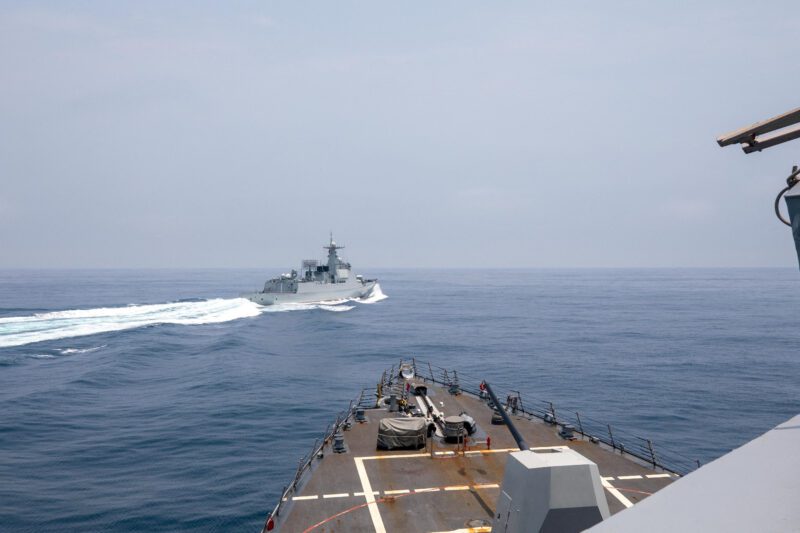
During this five-day mission, the fleet encircled Taiwan, operating extensively along its Pacific coast. Crucially, Chinese state media reported that these vessels "inspected" 198 passing commercial ships and, for the first time, issued radio queries to foreign commercial vessels transiting the area. This established a precedent of active administrative oversight in international waters.
The Undersea Surveillance Surge (July 2026)
By July, independent monitors, including the Armed Conflict Location & Event Data (ACLED) project, detected a sharp increase in the presence of Chinese oceanographic research vessels operating at unusually slow speeds off Taiwan’s eastern coast. These vessels focused their activities near critical undersea communication cables, raising concerns in Taipei and Washington about underwater surveillance and sabotage capabilities.
Defensive Countermeasures and Regional Posturing (July–August 2026)
In response to the mounting pressure, Taiwan’s military conducted live-fire exercises in mid-July on Orchid Island and Green Island, located off its southeastern coast. This marked the first time in three decades that Taipei had conducted military maneuvers on these strategic outposts.
Beijing countered almost immediately. In August, the PLA and CCG held "passing exercises" with the Indonesian Navy in these exact eastern waters. This was the first time China had integrated a third-party nation into exercises in this sector, signaling its intent to normalize its presence within the wider international community.
Supporting Context & Metrics
The strategic significance of China’s shift to Taiwan’s eastern coast is underscored by geographical reality, maritime economics, and hull capacity.
   COMMODITY VESSEL TRANSITS (JUNE 2026)
   ┌──────────────────────────────────────────────────────────┐
   │ Taiwan Strait (Traditional Route)        420 transits    │
   ├──────────────────────────────────────────────────────────┤
   │ Eastern Pacific Corridor (New Patrols)   527 transits    │
   └──────────────────────────────────────────────────────────┘
The Geometry of the Patrols
Based on ship-tracking and AIS data, the China Coast Guard has established an operational zone east of Taiwan encompassing approximately 27,100 square nautical miles—an area more than double the landmass of Taiwan itself.
While the patrols are extensive, CCG vessels have carefully calibrated their operations to remain approximately 30 nautical miles off Taiwan’s eastern coastline. By operating outside Taiwan’s 12-nautical-mile territorial sea and 24-nautical-mile contiguous zone, Beijing asserts administrative presence while avoiding an immediate, legally defined casus belli.
The Economic Lifeline: Strait vs. East Coast
While the Taiwan Strait is famous for carrying nearly half of the global container fleet, the waters off the east coast serve as a vital corridor for bulk commodities.
According to shipping data from MarineTraffic, the Pacific corridor off eastern Taiwan saw 527 transits by bulk carriers and tankers ferrying oil, liquefied natural gas (LNG), iron ore, and agricultural products in June 2026. By comparison, the historically busier Taiwan Strait saw 420 transits by similar vessels during the same period.
A successful Chinese blockade or disruption of this eastern corridor would instantly bottleneck raw materials heading to Japan, South Korea, and Taiwan, causing immediate disruptions to global supply chains.
| Vessel Name | Tonnage (Displacement) | Primary Previous Theater of Operations | Role in East Taiwan Campaign |
|---|---|---|---|
| Haixun 09 | 10,000 tons | South China Sea / Guangzhou | Multi-agency command, sovereign assertion |
| Haixun 06 | 6,600 tons | Taiwan Strait / Fujian | Traffic monitoring, "inspections" |
| Daishan | 5,000 tons | East China Sea / Senkakus | Persistent patrolling, law enforcement |
| Baita | 3,000 tons | East China Sea / Zhejiang | High-speed interception, tactical presence |
The Gray-Zone Strategy and the 2021 Coast Guard Law
The operational doctrine guiding these patrols is rooted in China’s 2021 Coast Guard Law. This legislation formally authorized the CCG to use military-grade force—including deck guns and ship-borne weapons—to defend what Beijing defines as its national sovereignty.
By deploying the CCG rather than the PLA Navy, Beijing exploits a legal gray area. Under international law, coast guard actions are generally classified as civil law enforcement rather than military aggression. This complicates defensive responses from the U.S. and its allies, who risk being labeled as escalators if they deploy grey-hulled warships to counter white-hulled coast guard cutters.
Official Statements
The escalating tensions off Taiwan’s Pacific coast have drawn sharp responses from Taipei, Washington, Beijing, and leading international security analysts.
The Taiwanese Perspective
The Taiwan Coast Guard Administration (TCGA) has raised alarms over the long-term implications of these patrols, noting:
"Beijing is attempting to leverage ‘law enforcement patrols’ to establish a new normal for its maritime presence in the waters east of Taiwan. We have dispatched our own vessels in a timely and professional manner to monitor and respond to these incursions, but the systemic nature of these deployments points to a broader, more coercive strategy."
The United States Response
The United States Department of State, along with defense officials in Washington, has closely monitored the shifting dynamics. A senior U.S. defense official characterized the deployments as:
"…deeply destabilizing to the status quo in the Western Pacific. By attempting to assert administrative control over international waters and questioning commercial shipping, Beijing is actively undermining the rules-based international order."
The Chinese Justification
Conversely, China’s Ministry of National Defense and the CCG Command have defended the operations as fully compliant with domestic and international legal frameworks:
"These are routine law-enforcement patrols aimed at safeguarding Beijing’s maritime rights and maintaining order in our sovereign waters. We will continue to strengthen these patrols to counter foreign interference and separatist provocations."
Expert Analytical Consensus
Geopolitical analysts argue that the implications of these patrols extend far beyond simple law enforcement.
Jing Ge, an instructor at Florida International University’s Department of Politics and International Relations, highlights the strategic shift:
"If the Taiwan Strait is the front door, the eastern waters have often been treated as the back door. Beijing wants to demonstrate this back door is no longer uncontested."
Ryan Martinson, an assistant professor at the China Maritime Studies Institute of the U.S. Naval War College, points to the geopolitical pretext used by Beijing:
"Beijing is using the joint statement issued by Japan and the Philippines as a pretext for greatly expanding its presence in these waters."
Zack Liao, a political risk analyst at the UK-based China Strategic Risks Institute, warns of a potential slippery slope regarding commercial navigation:
"If those interactions become routine, the next question is whether Chinese authorities begin to request more information. After that, whether they issue navigational instructions."
Finally, the U.S.-China Economic and Security Review Commission summarized the strategic utility of the CCG in a recent briefing:
"Using the CCG rather than the PLA Navy avoids direct military confrontations and allows Beijing to portray these activities as law enforcement while establishing the persistent presence necessary for a future blockade."
Future Outlook
The militarization and administrative normalization of the waters east of Taiwan represent a permanent shift in the Western Pacific security architecture. As Beijing continues to refine its tactics, several key trends are likely to shape the region over the coming years.
                  THE EVOLUTION OF WESTERN PACIFIC STRATEGY

  Phase 1: Normalization ──► Phase 2: Administrative Control ──► Phase 3: Blockade Readiness
  (Continuous CCG Patrols)   (Commercial Vessel Queries)         (De Facto Maritime Exclusion)
1. The Normalization of Commercial Interdiction
The "inspection" of 198 vessels in mid-2026 is likely a preview of future operations. If China successfully establishes a routine practice of querying, tracking, and directing commercial traffic east of Taiwan, it will gain de facto veto power over the island’s maritime trade. Shipping companies, seeking to avoid delays or insurance premium hikes, may begin voluntarily routing vessels away from these areas or complying with Beijing’s reporting demands, effectively conceding administrative control to China.
2. Undersea Cable Vulnerabilities
With Chinese research vessels frequently lingering near critical undersea fiber-optic lines, the threat of communication disruption remains high. In a pre-conflict scenario, Beijing could cut or tap these cables under the guise of "accidental maritime collisions" or "trawling incidents," isolating Taiwan from global communications before any kinetic action begins.
3. Allied Countermeasures and Joint Patrols
As China’s presence becomes more permanent, pressure will mount on the United States, Japan, and the Philippines to establish coordinated maritime patrols of their own. This could lead to the formation of joint allied task forces patrolling the Luzon Strait and the waters off eastern Taiwan. While such patrols would reassure Taipei, they also increase the risk of a high-seas collision or miscalculation between allied warships and Chinese Coast Guard cutters.
Ultimately, the contest over Taiwan’s eastern waters is a test of political will. By gradually rewriting the rules of navigation in the Western Pacific, Beijing is challenging the international community to either defend the freedom of navigation or accept a new geopolitical reality. How the U.S. and its regional allies respond to this "back door" challenge will likely determine the balance of power in the Pacific for decades to come.