









Executive Overview
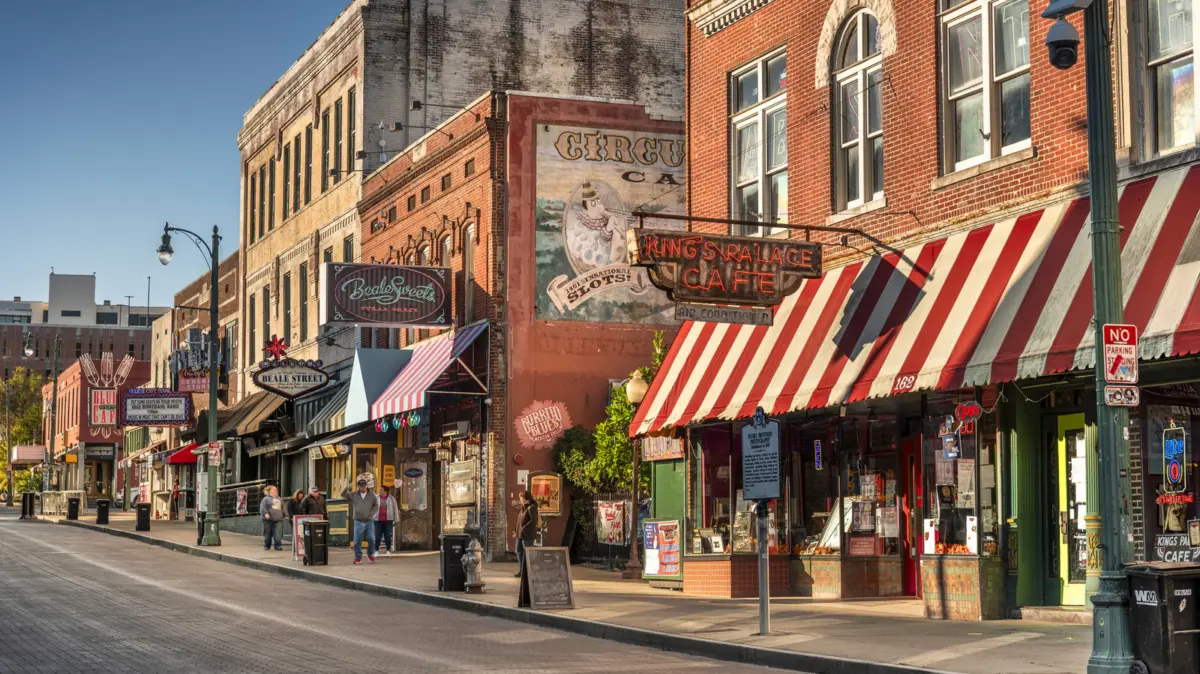
When global travelers and devoted audiophiles tally the great musical pilgrimage sites of the United States, Tennessee invariably takes center stage. While Nashville rightfully commands the spotlight as the undisputed capital of country music and commercial songwriting, it was further west, along the banks of the Mississippi River in Memphis, that the blues took its first deep, resonant breaths. At the absolute heart of this sonic revolution lies Beale Street—a legendary stretch of downtown asphalt that birthed icons, shaped modern rock and roll, and served as the cultural epicenter for generations of African American life, commerce, and artistry.
Yet, the neon-drenched facades, jubilant brass notes, and packed patios that define modern Beale Street belie a sobering reality: this historic district nearly vanished entirely.
Four decades ago, Beale Street was not a celebrated tourist sanctuary, but a hollowed-out ghost town. Ravaged by a catastrophic, city-sanctioned "urban renewal" campaign in the late 1960s and 1970s, the neighborhood was systematically leveled, leaving behind demolished neighborhoods, displaced residents, and vacant, decaying storefronts. Had it not been for a convergence of preservationist grit, commercial reinvention, and the indestructible staying power of the blues, Beale Street’s extraordinary legacy would have been reduced to dust.
Today, Beale Street stands as a testament to cultural resilience. But its rebirth is complex, caught in a delicate balance between commercial entertainment and the painful erasure of the vibrant, working-class Black community that built it.
Detailed Chronology: From Golden Era to Government Bulldozers
The Golden Age: The Epicenter of Black Excellence (1890s–1950s)
To understand what was nearly lost, one must look back to the turn of the 20th century. Between the 1890s and the 1930s, Beale Street evolved far beyond a simple commercial strip; it was the undisputed capital of Black culture, business, and entertainment in the Mid-South. During an era defined by Jim Crow segregation, Beale Street offered a sanctuary of autonomy and prosperity.
Black-owned doctor’s offices, law firms, newspapers, and jewelers lined the avenue, sharing space with bustling theaters, pool halls, and smoky juke joints. It was here that the foundational architects of American music—luminaries like W.C. Handy, the self-proclaimed "Father of the Blues"—pioneered a genre born from field hollers, spirituals, and the human struggle. By the 1940s and 1950s, Beale Street was exploding with creative energy, welcoming rising talents like B.B. King, Muddy Waters, and Bobby "Blue" Bland, who polished their craft in local clubs and broadcasted their sounds across the country via powerhouse radio station WDIA.
The Bulldozer Era: "Urban Renewal" and Destruction (1969–1980s)
The cultural vitality of Beale Street was brought to a screeching halt by government intervention disguised as progress. In 1969, the City of Memphis approved a sweeping redevelopment project designed to modernize the downtown core. In practice, the initiative was a targeted assault on a historic Black community, prioritizing white suburban tourists over the residents who called the neighborhood home.

Over the span of a decade, the catastrophic urban renewal project decimated the district. Officials bulldozed more than 550 historic buildings and displaced approximately 1,500 residents. Vibrant neighborhoods were razed to make way for parking lots and speculative developments that never materialized.
In a matter of years, a thriving 40-block cultural district was reduced to a desolate three-block stretch. The communities that supported the music were scattered, landmarks were pulverized, and the places where modern blues was codified became unrecognizable ruins. When public and private funding dried up in the early 1980s, Beale Street was left to rot—abandoned, structurally compromised, and seemingly destined for the history books.
The Commercial Resurrection (Late 1980s–Present)
The revival of Beale Street required an unconventional savior. In the mid-1980s, developer John Elkington spearheaded a revitalization initiative anchored not in residential restoration, but in commercialized entertainment. Recognizing the enduring global fascination with the Memphis sound, Elkington’s project focused on transforming the remaining historic shell into a themed tourist district.
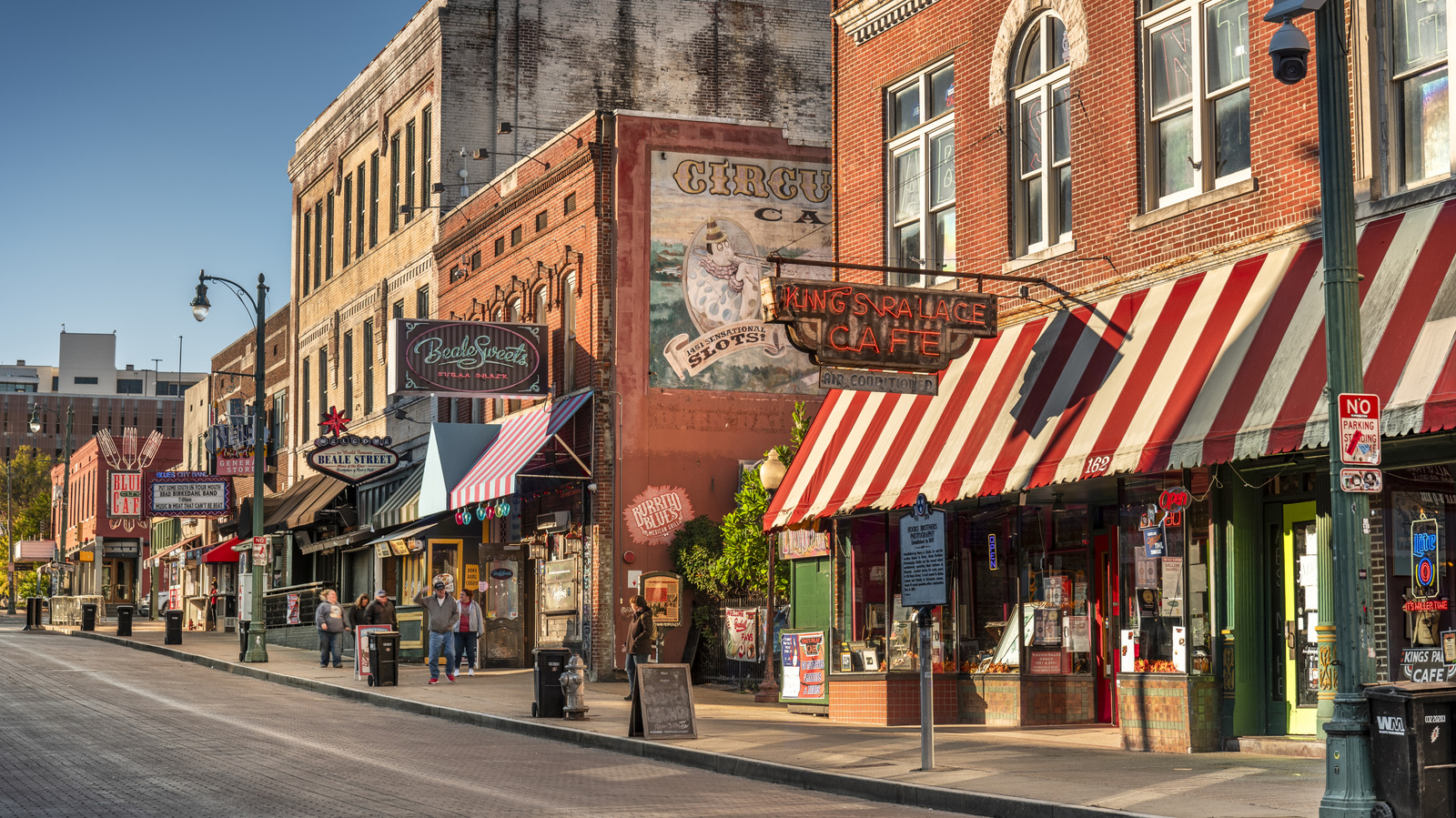
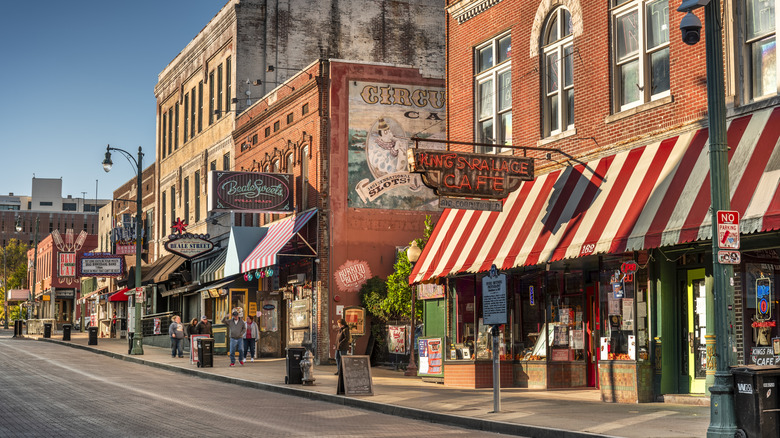
Slowly, the boarded-up storefronts gave way to live-music venues, barbecue joints, and bars designed to transport visitors back to the golden age of the blues. The strategy worked, breathing economic life back into a dead corridor and establishing Beale Street as a must-visit destination for millions of annual travelers. However, this corporate-led resurrection came with a steep cultural cost: while the music was preserved and celebrated, the complex, lived-in history of the Black families and entrepreneurs who originally forged the district was largely pushed to the margins.
Supporting Context & Metrics: The Scale of Loss and Recovery
To comprehend the magnitude of Beale Street’s near-death experience, quantitative data regarding its physical and demographic contraction paints a stark picture:
- Spatial Destruction: The historic commercial district shrank from a robust 40 blocks down to a mere 3 contiguous blocks following the 1960s and ’70s demolition campaigns.
- Property Losses: More than 550 historic buildings—many featuring distinct late-19th-century and early-20th-century architecture—were demolished under the guise of urban modernization.
- Human Displacement: Approximately 1,500 residents were forcibly displaced from their homes, breaking up tight-knit multi-generational communities and destroying local generational wealth.
- Economic Swing: From a state of near-total economic abandonment in the early 1980s, Beale Street now generates millions of dollars in tourism revenue annually, serving as one of Tennessee’s premier economic engines and anchoring downtown Memphis’s hospitality sector.
Official Statements & Preservationist Perspectives
The tension between commercial preservation and historical authenticity remains a central talking point among urban planners, historians, and cultural preservationists in Memphis.
Dr. Arlinda Harrison, a regional architectural historian specializing in Mid-South urban development, notes the profound irony of Beale Street’s survival:
"Music was the only thing strong enough to resurrect Beale Street from the grave dug for it by city planners. But in saving the music, we often sanitized the messenger. We preserved the notes that came out of the horn, but we bulldozed the homes of the people who blew it."
Local civic leaders, meanwhile, emphasize the economic necessity of the 1980s turnaround while acknowledging the ongoing work required to tell a complete story. In a recent municipal address regarding downtown heritage tourism, city officials highlighted the district’s unique status as a National Historic Landmark—designated in 1966 just before its near-destruction—stressing that modern investments must also honor civil rights narratives.
Urban development strategists point to institutions like the nearby National Civil Rights Museum at the Lorraine Motel as vital balancing forces, ensuring that visitors who come for the entertainment on Beale Street are confronted with the deeper sociopolitical realities of Memphis history.
Future Outlook: Navigating Music, Memory, and Modernity
As Beale Street looks toward the future, its greatest challenge is no longer physical survival, but cultural preservation. The strip continues to hum with energy, drawing travelers from every corner of the globe to iconic venues that keep the blues alive:
- B.B. King’s Blues Club: A premier venue offering searing guitar solos, authentic Memphis barbecue, and a nightly showcase of soul, blues, and rock and roll.
- Rum Boogie Cafe: Located just a block away, serving up classic blues jams alongside smokehouse staples.
- Blues City Cafe: A legendary neighborhood joint where visitors can dance well into the early morning hours.
- Silky O’Sullivan’s: A quirky staple housed in a century-old building, famous for its dueling pianos, patio bands, and resident beer-drinking goats.
- Peoples on Beale: A modern addition providing karaoke, stand-up comedy, and weekend DJ sets that showcase the evolving spectrum of local Black entertainment culture.
Yet, as Beale Street thrives in the 21st century, its stewards face a critical imperative: ensuring that the gloss of commercial tourism does not completely eclipse the profound, often painful history etched into its bricks. For music lovers, a trip down Beale Street is nothing short of a religious experience—a chance to stand on hallowed ground where American music was forged against incredible odds.
By actively engaging with both the jubilant sounds echoing from its clubs and the sobering history of its near-destruction, travelers can ensure that Beale Street remains not just a party strip, but a living monument to human endurance.