









Executive Overview
Despite a turbulent landscape defined by shifting federal legislation, the repeal of foundational EV incentives, and volatile geopolitical conflicts reshaping global energy markets, the electric vehicle (EV) revolution in the United States is proving far more resilient than initially projected. While the sudden expiration of the $7,500 federal EV tax credit in late 2025 created a temporary valley of despair for automakers and consumers alike, comprehensive new economic modeling reveals an industry adapting on the fly.
According to landmark research published by economists at Harvard University’s Salata Institute for Climate and Sustainability, US electric vehicles are projected to capture an impressive 38% of all new vehicle sales by 2030. This updated forecast represents a dramatic upward revision from earlier estimates and sits more than four times higher than the 8% market share recorded in 2025.
Far from buckling under the weight of the Trump administration’s signature tax legislation—the "One Big Beautiful Bill Act" (OBBA)—the American EV market is benefiting from structural improvements in battery technology, rapidly expanding public and curbside charging infrastructure, and a punishing fossil fuel market driven by ongoing instability in the Middle East and Eastern Europe. Legacy automakers like Toyota, Subaru, and Ford are doubling down on electrification, reframing the narrative from one of government dependency to one of fundamental consumer demand and technological superiority.
Detailed Chronology: Policy Shifts, Global Conflict, and Market Realignment
To understand how the US electric vehicle market reached its current trajectory, one must examine a rapid sequence of legislative, economic, and geopolitical events that unfolded between 2025 and 2026.
Late 2025: The Sunset of the $7,500 Federal Credit
For years, the federal consumer tax credit of up to $7,500 served as the primary financial catalyst for American EV adoption. However, following the legislative maneuvers that culminated in the OBBA, that incentive bit the dust in September 2025. The immediate aftermath was predictable: the US EV sales picture turned decidedly bleak, sending shockwaves through legacy and startup boardrooms alike. Many legacy automakers immediatelyPumped the brakes on multi-billion-dollar electrification roadmaps, fearing that without direct subsidization, consumer resistance would stall the transition indefinitely.
February 28, 2026: The Middle East Energy Shock
The geopolitical landscape shifted abruptly on February 28, 2026, when the Trump administration initiated a military conflict in Iran. As anticipated, Tehran swiftly closed the Strait of Hormuz—the world’s most critical petroleum shipping chokepoint. The conflict quickly escalated, resulting in widespread destruction of regional oil and gas infrastructure. Overnight, global crude supplies tightened, sending retail gasoline prices rocketing upward to punishing new highs.
Simultaneously, the administration’s hesitant and accommodating diplomatic posture toward Russia enabled Vladimir Putin to sustain his unprovoked war in Ukraine, even as domestic Russian energy production assets increasingly went up in flames. These compounding disruptions dealt a dual blow to global fossil fuel markets, transforming transient price spikes into a prolonged energy crisis.

July–September 2026: Harvard’s Economic Reassessment
Against this volatile backdrop, Harvard University’s Salata Institute released a pivotal study on July 6, 2026, titled "Simulating Impacts of Trump Policy Changes on Electric Vehicle (EV) Adoption." The initial model stunned industry analysts by projecting that despite the loss of the Biden-era green energy subsidies, EVs would still capture a remarkably healthy 32% market share by 2030.
Just months later, on September 17, 2026, the Harvard Gazette published an updated revision to the study, raising the 2030 projection even further to 38%. The researchers concluded that while regulatory headwinds had an impact, the market dynamics driving electrification had evolved past the point of easy reversal.
Supporting Context & Metrics: Dissecting the Harvard Study
The Harvard study offers a granular look at the mechanics of policy interference versus underlying market fundamentals.
Quantifying the OBBA Impact
In a business-as-usual baseline scenario where previous federal energy policies remained intact, Harvard economists projected that EV uptake would have reached 48% by the end of the decade. The passage of the OBBA undoubtedly inflicted damage on that growth trajectory.
According to the study’s findings:
- Total Reduction: The OBBA’s elimination of the IRA EV-related tax credits reduces the 2030 EV sales share from a baseline of 48.0% down to 39.4%.
- The Culprit Tax Credits: The single largest downward pressure—accounting for a 6.2 percentage point reduction in 2030 sales share—stems directly from the cancellation of tax credits for new, used, and commercial EV purchases, alongside retail leases.
- Other Regulatory Hurdles: While the administration introduced various other executive obstacles, the economists noted that these secondary policies were largely negligible compared to the brute-force fiscal impact of the OBBA tax changes.
The Technology and Infrastructure Gap
What differentiates the current high-fuel-price environment from previous historical anomalies, such as the transient spikes seen during the COVID-19 pandemic? The Harvard research highlights two fundamental advancements:
- Battery Economics and Range: EV battery technology has advanced exponentially over the past several years. Modern packs deliver significantly higher energy density, enabling longer driving ranges that eliminate range anxiety for mainstream consumers, all while lowering the overall upfront manufacturing costs.
- Ubiquitous Charging Networks: Despite federal setbacks—such as the administration’s temporary, court-overturned freeze on the $5 billion National Electric Vehicle Infrastructure (NEVI) fast-charging program—charging infrastructure has proliferated through private initiative. Quick-serve restaurants, retail centers, and ambitious municipal curbside charging initiatives (particularly in dense urban environments like New York City) have transformed the charging landscape into a dense, reliable web.
Furthermore, the retail gasoline landscape is contracting. Long-term consolidation in the fuel retail sector has accelerated the "gas desert" phenomenon in both rural and urban areas. Refueling an EV at home, at a local shopping center, or while grabbing lunch has quietly become exponentially more convenient than tracking down a traditional gas station.

Official Statements and Industry Perspectives
Major legacy automakers are publicly acknowledging this paradigm shift, recalibrating their manufacturing strategies to survive and thrive without federal crutches.
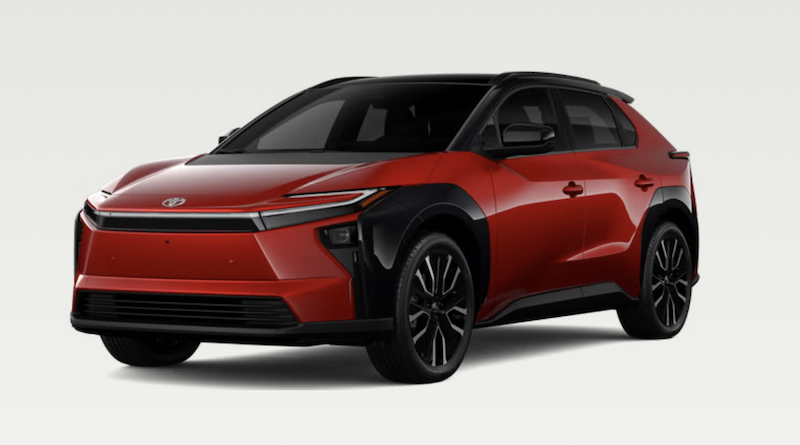
Toyota, long a cautious participant in the pure-battery EV space, is banking heavily on sustained electrification. Highlighting upcoming additions to its lineup—such as the previewed 2027 bZ series—company representatives have emphasized that consumer preference for lower operating costs and advanced vehicle architecture will ultimately dictate market success.
Other legacy brands are leaning into affordable volume production to capture market share left open by shifting policies:
- Subaru: Expanded its US footprint earlier this year with the rollout of new, ruggedized EV variants like the Solterra derivatives, appealing directly to outdoor lifestyle demographics.
- Ford: Has aggressively advanced pre-production manufacturing for its upcoming Fathom electric pickup truck. Engineered to hit the market at an aggressive price point just under $30,000, the Fathom is designed to directly target cost-conscious truck buyers who are weary of fluctuating fuel expenditures at the pump.
Environmental and economic analysts point out that the traditional auto industry has crossed a psychological Rubicon. The $7,500 tax credit is no longer viewed as a make-or-break lifeline, but rather as an optional accelerator.
Future Outlook: The Inevitable Rise of Electric Mobility
As the decade progresses toward 2030, the trajectory of American transportation is set in stone. Legislative acts of Congress like the OBBA can alter the slope of the adoption curve, but they can no longer arrest the underlying momentum of the technology.
The convergence of chronic geopolitical instability in fossil fuel regions, structural improvements in battery chemistry, falling manufacturing cost curves, and a rapidly maturing charging ecosystem ensures that electric vehicles are transitioning from a subsidized niche into the undisputed mainstream. With a projected 38% market share now locked into economic models for 2030—and climbing—the message to the automotive industry is clear: the future is electric, and those who fail to adapt will be left idling at the pump.