










Executive Overview
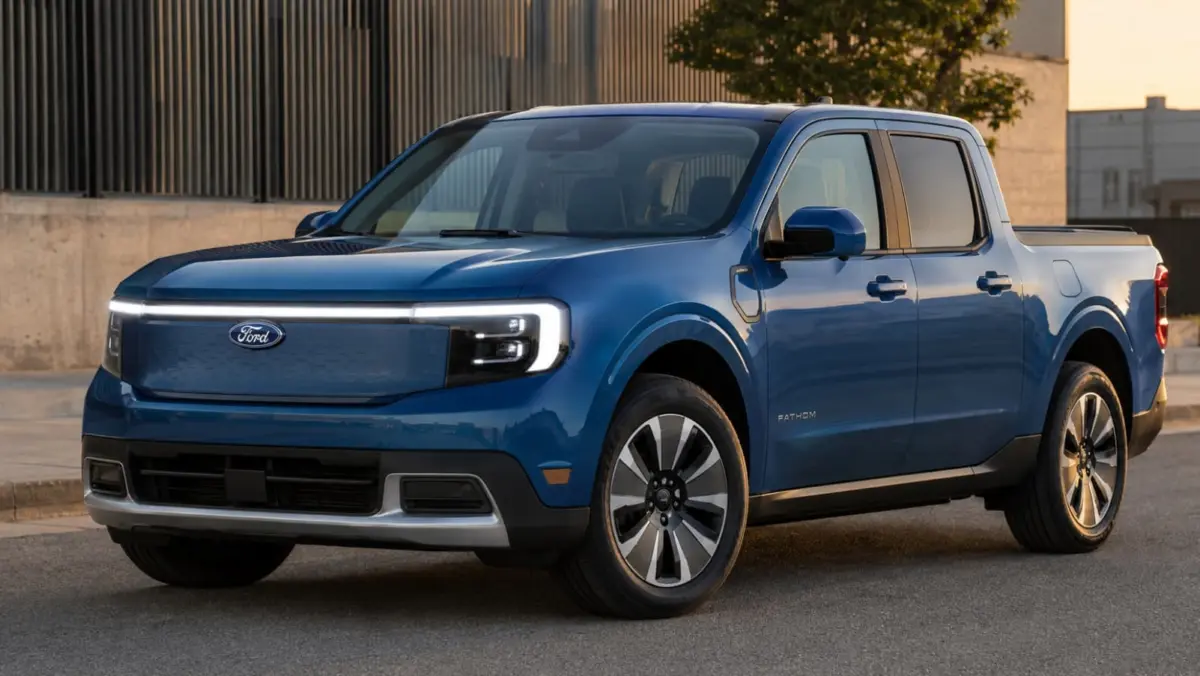
The global electric vehicle (EV) landscape is entering a volatile, high-stakes chapter characterized by aggressive corporate positioning, shifting political headwinds, and a battle for the working-class consumer. As Tesla prepares to unveil its long-awaited autonomous Cybercab in Austin, Texas, heritage automaker Ford Motor Co. has launched a calculated public relations and product offensive. Aiming squarely at Tesla’s market dominance, Ford has weaponized the rollout of its forthcoming, budget-friendly electric pickup truck: the Ford Fathom.
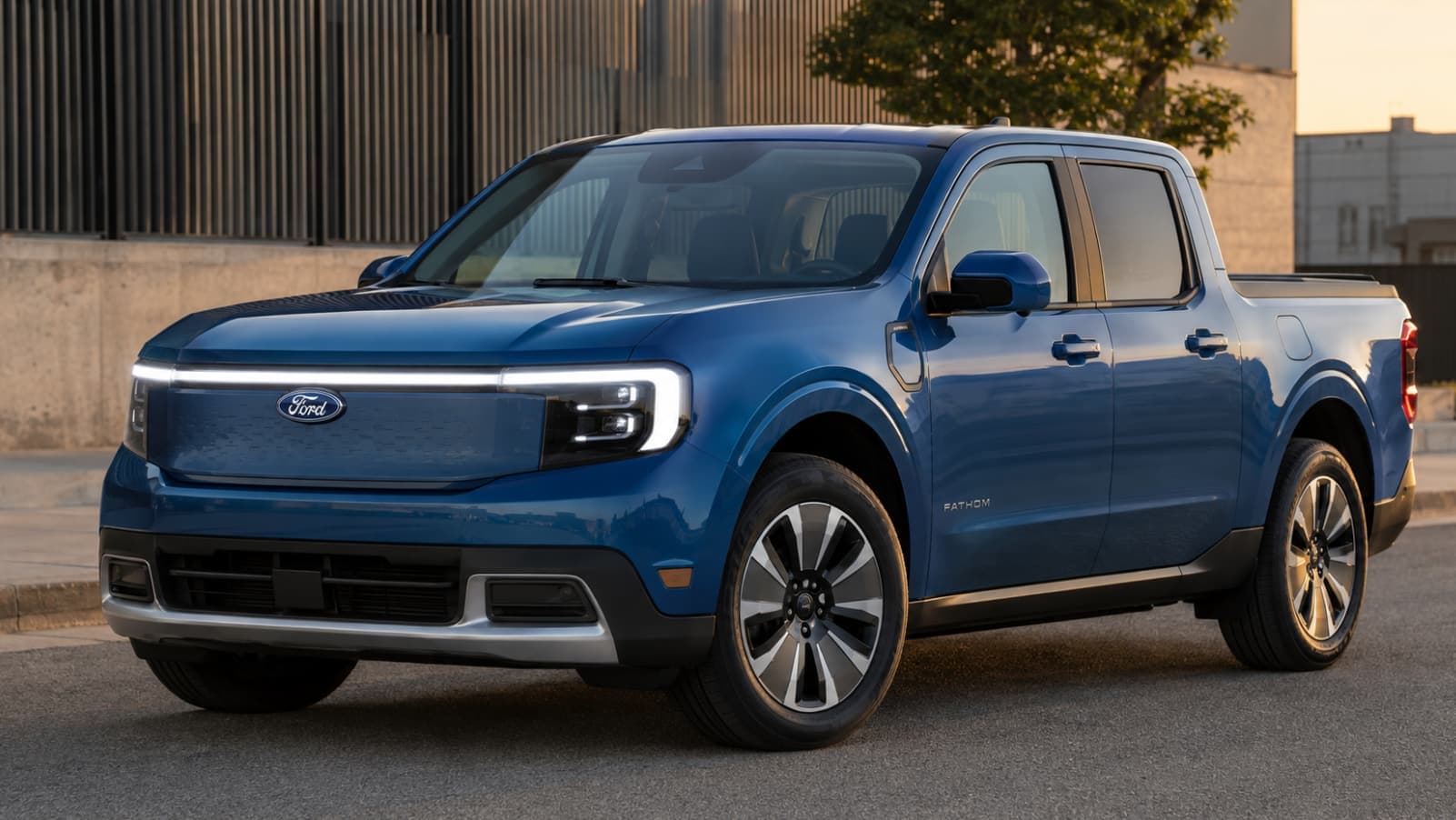
Set to debut officially by the end of the year, the Fathom represents more than just a new entry into the EV segment; it is the vanguard of Ford’s revolutionary "Universal" EV platform. Utilizing an innovative, cost-cutting, labor-saving tree-like manufacturing process instead of traditional, linear gasmobile assembly lines, Ford aims to deliver a midsize electric pickup truck starting at under $30,000 (specifically $29,945 including destination fees).
Internal projections leaked to the Wall Street Journal indicate that Ford is targeting a staggering 100,000 sales in the Fathom’s first year of production. If realized, this volume would instantly position the truck among the top-selling electric vehicles in the United States.

By contrasting the practical, affordable, and universally accessible Fathom against Tesla’s ultra-exclusive, steering-wheel-free Cybercab, Ford is executing a masterclass in market timing. Amid economic anxieties, rising housing costs, and shifting consumer sentiment, the unfolding rivalry between Dearborn and Austin highlights a fundamental ideological split in the EV sector: Will the future of electric mobility be defined by elite, autonomous luxury pods, or by versatile, everyday utility vehicles priced for the masses?
Detailed Chronology: A Week of High-Stakes PR Warfare
The escalation of hostilities between Ford and Tesla reached a fever pitch in late August and early September, unfolding across digital platforms, traditional media leaks, and dealer networks.
August 17: Tesla Teases the Cybercab
The narrative machinery swung into motion when The Information reported that Tesla was finalizing preparations to launch the autonomous, steering-wheel-free Cybercab into its active robotaxi fleet in Austin, Texas. Designed strictly for commercial fleets and autonomous ride-hailing, the vehicle immediately sparked intense curiosity—and skepticism—regarding its operational timeline and regulatory approval.
Mid-August: The Accidental Dealer Leak
While Tesla kept details of its upcoming event under wraps, an enterprising Ford dealership in Palestine, Texas, inadvertently scooped the automaker’s design language. On its website, All Star Ford published promotional material and imagery showcasing a midsize, Fathom-adjacent electric truck concept, offering consumers their first concrete glimpse of the silhouette Ford intended to keep hidden beneath heavy camouflage.

September 1–2: Ford’s Las Vegas Counter-Offensive
Recognizing the impending media saturation surrounding Tesla’s Austin gathering, Ford’s leadership executed a calculated pre-emptive strike. On September 1, Ford CEO Jim Farley—a former head of marketing known for his aggressive digital strategy—took to Elon Musk’s own social media platform, X (formerly Twitter). Farley posted vibrant photographs of a camouflaged Fathom prototype undergoing testing in Las Vegas, instantly redirecting automotive journalism cycles toward Dearborn.
The timing could not have been more precise. At 7:00 PM on September 2, the Wall Street Journal dropped an exclusive scoop sourced from anonymous insiders: Ford’s ambitious goal of moving 100,000 Fathoms in year one. Simultaneously, the Detroit Free Press published an in-depth profile detailing Ford’s strategic maneuvers ahead of the year-end official reveal.
September 2: Tesla’s Exclusive Access Event
As Ford dominated the headlines with manufacturing milestones and mass-market pricing, Tesla hosted its long-anticipated "Exclusive Access: Cybercab" event in Austin. However, the rollout drew mixed reviews from the automotive press. Outlets like Reuters noted that while Tesla marketed the gathering aggressively to select guests and existing Model Y robotaxi riders via X, the company withheld concrete operational specs, pricing for private buyers, and a definitive timeline for widespread consumer availability.
Supporting Context & Metrics: Economics, Platforms, and Powertrains
To fully understand the significance of the Fathom, one must examine the engineering and macroeconomic pillars supporting Ford’s new strategy.
The Universal EV Platform and the Under-$30k Price Point
The automotive industry has long struggled to manufacture profitable electric vehicles at scale without heavy government subsidies. Ford’s response is the "Universal" platform. By moving away from traditional, linear automotive assembly lines and adopting a modular, labor-saving tree manufacturing architecture, Ford has dramatically reduced capital expenditures and labor requirements.
Priced at $29,945 (inclusive of a $1,595 delivery fee), the Fathom undercuts the vast majority of competing EVs on the market. In a climate shaped by inflationary pressures and economic uncertainty, this price point positions the truck as a viable alternative not only to new internal combustion engine (ICE) vehicles but also to depreciating used EVs.
Comparing Use Cases: The Fathom vs. The Cybercab
Industry analysts emphasize that comparing the Fathom and the Cybercab is apples-to-oranges in terms of utility:

- The Ford Fathom: Designed as a traditional midsize pickup truck, the Fathom caters to individual consumers, small business owners, and commercial fleets requiring hauling capacity, towing capability, and everyday utility.
- The Tesla Cybercab: Conceived as a dedicated, autonomous robotaxi devoid of manual controls, the Cybercab is restricted strictly to fleet-based, point-to-point urban transport. Its utility is fundamentally limited to passengers traveling light without cargo.
The Rise of the EREV (Extended Range EV)
Beyond pure-battery electric vehicles (BEVs), Ford is hedging its technological bets by reintroducing Extended Range Electric Vehicle (EREV) powertrain options. Following in the footsteps of pioneering vehicles like the early-generation Chevy Volt, Ford is developing an onboard gas engine and generator system designed to work in tandem with an electric drivetrain.
Set to be integrated into a revived version of the F-150 Lightning pickup, this EREV system will boast a total driving and towing range exceeding 700 miles. Unlike traditional hybrids, the wheels of an EREV are driven exclusively by electricity; the internal combustion engine acts solely as a mobile generator to replenish the battery pack under heavy loads or long-distance towing scenarios. This architecture directly addresses "range anxiety" for truck owners who frequently haul heavy payloads across vast distances—a segment where pure-play EVs have historically faced criticism. Furthermore, Ford is retaining the popular exportable electricity feature, allowing the truck to function as a mobile generator during grid failures or remote job-site emergencies.
Official Statements & Industry Analysis
The contrast between Ford’s populist messaging and Tesla’s ultra-exclusive branding has provided ample material for automotive analysts and economic commentators.
- On Ford’s Sales Ambitions: Writing for the Wall Street Journal, reporter Ryan Felton emphasized the sheer scale of Ford’s goal: "If it meets Ford’s targets, Fathom would instantly become one of the top-selling EVs in the U.S. in the first year of its production."
- On Jim Farley’s Marketing Playbook: Detroit Free Press automotive journalist Jamie L. LaReau highlighted the deliberate nature of CEO Jim Farley’s social media strategy, noting: "Farley, who has a background in marketing… shared the photos to keep the buzz buzzing on this very important vehicle for the Dearborn-based automaker."
- On Tesla’s Exclusive Marketing: Reuters reporters Abhirup Roy and colleagues pointed out the insular nature of Tesla’s Austin showcase, observing that the company framed the gathering as "Exclusive Access: Cybercab" while providing sparse operational details to the broader public and press.
Industry observers note that while Tesla’s robotaxi vision looks toward a fully autonomous future, Ford is addressing the immediate, ground-level realities of American consumers. With housing costs surging and inflation squeezing household budgets—particularly in states like Texas—marketing a $30,000 utility vehicle resonates far more profoundly than showcasing an exclusive, high-end robotaxi pod geared toward the affluent.
Future Outlook: The Road Ahead for Dearborn and Austin
As the dust settles on the initial PR skirmishes, the automotive industry stands at a critical crossroads. The coming months will test whether Ford can successfully scale its Universal platform and meet its aggressive production milestone of 100,000 Fathoms in year one. With five distinct vehicles slated to utilize the Universal architecture, the success or failure of the Fathom will heavily influence Ford’s long-term profitability and electrification trajectory.
Concurrently, Tesla faces mounting pressure to deliver on its autonomous promises. As regulatory scrutiny over full self-driving (FSD) technology intensifies, the commercial viability of the Cybercab will depend heavily on regulatory approvals, hardware reliability, and consumer trust—hurdles that extend far beyond flashy launch events.
Ultimately, the Ford-Tesla rivalry has transformed into a proxy war for the soul of modern transportation. Whether consumers prioritize the autonomous, futuristic vision championed by Elon Musk or the pragmatic, affordable utility delivered by Jim Farley and Ford will determine the market leaders of the next decade. One thing is certain: the gloves are off, and the electric vehicle market will never be the same.