









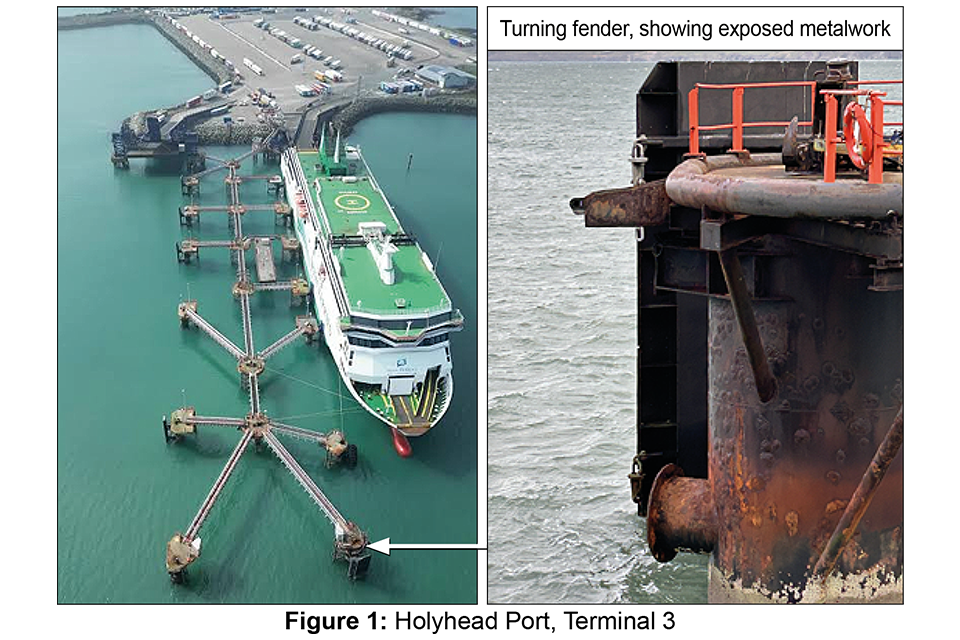
On the morning of 7 January 2026, a routine Irish Sea crossing turned into a critical maritime emergency when the roll-on/roll-off passenger (RoPax) ferry Stena Estrid made heavy contact with an unprotected turning fender at Holyhead Port, Wales. The collision, which occurred during a high-stakes berthing maneuver in challenging weather conditions, tore a hole in the vessel’s hull just below the waterline. The breach triggered an immediate influx of approximately 500 tonnes of seawater into the starboard engine room, alongside additional flooding in an adjacent void space.
Thanks to the rapid, disciplined response of the ship’s 66 crew members, a catastrophic outcome was averted. Through prompt damage control—including structural shoring, high-capacity dewatering, and the calculated transfer of ballast to induce a port list—the crew managed to stabilize the vessel, lift the breach above the waterline, and safely disembark all 91 passengers and 95 vehicles.
Following the incident, the Marine Accident Investigation Branch (MAIB) launched a formal preliminary assessment (PA summary 3/2026: Stena Estrid). Because Stena Line Limited and Stena Line Ports Limited implemented swift corrective actions and committed to infrastructure enhancements, the MAIB has officially closed its investigation. This report provides a comprehensive examination of the event, synthesizing the sequence of operations, structural damage profiles, vessel metrics, and the broader implications for ferry terminal safety in the Irish Sea corridor.
Detailed Chronology of Events
The Approach and Environmental Conditions
At 0750 UTC on 7 January 2026, the 41,671-gross-tonne RoPax ferry Stena Estrid was completing the final stages of its regular international voyage from Dublin, Ireland, to Holyhead, Wales. Operating in a harsh maritime environment defined by a strong westerly wind blowing at Force 6 to 7, the bridge team faced demanding crosswinds and localized hydrodynamic challenges as they prepared to dock at Terminal 3.
On board were 157 souls—comprising 91 passengers and 66 crew members—along with 95 vehicles secured on the cargo decks. As the vessel neared the port limits, the master and bridge crew executed standard preliminary berthing procedures, which required positioning the vessel for a reverse approach into the terminal slip.
The Maneuver and the Impact
Before backing into Terminal 3, the Stena Estrid executed a port turn to the north of the jetty. To assist with heading control and counteract the heavy westerly winds, an assist tug was made fast on the ferry’s port aft quarter.
During this complex turning and positioning phase, the vessel drifted or swung beyond its intended safety margin, making direct contact with an unprotected turning fender located at the northern extent of Terminal 3. The kinetic energy of the 214.5-meter-long vessel focused heavily on the impact point, resulting in immediate structural failure of the ship’s skin.


The collision caused a double-breach of the hull:
- Below the Waterline: A severe puncture directly compromising the starboard engine room, allowing seawater to rush into the compartment.
- Above the Waterline: A secondary structural rupture extending up to the cargo deck level.
Emergency Response and Damage Control
As water rushed into the ship, the engine room automation triggered alarms. Approximately 500 tonnes of seawater rapidly inundated the starboard engine room, while an unquantified volume entered an adjacent void space. The rapid accumulation of water threatened the vessel’s stability, generator power, and propulsion redundancy.
Instantly transitioning from routine navigation to emergency response, the ship’s crew initiated pre-established damage control protocols:
- Structural Shoring: Damage control teams rushed to the affected spaces to shore up the compromised hull plating, mitigating further structural deformation and slowing the ingress of water.
- Dewatering: High-capacity emergency bilge pumps were deployed to pump out the flooded compartments.
- Ballast Management: In a textbook display of ship stability management, the crew systematically transferred internal ballast water to induce a controlled port list. This intentional tilt raised the starboard hull breach above the waterline, effectively stopping the flow of incoming sea and stabilizing the vessel’s trim.
Berthing, Passenger Disembarkation, and Port Operations
With the emergency stabilized and the vessel maintaining positive buoyancy and structural integrity, the master made the decision to continue the berthing operation. The Stena Estrid safely backed into Terminal 3, secured alongside, and successfully disembarked all passengers and unloaded vehicles without significant delay or injury.
Holyhead Port authorities temporarily closed the ferry terminal to all incoming and outgoing ferry traffic while the situation was evaluated. Later that evening, once the Stena Estrid was safely shifted to an alternative berth, marine surveyors conducted a thorough structural assessment of the jetty. Finding no significant damage to the concrete and steel pier infrastructure, the port authorities reopened Terminal 3 to commercial service.
Following temporary repairs carried out at Holyhead, the Stena Estrid departed under its own power, crossing the Irish Sea to a specialized dry dock in Liverpool, England, for permanent steel renewal and classification surveys.
Supporting Context & Metrics
Understanding the severity of the incident and the engineering feat required to save the vessel demands a detailed look at the ship’s specifications, voyage parameters, and the nature of the marine casualty.
Ship Particulars: Stena Estrid
- Vessel Name: Stena Estrid
- Flag: Cyprus
- Classification Society: DNV GL
- IMO Number: 9807293
- Vessel Type: Roll-on/Roll-off Passenger (RoPax) Ferry
- Registered Owner: LS-CYP1 Co Ltd
- Ship Manager: Stena Line Limited
- Operator: Stena Line Irish Sea Ferries Limited
- Builder: China Merchants Jinling Shipbuilding Co. Ltd.
- Year of Build: 2019
- Length Overall (LOA): 214.5 meters
- Gross Tonnage: 41,671 GT
- Minimum Safe Manning: 19 crew members
- Authorised Cargo: Passengers and wheeled vehicles
Voyage and Environmental Particulars
- Port of Departure: Dublin, Ireland
- Port of Arrival: Holyhead, Wales
- Type of Voyage: International short-sea transit
- Cargo on Board: 95 vehicles and 91 passengers
- Total Manning: 66 crew members
- Total Persons on Board (POB): 157
- Date and Time of Incident: 7 January 2026 at 0750 UTC
- Location: Terminal 3, Holyhead Port, Wales
- Specific Area on Board: Starboard engine room and adjacent void space
- Weather and Environmental Conditions: Westerly wind, Force 6 to 7 (strong breeze to near gale), creating difficult handling dynamics during low-speed maneuvering.
- Voyage Segment: Berthing / Port approach
Official Findings & Actions Taken
While the formal MAIB investigation has been closed following a preliminary assessment, the incident highlighted specific operational vulnerabilities regarding terminal infrastructure—specifically, the presence of unprotected turning fenders in high-traffic berthing zones exposed to severe crosswinds.
Corrective Measures by Stena Line Limited
In response to the collision and subsequent flooding, the vessel management company, Stena Line Limited, instituted internal safety reviews focused on:
- Re-evaluating tug-assisted berthing protocols during high-wind events (Force 6 and above).
- Enhancing bridge resource management (BRM) training to account for hydrodynamic interactions between assist tugs, ship hulls, and port fendering systems.
- Updating internal damage control response drills to ensure even faster deployment of shoring and ballast-shifting procedures.
Corrective Measures by Stena Line Ports Limited
As the terminal infrastructure operator, Stena Line Ports Limited addressed the physical hazard presented by the jetty:
- Conducted a comprehensive engineering audit of all fendering systems across Holyhead Port terminals.
- Scheduled infrastructure upgrades to replace or modify unprotected turning fenders at Terminal 3, ensuring they absorb impact more effectively and minimize hull-to-steel contact risks during adverse weather docking.
- Reviewed port communication procedures between shore-side docking masters and incoming vessel bridges.
Because these proactive steps directly mitigate the risk of recurrence, the MAIB determined that further prolonged investigative proceedings were unnecessary, officially filing Preliminary Assessment Summary 3/2026.
Future Outlook
The incident involving the Stena Estrid serves as a stark reminder of the inherent vulnerabilities faced by modern mega-ferries operating in confined port waters during adverse weather. As maritime trade across the Irish Sea intensifies, the pressure on vessel operators and port authorities to maintain tight schedules must be balanced against the physical limits of maneuvering high-sided RoPax vessels in near-gale conditions.
The swift recovery and zero-casualty outcome of the Stena Estrid accident stand as a testament to modern ship design, watertight subdivision standards, and, above all, the exceptional training and professionalism of the ship’s crew. By converting a potential environmental and human disaster into a managed emergency through prompt dewatering and ballast control, the crew proved the vital importance of damage control readiness.
Moving forward, the infrastructure enhancements at Holyhead Port and the revised operational guidelines implemented by Stena Line will set a higher benchmark for port safety. As the Stena Estrid returns to full commercial service following its dry-dock overhaul in Liverpool, the lessons learned from this January morning will undoubtedly contribute to safer berthing practices across European ferry networks for years to come.