







Executive Overview
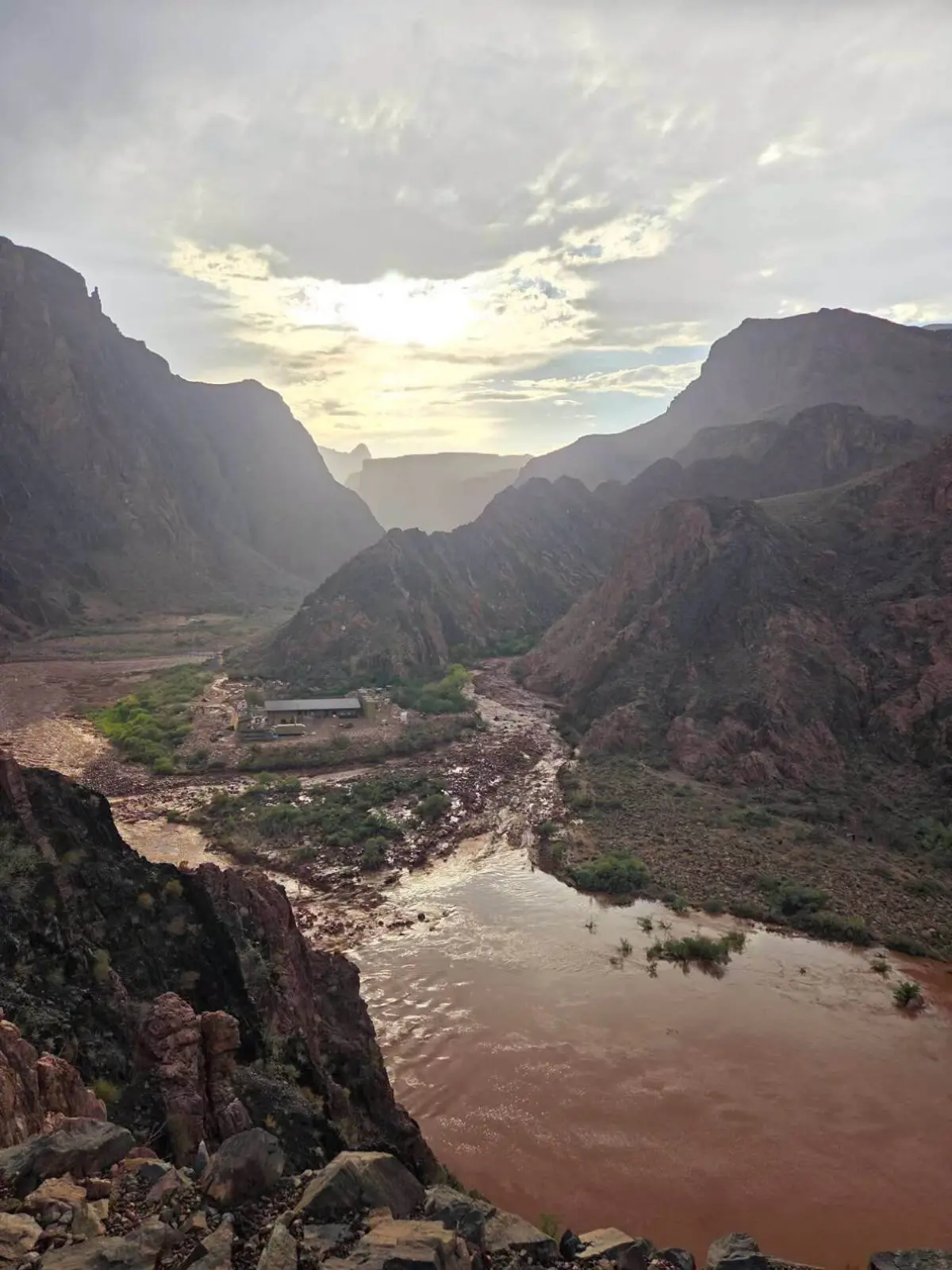
A catastrophic flash flood tore through the inner depths of the Grand Canyon on Saturday afternoon, transforming serene hiking paths and popular river-access points into raging, debris-choked torrents. The sudden deluge, triggered by torrential downpours over Bright Angel Canyon, has left at least two people dead and sparked an urgent, multi-agency search and recovery operation for approximately 15 individuals still unaccounted for.
National Park Service (NPS) officials, working alongside specialized wilderness rescue teams, have mobilized helicopters and ground crews to scour the devastated landscape. More than 60 people have been successfully evacuated from Phantom Ranch—a historic oasis nestled at the base of the canyon—following harrowing rescues that involved both aerial extractions and frantic, life-or-saving dashes through treacherous terrain.
Beyond the devastating toll on human life, the weekend disaster has crippled critical regional infrastructure. The flash flood tore through the canyon’s heart, obliterating pedestrian footbridges, devastating stone bridge pylons, and severely compromising the Transcanyon Waterline—a vital lifeline currently undergoing a massive $208 million rehabilitation project. The subsequent loss of water infrastructure has forced the implementation of emergency water restrictions, shuttered overnight lodging across the park, and prompted total closures of major hiking routes and the entire Colorado River corridor within the park boundaries.
As meteorologists warn of persistent, unstable weather patterns carrying the threat of secondary storms, park authorities face an unprecedented challenge in securing the canyon, accounting for missing visitors, and assessing millions of dollars in structural damage.
Detailed Chronology: How the Disaster Unfolded
Saturday Afternoon: The Deluge Begins
The unfolding disaster began innocuously enough with midday monsoon-type weather patterns over Northern Arizona. However, the meteorological conditions rapidly deteriorated on Saturday afternoon as heavy, unyielding rainclouds stalled directly over the Bright Angel Creek watershed. The sheer volume of precipitation falling onto sun-baked, impermeable canyon walls had nowhere to go, instantly funneling millions of gallons of water into narrow rock passages and dry creek beds.
For hikers navigating the inner canyon, the onset of the flood was abrupt and terrifying. Parth Desai, an independent hiker trekking through a narrow passage in Bright Angel Canyon, recounted the sudden transformation of the landscape.
"We saw the creek flood, waterfalls coming up out of nowhere, boulders, mud, landslides happening everywhere," Desai recalled in an interview with The Associated Press.

With virtually no warning, a wall of water, mud, and heavy debris—estimated to be roughly four feet (one meter) high—surged down the canyon corridor. As the roaring wall of destruction closed in, quick-thinking hikers shouted frantic warnings of "Up, Up, Up!" to one another. Desai and fellow travelers managed to scramble up the canyon walls, diving into patches of sharp desert cacti to evade the crushing force of the moving debris. They ultimately weathered the storm before being airlifted to safety near Phantom Ranch once rescue aircraft could reach the area.
Saturday Night into Sunday: Mass Evacuations and Initial Discoveries
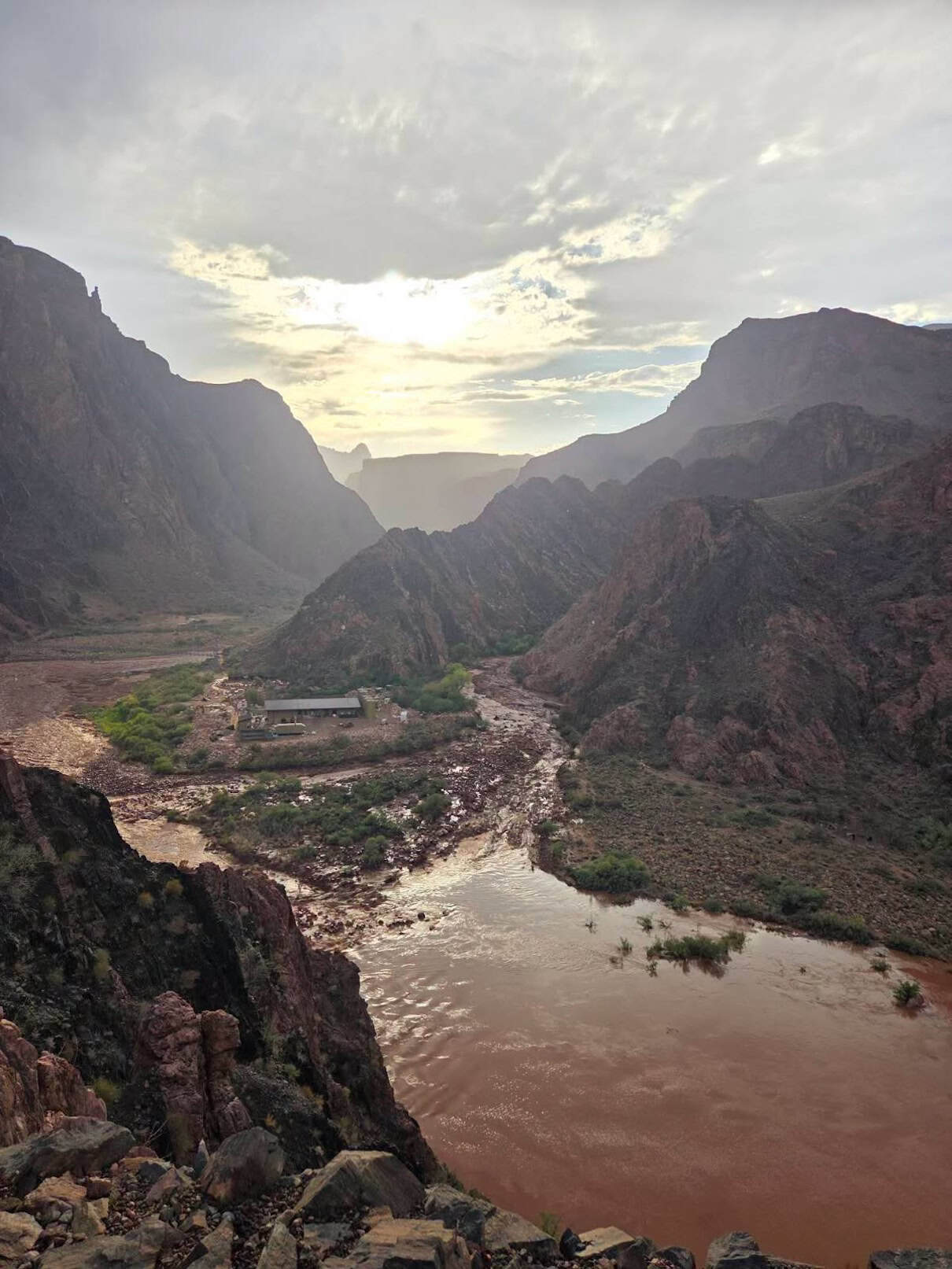
As the storm system pushed through, park rangers initiated emergency protocols. Phantom Ranch—famous for its historic canteen, dormitory cabins, and popularity among river rafters transitioning on and off the Colorado River—quickly became a staging ground for emergency operations.
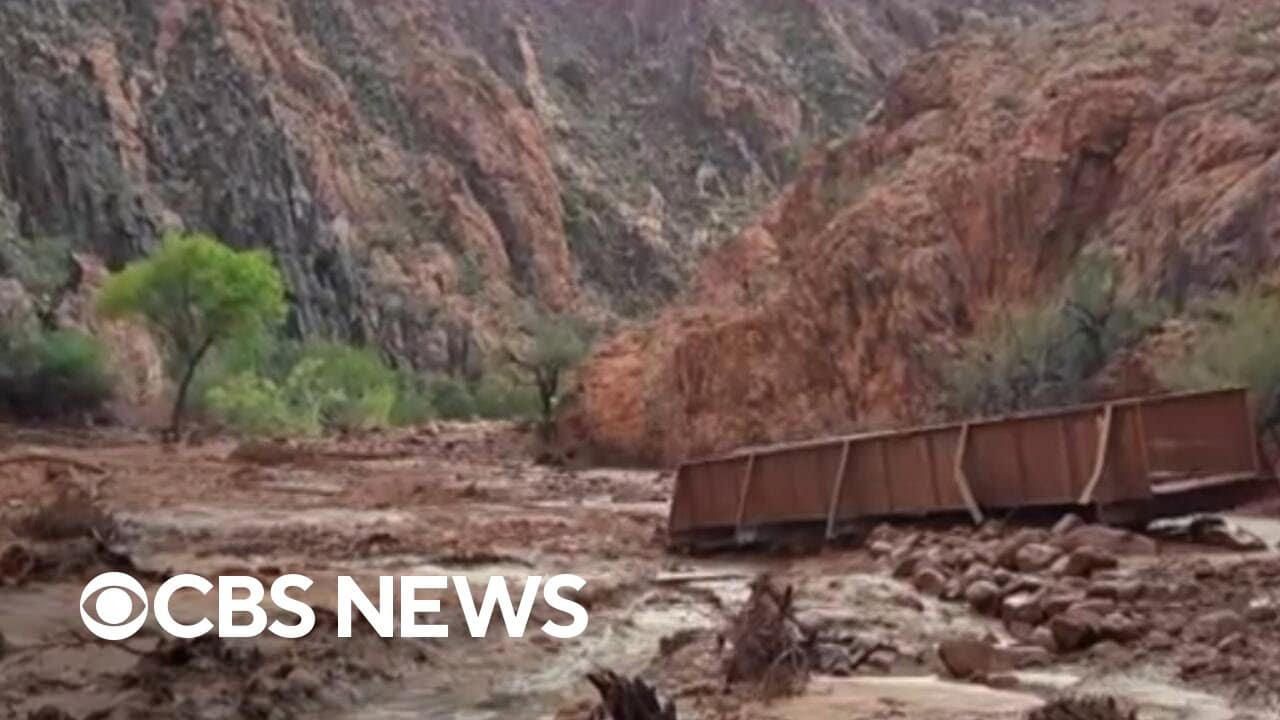
By Sunday morning, over 60 stranded individuals had been evacuated from the Phantom Ranch delta area. While some visitors were hoisted into helicopters from precarious perches along the canyon walls, others were guided out by rangers as conditions permitted.
Tragically, the scale of the catastrophe quickly became apparent. Late Sunday evening, search and recovery teams operating near Crystal Rapids along the Colorado River recovered the body of a 46-year-old man. As rescue operations expanded into Monday, a second body was pulled from the debris-choked waterways, though park officials initially withheld identifying details pending family notifications and further forensic investigation.
Supporting Context & Metrics: Infrastructure Collapse and Parkwide Impact
The true magnitude of Saturday’s flash flood extends far beyond the immediate rescue zones, laying bare the vulnerability of human engineering against the raw power of geological forces.
Destruction of the Transcanyon Waterline
Among the most critical infrastructure failures is the extensive damage inflicted upon the Transcanyon Waterline. Preliminary assessments released by Grand Canyon National Park indicate that approximately 40% of the vital pipeline system has been severely damaged or entirely destroyed.
The pipeline is the sole source of potable water for both the North and South Rims of the Grand Canyon, servicing millions of visitors and residents annually. Ironically, the disaster struck in the midst of a massive, multi-year $208 million rehabilitation project explicitly designed to upgrade and secure the aging infrastructure—a project that was slated for completion next year.
With the pipeline nonoperational, Grand Canyon National Park instituted sweeping emergency water restrictions starting Sunday. Water spigots across South Rim campgrounds have been turned off, and park authorities have taken the drastic step of halting all overnight hotel and lodge accommodations beginning Monday, August 31, permitting only self-sufficient dry camping for visitors already inside the park.
Trail and River Closures
The physical scars left by the flood are extensive. Nearly all historical footbridges traversing Bright Angel Creek have been swept away or structurally compromised, leaving stone bridge pylons standing as lonely monuments to the raging waters. Key hiking routes, including the iconic North Kaibab Trail and Bright Angel Campground, remain strictly closed until further notice.
On the water, the National Park Service issued an unprecedented closure of the Colorado River to all river traffic. The decree was triggered by massive metal structures, massive boulders, and structural debris washing directly from Bright Angel Creek into the main channel of the river, creating extreme navigational hazards for commercial and private rafting parties alike.
Official Statements and Ongoing Search Operations
The search for the approximately 15 individuals still unaccounted for remains the top priority for park administration, local law enforcement, and specialized search-and-rescue teams.
Public Assistance Requested
In an official statement released via social media and emergency channels, the National Park Service Investigative Services Branch implored the public for assistance. Authorities are actively seeking information regarding any hikers, backpackers, or independent travelers who were known to be in the inner canyon along the Bright Angel Creek corridor on or around August 29.
Families, travel companions, or outfitters with knowledge of missing persons are urged to contact the NPS Investigative Services Branch immediately to help reconcile manifest lists and narrow down search parameters.
Weather Complications
Compounding the difficulties faced by emergency responders is an unforgiving weather forecast. National Weather Service meteorologists warned that lingering atmospheric moisture could spark additional rain showers and localized thunderstorms throughout Monday.
Park officials have explicitly cautioned that secondary rain events could trigger renewed flash flooding, sudden rockfalls, and unpredictable surges in mud and debris flows. These volatile conditions threaten to slow down active rescue sorties, ground support aircraft, and delay engineering assessments of the damaged water pipeline.
Future Outlook: Recovery, Rebuilding, and Resilience
As the dust settles over the canyon floor, the Grand Canyon National Park faces a protracted, multi-phase recovery effort. The immediate horizon is entirely dedicated to humanitarian objectives: locating the remaining missing persons, ensuring the safety of stranded or evacuated personnel, and stabilizing hazardous areas along the inner canyon trails.
Once search-and-rescue operations transition to recovery and remediation, park administrators will confront the monumental task of rebuilding wiped-out infrastructure. Repairing or replacing 40% of a multi-million-dollar subterranean and surface water pipeline within the precipitous depths of the Grand Canyon represents an engineering hurdle of historic proportions. Until the Transcanyon Waterline is fully restored, restrictions on overnight lodging and water consumption will likely remain in effect, drastically altering the visitor experience for millions who journey to northern Arizona each autumn.
For the adventure travel and river-running communities, the disaster serves as a sobering reminder of the unforgiving nature of desert slot canyons and monsoon climates. River parties currently operating within the canyon are receiving continuous tactical updates through river operations rangers and the specialized Grand Canyon River Alert system—a direct-to-device satellite messaging network. Prospective visitors and commercial outfitters with upcoming autumn itineraries are strongly advised to monitor official updates via the Grand Canyon National Park website or consult directly with NPS River Permits before planning travel into the canyon interior.