










Executive Overview
The connectivity landscape between the United States and Central America is undergoing a transformative period of growth, driven by shifting consumer demands, targeted airline expansion strategies, and an increasing desire for seamless access to diverse ecological and cultural destinations. At the forefront of this aviation evolution is BermudAir, a carrier that has quickly established itself as a nimble and forward-thinking player in regional aviation.
In a strategic move set to bolster travel options for vacationers, business travelers, and the diaspora alike, BermudAir has officially announced the launch of a brand-new nonstop service connecting Fort Lauderdale-Hollywood International Airport (FLL) in South Florida with Philip S.W. Goldson International Airport (BZE) in Belize City.
Commencing on October 26, the newly minted route will operate three times weekly, offering passengers a rapid, highly convenient two-and-a-half-hour gateway to Belize’s legendary barrier reefs, ancient Maya ruins, and pristine rainforests. This service is not merely an isolated route addition; it represents the inaugural phase of an ambitious, five-route expansion plan targeting key U.S. markets, signaling BermudAir’s broader strategic pivot into the wider Caribbean and Central American basins.
For South Florida travelers, the addition of this service introduces a competitive alternative to existing carriers, injecting fresh capacity into a corridor that has historically experienced high demand. By deploying comfortable regional jet aircraft equipped with both economy and business-class configurations, BermudAir is elevating the product standard for short-haul international flights in the region.
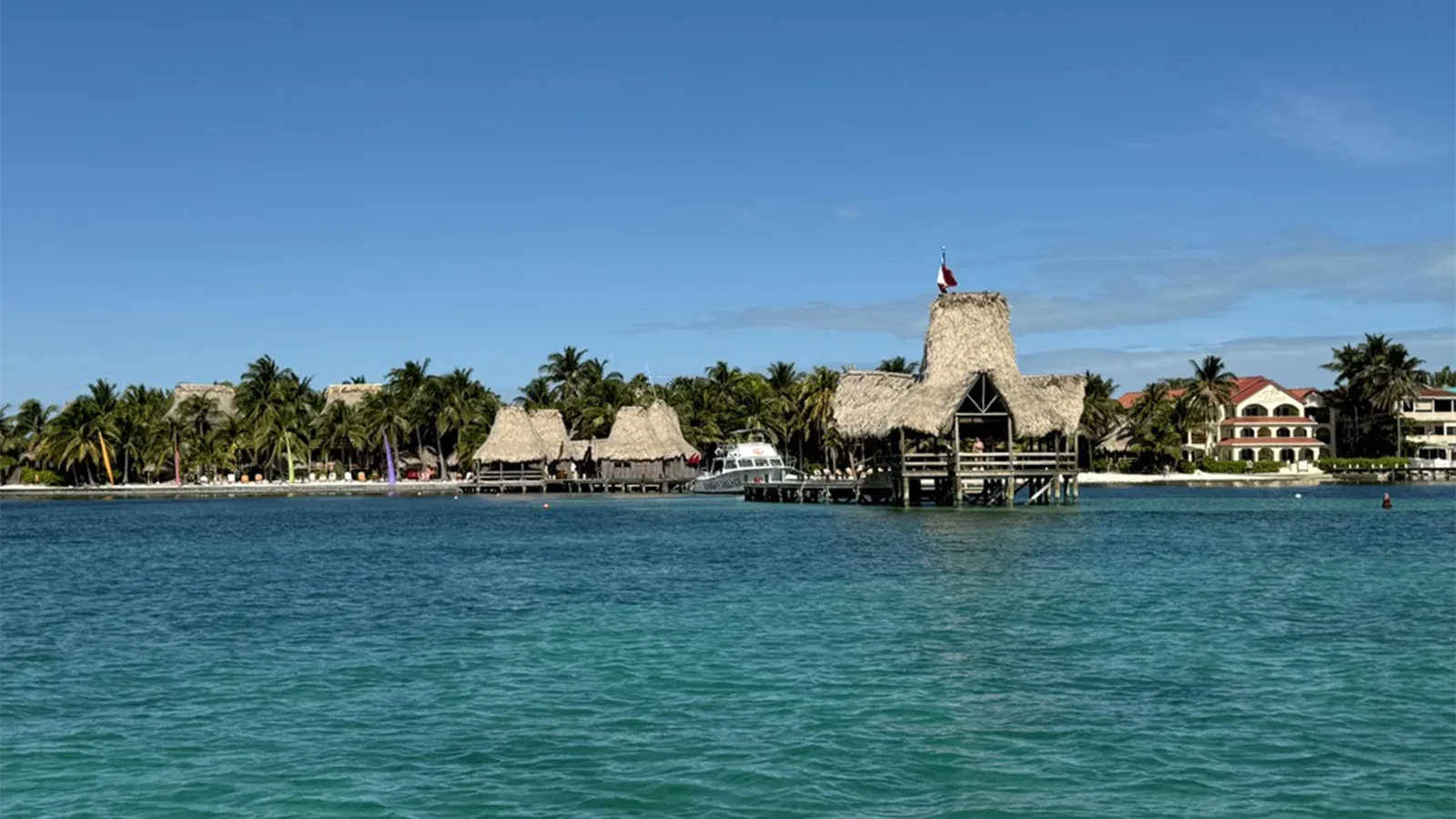
Furthermore, the timing of the flights—scheduled for Mondays, Wednesdays, and Fridays—has been meticulously engineered to facilitate smooth connections. Whether passengers are heading onward to the sandy shores of Ambergris Caye, the idyllic beaches of Placencia, or the jungle eco-lodges of the Cayo District, the new schedule minimizes layovers and maximizes destination time. As Belize continues to experience a renaissance in tourism infrastructure and airlift development, this latest partnership between the destination and BermudAir underscores a mutual commitment to sustainable, accessible tourism growth.
Detailed Chronology
To fully understand the weight of BermudAir’s latest network expansion, it is essential to trace the deliberate sequence of events, operational milestones, and strategic announcements that have culminated in the October 26 launch.
The Foundation: Strategic Network Planning (Early-to-Mid 2026)
BermudAir’s path to the Belize corridor began well in advance of the public schedule release. Following the airline’s successful stabilization and maturation of its initial route networks, executive leadership turned its sights toward broader regional expansion. Market analyses identified Central America and the Caribbean as high-potential regions where underserved routes or high-demand leisure corridors could benefit from a boutique, customer-centric airline model.

Belize emerged as a prime candidate. Despite its immense popularity as a haven for eco-tourists, scuba divers, and cultural explorers, airlift from specific U.S. hubs remained constrained or subject to legacy carrier scheduling limitations. Conversations between BermudAir representatives and Belizean tourism authorities quietly took shape during the spring months, focusing on slot availability, terminal operations at Philip S.W. Goldson International Airport, and the alignment of tourism marketing campaigns.
The Summer Revelation (July–August 2026)
The broader blueprint of BermudAir’s regional ambitions became public knowledge during the summer months. Industry reports, notably highlighted by aviation and travel chroniclers in July and August, revealed that the airline was not planning a solitary route, but rather a coordinated wave of five new U.S.-to-Belize routes.
This multi-city strategy caught the attention of aviation analysts, who noted the audacity of launching multiple international connections into a single destination within a compressed timeframe. While competitors often test the waters with a single weekly frequency, BermudAir signaled supreme confidence in the Belizean market by committing substantial fleet resources upfront.
Schedule Finalization and Ticket Sales (September 2026)
As summer transitioned into early autumn, operational logistics fell into place. Flight numbers, ground-handling contracts, and crew scheduling were finalized. In mid-September, BermudAir officially published its definitive flight timetable, opening reservation channels to the public.
The announcement detailed the operational mechanics of Flight 425 and its corresponding return leg, locking in the Embraer E190 as the workhorse aircraft for the route. Travel agencies, tour operators, and direct consumers immediately began snapping up tickets, particularly for late-fall and early-winter getaways—a peak travel window for Belize as North Americans seek refuge from dropping temperatures.
The Inaugural Flight Countdown (October 2026)
As the calendar ticks down to October 26, operational preparations at both Fort Lauderdale-Hollywood International Airport and Belize City are hitting a fever pitch. Ground crews are undergoing specialized training for the Embraer E190 fleet specifications, while local tourism boards in Belize are preparing a festive water-salute welcome for the inaugural flight. This date will mark a milestone not just for the airline, but for the ongoing diversification of travel options connecting the Florida peninsula with Central America.
Supporting Context & Metrics
An evaluation of the Fort Lauderdale-Belize route requires examining the quantitative metrics, scheduling details, and geographical advantages that render this service uniquely viable.
Operational Schedule and Route Parameters
The flight particulars have been structured to maximize efficiency for both point-to-point travelers and those utilizing South Florida as a connecting mega-hub:
- Frequency: Three times weekly (Mondays, Wednesdays, and Fridays).
- Southbound Flight (BermudAir Flight 425): Departs Fort Lauderdale-Hollywood International Airport (FLL) at 11:00 AM, arriving at Philip S.W. Goldson International Airport (BZE) in Belize City at 11:30 AM local time.
- Flight Duration: Approximately 2 hours and 30 minutes, classifying it as an ideal short-haul international hop.
- Northbound Return Flight: Departs Belize City at 12:30 PM on the same operational days, maintaining a tight, highly efficient aircraft turnaround profile.
- Aircraft Equipment: Embraer E190, featuring a dual-class cabin layout complete with dedicated business-class seating alongside a spacious economy configuration.
The Fleet Factor: Why the Embraer E190 Matters
The choice of the Embraer E190 is a central pillar of BermudAir’s operational strategy. Unlike massive narrowbody aircraft that can struggle with load factors on nascent or niche international routes, the E190 strikes an optimal balance between passenger capacity and range economics.
For travelers, the regional jet configuration brings distinct advantages: fewer middle seats, a quieter cabin environment, and a more intimate boarding and deplaning process. Furthermore, by offering a true business-class product on a two-and-a-half-hour flight, BermudAir caters to premium leisure travelers and corporate executives who refuse to compromise on comfort during short international transits.
Connecting the Dots: Seamless Onward Travel
One of the most compelling metrics of the new service is its synergy with Belize’s domestic transport network. Because Flight 425 touches down in Belize City at 11:30 AM, passengers are perfectly positioned to catch afternoon domestic puddle-jumper flights operated by local carriers such as Maya Island Air or Tropic Air.
Consider the logistical breakdown for popular regional extensions:
- Ambergris Caye (San Pedro): A brief 15-minute domestic flight from BZE places visitors directly on the doorstep of the island’s vibrant dive sites and resort properties.
- Placencia and Hopkins: Southern coastal escapes are accessible via equally short domestic hops or well-maintained highway connections, allowing travelers to reach their final jungle or beach hideaway before sunset.
- The Cayo District: Travelers heading west toward San Ignacio and the ancient Maya monuments of Xunantunich or Caracol can easily secure rental vehicles or private transfers straight from BZE airport, bypassing the need for overnight layovers in Belize City.
The Broader Airlift Boom in Belize
BermudAir’s arrival is part of an aggressive, sustained expansion of North American airlift into Belize. Tourism statistics released by regional bodies indicate that international arrivals have steadily climbed, prompting carriers to rethink seasonal limitations.
In addition to the Fort Lauderdale launch, BermudAir has slated future nonstop entries from Boston, Raleigh-Durham, Orlando Sanford, and St. Petersburg-Clearwater. Concurrently, legacy and low-cost carriers from across the continent—such as WestJet’s introduction of winter routes from Winnipeg—demonstrate that Belize is cementing its status as a top-tier regional destination capable of sustaining year-round international air traffic.
Official Statements
The introduction of a transnational aviation link of this magnitude inevitably draws commentary from industry leaders, tourism ministers, and corporate executives invested in the economic vitality of the region.
While specific quotes from the executive suites at BermudAir emphasize a corporate philosophy centered on "accessible boutique travel" and "responsive network engineering," regional tourism stakeholders have been vocal about the transformative economic impact of the new FLL-BZE pairing.
A senior representative from Belize’s tourism infrastructure sector noted during the preliminary schedule rollouts that expanding direct access from South Florida is a cornerstone of the country’s sustainable tourism master plan. "South Florida is not merely a point of origin; it is the ultimate global bridge connecting Latin America, the Caribbean, and North America," the official remarked. "By securing a reliable, three-weekly carrier like BermudAir with premium product offerings, we are opening our doors to a demographic of travelers who value both expediency and elevated service standards."
Concurrently, aviation analysts tracking BermudAir’s financial and operational trajectory have praised the airline’s measured aggression. Industry observers point out that many regional carriers stumble by expanding too quickly into hyper-competitive legacy corridors. By contrast, BermudAir’s targeting of secondary and underserved markets—such as coupling Fort Lauderdale with Belize City, and subsequently branching out to regional U.S. cities like Raleigh-Durham and St. Petersburg-Clearwater—represents a textbook study in niche market capture.
Furthermore, airport authorities at Fort Lauderdale-Hollywood International Airport have expressed enthusiasm over the diversification of their international portfolio. The addition of BermudAir strengthens FLL’s standing as an indispensable gateway to Central America and the wider Caribbean basin, providing local passengers with enhanced scheduling flexibility and competitive pricing structures that challenge entrenched airline dominance.
Future Outlook
As the October 26 launch date approaches, attention naturally turns toward the long-term viability, scalability, and strategic ramifications of BermudAir’s expansion into Belize and the broader Central American market.
Sustainability and Market Absorption
The primary question facing any new international route is market absorption: Can the three-weekly frequency maintain healthy load factors once the initial wave of inaugural excitement settles? Given the diverse appeal of Belize—encompassing scuba diving along the Mesoamerican Barrier Reef System, cave tubing in the Cayo District, luxury eco-resorts, and cultural heritage tourism—demand is structurally diversified. The destination does not rely solely on seasonal winter sun-seekers; its rainforests and Mayan archaeological sites draw explorers twelve months a year.
Moreover, BermudAir’s dual-class configuration positions it to capture high-yield travelers—honeymooners, high-net-worth eco-tourists, and corporate remote workers—who are willing to pay a premium for business-class amenities on short-haul segments. This yield management strategy protects the airline against the margin compression that frequently plagues ultra-low-cost carriers relying purely on economy volume.
The Domino Effect: Upcoming Routes and Network Maturation
The Fort Lauderdale-Belize service is merely the tip of the iceberg. With upcoming nonstops from Boston, Raleigh-Durham, Orlando Sanford, and St. Petersburg-Clearwater slated to roll out in subsequent phases, BermudAir is weaving a dense web of connectivity between the United States and Belize.
As these routes mature through late 2026 and into 2027, aviation watchers expect to see increased code-sharing discussions, deeper integration with local Belizean ground-tour operators, and potentially an intensification of frequency on routes that outperform baseline projections.
Conclusion: A New Era for Regional Aviation
BermudAir’s entry into the Fort Lauderdale-Belize City corridor is a textbook example of modern aviation entrepreneurship meeting consumer demand. By pairing a comfortable, well-appointed aircraft with a strategically optimized timetable, the airline has successfully shrunk the distance between South Florida’s bustling metropolis and Belize’s tranquil natural wonders.
For travelers, the benefits are immediate: shorter travel times, superior onboard comfort, and seamless onward connections to the reef and the jungle. For the aviation industry, the route serves as a fascinating case study in how agile, boutique carriers can carve out profitable, high-satisfaction niches in an airspace historically dominated by legacy giants. As Flight 425 lifts off from the tarmac on October 26, it will carry not just passengers, but the promise of a more connected, accessible Caribbean and Central America.