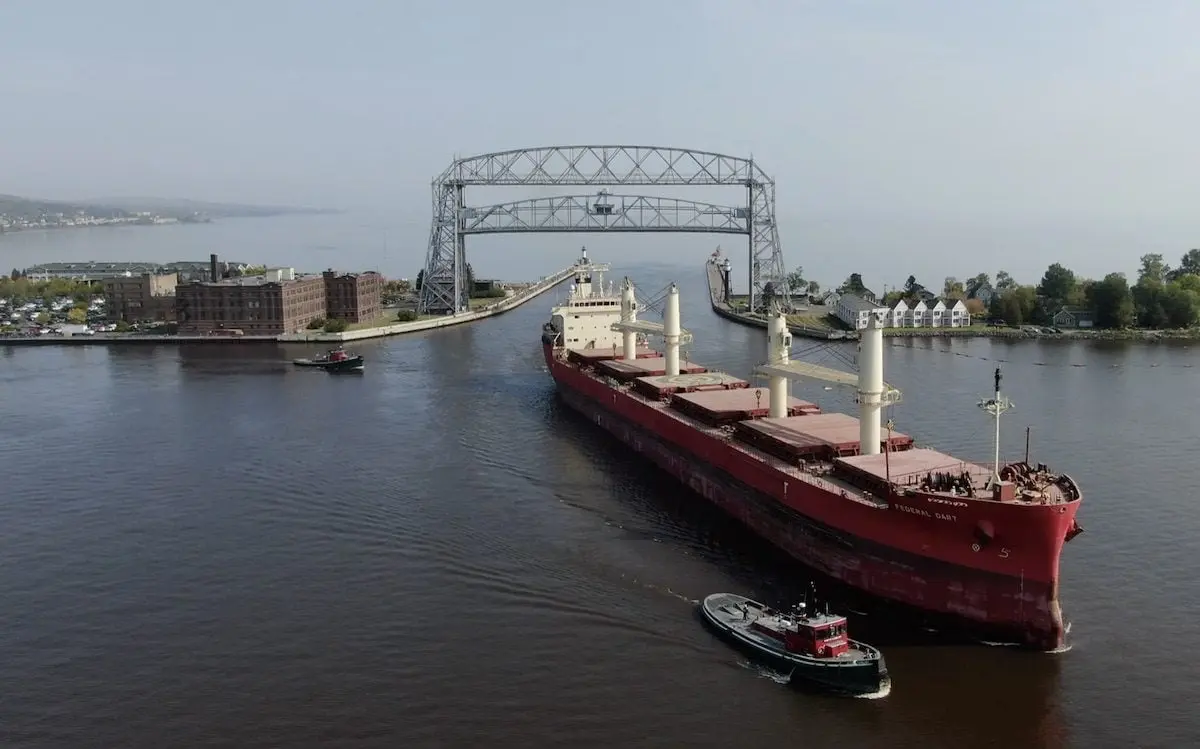
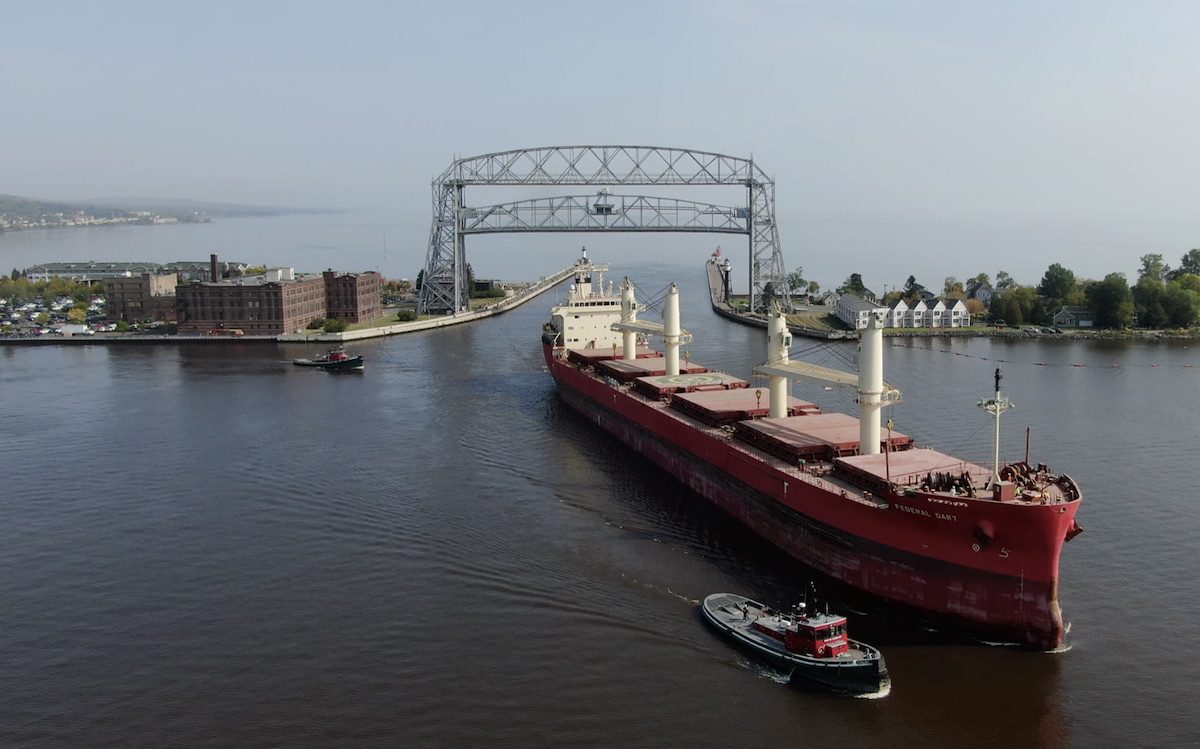
For nearly half a century, the arrival of the American Century at the Port of Duluth-Superior has been a celebrated ritual of American industrial endurance. The 1,000-foot-long bulk carrier, powered by four massive General Motors diesel engines generating more horsepower than a dozen Formula 1 cars, represents the zenith of late-twentieth-century American manufacturing. Yet, as the vessel loads Minnesota iron ore under the watchful eyes of local onlookers, its towering silhouette serves as a stark reminder of a rapidly fraying alliance.
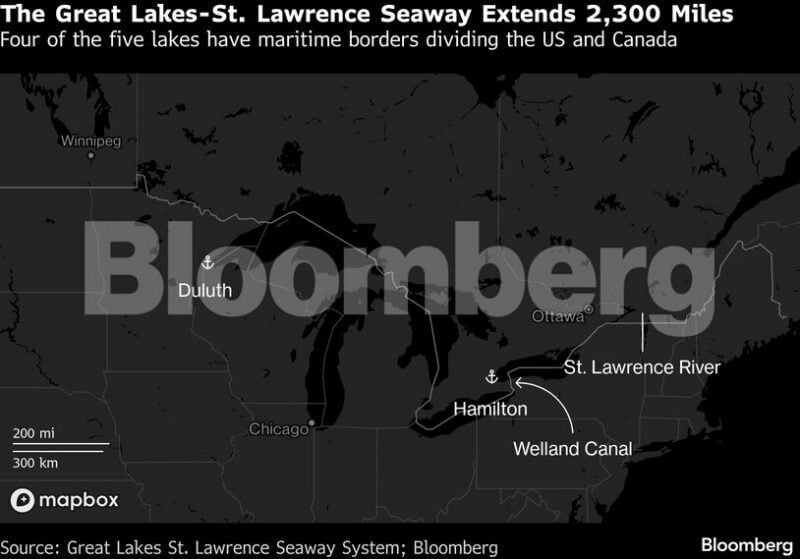
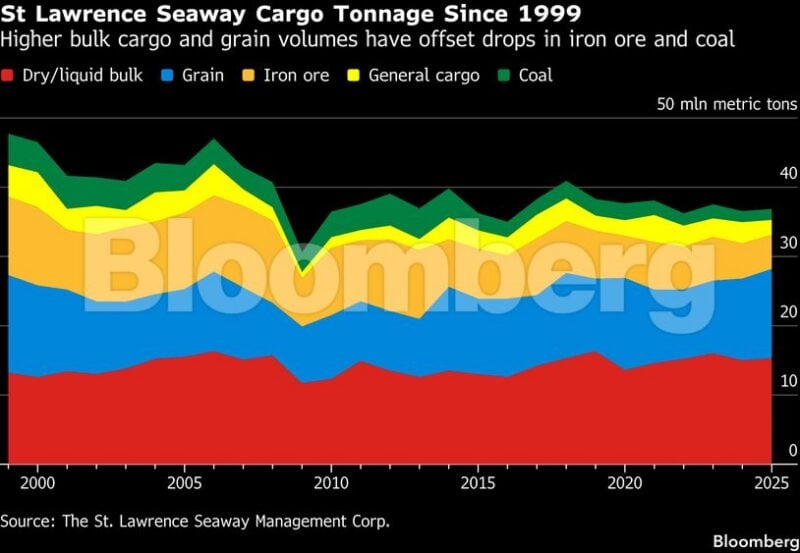
The Great Lakes and the St. Lawrence Seaway system form a binational economic corridor that, if treated as a single sovereign entity, would represent the third-largest economy in the world, generating over $6 trillion in annual economic activity. For decades, this "Blue Highway" operated as a seamless, integrated logistics network, moving over 200 million tons of raw materials annually across a border defined more by shared prosperity than political division.
Today, that integration is under existential threat. A escalating trade dispute between Washington and Ottawa has disrupted long-standing maritime supply chains. The combination of targeted US tariffs on Canadian steel, retaliatory maneuvers, and structural shifts in the energy sector has sent shipping volumes into a historic tailspin. At the western terminus of the system, Duluth-Superior has seen overall vessel traffic plummet by 23% through August 2026 compared to the previous year.
As President Donald Trump and Canadian Prime Minister Mark Carney engage in a high-stakes war of words, the maritime industry is left to navigate a turbulent new reality. What began as a dispute over industrial tariffs has evolved into a broader systemic rift, raising fundamental questions about cabotage laws, shipbuilding subsidies, and the future of North American economic interdependence.
Detailed Chronology: The Unraveling of a Continental Commons
[1871] Treaty of Washington guarantees free transit on the St. Lawrence River
       │
[1950s] Joint construction of the St. Lawrence Seaway after initial US hesitation
       │
[2025] Escalating trade tensions; US imposes sweeping tariffs on Canadian steel
       │
[Early 2026] Vessel traffic drops sharply; Trump jokingly renames Lake Ontario "Lake America"
       │
[August 2026] Unifor & regional port authorities sound the alarm over 23% shipping decline
       │
[Sept 2026] PM Mark Carney signals readiness for talks; Canadian ports seek EU diversification
The Roots of Co-Dependence
The maritime boundary between the United States and Canada spans four of the five Great Lakes—Superior, Huron, Erie, and Ontario—along with the St. Lawrence River, which connects the midcontinental heartland to the Atlantic Ocean. This shared geography required a level of diplomatic and administrative cooperation unique in global geopolitics.
The foundational legal framework of this relationship dates back to the Treaty of Washington in 1871, which decreed that navigation of the St. Lawrence River would "forever remain free and open for the purposes of commerce" to the citizens of both nations. This commitment was tested and ultimately reinforced in the 1950s during the construction of the St. Lawrence Seaway. Initially hesitant to fund the massive engineering project, the United States only joined the effort after Canadian officials threatened to build the seaway unilaterally. The resulting infrastructure—featuring 15 locks, 13 managed by Canada and two by the US—became a monument to mid-century bilateral cooperation.
The Spark of the 2025–2026 Trade Dispute
The current crisis is rooted in a shift toward protectionism in Washington. Following the implementation of aggressive US tariffs on steel and aluminum, Canada’s industrial metals sector faced immediate headwinds. Because the Great Lakes shipping industry is fundamentally geared toward moving the raw ingredients of steelmaking—specifically iron ore from Minnesota’s Mesabi Range to Canadian mills, and Canadian metallurgical products back to US manufacturing hubs—the tariffs acted as an immediate brake on bilateral shipping.
The political rhetoric escalated rapidly throughout 2026:
The "Lake America" Provocation: In a move that highlighted the highly charged nature of the dispute, President Trump symbolically renamed Lake Ontario "Lake America" during a rally, signaling a disregard for the binational administration of the lakes.
The European Pivot: In response to US pressure, Canadian Prime Minister Mark Carney began exploring associate membership options and enhanced trade pacts with the European Union. This pivot prompted fresh threats from Washington, which views Ottawa’s European overtures as a violation of continental trade agreements.
The "Strait of Our Moose" Campaign: On the grassroots level, Canadian social media campaigns began jokingly demanding that Ottawa declare absolute sovereignty over the Welland Canal—the critical Canadian-controlled link bypassing Niagara Falls—dubbing it the "Strait of Our Moose" in a satirical reference to US maritime struggles in the Strait of Hormuz.
Supporting Context & Metrics: The Economic Toll in Numbers
The impact of this geopolitical friction is not merely rhetorical; it is written directly into the cargo manifests of the Great Lakes fleet. The Port of Duluth-Superior, the largest Great Lakes port by tonnage, has borne the brunt of the slowdown.
Port of Duluth-Superior Shipping Statistics (Through August 2026)
Metric
2025 Performance
2026 Performance (YTD)
Year-over-Year Change
Total Vessel Traffic
Baseline
-23%
-23%
US-Flagged Vessel Visits
Baseline
-19%
-19%
Canadian Carrier Arrivals
Baseline
-37%
-37%
Coal Volume (Tons)
4.7 Million
500,000 (Projected)
-89.4%
Domestic Iron Ore Shipments
Baseline
-40%
-40%
The Coal Collapse and Iron Ore Slump
The dramatic 89% drop in coal volume is partially structural, driven by the closure of a major regional coal terminal and a broader global transition away from coal-fired power generation. The projected 500,000 tons for 2026 represents the lowest volume recorded at the port since 1973.
However, the decline in iron ore is directly tied to the trade dispute. Domestic iron ore shipments from Duluth-Superior are running 40% below their 2025 pace. Normally, this steelmaking feedstock is hauled across the lakes to integrated steel mills in Hamilton, Ontario, or down to domestic US mills in Ohio and Indiana. With Canadian steel mills operating at reduced capacity due to US import barriers, the northbound flow of iron ore has slowed significantly.
The ongoing trade dispute has laid bare deep-seated structural grievances between US and Canadian vessel operators, revealing that the current crisis is about more than just tariffs.
The US Perspective: Accusations of a "Canadian Monopoly"
US shipping interests, represented by the Lake Carriers’ Association (LCA), have long argued that they are operating at a competitive disadvantage. Jim Weakley, President of the LCA, has pointed to regulatory disparities that he claims have decimated the US-flagged Great Lakes fleet.
In a position paper, Weakley asserted:
"Canada has flagging laws, regulations, and practices that endanger the economic viability, efficiency, and service reliability of the US-flagged Great Lakes fleet’s binational trade… This has created a Canadian monopoly on the binational Great Lakes trade."
A central grievance of the US domestic fleet is the Canadian industry’s reliance on foreign shipbuilders. Because the US Jones Act requires all vessels moving goods between US ports to be built in domestic shipyards, US operators face capital costs that are often three to four times higher than those of their international peers. In contrast, Canadian operators have rebuilt their fleets using state-subsidized shipyards in China.
The Canadian Defense: A Lack of Domestic Shipbuilding Capacity
Canadian maritime representatives counter that their reliance on international shipyards is a matter of survival, not preference. Jason Card, Vice President of External Affairs with the Chamber of Marine Commerce in Ottawa, defended the practice:
"It’s difficult to find a shipyard that’s willing to build a laker vessel because of the unique narrow design and limited orders. There’s not a desire to build far from home, it’s just been the reality for the past several years that there’s no available capacity."
Card noted that while US carriers have historically focused on large-scale, long-term contracts moving coal and iron ore on the Western Lakes using massive 1,000-foot vessels, Canadian operators adapted to the smaller lock systems, dominating the diverse, multi-commodity trade lanes.
Port Authorities Call for Pragmatism
Port directors on both sides of the border are urging political leaders to recognize the high cost of economic decoupling. Ian Hamilton, President and CEO of the Hamilton-Oshawa Port Authority (HOPA), expressed frustration at the self-inflicted damage of the tariff battle:
"Over decades and decades of time, the Great Lakes, the states, and the provinces have become a hugely integrated economy… US counterparts are all kind of scratching their heads going, ‘Why are we disrupting this integrated market?’ We’ve crossed the borders to drink in each other’s bars and eat each other’s food and vacation at each other’s properties. I certainly appreciate that the United States could probably survive on less trade with Canada, but I also think that ultimately drives up the costs for everybody."
Future Outlook: Restructuring the Northern Supply Chain
As the trade dispute drags on, regional players are beginning to accept that the old status quo may not return. Consequently, strategic planning on both sides of the border is shifting from temporary crisis management to long-term structural adaptation.
                 ┌────────────────────────────────────────┐
                 │  Strategic Realignment of Great Lakes  │
                 └───────────────────┬────────────────────┘
                                     │
          ┌──────────────────────────┴──────────────────────────┐
          ▼                                                     ▼
┌───────────────────────────────────┐                 ┌───────────────────────────────────┐
│     Canadian Diversification      │                 │       US Port Adaptation          │
├───────────────────────────────────┤                 ├───────────────────────────────────┤
│ • Sault Ste. Marie port expansion │                 │ • Pivot to high-value breakbulk   │
│ • Enhanced road & rail links      │                 │ • Wind turbine logistics hub      │
│ • Direct trade routes to Europe   │                 │ • Regional energy supply chains   │
└───────────────────────────────────┘                 └───────────────────────────────────┘
Canada’s Pivot to Domestic and Overseas Markets
To reduce its dependence on volatile US trade policy, Canada is investing in infrastructure designed to bypass the US market entirely. HOPA is currently partnering with the city of Sault Ste. Marie, Ontario—home to a key regional steel mill—to propose a new port facility.
This project aims to:
Strengthen Intermodal Connections: Develop robust road and rail infrastructure to link resource-rich northern Canadian regions directly with domestic consumer markets in southern Ontario and Quebec.
Facilitate Direct Overseas Exporting: Enable Canadian producers to bypass US transit routes, shipping grain, minerals, and manufactured goods directly to European and Asian markets via the St. Lawrence River.
US Port Adaptation
On the American side, ports like Duluth-Superior are attempting to offset the loss of bulk commodities by diversifying into high-value cargo. Kevin Beardsley, Executive Director of the Duluth Seaway Port Authority, has overseen an increase in "breakbulk" cargo. The port is increasingly handling large-scale industrial machinery, heavy equipment, and massive components for wind turbines destined for energy projects across the American Midwest and Western Canada.
While these high-value cargoes generate solid revenue, they do not match the sheer volume or steady employment provided by the traditional iron and coal trade. For the crews of vessels like the American Century, and the communities that support them, the hope remains that economic pragmatism will eventually prevail over protectionist politics. Until then, the Great Lakes shipping industry must navigate a narrower, more hazardous economic channel than any it has faced in its long history.