











Executive Overview
In an era where economic anxiety dominates household financial concerns, the notion of a tropical getaway often feels like an unattainable luxury. According to recent economic and personal finance data from Gallup, surging everyday costs—spanning everything from municipal utility bills to supermarket essentials—have steadily eroded discretionary spending power and squeezed standard living metrics worldwide. For millions of travelers, the knee-jerk reaction to these inflationary pressures is to shelve their annual vacations indefinitely.
However, writing off travel entirely is an unnecessary sacrifice. With strategic planning, localized expertise, and an understanding of seasonal market shifts, a sun-drenched Caribbean vacation complete with round-trip airfare, comfortable three-star accommodations, authentic culinary experiences, and memorable excursions is entirely achievable for roughly $1,500 per person.

This guide dismantles the myth that island travel requires an exorbitant budget. Drawing from decades of regional expertise and budget-travel mechanics, we examine how to execute a five-to-seven-day tropical escape without decimating your savings. Whether you prefer the hands-off convenience of a private all-inclusive compound or the cultural immersion of independent island exploration, affordable paradise is closer—and more affordable—than you think.

Detailed Chronology & Strategic Planning Timeline
Securing a budget-friendly Caribbean vacation is less about luck and more about precise timing and deliberate scheduling. Understanding how regional tourism cycles operate can save travelers hundreds of dollars on identical itineraries.

Phase 1: The Booking Window and Seasonal Sweet Spot
Conventionally, budget travelers are funneled toward the traditional Caribbean off-season—spanning June through November—to secure deep discounts. However, this window overlaps directly with the region’s rainy season, with the peak threat of tropical storms and hurricanes concentrated between August and October.
To maximize savings while mitigating weather risks, seasoned travelers target May. Falling right at the tail end of the peak winter-escape season and just before the heavy summer rains, May acts as an ideal shoulder month.
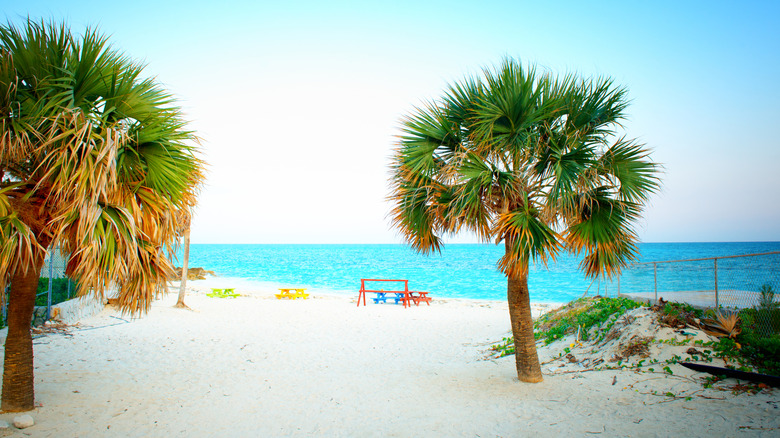
- Financial Impact Example: Booking a three-star accommodation such as the Colony Club Inn and Suites in Nassau, Bahamas, during the second week of May yields nightly rates hovering around $105. By contrast, booking the exact same property during the peak January high season routinely pushes rates to $125 on the low end and up to $180 per night on the high end. This single seasonal shift saves upwards of $350 over a week-long stay.
Phase 2: Evaluating Travel Styles (Resorts vs. Cruises vs. Independent Exploration)
Your financial threshold is heavily dictated by how you structure your trip. Travelers must weigh three primary modalities:

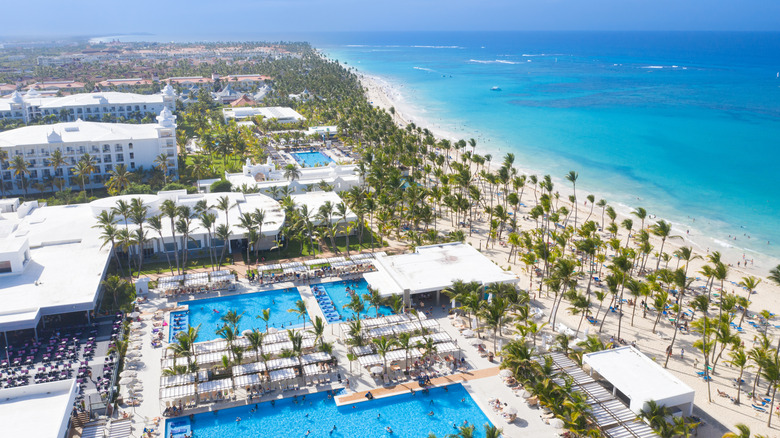
- All-Inclusive Resorts: Ideal for travelers seeking predictability. While winter rates can break the bank, May price drops at properties like Jamaica’s Bahia Principe Escape Runaway Bay see per-person nightly rates fall from roughly $300 (January) to around $210 (May). When factoring in that ground transportation, food, and private beaches are bundled into the cost, pairing this with a short-haul flight from Florida keeps you comfortably under the $1,500 ceiling. The primary trade-off is a lack of deep cultural immersion.
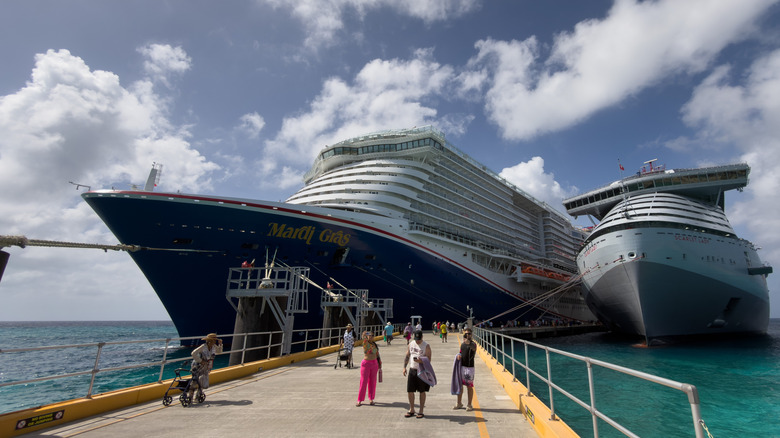
- Caribbean Cruises: Highly attractive for gregarious travelers who enjoy multi-destination itineraries. While September and October offer rock-bottom cruise prices, the weather volatility makes May a safer bet for avoiding stranded port days. A seven-day voyage on acclaimed lines like Carnival in May can land right under the $1,500 mark for solo travelers departing from Florida ports, with even steeper per-person discounts for double-occupancy bookings.
- Independent Island-Hopping and Solo Itineraries: Perfect for travelers who want absolute autonomy over their daily schedules. This method requires hand-picking a destination close to the U.S. mainland to slash airfare overhead.
Supporting Context & Metrics: Where Your Money Goes
To keep total expenses capped at $1,500, a disciplined allocation of funds is essential. A standard budget breakdown for a 6-night, 7-day trip generally allocates:
- Airfare: $300 – $450 (from southern U.S. hubs like Miami)
- Accommodation: $400 – $600 (three-star hotels or highly rated rentals)
- Food & Beverage: $250 – $350 (mixing local street food with occasional sit-down dinners)
- Transportation & Excursions: $150 – $250 (public transit, walking, and select tours)
Proximity Dictates Airfare Viability
Minimizing flight duration is the single most effective way to protect a tight budget. Data compiled by tourism analysts highlights that the most affordable regional airfares originate from major southern U.S. hubs (Miami, Fort Lauderdale) and fly into short-haul destinations.
- The Bahamas, Cuba, Jamaica, and the Dominican Republic sit within a one-to-two-hour flight radius from Florida. In May, round-trip flights from Miami to Santo Domingo (DR), San Juan (PR), or Nassau (Bahamas) regularly price out around $300. Flights to Montego Bay, Jamaica, fluctuate between $400 and $450.
- The Caveat: While islands like Grand Cayman, Turks and Caicos, and the U.S. Virgin Islands often feature enticingly low airfares, their high cost of living, steep lodging rates, and expensive tourist attractions quickly disqualify them from true budget-tier categorization.
Official Recommendations: Four Budget-Friendly Caribbean Havens
If you opt for independent travel rather than an all-inclusive or cruise, choosing the right neighborhood is critical. Staying in tourist-heavy enclaves balloons expenses; staying just outside these zones unlocks authentic local culture and steep savings.
1. Nassau, The Bahamas (Chippingham Neighborhood)
- Accommodations: Skip the mega-resorts on Paradise Island. The residential Chippingham neighborhood offers walkability to local attractions and downtown Nassau. A six-night stay at the Colony Club Inn and Suites (breakfast included) runs roughly $600, while one-bedroom Airbnb options drop as low as $500.
- Dining: Sample authentic Bahamian flavors at local staples like New Duff (guava duffs and sandwiches for under $6) or Bahama Grill. For an iconic local experience, head to the Nassau Fish Fry—just a 20-minute walk from Chippingham—where spots like Oh Andros serve fried whole snapper, conch fritters, and local beers for around $40 total.
- Activities: Take advantage of free public beaches like Junkanoo Beach. Cultural touchpoints such as the Pirates of Nassau Museum, the National Art Gallery of the Bahamas, and the Bahamas Museum of Junkanoo charge nominal entry fees ranging from $10 to $14. Even a premium excursion, such as a snorkeling trip to Blue Lagoon Island, fits comfortably into the budget at roughly $120.
2. Puerto Plata, Dominican Republic
- Accommodations: The Dominican Republic remains remarkably affordable year-round. While the historic capital of Santo Domingo is culturally rich, Puerto Plata offers a more compact, walkable base where beaches and historic sites sit side by side. Travelers seeking an all-inclusive beach escape can book the Iberostar Waves Costa Dorada in the Playa Dorada area for around $800 for a seven-day stay in May. For city explorers, the central three-star Dinasty Hotel charges roughly $350 for a full week.
- Dining: Local neighborhood eateries like Polanco offer generous plates of traditional goat stew and mofongo for $14 to $22.
- Activities: Exploring Puerto Plata’s historic district—including Umbrella Street, Pink Street, and the Cathedral of Saint Phillip—is entirely free. Modest fees apply to the General Gregorio Luperon House Museum ($3), leaving plenty of fiscal room for high-tier excursions like the Damajagua Waterfalls or Ocean World Adventure Park (~$80 each).
3. Negril, Jamaica
- Accommodations: Renowned for its legendary Seven Mile Beach, Negril experiences significant price drops in May. Properties like Travellers Beach Resort and Jamaica Tamboo Resort offer five-day stays ranging from $400 to $650, with even lower rates available directly through hotel booking portals. Beachfront Airbnbs can also be secured for around $500.
- Dining: Negril’s layout allows visitors to walk effortlessly between the beach and local eateries. At Dru’s International Bar & Grill, authentic jerk chicken, patties, and local sides paired with a cold Red Stripe beer cost between $10 and $20.
- Activities: Days spent lounging on Seven Mile Beach are free. Haggle directly with local operators on the beach for affordable glass-bottom boat rides (~$20) or single-tank scuba dives (~$60). Cap off the evening with a sunset visit to the world-famous Rick’s Cafe, accessible via an inexpensive cab ride and the cost of a $7 local beer.
4. Miramar, San Juan, Puerto Rico
- Accommodations: While Puerto Rico features affordable flights, finding central hotel accommodations within a tight budget can be challenging. The Miramar neighborhood, nestled just outside the upscale districts of Condado and Old San Juan, serves as an ideal launchpad. Highly rated Airbnb apartments in Miramar range from $400 to $550 for a five-night stay.
- Dining: Neighborhood gems like Casita Miramar serve exceptional Puerto Rican cuisine with main dishes starting around $21.
- Activities: The famous Condado Beach is a free, easy walk from Miramar. Old San Juan—with its colorful historic streets, Castillo San Cristobal, and Plaza Colon—is accessible via a 10-minute public bus ride that costs less than the price of a specialty coffee.
Future Outlook: Navigating Travel in an Inflationary Economy
As the global travel market adapts to shifting economic pressures, budget-conscious globetrotting requires a paradigm shift. The era of spontaneous, loosely planned getaways is yielding to calculated, data-driven itinerary construction.
Travel industry analysts project that shoulder-season travel will continue to surge in popularity as middle-class consumers actively seek out months like May and October to bypass peak pricing. Furthermore, as local economies across the Caribbean lean into community-based tourism, independent travelers who venture outside resort compounds will find increasingly robust infrastructure supporting walkable neighborhoods, public transit expansions, and authentic local dining.

Ultimately, the ability to disconnect, recharge, and explore the globe is not strictly tethered to high-net-worth status. By leveraging regional proximity, targeting shoulder months, and embracing grassroots exploration, a breathtaking Caribbean vacation for $1,500 is not a compromise—it is one of the smartest investments a traveler can make in their own well-being.


