




Executive Overview
The Hawaiian Islands are facing severe meteorological disruptions as Tropical Storm Lala batters the region with torrential downpours, destructive wave action, and near-hurricane-force wind gusts. For thousands of travelers and maritime operators, the storm has created a logistical nightmare, leaving schedules in complete disarray and forcing major cruise lines into reactive safety postures.
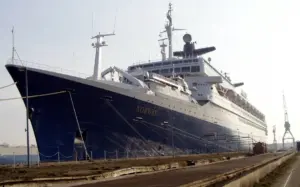
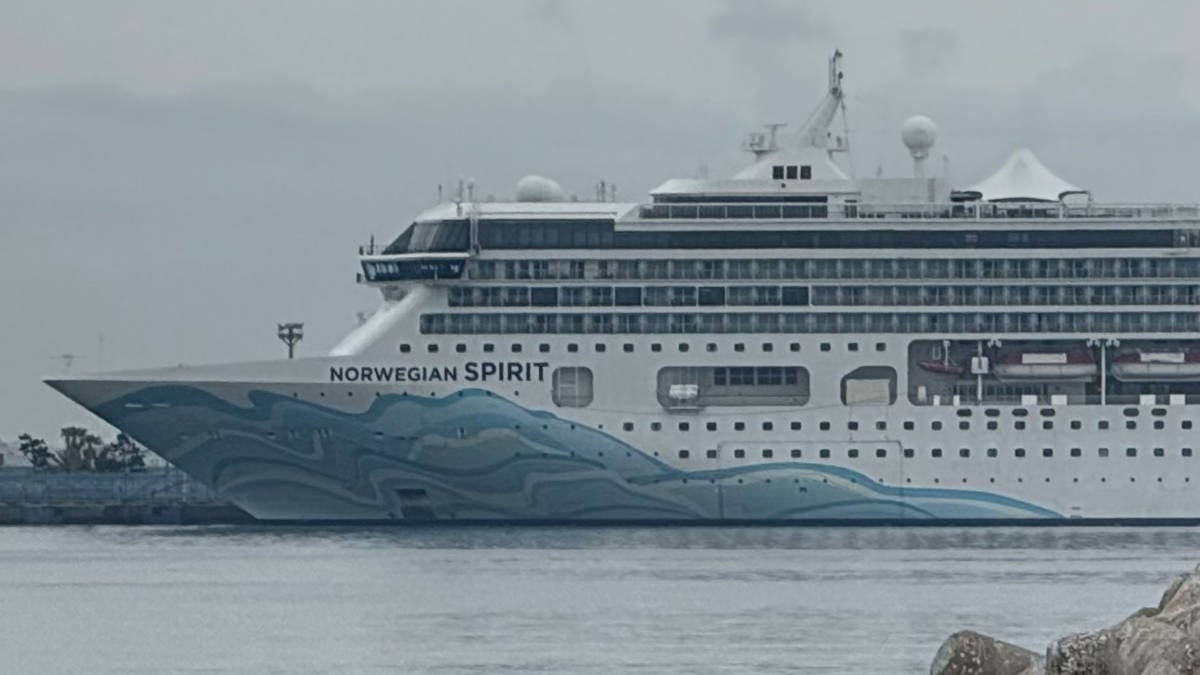
At the center of this unfolding maritime crisis is Norwegian Cruise Line (NCL). Thousands of guests aboard the 75,904-gross-ton Norwegian Spirit have found themselves trapped at sea, caught in limbo as the Port of Honolulu remains indefinitely shuttered. The 1,972-guest vessel was originally slated to conclude its current voyage on August 16, 2026, seamlessly transitioning to a new group of passengers embarking on an ambitious 16-night, one-way itinerary bound for Vancouver, Canada. Instead, the ship has been forced to weather punishing open-ocean swells in deeper waters, waiting out the storm’s fury until federal maritime authorities grant clearance to return to port.
The disruption extends far beyond a single vessel. NCL’s Hawaii-dedicated ship, the Pride of America, has likewise been forced to scramble for safety, highlighting the vulnerability of Pacific cruise schedules during the peak of tropical weather seasons. With the U.S. Coast Guard maintaining strict port closures across the archipelago under "Condition Zulu" emergency declarations, both vacationers preparing for dream getaways and those desperately trying to return home are left grappling with uncertainty, communication blackouts, and drastically altered travel itineraries.
This report provides a comprehensive examination of the unfolding situation, detailing the chronology of events, the meteorological forces driving the closures, the exact operational responses of cruise operators, and the broader implications for Pacific maritime tourism.
Detailed Chronology: From Approaching Threat to Open-Ocean Limbo
The disruption caused by Tropical Storm Lala did not happen overnight; it is the culmination of a rapidly evolving weather system that forced cruise lines to make split-second operational pivots to protect passengers and crew.
The Initial Threat and Preemptive Maneuvers
As meteorological models began tracking the intensification of the storm south of the Hawaiian archipelago earlier in August, cruise operators monitoring the system realized that standard itineraries would need to be radically altered.
For the Norwegian Spirit, the initial strategy involved making a preemptive, early arrival into the Port of Honolulu. By rushing the ship back to Oahu ahead of schedule, NCL hoped to disembark guests safely and bypass the worst of the incoming gale-force winds. However, as Tropical Storm Lala rapidly strengthened and shifted its trajectory, local maritime authorities determined that the rapidly deteriorating conditions posed an unacceptable risk to harbor infrastructure and vessels alike.
Consequently, the Port of Honolulu was ordered closed. This forced the Norwegian Spirit to reverse course, pulling away from the pier and heading back out to sea to ride out the storm in deeper, safer waters.
A strikingly similar scenario played out for the Pride of America. NCL’s U.S.-flagged inter-island vessel made a direct beeline for Honolulu to hunker down as the storm closed in. Originally scheduled to return to port on August 16 to debark its current sailing one day late, the ship now faces an extended delay. Whether it will be able to disembark its passengers on schedule—or face further postponements—depends entirely on when the U.S. Coast Guard deems it safe to lift port restrictions.
The Current Standoff at Sea
As of early morning on August 16, tracking data placed the Norwegian Spirit positioned off the coast of Hilo, slowly navigating in the general direction of Honolulu. However, the journey is far from smooth. The vessel is currently contending with hostile open-ocean conditions, battling rough seas characterized by imposing 2.9-meter swells (approximately 9.5 feet).
For the nearly 2,000 passengers currently on board, the experience is one of enforced patience. While the ship is well-equipped to handle heavy weather, the psychological toll of being stuck at sea with an indefinite timeline has tested the resolve of vacationers. Disembarking passengers, many of whom have international flights, connecting hotels, and rigid work schedules waiting for them back home, are facing mounting anxiety. Simultaneously, the next wave of travelers—those booked on the highly anticipated 16-night transpacific voyage to Vancouver—are stuck in local hotels or airports in Honolulu, with zero clarity on when their cruise might actually begin.
Supporting Context & Metrics: Understanding Tropical Storm Lala
To fully grasp why multi-billion-dollar cruise vessels are being held hostage by the weather, one must look closely at the meteorological data and federal emergency protocols governing Hawaiian ports.
Meteorological Profile of Tropical Storm Lala
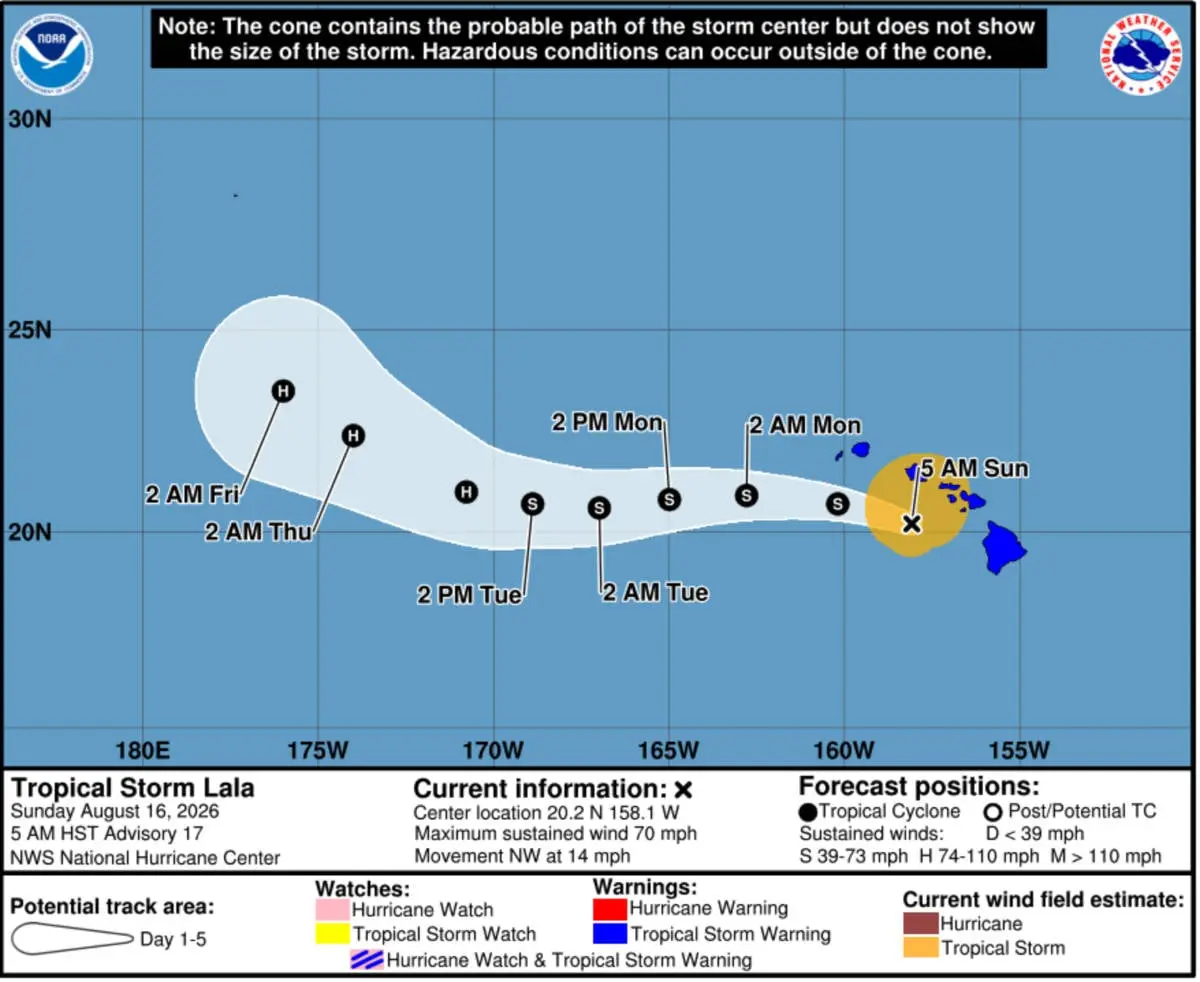
According to official updates from the National Hurricane Center (NHC) and the National Oceanic and Atmospheric Administration (NOAA), Tropical Storm Lala has experienced fluctuations in intensity. Though recently downgraded from a Category 1 hurricane, the storm remains a formidable atmospheric hazard, packing near-hurricane-force gusts, torrential rainfall, and massive, destructive waves across the islands.
In its 5:00 a.m. HST update on August 16, NOAA painted a stark picture of the ongoing dangers:
"Strong wind gusts are expected to continue across the Big Island of Hawaii this morning, particularly over areas of higher terrain. Across portions of the smaller islands, tropical-storm-force winds accompanied by gusts to near hurricane strength will persist through today."
The storm’s geographic positioning exacerbates the danger to maritime traffic. Moving northwest at roughly 14 miles per hour, Tropical Storm Lala was tracked approximately 140 miles west-northwest of Kailua-Kona and roughly 75 miles south of Honolulu, generating maximum sustained winds of 70 miles per hour.
Furthermore, the NHC warned of severe marine hazards:
"Large and dangerous waves are expected to persist across portions of the Hawaiian islands today… The heavy surf may cause localized coastal flooding and significant beach erosion."
Maritime Emergency Protocols: The Meaning of "Condition Zulu"
In response to these catastrophic weather projections, the United States Coast Guard enacted the highest level of emergency preparedness across the Hawaiian maritime sector.
All major ports throughout the islands have been officially closed and placed under Condition Zulu. In the lexicon of maritime emergency management, Port Condition Zulu is enacted when sustained gale-force winds from an approaching storm or tropical system are predicted to impact the port facility within 12 hours.
Under Condition Zulu:
- All commercial vessel movements are strictly prohibited unless specifically authorized by the Captain of the Port (COTP).
- Cargo operations, bunkering, and land-to-ship transfers are completely suspended.
- Ports remain shuttered until damage assessments can be completed and navigational channels are cleared of submerged debris or shifting sandbars that could jeopardize vessel safety.
This explains why NCL’s vessels cannot simply slip back into their berths. Bringing a nearly 76,000-ton cruise ship into a confined harbor during or immediately after a tropical storm presents an extreme risk of collision, grounding, or structural damage to both the ship and the pier infrastructure.
Official Statements and Corporate Communication
Communication during a maritime crisis is critical for maintaining order and managing passenger expectations. However, when nature dictates the timeline, even the most robust corporate communication strategies can result in ambiguity.
The NCL Guest Communications
On August 15, Norwegian Cruise Line distributed an official advisory letter to affected guests. The correspondence, which quickly made its rounds on social media platforms like Reddit via the r/NCL community, laid bare the frustrating reality of the situation:
"At this time, we do not have any new information to share. Ongoing tropical storm conditions continue to affect the area, and as a result, the Port of Honolulu remains closed," NCL stated in the memo.
Acknowledging the immense frustration of thousands of travelers whose holidays and logistical arrangements have been upended, the cruise line added:
"We understand that your travel plans have been impacted, and we appreciate your patience and understanding. Please be assured that our team remains in close contact with port officials and is actively monitoring the situation."
The Promise of Transparency
Recognizing the hunger for timely updates, NCL leadership committed to maintaining a strict communication schedule. The company promised passengers and their waiting families that a fresh operational update would be broadcast across the ship’s internal channels and digital portals by 8:00 a.m. HST on August 16—explicitly noting that an update would be provided even if port authorities had not yet signaled a green light for reopening.
Future Outlook: Recovery, Compensation, and Resuming Operations
As Tropical Storm Lala slowly tracks further away from the Hawaiian chain and its immediate wind fields begin to weaken, the primary focus shifts from emergency sheltering to post-storm recovery.
The Path to Reopening
The timeline for the resumption of normal cruise operations relies entirely on the U.S. Coast Guard’s structural and navigational inspections. Once Condition Zulu is lifted and downgraded to Recovery phases, Coast Guard marine inspectors must survey port facilities, check navigational aids, and ensure that wharf infrastructure has not suffered foundational undermining from heavy surf and storm surges.
For the Norwegian Spirit, the immediate priority will be executing a swift, highly organized disembarkation process once the Port of Honolulu reopens. However, port congestion will likely be an issue, as multiple commercial vessels, cargo ships, and inter-island liners vie for dock space simultaneously.
Ripple Effects on Future Itineraries
The delay of the Norwegian Spirit will inevitably trigger a cascade of schedule adjustments. The 16-night one-way voyage to Vancouver, Canada, will undoubtedly experience a shortened itinerary or revised routing. Cruise line logistics teams will have to calculate whether to skip specific ports of call along the Pacific Northwest route or adjust cruising speeds to make up for lost time once the ship enters open ocean waters northward.
Furthermore, guests whose embarkation has been delayed face days of waiting in temporary accommodations in Honolulu. While major cruise lines typically offer financial reimbursement, travel credits, or assistance with hotel and flight rebookings during weather-related force majeure events, the personal inconvenience and emotional toll on travelers remain significant.
Final Takeaway
Tropical Storm Lala serves as a stark reminder of the unpredictable power of nature in the Pacific basin and the inherent vulnerabilities of modern cruise tourism. While passengers aboard the Norwegian Spirit and Pride of America are safe in the hands of seasoned maritime crews, the incident underscores the delicate balance between rigid cruise timetables and the unforgiving reality of tropical meteorology. As ports begin the arduous process of damage assessment and reopening, thousands of travelers wait with bated breath for the call that will finally bring their voyages to an end—or allow them to finally begin.