
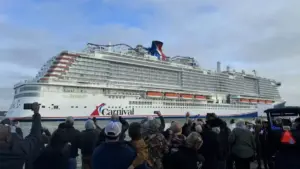






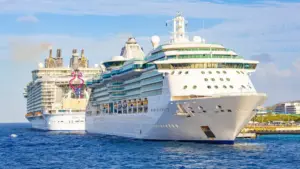


LONDON — In a formal regulatory update published today, the Marine Accident Investigation Branch (MAIB) has announced the conclusion of its preliminary assessment into a recent maritime incident. Following a rigorous initial review of the available evidence, the Chief Inspector of Marine Accidents has determined that no new systemic or vessel-specific safety issues were uncovered. Consequently, in strict accordance with the provisions outlined in the Merchant Shipping (Accident Reporting and Investigation) Regulations 2026, the Branch has formally decided not to launch a full-scale safety investigation.
The decision marks a critical milestone in the handling of the incident, providing clarity to stakeholders across the maritime sector, insurers, and the wider shipping community. While the threshold for triggering a full MAIB statutory investigation is high—requiring the identification of novel safety lessons that can prevent future tragedies—this preliminary closure underscores the adequacy of existing regulatory frameworks and standard operating procedures within the specific parameters of the event.
Executive Overview
The announcement, issued by the MAIB on August 21, 2026, brings a swift conclusion to the preliminary investigative phase that follows every reported marine casualty or incident occurring within UK territorial waters or involving UK-flagged vessels globally.
Under the statutory framework governing maritime safety in the United Kingdom, the MAIB operates independently of the Maritime and Coastguard Agency (MCA) and the Department for Transport. Its sole objective is the prevention of future marine accidents through the thorough investigation of causes and circumstances, rather than the allocation of blame or liability. When an incident is reported, investigators must first execute a preliminary assessment—a rapid, multi-faceted analytical process designed to gauge the severity of the occurrence, evaluate the potential for actionable safety learning, and determine whether a full investigation is warranted.
In this instance, the preliminary review exhaustively scrutinized the initial reports, Voyage Data Recorder (VDR) extractions where applicable, vessel logs, and preliminary statements from the involved parties. Upon synthesizing this data, the Chief Inspector concluded that the existing body of maritime safety knowledge adequately covers the factors observed in the incident. No previously unrecognized hazards, design flaws, operational vulnerabilities, or regulatory gaps were revealed that would necessitate a protracted, resource-intensive statutory investigation.
While some observers may question the decision not to proceed further, maritime policy experts emphasize that a closed preliminary assessment is a testament to the robust baseline safety standards already embedded in modern commercial shipping operations. It indicates that established safety management systems (SMS), international conventions, and domestic regulations functioned as intended, or that the incident’s root causes were isolated anomalies rather than systemic red flags.
Detailed Chronology of the Assessment Phase
The lifecycle of an MAIB case—from the initial distress signal or mandatory accident report to the final determination—follows a strict, legally mandated protocol designed to ensure transparency, impartiality, and efficiency.

Phase 1: Initial Notification and Emergency Response
The process invariably begins the moment an incident occurs at sea or within port limits. Under the Merchant Shipping (Accident Reporting and Investigation) Regulations, masters, owners, and designated persons ashore are legally obligated to report any marine accident, serious injury, or hazardous occurrence to the MAIB without delay.
Upon receipt of the initial notification, the MAIB’s duty coordinator initiates a triage process. Depending on the gravity of the situation—such as loss of life, severe pollution, total loss of a vessel, or major structural damage—a team of inspectors may be deployed immediately to the scene or to a port of refuge to interview crew members, secure electronic data, and inspect damaged machinery or hull structures.
Phase 2: Gathering Perishable Evidence
Once the immediate operational safety and environmental protection measures are secured by relevant authorities (such as the Coastguard or port authorities), MAIB inspectors focus on capturing perishable evidence. This typically includes:
- Securing VDR data, bridge audio recordings, and radar logs.
- Downloading electronic chart display and information system (ECDIS) tracks.
- Reviewing engine telegraph logs and automated identification system (AIS) historical data.
- Conducting preliminary witness interviews with key personnel, including the master, deck officers, and engineering crew.
Phase 3: The Preliminary Assessment and Risk Evaluation
With the baseline data secured, the case file is handed over to a senior inspector and evaluated against the MAIB’s strategic mandate. The core question guiding this phase is straightforward: Does this incident offer an opportunity to identify new safety lessons that can benefit the wider maritime industry?
During this phase, analysts cross-reference the specifics of the incident against historical MAIB databases, international maritime safety alerts, and global shipping accident trends. If the incident highlights a known risk—such as standard navigational errors, well-documented machinery failures, or typical slip-and-fall hazards—and demonstrates that existing safety barriers are theoretically sufficient when properly applied, the justification for a full investigation diminishes.
Phase 4: The Chief Inspector’s Determination
Culminating the preliminary phase, the Chief Inspector of Marine Accidents reviews the findings of the assessment team. Guided by the statutory criteria laid down in the Merchant Shipping (Accident Reporting and Investigation) Regulations 2026, the Chief Inspector formally decides whether to:
- Launch a full safety investigation resulting in a published report with formal safety recommendations.
- Publish a safety bulletin focusing on urgent, immediate lessons.
- Discontinue active investigation, relying on the preliminary assessment to capture necessary administrative data, and publish a notice of closure—the outcome observed in this latest update.
Supporting Context and Metrics: The MAIB Operational Landscape
To fully understand the significance of the MAIB’s decision not to investigate, it is essential to examine the operational context within which the Branch functions. As an independent arm of the UK government, the MAIB processes hundreds of accident and incident reports annually, ranging from catastrophic commercial shipping losses to minor injuries on fishing vessels and leisure craft.
Understanding the Statutory Threshold
The MAIB is statutorily constrained by finite resources and a mandate focused exclusively on safety learning. It cannot investigate every reported incident. In any given year, hundreds of marine casualties and incidents are reported under the regulations, but only a fraction—typically between 20 and 30 complex cases—are selected for full, comprehensive safety investigations.
The decision to investigate is governed by several core criteria:
- Severity of the Consequences: Loss of life, severe injuries, significant environmental damage, or major asset destruction naturally elevate a case’s priority.
- Potential for Safety Learning: An incident involving a novel technology, an unaddressed regulatory loophole, or a recurring hazard with high potential for catastrophic failure is far more likely to trigger a full investigation.
- Jurisdiction and Flag State Responsibilities: The UK’s obligations under the International Maritime Organization (IMO) and the United Labour Organization (ILO) also dictate the extent of involvement, particularly when UK-flagged vessels or UK nationals are involved in international waters.
The Role of the Merchant Shipping (Accident Reporting and Investigation) Regulations 2026
The regulatory framework governing these actions has recently been updated to the Merchant Shipping (Accident Reporting and Investigation) Regulations 2026. These updated regulations reflect the evolving nature of the maritime industry, incorporating modern technological advancements—such as autonomous shipping trials, advanced alternative fuels (like hydrogen, ammonia, and methanol), and digitized navigation systems—while streamlining the reporting obligations for mariners.
Under the 2026 regulations, the mandate of the MAIB remains fiercely independent. The framework ensures that investigators have unfettered access to evidence without fear of pre-judicial compromise, preserving the crucial distinction between safety investigations and civil or criminal liability proceedings.
Official Statements and Regulatory Perspective
While the MAIB’s published notice is concise, reflecting the routine closure of a preliminary assessment where no new safety issues emerged, maritime legal and safety experts have provided broader commentary on what this decision signifies for the sector.
A senior maritime regulatory consultant, speaking on condition of anonymity regarding government procedures, noted:
"The public often conflates the severity of an incident with the necessity of an exhaustive state investigation. However, the MAIB’s statutory remit is precise: it investigates to learn, not merely to document. When a preliminary assessment reveals that standard safety management systems failed due to human factors already extensively covered in existing literature, or that established engineering protocols simply needed stricter adherence rather than structural revision, a full investigation yields diminishing returns. Closing the file at the preliminary stage is an efficient use of public resources and respects the operational realities of modern compliance."
Furthermore, industry bodies such as the UK Chamber of Shipping frequently emphasize the importance of a balanced regulatory approach. A spokesperson for maritime safety advocacy groups highlighted that timely processing of incident reports allows operators and insurers to achieve closure without prolonged regulatory limbo, fostering an environment where transparent reporting is encouraged rather than feared.
Future Outlook: Implications for Maritime Safety and Compliance
The formal conclusion of this preliminary assessment without further investigation does not mean the story of maritime safety ends here. Rather, it serves as a reminder of the continuous vigilance required across all sectors of the shipping industry—from deep-sea container vessels and bulk carriers to coastal ferries, workboats, and the domestic fishing fleet.
Key Takeaways for Vessel Operators and Masters
- Unrelenting Adherence to Safety Management Systems (SMS): The fact that no new safety issues were identified implies that the existing rules are theoretically sound. Consequently, operators must ensure that their onboard SMS is not merely a paper exercise but a living, actively practiced culture.
- Mandatory Reporting Compliance: The swift resolution of this case reinforces the value of transparent, immediate reporting. The MAIB relies on accurate, timely data from mariners to conduct these rapid preliminary assessments effectively.
- Preparedness for Emerging Technologies: As the maritime industry transitions toward net-zero carbon fuels, digital autonomy, and advanced automation, future preliminary assessments will undoubtedly face unprecedented challenges. The robustness of the 2026 regulatory framework will be continuously tested by these technological shifts.
Conclusion
The Marine Accident Investigation Branch’s decision to close its assessment without initiating a full safety investigation is a procedural endorsement of existing maritime safety standards within the context of the reported incident. By adhering strictly to the Merchant Shipping (Accident Reporting and Investigation) Regulations 2026, the MAIB maintains a focused, efficient investigative regime that concentrates its formidable expertise where it is most urgently needed: uncovering novel systemic risks and driving enduring safety improvements across the global maritime domain.
As the industry looks ahead, the emphasis remains squarely on proactive risk mitigation, rigorous crew training, and the unwavering commitment of seafarers and shore-based management alike to uphold the highest standards of safety at sea.