


LISBON, PORTUGAL — In a landmark milestone for European coastal engineering and climate adaptation, Danish dredging specialist Rohde Nielsen has officially announced the successful completion of a complex maintenance dredging and coastal protection campaign at Costa da Caparica, Portugal. Executed on behalf of the Portuguese Environment Agency (Agência Portuguesa do Ambiente — APA), the project represents a critical masterstroke in sustainable sediment management, reinforcing fragile shorelines against the compounding threats of severe Atlantic erosion and rising sea levels.
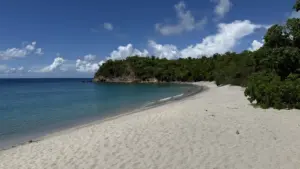
The multi-faceted operation involved the extraction, transport, and precise placement of approximately one million cubic meters ($1,000,000text m^3$) of sand. Rather than treating dredged material as waste, this massive volume was harvested directly from the navigation entrance channel of the Port of Lisbon—where natural sedimentation continuously threatens maritime logistics—and beneficially reused for beach nourishment. The sand was meticulously deposited along a vital four-kilometer stretch of coastline encompassing the vulnerable beach communities of Costa da Caparica and São João da Caparica.
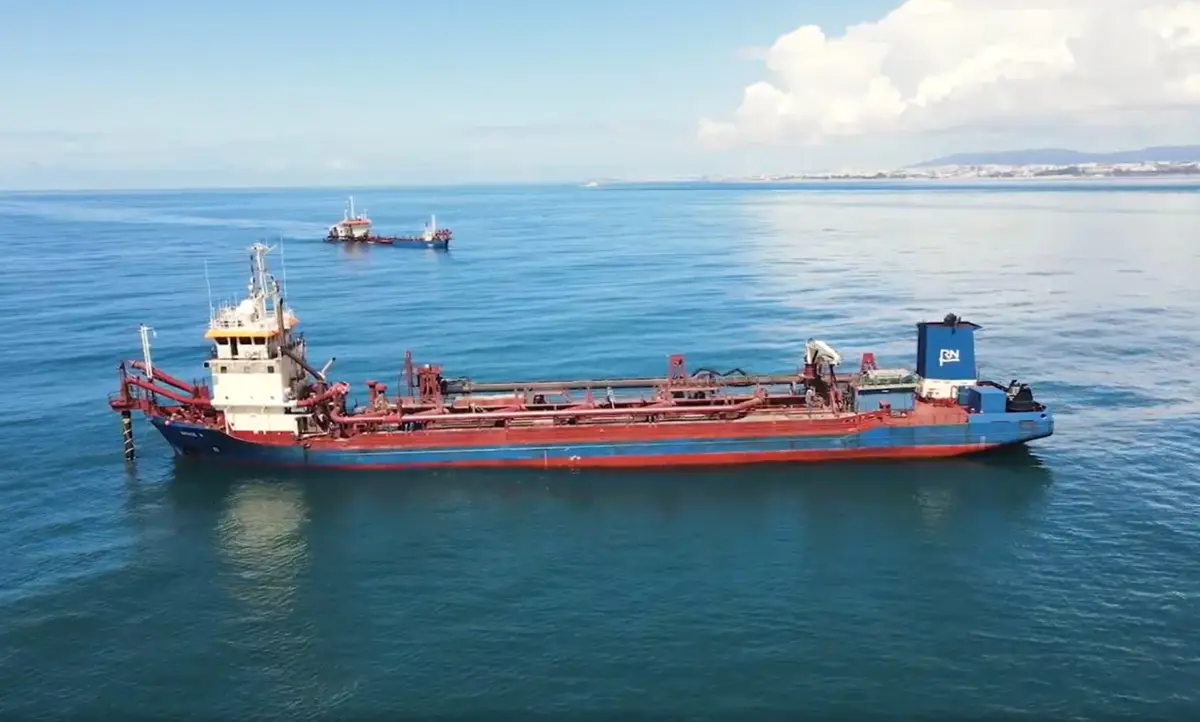
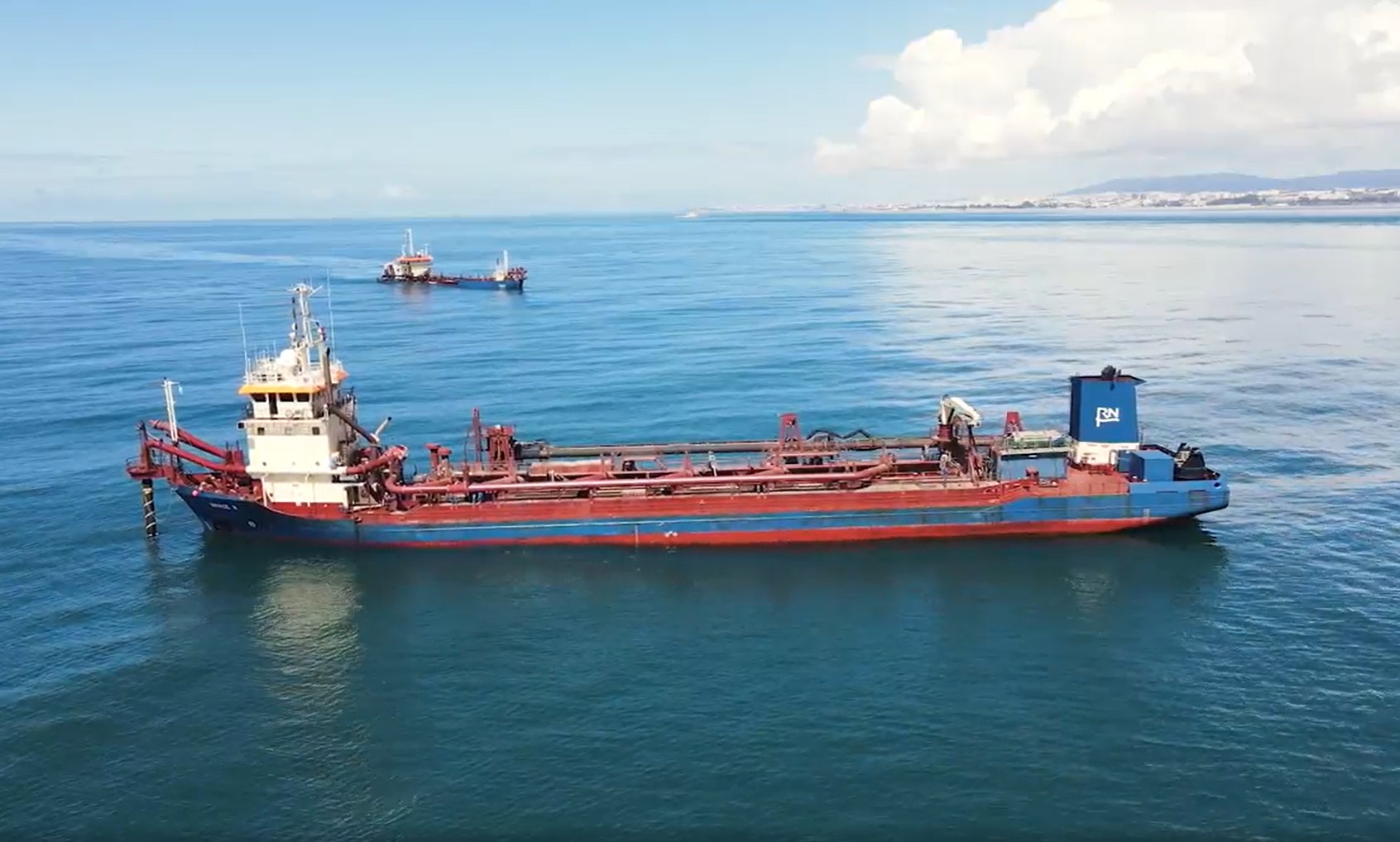
Utilizing a high-capacity, specialized fleet comprising some of its most advanced trailing suction hopper dredgers and support vessels, Rohde Nielsen executed the works with high efficiency, navigating the delicate balance between bustling maritime commerce in the Tagus Estuary and rigorous environmental stewardship on the open Atlantic coast.
Executive Overview: Safeguarding Portugal’s Crown Jewel Coastline
The Costa da Caparica coastline is one of Portugal’s most heavily utilized and economically vital recreational regions. Located just south of Lisbon across the Tagus River, the area serves as a primary economic engine driven by tourism, hospitality, and local fisheries, while simultaneously acting as a densely populated residential hub. However, its geographic exposure to the high-energy swells of the Atlantic Ocean makes it acutely vulnerable to dynamic coastal morphodynamics, winter storms, and progressive shoreline retreat.
For decades, the Portuguese government has wrestled with the systemic erosion plaguing the district. Traditional hard engineering solutions, such as groynes and seawalls, have proven insufficient on their own and can occasionally exacerbate down-drift erosion. Consequently, APA has increasingly pivoted toward soft-engineering strategies—chiefly large-scale beach nourishment—to mimic and reinforce natural coastal systems.
Rohde Nielsen’s recently concluded campaign directly addresses these vulnerabilities. By intercepting sediments that would otherwise shoal the Port of Lisbon’s navigation channels, the project achieves a dual environmental and economic objective: maintaining safe maritime access for international shipping while recycling high-quality marine aggregate to rebuild protective dune systems and expand recreational beaches.
The successful delivery of this one-million-cubic-meter nourishment project not only widens the protective buffer shielding coastal infrastructure, homes, and businesses from winter storm surges, but it also restores the ecological and recreational integrity of the beaches ahead of peak seasonal demands.
Detailed Chronology and Operational Execution
The execution of a maritime engineering project of this magnitude requires meticulous planning, precise bathymetric surveying, and seamless coordination between federal agencies, port authorities, and marine contractors. While the final completion was formally declared in late August 2026, the underlying framework of the campaign represents the culmination of months of logistical preparation and high-tempo offshore operations.
Mobilization and Fleet Integration
To meet the stringent timelines and volume requirements stipulated by the Portuguese Environment Agency, Rohde Nielsen deployed a formidable armada of specialized vessels. The operational fleet featured a synergistic combination of trailing suction hopper dredgers (TSHDs) and support craft, specifically:
- TSHD Njord R
- TSHD Thor R
- TSHD Brage R
- TSHD Idun R
- Multicat/Support Vessel Rimfaxe R
This diverse array of vessels allowed the project team to optimize operational cycles. The larger hopper dredgers were tasked with high-volume extraction within the demanding hydrological environment of the Port of Lisbon’s entrance channel, where strong tidal currents, heavy commercial vessel traffic, and oceanic swells demand exceptional seamanship. Meanwhile, lighter, highly maneuverable vessels supported localized operations, pipeline management, and nearshore positioning.
Phase One: Navigational Channel Optimization
The operational cycle began in the designated borrow areas within the Port of Lisbon’s outer approach channels. Over time, natural littoral drift and riverine sediment deposition create shoals that restrict the draft of deep-sea container vessels, bulk carriers, and cruise liners entering one of Europe’s premier capitals.
Operating round-the-clock, Rohde Nielsen’s dredgers utilized trailing suction dragheads to loosen and vacuum sediment from the seabed, loading it directly into their central hoppers. Advanced onboard GPS positioning systems, hydrographic multibeam sonar arrays, and draught monitoring equipment ensured that dredging occurred strictly within pre-approved navigational parameters, avoiding over-dredging while maximizing payload efficiency.
Phase Two: Transport and Beneficial Reuse
Once loaded, the vessels transited short coastal routes from the mouth of the Tagus estuary southward toward the target zones off Costa da Caparica and São João da Caparica.
Depending on the specific zone requirements and sea states, the dredgers employed direct rainbowing techniques for nearshore placement or pumped the sediment ashore via temporary floating and land-based pipeline networks. This slurry—a mixture of seawater and high-grade sand—was distributed across designated profiles along the four-kilometer stretch. Heavy machinery, including bulldozers and excavators operating on the beach, then contoured the newly deposited sand to replicate natural dune gradients and beach slopes, ensuring optimal aesthetic and ecological integration.
Supporting Context & Metrics: Engineering Resilience
Quantifying the scope of the Costa da Caparica campaign highlights the immense logistical and technical capacity required to execute modern coastal protection schemes.
Key Project Metrics & Data At-a-Glance
- Client: Agência Portuguesa do Ambiente (APA) — Portuguese Environment Agency
- Contractor: Rohde Nielsen A/S
- Total Volume Dredged & Nourished: Approximately $1,000,000text m^3$ of sand
- Project Geography: Port of Lisbon Entrance Channel (Borrow Area) to Costa da Caparica & São João da Caparica (Placement Area)
- Protected Coastline Length: 4 kilometers
- Primary Active Fleet: Njord R, Thor R, Brage R, Idun R, and Rimfaxe R
- Core Methodologies: Trailing Suction Hopper Dredging (TSHD), Rainbowing, Direct Beach Nourishment via Pipeline Slurry Distribution
The Mechanics of Beneficial Reuse
The concept of "beneficial reuse" has transitioned from an innovative alternative to an industry standard in marine civil engineering. Historically, material dredged from ports was frequently dumped at designated offshore disposal sites, representing both a loss of valuable mineral resources and an unnecessary disruption to benthic ecosystems.
By redirecting the sediment harvested from the Port of Lisbon to the starving shorelines of Caparica, Rohde Nielsen and APA executed a textbook circular-economy model for sediment management. The sand dredged from the maritime channel possesses physical characteristics—such as grain size distribution and mineral composition—that closely match the native beach sands of the Atlantic coast. This compatibility minimizes post-placement wind-blown dust and ensures that the nourishment behaves naturally under wave action, consolidating rather than washing away prematurely.
Ecological and Morphological Impact
Beyond protecting seaside infrastructure, the newly widened beaches serve as vital ecological buffer zones. Wide, gently sloping sandy beaches naturally dissipate the energy of incoming storm waves, protecting fragile back-dune habitats, coastal roads, and residential structures from catastrophic undermining. Furthermore, the restored beach profiles provide a reinstated habitat for native coastal flora and nesting shorebirds, ensuring that human defense measures align harmoniously with local biodiversity goals.
Official Statements and Industry Significance
While maritime projects are routinely evaluated on technical parameters such as cubic meters moved and operational uptime, their broader resonance lies in regional partnerships and long-term strategic vision.
In official statements marking the conclusion of the campaign, representatives from Rohde Nielsen highlighted the smooth collaboration with the Portuguese Environment Agency, underscoring that the successful completion reinforces the company’s long-standing footprint in the Iberian peninsula.
"The successful execution of the Costa da Caparica project stands as a testament to our team’s technical proficiency and the versatility of our modern fleet," noted a company spokesperson. "Working in dynamic environments like the Port of Lisbon requires precision, while nearshore nourishment demands environmental sensitivity. We are proud to once again deliver a high-performance coastal protection campaign in close partnership with the Agência Portuguesa do Ambiente, securing both vital navigation corridors and vulnerable shorelines for years to come."
For APA, the project represents another successful chapter in a broader, national strategy to combat coastal erosion. With large portions of Portugal’s extensive coastline facing the compounded pressures of sea-level rise and heightened storm frequency driven by global climate change, federal authorities have increasingly relied on recurring, scheduled maintenance nourishment programs. By partnering with experienced, well-equipped contractors capable of deploying specialized fleets like the Njord R and Thor R, APA ensures that public infrastructure investments yield maximum longevity and resilience.
Future Outlook: The Imperative of Ongoing Coastal Adaptation
As the last pipelines are dismantled and Rohde Nielsen’s vessels demobilize from the waters off Lisbon and Caparica, local residents and business owners can look toward the future with renewed confidence. The newly nourished beaches of Costa da Caparica and São João da Caparica stand ready to absorb the brunt of upcoming seasonal storms, safeguarding the socio-economic vitality of the region.
However, marine experts and environmental planners emphasize that coastal protection is not a "one-and-done" achievement, but an ongoing, generational commitment. Climate change projections indicate that sea levels will continue to rise throughout the 21st century, accompanied by shifts in storm tracks and wave energy patterns along the European Atlantic seaboard.
Consequently, the success of the Costa da Caparica campaign highlights several key trends for the future of European coastal infrastructure:
- Systemic Sediment Budgeting: Future coastal management will increasingly rely on regional sediment management frameworks, where the maintenance dredging needs of major commercial ports are systematically integrated with the sand deficits of eroding beaches.
- Technological Evolution: The deployment of low-emission, highly efficient hopper dredgers equipped with advanced automation and monitoring systems will become the baseline requirement for winning public tenders across Europe.
- Proactive Adaptation: Governments are shifting away from reactive emergency interventions after storm disasters toward proactive, scheduled maintenance cycles that preserve coastal buffers before catastrophic failures occur.
For Rohde Nielsen, the completion of this project further cements its reputation as a premier partner for complex marine civil works across Europe. As ports deepen their approaches to accommodate larger neo-Panamax and ultra-large vessels, and as coastal communities desperately seek solutions to encroaching seas, the proven capacity to successfully execute dual-purpose dredging campaigns will remain in exceptionally high demand.
Ultimately, the revitalized shores of Costa da Caparica serve as a shining example of modern engineering meeting environmental necessity—proving that with the right expertise, vision, and operational prowess, human ingenuity can successfully coexist with the immense power of the ocean.