








Executive Overview
The motorcoach and group transportation industry—historically defined by paper manifests, fragmented regional networks, and manual dispatching—is undergoing a rapid technological transformation. At the forefront of this evolution is CharterUP, a company that began as a digital marketplace connecting consumers with charter bus providers and has since matured into a comprehensive operational technology layer. Managing a sprawling network of over 10,000 buses and more than 700 independent operators across the United States, CharterUP is redefining how public- and private-sector entities approach mass transit, corporate shuttles, disaster response, and recurring mobility programs.
In a recent appearance on the METROspectives podcast hosted by METRO Executive Editor Alex Roman, CharterUP Founder and Chief Executive Officer Armir Harris detailed the company’s strategic shift from a transactional booking portal to an all-encompassing infrastructure platform. By integrating artificial intelligence (AI), predictive route optimization, electric vehicle (EV) fleet incentives, and cutting-edge autonomous vehicle partnerships—such as its collaboration with AV manufacturer HOLON—CharterUP is positioning itself as the central operating system for modern group mobility.
This deep dive explores CharterUP’s evolutionary trajectory, the technological underpinnings of its platform, its unique bridging of public- and private-sector transit, and its ambitious vision for a hybridized, electrified, and autonomous future of passenger transportation.
Detailed Chronology: From Fragmented Offline Markets to Unified Mobility Infrastructure
The Analog Era of Motorcoaches
When Armir Harris first entered the motorcoach and group transportation sector over two decades ago, the industry was largely insulated from the rapid digitization sweeping other segments of logistics and consumer travel. Booking a charter bus often involved a cumbersome cycle of phone calls, faxed itineraries, manual price quotes, and a heavy reliance on trusted personal relationships rather than data-driven efficiency.
For operators, this meant fluctuating vehicle utilization rates, empty backhauls, and significant administrative overhead. For consumers—ranging from corporate event planners and athletic directors to school groups and military coordinators—the process lacked baseline transparency regarding pricing, vehicle quality, safety records, and real-time tracking.
The Marketplace Breakthrough
Recognizing an acute need for speed, transparency, and operational reliability, Harris founded CharterUP to bridge the chasm between fragmented bus operators and high-demand consumers. The core value proposition was simple yet disruptive: build a digital marketplace that allowed users to instantly compare bids, book vetted motorcoaches online, and track trips with consumer-grade reliability.
By bringing transparency to an antiquated marketplace, CharterUP successfully generated mutual benefits for both sides of the transactional equation:
- For Consumers: Eliminated the friction of traditional booking, providing instant quotes, verified reviews, and guaranteed availability.
- For Operators: Provided a steady stream of incremental demand that minimized empty vehicle miles, optimized fleet utilization, and streamlined administrative workflows.
Scaling into an Enterprise Software and Infrastructure Platform
As the marketplace scaled, Harris and his leadership team identified a larger, more systemic opportunity. A transactional booking model, while lucrative, only scratched the surface of what was possible in the broader mobility landscape. The underlying infrastructure supporting group transportation—ranging from dispatch software and driver management to maintenance tracking and compliance audits—was equally ripe for modernization.
Consequently, CharterUP expanded its portfolio from a consumer-facing marketplace to an enterprise-grade software provider. Today, the company supplies its proprietary operational technology directly to bus operators, effectively digitizing their back-office operations. This evolution transformed CharterUP from a middleman facilitator into a foundational mobility platform capable of managing complex, large-scale recurring transportation programs for massive enterprise clients and municipal transit authorities alike.
Supporting Context & Metrics: The Mechanics of Modern Fleet Logistics
To understand CharterUP’s current market standing, one must examine the scale of its network and the technological machinery driving its operations.
Network Scale and Capacity
- Fleet Footprint: Over 10,000 buses integrated into the digital ecosystem.
- Operator Network: More than 700 independent motorcoach and shuttle operators spanning key U.S. metropolitan areas and regional corridors.
- Market Dynamics: According to CEO Armir Harris, the platform currently experiences significantly higher transportation demand from consumers and enterprises than available supply—a testament to the rapid adoption of digital group mobility and a primary catalyst for ongoing network expansion.
Technology Stack: Moving Beyond Table Stakes
In contemporary logistics, basic GPS tracking and estimated time of arrival (ETA) notifications are no longer competitive differentiators; they are baseline expectations. As Harris noted during his METROspectives interview, basic tracking capabilities are now merely "table stakes."
To surpass these baseline expectations, CharterUP developed advanced proprietary tools designed to provide total operational visibility:
- Real-Time Dashboards: Offering operators and clients live telemetry, route deviation alerts, and comprehensive passenger load metrics.
- Fleet Utilization Insights: Analytics engines that track wear-and-tear, fuel consumption, and operational bottlenecks to maximize asset lifespan and reduce downtime.
- Proactive Maintenance Analytics: Predictive algorithms that flag mechanical anomalies before they result in catastrophic road failures, ensuring superior safety and on-time performance.
Transit Intelligence and AI Integration
At the heart of CharterUP’s technological edge is its proprietary suite of AI-driven products, collectively known as Transit Intelligence. Designed to automate workflows that traditionally required extensive human intervention, Transit Intelligence handles complex tasks such as:
- Automated Route Optimization: Dynamic routing algorithms that account for real-time traffic congestion, road construction, weather patterns, and passenger density to optimize fuel usage and reduce transit times.
- Intelligent Dispatching: Matching available fleet capacity with immediate or recurring demand profiles without manual dispatch delays.
- Workflow Automation: Streamlining compliance, driver log audits, and billing reconciliations.
While initial skepticism toward artificial intelligence is common among legacy transportation operators, Harris observed that resistance quickly melts away once users experience the tangible time-savings and operational efficiencies delivered by the platform.
Official Statements & Industry Insights
Armir Harris on the Evolution of Mobility
Highlighting the strategic shift from a booking portal to a foundational infrastructure provider, Armir Harris emphasized the sheer scale of the opportunity during his discussion with Alex Roman:
"We initially won by bringing the speed, the transparency, and reliability to… a very fragmented and outdated market. As we scale over time, it became clear to us that the larger opportunity was not just in being a transactional marketplace, but in really modernizing the underlying infrastructure for the entire mobility space."
Addressing the rapid integration of artificial intelligence into day-to-day operations, Harris underscored AI’s transformative potential across both public and private sectors:
"One of the biggest trends that we’ve seen is a demand for transparency and visibility with modern tools… AI is going to fundamentally change the way that… workforce and public and private mobility functions."
Emphasizing CharterUP’s unique positioning as an ecosystem enabler rather than a competitor to traditional motorcoach operators, Harris stated:
"We sit at a very unique position as the operational technology layer between the operators and the supply side. Our goal here is to expand market share and expand TAM [Total Addressable Market] as we provide better tools across the demand and supply side."
Future Outlook: Public-Private Integration, Autonomy, and Electrification
Looking ahead, CharterUP’s strategic roadmap focuses on three primary pillars: bridging public and private transit sectors, integrating autonomous vehicle fleets, and accelerating fleet electrification.
Bridging Public and Private Mobility
Traditionally, private motorcoach operators and public transit agencies operated in distinct silos. CharterUP is actively dismantling these barriers by serving as an agile operational layer that complements both fixed-route and on-demand municipal services.
- Public-Sector Value Proposition: Municipal transit agencies face strict regulatory compliance, rigid procurement cycles, and budget constraints. When sudden demand surges occur—such as emergency evacuation scenarios, major civic events, or temporary rail shutdowns—procuring traditional municipal fleet capacity can involve prohibitive lead times. CharterUP provides public agencies with instant access to a vast, pre-vetted network of over 10,000 vehicles, enabling rapid deployment without administrative bottlenecks.
- First- and Last-Mile Solutions: Agencies utilize CharterUP’s platform to scale capacity, bridge first- and last-mile gaps in suburban transit corridors, and manage recurring employee or student shuttle programs with high cost-efficiency.
- Private-Sector Dynamics: Private enterprise demand is typically more dynamic and usage-sensitive. Corporate campuses, tech hubs, and private universities leverage CharterUP for scalable, recurring employee transit programs that reduce local carbon footprints and ease parking congestion.
The Autonomous Horizon: Partnering with HOLON
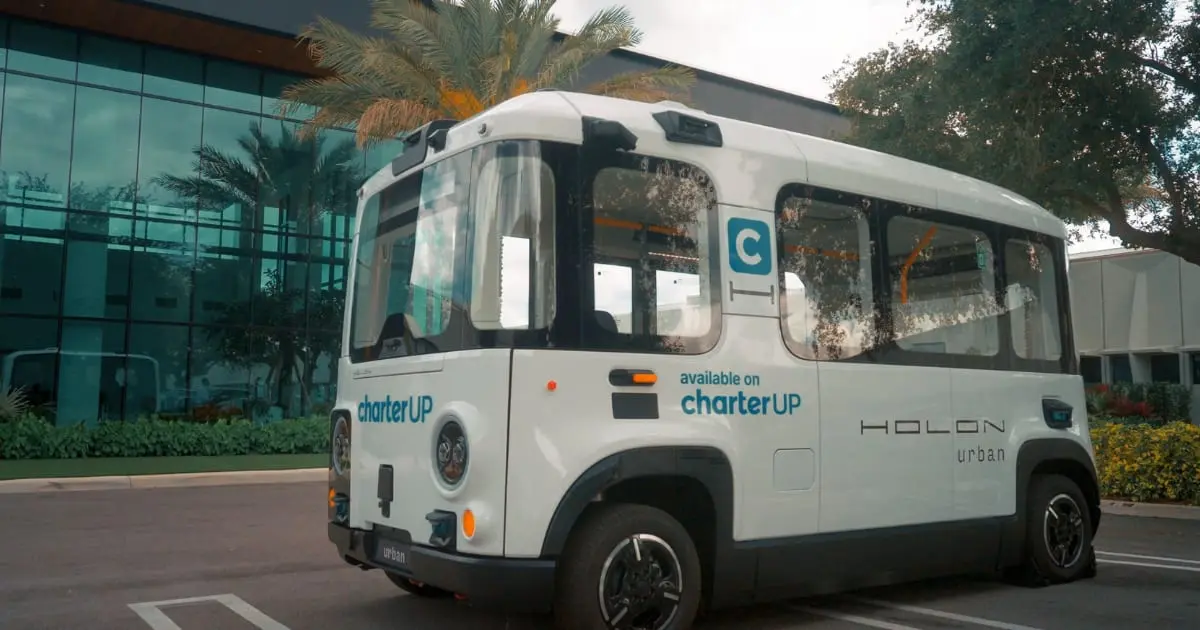
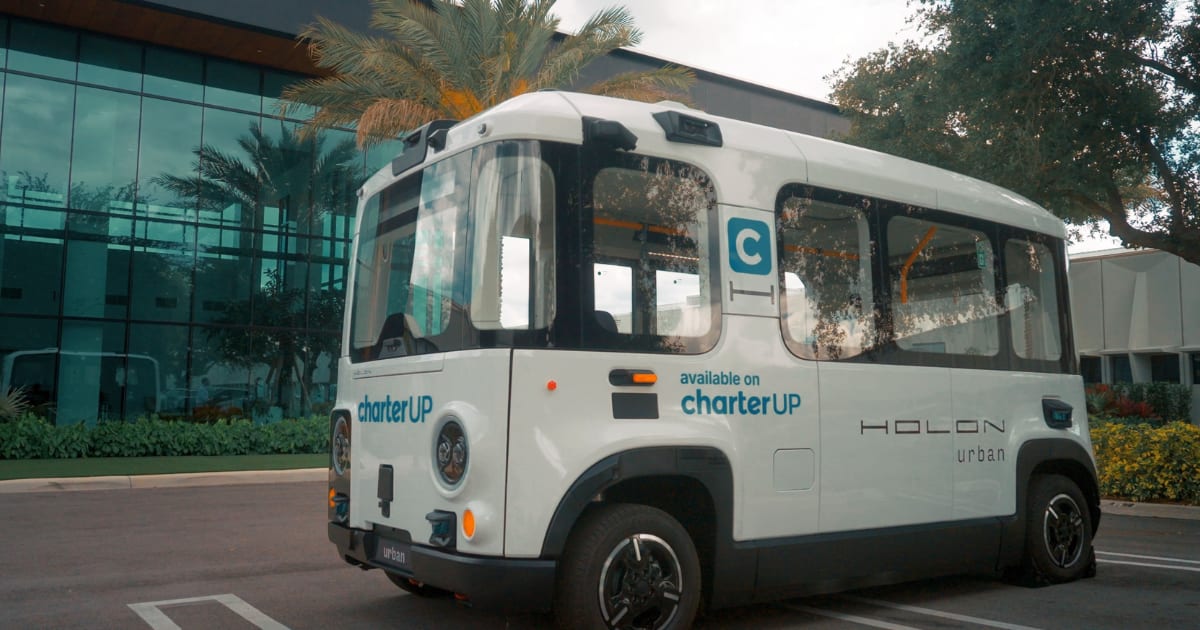
One of CharterUP’s most forward-looking initiatives is its strategic foray into autonomous transportation. The company is actively collaborating with autonomous vehicle manufacturer HOLON to prepare for the commercial deployment of higher-capacity autonomous shuttles.
Rather than viewing autonomous vehicles (AVs) as a disruptive force destined to render traditional motorcoach fleets obsolete, Harris envisions a symbiotic, hybridized ecosystem:
- The Hybrid Operating Model: Autonomous shuttles are exceptionally well-suited for controlled, high-density environments such as corporate campuses, university grounds, airport terminals, and master-planned communities. In these settings, autonomous shuttles will run in parallel with manually operated vehicles under a single, unified CharterUP operating system.
- Synergistic Collaboration: The partnership leverages the core competencies of both entities—HOLON supplies state-of-the-art autonomous hardware and vehicle engineering, while CharterUP contributes high-volume transportation demand, routing logistics, and customer-facing software interfaces.
Fleet Electrification and Sustainability
Beyond autonomy, CharterUP is aggressively championing environmental sustainability through fleet electrification. The company has already integrated numerous electric vehicles (EVs) into its nationwide network. To accelerate this transition without forcing out legacy operators, CharterUP utilizes a market-incentive approach: directing a higher volume of corporate and public transit business toward operators that invest in and deploy zero-emission electric buses.
This market-driven sustainability model aligns the commercial interests of fleet operators with global corporate ESG (Environmental, Social, and Governance) targets, cementing CharterUP’s role as a conscientious leader in modern mobility.
Conclusion
As CharterUP looks toward the horizon—teasing major upcoming announcements and seeking to balance its overwhelming market demand with expanding supply—the company stands as a prime example of how digital transformation can revitalize legacy industries. By fusing artificial intelligence, transit intelligence software, public-private partnerships, and next-generation autonomous and electric fleets, Armir Harris and the CharterUP team are not merely participating in the future of transportation; they are actively building its foundation.