






Executive Overview
Standup paddleboarding (SUP) has cemented its place as one of the most accessible and rapidly expanding outdoor recreational activities in the world. Over the past decade, bright, inflatable boards have transformed from a niche ocean-surfing pastime into a ubiquitous summer sight on lakes, slow-moving rivers, and coastal inlets. Today, SUP gear is sold everywhere from specialized marine shops to suburban big-box retailers like Costco, Walmart, and The Home Depot.
However, this democratization of the sport has created a dangerous knowledge gap. Millions of people are taking to the water with minimal orientation, unaware of the complex dynamics of natural waterways or the hidden hazards lurking beneath the surface.
Compounding this issue is a alarming and largely unrecognized safety hazard: standup paddleboard leash entrapments. While safety equipment is traditionally marketed as a universal safeguard, a specific piece of standard gear—the ankle leash—has become a lethal trap in moving water and debris-laden environments. Driven by a dramatic post-pandemic surge in participation, national safety statistics reveal a staggering spike in fatalities. According to the U.S. Coast Guard, standup paddleboarding deaths skyrocketed by 164 percent between 2023 and 2024.
State agencies are now sounding the alarm. In Oregon alone, the Oregon State Marine Board reports 13 paddleboard-related fatalities since 2020. Out of those, five deaths were directly tied to leash entanglements—every single one involving a standard ankle or calf leash snagging on submerged obstacles. As authorities grapple with this rising death toll, experts are urging a fundamental shift in how paddlers view safety equipment, emphasizing that the wrong gear in the wrong environment can prove fatal.
Detailed Chronology: Anatomy of a Tragic Accident
To understand the mechanics of a leash entrapment, safety experts often look to specific, preventable tragedies that illuminate the lethal synergy between current, debris, and fixed tethers.
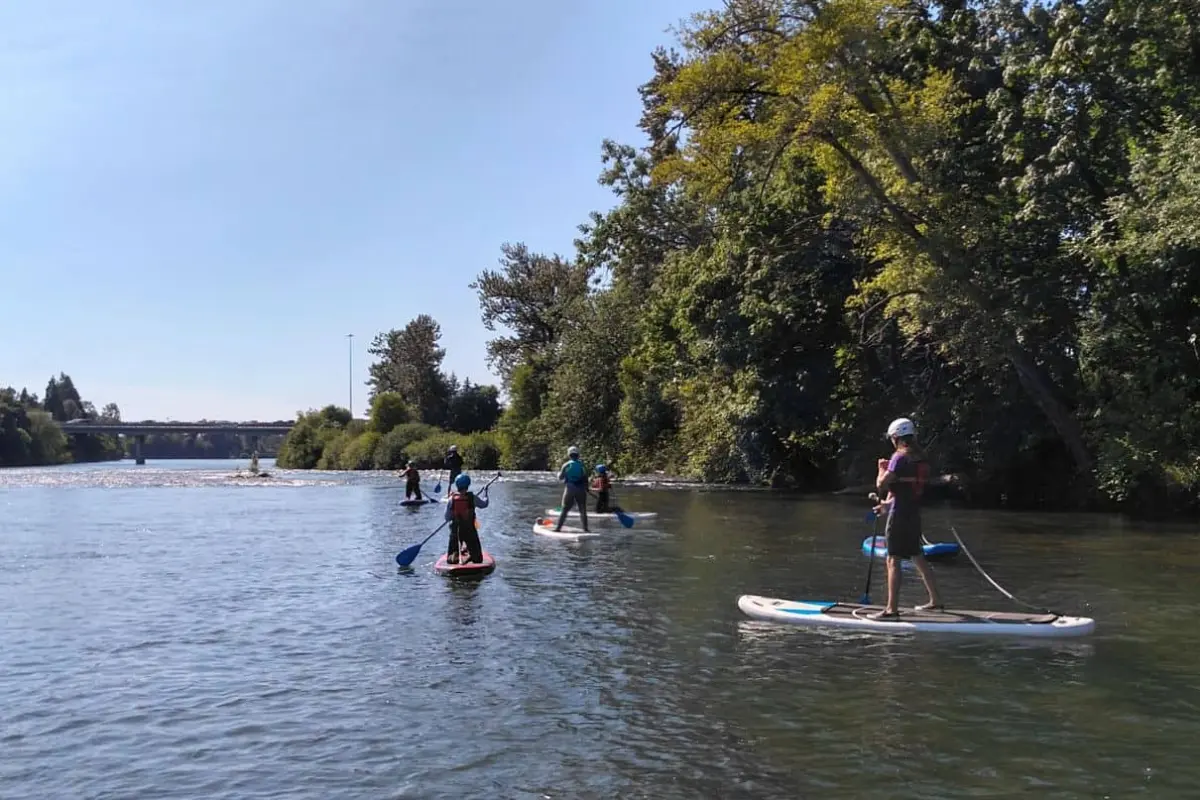
On a bright July afternoon, a 26-year-old man from Harrisburg, Oregon, set out for what should have been a routine paddleboarding excursion on the picturesque Willamette River. The conditions appeared benign, offering a refreshing escape from the summer heat. However, beneath the serene surface of the Willamette lies a dynamic, shifting ecosystem.
As the paddler navigated a section of the river, a submerged tree—often referred to by river runners as a "strainer" or "hazard log"—loomed silently beneath the water’s surface. The strong, cold current pushed against the obstacle, creating churning hydraulics and underwater pressure zones. As the paddler passed, the current or a collision with the submerged branches knocked him off his standup paddleboard.

For the average swimmer, falling off a board is a minor inconvenience. But this paddler was connected to his board by an ankle leash—a standard safety cord designed to keep the vessel from blowing away in the wind. In this critical fraction of a second, that lifeline became a death sentence.
As the man fell into the current, the ankle leash floated downstream, sweeping past the submerged branches of the tree. The cord or the ankle cuff snagged tightly on the abrasive bark or broken limbs of the underwater timber. Because the river current was pushing downstream with immense force, it pinned the board and the trailing leash in place, creating a powerful tethering effect.
Trapped just inches beneath the water’s surface, the 26-year-old was unable to reach down against the heavy pressure of the current to manipulate the Velcro cuff on his ankle. The board, held firmly by the current and the snagged line, acted as an anchor, keeping him submerged against his will. Despite the presence of rescue personnel or bystanders, the mechanical entrapment proved fatal before he could be freed.
This tragic event is far from an isolated anomaly. It mirrors a chillingly consistent pattern documented by marine safety investigators across the Pacific Northwest and nationwide: a sudden fall, an unexpected snag, and an ankle tether that turns a navigable river into a watery trap.
Supporting Context & Metrics: The Scale of the Crisis
The dangers facing the standup paddleboarding community cannot be fully grasped without examining the broader statistical landscape. For years, marine safety organizations focused heavily on the basics of boating safety: life jackets, sobriety, and weather awareness. Today, however, the data demands a broader conversation about gear mechanics and environmental literacy.
The National and Regional Numbers
- The 164% Spike: Data compiled by the U.S. Coast Guard reveals an unprecedented 164 percent increase in standup paddleboarding fatalities nationwide between 2023 and 2024. This dramatic rise vastly outpaces the growth in new participants, indicating a growing vulnerability among current paddlers.
- Oregon’s Grim Milestone: According to data compiled by the Oregon State Marine Board, 13 paddleboard-related deaths have occurred in the state since 2020.
- The Entrapment Share: Out of those 13 Oregon fatalities, 5 involved leash entanglements. Most critically, 100 percent of those five leash-related deaths involved standard ankle leashes catching on underwater hazards.
- The PFD Deficit: Beyond leashes, traditional safety measures continue to be ignored. The U.S. Coast Guard reports that approximately 83 percent of fatal boating accident victims were not wearing a personal flotation device (PFD) at the time of the incident, despite legal requirements to carry them.
Understanding the Three Types of SUP Leashes
To combat these rising statistics, experts emphasize that not all leashes are created equal. Manufacturers generally produce three distinct categories of SUP leashes, each engineered for specific environments:
- Straight Leashes: Characterized by a single, uncoiled line attached to an ankle or calf Velcro cuff, straight leashes are designed primarily for ocean surfing. The length and rigidity of the straight line prevent the board from springing violently back toward the rider’s body after a wipeout in the surf zone. However, they create excessive drag in flat water and tangle easily.
- Coiled Leashes: Featuring a telephone-cord-style helix, these leashes stretch when the user falls and retract neatly when not in use. They are designed specifically for flat water, such as lakes, ponds, and slow-moving bays, where the risk of encountering underwater debris or obstructions is low. They reduce drag and prevent the cord from tangling around the paddler’s feet.
- Quick-Release Leashes: Engineered specifically for moving water—including rivers, creeks, and tidal races—these systems eliminate the danger of the ankle trap. Instead of tethering the body at the lower extremities, a quick-release leash attaches to a specialized waist belt or a PFD harness. Crucially, it features an easy-to-grab toggle, pin, or pull-tab. When yanked, it instantly disconnects the user from the board, allowing them to escape a snagged tether in seconds.
Official Statements: Navigating the Grey Areas of Gear Regulation
Unlike marine life jackets, which are subject to rigorous federal design standards, manufacturing approvals, and mandatory carriage laws under organizations like the U.S. Coast Guard and Transport Canada, standup paddleboard leashes remain completely unregulated. There are no federal mandates dictating how leashes must perform, how easily they must release, or where they should be worn.
Ashley Massey, public information officer for the Oregon State Marine Board, stresses that this lack of oversight places a heavy burden of responsibility directly onto the shoulders of the consumer.
"Imagine," Massey says, painting a vivid picture of a common open-water scenario, "you’re in the middle of a lake, you get a wind, you fall off the board and—whoosh. Your board’s blown out of reach."
For this reason, the Marine Board strongly recommends that paddleboarders wear a leash to prevent runaway boards from stranding swimmers miles from shore. But Massey is quick to draw a sharp line between open-water convenience and riverine hazard.
"This is where skill becomes important," Massey notes, highlighting the cognitive demands of modern paddlesports. "Choosing a leash requires discernment."
According to Massey, the fundamental error many paddlers make is using an ankle leash—whether straight or coiled—in moving water or environments featuring hidden snags. When an ankle leash wraps around a submerged tree branch, bridge piling, or dense aquatic vegetation, the paddler’s body weight and the relentless force of the current make reaching down to peel open a Velcro ankle cuff nearly impossible.
"Among the three corded options," Massey asserts, "you can’t go wrong with a quick-release leash" when venturing into dynamic waters.
Furthermore, marine safety experts note that even after-market SUP waist belts—which allow paddlers to convert standard ankle leashes into waist-mounted quick-release systems—must be thoroughly understood and maintained. Under high stress and in freezing water, fine motor skills degrade rapidly. If a quick-release toggle is jammed, buried beneath a life jacket, or difficult to locate by feel alone, the system can fail. In some extreme river-running scenarios, expert paddlers choose to forgo leashes altogether, accepting the risk of a runaway board in exchange for total freedom from entanglement.
Future Outlook: Education, Equipment, and the Path Forward
As the popularity of standup paddleboarding continues its upward trajectory, reversing the tide of preventable injuries and fatalities will require a multi-faceted cultural shift across the outdoor recreation community. Industry leaders, government agencies, and retail giants must confront the challenges posed by an activity that has become dangerously easy to enter without adequate preparation.
The Big-Box Dilemma and River Literacy
The commercial accessibility of paddleboards is a double-edged sword. While it encourages healthy, active outdoor lifestyles, it also decouples the purchase of equipment from necessary safety instruction.
"Picking up a paddleboard at Walmart isn’t going to help you learn necessary skills like reading the river," Massey points out.
Waterways are inherently volatile, living systems. Factors such as seasonal snowmelt, upstream agricultural runoff, recent wildfires, and heavy rainstorms constantly reshape riverbeds, washing down massive root wads, fallen timber, and industrial debris. Paddlers stepping onto a local river must possess the situational awareness to evaluate:
- The speed and volume of the current.
- The presence of recent log jams or strainers.
- Water temperatures that can trigger cold-water shock within minutes.
- The physical limitations of their own swimming ability and gear setup.
Recommendations for Safer Paddling
To ensure that standup paddleboarding remains an enjoyable and life-affirming pursuit, safety advocates recommend the following protocols for all participants:
- Match the Leash to the Water: Never use an ankle leash in rivers, creeks, or waterways with submerged timber and debris. Reserve ankle leashes exclusively for open, flat-water lakes or ocean surfing where entanglement risks are absent.
- Invest in a Quick-Release System: If paddleboarding in moving water or unfamiliar environments where subsurface hazards may exist, always utilize a waist-mounted quick-release leash. Practice pulling the release mechanism dry on land until it becomes second nature.
- Wear Your PFD: A Coast Guard-approved personal flotation device does not help if it is strapped to the deck of the board. Wear it zipped and secured every time you are on the water.
- Seek Formal Instruction: Before tackling moving water, take a introductory paddleboarding or swiftwater safety clinic. Learn how to read river currents, identify eddies, spot strainers, and execute defensive swimming techniques.
- Respect the Environment: Understand that nature changes overnight. A familiar stretch of river can transform into a maze of deadly strainers following a single heavy storm.
Ultimately, the tragic death on the Willamette River serves as a stark, sobering reminder that the greatest danger on the water is often invisible. By pairing modern safety innovations—such as quick-release waist tethers—with rigorous environmental education and an abiding respect for river dynamics, the paddleboarding community can honor the lives lost by steering the sport toward a safer, more informed future.