











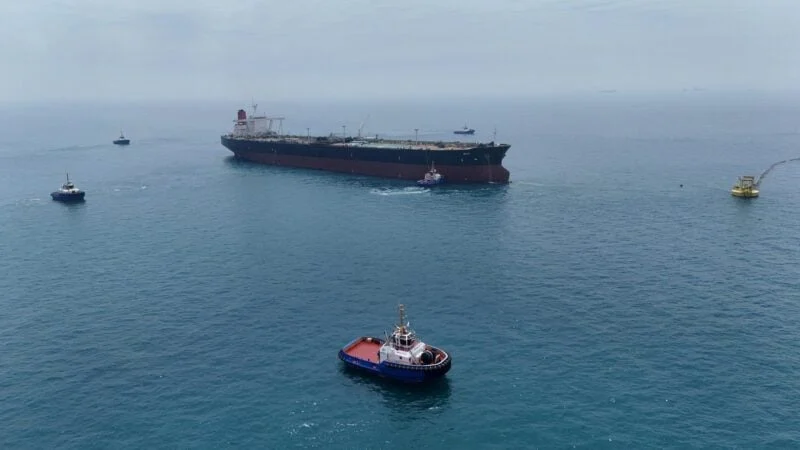
Executive Overview: A Paradigm Shift in Iraqi Oil Logistics
In a decisive move that marks a fundamental shift in its energy marketing strategy, Iraq’s state-owned shipping entity has initiated its first sovereign transport of crude oil beyond the volatile Strait of Hormuz in decades. On October 4, 2026, the Iraqi Oil Tankers Company (IOTC) successfully chartered and loaded a Very Large Crude Carrier (VLCC) with 2 million barrels of crude oil, signaling Baghdad’s intention to transition from a passive supplier to an active maritime logistics player.
Historically, Iraq has operated primarily on a "Free on Board" (FOB) basis from its southern terminals near Basra. Under this traditional model, international buyers assumed the logistical responsibility, insurance liabilities, and physical risks of sending their own tankers into the narrow, geopolitically fraught waters of the Persian Gulf. By taking control of the transport chain and delivering oil beyond the Strait of Hormuz—potentially on a "Delivered Ex-Ship" (DES) or "Cost, Insurance, and Freight" (CIF) basis—Iraq aims to capture higher profit margins, insulate its customers from regional maritime hazards, and court risk-averse refiners who have grown increasingly hesitant to send their vessels through the world’s most sensitive maritime choke point.
This operational pivot comes at a critical juncture. The Middle East is grappling with the economic and logistical aftermath of recent regional conflicts, which have severely disrupted commercial shipping lanes. As regional competitors like the United Arab Emirates and Saudi Arabia aggressively expand their state-controlled shipping fleets to guarantee supply security, Iraq’s move signals its refusal to be left behind. By developing its own maritime logistics capabilities, Baghdad is taking the first steps toward securing its economic sovereignty, stabilizing its export revenues, and insulating its treasury from the geopolitical shocks that frequently paralyze the Persian Gulf.

Detailed Chronology: Charting the Historic Voyage
The execution of this landmark shipment represents the culmination of months of quiet planning within the Iraqi Oil Ministry and the IOTC. The timeline of this operational breakthrough highlights both the urgency of Iraq’s strategic shift and the broader recovery of its energy sector:
[August 2026] ────> [September 21, 2026] ────> [October 3, 2026] ────> [October 4, 2026]
Exports plunge       Exports rebound to         Oil Minister seeks      IOTC loads 2M-bbl
to 2.0M bpd due      2.6M bpd as regional       funding for state-      VLCC for historic
to war fallout.      tensions temporarily ease. owned tanker fleet.     Hormuz transit.
The Loading and Departure
In early October 2026, the IOTC coordinated the loading of 2 million barrels of Basra Light or Medium crude onto an unnamed VLCC at the Basra Oil Terminal. On October 4, Ali Qais Abdul Jabbar, Director General of the IOTC, confirmed in a video address published on the Oil Ministry’s official social media channels that the supertanker had been cleared to transit the Strait of Hormuz. Abdul Jabbar heralded the voyage as the company’s first self-arranged transit of its kind "in decades," highlighting a clean break from the passive marketing strategies that have defined Iraqi oil sales since the late 20th century.
The Funding Push
Just one day prior to the loading announcement, on Saturday, October 3, 2026, Iraqi Oil Minister Basim Mohammed Khudair made a public appeal through state media, revealing that Baghdad is actively seeking international funding and domestic capital allocations to purchase a new fleet of state-owned tankers. While Khudair declined to specify the exact number of vessels the ministry aims to acquire, he emphasized that owning a sovereign fleet of VLCCs and Suezmax vessels is no longer a luxury, but a strategic necessity to maximize financial returns and protect state revenues from foreign shipping monopolies.
Export Volatility and Recovery
The maritime breakthrough occurred against a backdrop of highly volatile export volumes. In August 2026, the lingering fallout from regional hostilities dragged Iraq’s crude exports down to a meager 2 million barrels per day (bpd). However, through the first three weeks of September, exports surged back to an average of 2.6 million bpd. While this recovery represents a significant triumph for the Oil Ministry, current volumes remain substantially below the pre-war baseline of 3.3 million to 3.5 million bpd that Iraq routinely piped and shipped to global markets.

Supporting Context & Metrics: Geopolitical Risks and the Fleet Race
To understand the gravity of Iraq’s decision to deliver its own oil past the Strait of Hormuz, one must examine the severe geopolitical and economic pressures currently reshaping the Persian Gulf’s maritime landscape.
+-------------------------------------------------------------------------+
|                  PERSIAN GULF OIL EXPORT DYNAMICS                       |
+-------------------------------------------------------------------------+
|                                                                         |
|  [ Iraq's Basra Terminal ] ───(FOB: High Risk/Discounted Price)───┐      |
|             │                                                     │      |
|             ▼ (New Delivered Strategy)                            ▼      |
|     [ Strait of Hormuz ] ───(War Risk Zone / High Insurance)── [Refiners]|
|             │                                                     ▲      |
|             ▼                                                     │      |
|  [ Gulf of Oman / Safe Waters ] ───(Delivered: Premium Price)─────┘      |
|                                                                         |
+-------------------------------------------------------------------------+
The Strait of Hormuz Choke Point
The Strait of Hormuz is the world’s most critical oil transit artery, with approximately 20% of the world’s liquefied natural gas (LNG) and petroleum consumption passing through its narrow lanes daily. Recent military escalations have turned the waterway into a high-risk zone. Commercial vessels have faced threats from naval mines, drone strikes, and state-sponsored seizures.
Consequently, maritime insurance syndicates, including Lloyd’s Joint War Committee, have maintained elevated War Risk Surcharges for vessels entering the Persian Gulf. For international refiners, the cost of chartering a VLCC to Basra has occasionally become prohibitively expensive, forcing Iraqi marketing authorities (SOMO) to offer deep discounts on its crude to compensate for the exorbitant freight and insurance costs borne by buyers.
The Economics of Delivered Crude
By taking on the maritime transit risk itself, the IOTC can bypass these market distortions. Delivering oil directly to buyers in safer waters, such as the Gulf of Oman, the Arabian Sea, or directly to Asian and European refining hubs, yields several economic advantages:
- Discount Reduction: Iraq can phase out the steep "risk discounts" it previously offered to buyers who braved the Gulf.
- Expanded Customer Base: The state can sell to risk-averse refiners whose internal compliance policies or insurance constraints forbid them from chartering vessels into active conflict zones.
- Freight Premium Capture: Rather than leaving lucrative shipping margins to international tanker syndicates, the Iraqi state can capture the freight premium, keeping more oil dollars within national coffers.
The Regional Tanker Arms Race
Iraq’s strategy mirrors a broader regional scramble for sovereign shipping capacity. Middle Eastern national oil companies are rapidly expanding their maritime logistics arms to insulate themselves from geopolitical vulnerabilities:
| Country | National Shipping Entity | Current Strategy / Activity |
|---|---|---|
| United Arab Emirates | ADNOC L&S (Logistics & Services) | Aggressively expanding its VLCC, gas carrier, and dry bulk fleet to offer end-to-end global delivery. |
| Saudi Arabia | Bahri | Operating one of the world’s largest VLCC fleets to maintain dominant market share and delivery flexibility. |
| Iraq | IOTC (Iraqi Oil Tankers Co.) | Seeking urgent funding to transition from zero sovereign VLCC capacity to a competitive state-owned fleet. |
Official Statements: National Sovereignty and Financial Returns
The rhetoric coming out of Baghdad reflects a calculated blend of economic ambition and national security priority.
In his address broadcasted on the Oil Ministry’s Facebook page, IOTC Director General Ali Qais Abdul Jabbar framed the VLCC charter as a historic milestone:
"For the first time in decades, the Iraqi Oil Tankers Company has taken the initiative to move our wealth beyond the traditional boundaries of our southern terminals. By coordinating this VLCC shipment through the Strait of Hormuz under our own logistics umbrella, we are proving that Iraq is capable of managing its energy destiny. This is not just a commercial transaction; it is a assertion of our national maritime capabilities."
Abdul Jabbar further noted that acquiring and controlling its own fleet would grant Baghdad "greater control over crude deliveries," enabling the state to compete on an equal footing with regional energy giants who have long used their logistics fleets as geopolitical leverage.
Supporting this vision, Oil Minister Basim Mohammed Khudair emphasized the fiscal wisdom of the ministry’s new direction during his interview with the state-run Iraqi News Agency:
"Our dependence on foreign-flagged vessels and buyer-arranged shipping has historically left our export revenues vulnerable to external shocks and high insurance premiums. Owning our own vessels will directly support our national export targets and significantly increase our financial returns. We are actively pursuing diverse funding channels to build a robust, modern fleet for the IOTC. Every dollar we invest in our maritime capacity is a dollar saved in transport fees and marketing discounts."
Future Outlook: Rebuilding Iraq’s Maritime and Pipeline Infrastructure
As Iraq looks beyond the immediate milestone of its October 2026 VLCC shipment, the country faces a complex web of logistical challenges and structural opportunities. The success of its long-term energy strategy depends on a multi-pronged approach encompassing fleet expansion, pipeline diversification, and diplomatic maneuvering.
                       ┌───► 1. Fleet Expansion (Aquire state-owned VLCCs)
                       │
                       ├───► 2. Northern Corridor (Resolve Turkey-Ceyhan dispute)
IRAQ'S STRATEGIC ROADMAP ─┼
                       ├───► 3. Western Corridor (Rebuild Baniyas Pipeline, Syria)
                       │
                       └───► 4. Overland Logistics (Maintain temporary truck routes)
1. Fleet Expansion and Financing
The primary obstacle to Iraq’s maritime ambitions is the lack of state-owned tonnage. While the IOTC successfully arranged the 2-million-barrel shipment, it relied on a chartered vessel. To achieve true logistical independence, Iraq must acquire its own VLCCs. With newbuild VLCC prices hovering at historic highs and shipyards booked years in advance, Baghdad is exploring secondary-market acquisitions of modern, eco-friendly tankers, alongside seeking joint ventures with established international shipping lines to rapidly scale its operational expertise.
2. The Northern Corridor (Turkey)
While southern maritime routes are being optimized, Baghdad continues to negotiate the reopening of the Iraq-Turkey pipeline to the Mediterranean port of Ceyhan. This route, which historically carried roughly 450,000 bpd of northern crude, has been offline due to long-standing legal, financial, and political disputes between the federal government in Baghdad, the Kurdistan Regional Government (KRG), and Ankara. Resolving this impasse remains a top priority to alleviate pressure on the southern terminals.
3. The Syrian Pipeline Option
In tandem with maritime and northern pipeline efforts, Iraq is reviving discussions surrounding a proposed pipeline corridor to Syria’s Mediterranean port of Baniyas. Though highly complex due to security and political considerations in Syria, a functional western pipeline would completely bypass both the Strait of Hormuz and the Turkish straits, offering a direct, secure land route to European markets.
4. Overland Trucking as a Temporary Stopgap
In the interim, Iraq continues to rely on unconventional overland logistics to move marginal volumes. Thousands of oil trucks currently haul crude through Syria and Jordan—a logistically inefficient and costly practice, but one that underscores Baghdad’s determination to maintain market presence and preserve export volumes at all costs while its maritime and pipeline infrastructures are systematically rebuilt.
Conclusion
The successful voyage of the IOTC-chartered VLCC past the Strait of Hormuz is more than a logistical achievement; it is a declaration of economic resilience. By shifting toward a proactive, delivered-basis shipping model, Iraq is slowly transforming itself from a vulnerable, land-locked producer into a dynamic maritime energy exporter. If Baghdad can successfully secure the funding required to build out its sovereign fleet, the nation will not only safeguard its oil revenues from the chronic volatility of the Persian Gulf but will also secure a more resilient and profitable position in the global energy hierarchy.


