








WASHINGTON, D.C. — In a sharp and volatile escalation that threatens to upend months of fragile regional stability, the United States and Iran have engaged in direct military exchanges for the first time in nearly a month. The sudden flare-up, marked by pre-emptive American airstrikes on Iranian maritime assets and subsequent retaliatory missile barrages aimed at US facilities in Jordan, has immediately reverberated through global energy markets. As Brent crude surged past the critical $90-a-barrel threshold, the clash underscored the high stakes of the Trump administration’s dual-track strategy of localized kinetic deterrence and aggressive, secondary financial sanctions.
With the November 2026 congressional midterm elections rapidly approaching, the resumption of hostilities presents a double-edged sword for the White House. While the administration seeks to project decisive military strength and enforce maritime security in the critical shipping lanes of the Middle East, it simultaneously faces a weary domestic electorate and the looming specter of energy-driven inflation.
Executive Overview
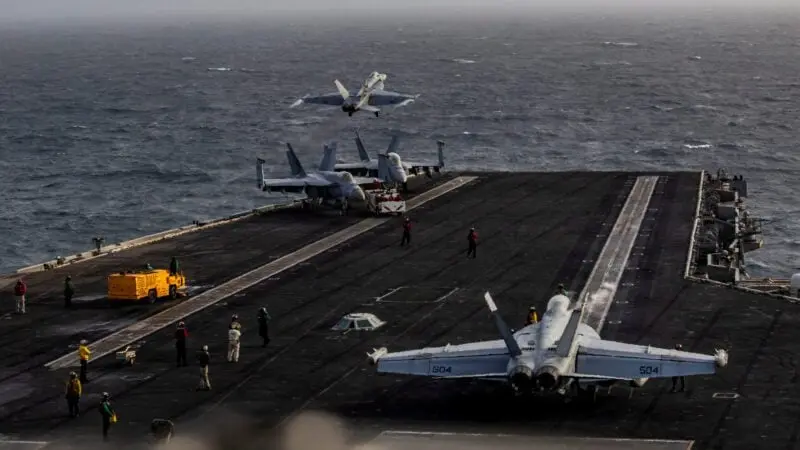
The month-long lull in direct military confrontations between Washington and Tehran came to an abrupt end on August 30, 2026. The spark was a pre-emptive strike by US forces targeting Iranian rocket launchers positioned to threaten shipping lanes in the Persian Gulf. Iran’s response was swift: a coordinated missile and drone assault directed toward US military installations in Jordan. Though Jordanian air defenses successfully neutralized the incoming threat, preventing casualties and infrastructure damage, the exchange represents a dangerous transition back to active hostilities.

The military friction coincides with a dramatic escalation in US economic policy. Led by Treasury Secretary Scott Bessent, the United States is deploying a doctrine of "financial violence" designed to choke off Iran’s remaining economic lifelines. By targeting major foreign financial institutions—such as Egypt’s Banque Misr—and threatening secondary sanctions against principal buyers of Iranian crude like China, the administration hopes to force diplomatic concessions. However, the efficacy of this strategy remains highly contested, as regional allies express skepticism over maritime security claims, and global markets brace for a protracted conflict.
Detailed Chronology of the Escalation
[August 30, 2026: Day 1]
  │
  ├── 08:00 AM - US CENTCOM identifies active Iranian rocket launchers near the Strait of Hormuz.
  │
  ├── 12:00 PM - US forces launch pre-emptive airstrikes, neutralizing the launchers.
  │
  └── 04:00 PM - CENTCOM spokesperson Captain Tim Hawkins confirms the strike, citing a mine-laying threat.
  │
[August 31, 2026: Day 2]
  │
  ├── 02:00 AM - IRGC retaliates with a combined missile and drone attack targeting US air bases in Jordan.
  │
  ├── 02:30 AM - Jordanian air defenses intercept and destroy eight Iranian missiles breaching national airspace.
  │
  └── 08:00 AM - Global markets react; Brent crude oil rises 2.4%, trading above $90 per barrel.
The Pre-emptive Strike in the Gulf
On the morning of Sunday, August 30, US intelligence assets detected high-readiness preparations by the Islamic Revolutionary Guard Corps (IRGC) along the Iranian coastline. According to US Central Command (CENTCOM), Iranian forces were preparing specialized rocket launchers capable of deploying sea mines directly into the transit lanes of the Strait of Hormuz.
Fearing an imminent blockade of the world’s most sensitive maritime chokepoint, US forces executed targeted kinetic strikes to neutralize the launchers before the mines could be deployed. Captain Tim Hawkins, spokesperson for CENTCOM, confirmed the action, emphasizing that the military acted to prevent an immediate threat to international shipping.
The Retaliation: Targeting the Levant
Tehran’s response did not occur in the waters of the Gulf, but rather in the skies of the Levant. Early Monday morning, the IRGC launched a coordinated barrage of ballistic missiles and one-way attack drones. The targets were US air bases located in neighboring Jordan, which serve as crucial hubs for American regional operations.
According to reports published by Iran’s state-run IRNA news agency, the strike was explicitly framed as a direct retaliation for the "American aggression" in the Gulf. The escalation highlights Iran’s capability to project power across borders and utilize its regional posture to strike US assets in allied nations.
Jordan’s Defensive Shield
The potential for a devastating mass-casualty event was averted by the rapid response of the Jordanian armed forces. The Jordan News Agency (Petra) confirmed that the kingdom’s air defense networks intercepted eight distinct missiles after they breached Jordan’s sovereign airspace.
Jordanian Airspace Interception Metrics:
┌──────────────────────────────┬──────────────────────────────┐
│ Metric                       │ Value / Status               │
├──────────────────────────────┼──────────────────────────────┤
│ Missiles Intercepted         │ 8                            │
│ Threat Type                  │ Ballistic / Cruise Missiles  │
│ Collateral Damage            │ Zero Reported                │
│ Air Defense Status           │ Maximum Alert                │
└──────────────────────────────┴──────────────────────────────┘
The successful interceptions prevented any debris or warheads from impacting US military facilities or Jordanian civilian infrastructure. The incident, however, underscores the precarious position of Amman, which continues to navigate the geopolitical crossfire between Washington and Tehran.
Supporting Context & Metrics
The Battle for the Strait of Hormuz
The Strait of Hormuz remains the ultimate geopolitical leverage point for Iran. Historically, approximately 20% of the world’s liquefied natural gas (LNG) and petroleum consumption passes through this narrow waterway daily.
Strait of Hormuz Global Transit Share:
█▓▒░ Oil & LNG Transit: 20% of Global Consumption
While the US military declared last week that it had completed comprehensive demining operations to secure shipping lanes, international allies have privately expressed deep skepticism. European and Gulf partners have warned that the strait remains heavily contested and likely still contains undetected or newly deployed Iranian naval mines, rendering US declarations of a "mine-free" passage premature.
Global Energy Markets and Inflationary Pressures
The immediate consequence of the renewed military friction was felt on Wall Street and global energy exchanges.
- Brent Crude: Rose by 2.4%, climbing back above the psychologically significant barrier of $90 per barrel.
- Market Sentiment: Analysts warn that any prolonged disruption to Gulf shipping or escalation into a wider regional war could easily push crude prices into the triple digits.
- Economic Impact: For the Trump administration, $100-plus oil represents a severe political liability. High energy costs directly feed into domestic inflation, eroding consumer confidence and threatening to complicate the Federal Reserve’s monetary policy trajectory.
Official Statements and Diplomatic Posturing
The American Position: Military Readiness and Economic Coercion
From the military command in Florida to the Treasury chambers in Washington, the US message is one of unyielding pressure.
"Our forces are monitoring the area closely and remain prepared to protect the free flow of commerce through this essential waterway."
— Captain Tim Hawkins, US CENTCOM Spokesperson
On the economic front, Treasury Secretary Scott Bessent has assumed a leading role, traveling to North Carolina ahead of the Group of 20 (G20) finance ministers’ meeting to rally international support for a punitive financial regime. Bessent has signaled a shift away from purely kinetic engagements toward a policy of systemic economic isolation.
Key Elements of Treasury Secretary Bessent's "Financial Violence" Campaign:
1. Secondary Sanctions on Global Banks: Targeting institutions facilitating Iranian oil payments.
2. Severing US Dollar Access: Forcing foreign banks to choose between the US financial system and Iranian trade.
3. Choking China's Supply: Pressuring Beijing to reduce its reliance on Iranian crude (currently 90% of Iran's exports).
"This is going to be financial violence if we have to. We are prepared to implement an economic onslaught against anyone who attempts to bypass our sanctions regime."
— Scott Bessent, US Treasury Secretary
As part of this initiative, the US Treasury recently proposed a rule to sever the United Arab Emirates-based branches of Banque Misr—Egypt’s second-largest financial institution—from the US financial system. Bessent also confirmed that a second major regional bank would face similar sanctions in the coming days.
The Iranian Counter-Strategy: Resistance and Diplomatic Leverage
Tehran has met the US "maximum pressure" campaign with a combination of military defiance and diplomatic maneuvering. Iranian Foreign Minister Abbas Araghchi clarified that while Iran does not seek a wider war, it will not negotiate under duress. Following mediation sessions facilitated by Qatari officials, Araghchi made it clear that diplomatic progress remains stalled by Washington’s refusal to lift unilateral sanctions.
"Progress hinges on US understanding of one simple fact: Pressure doesn’t work. We remain open to diplomacy, but Washington must first abandon its failed economic campaign."
— Abbas Araghchi, Iranian Foreign Minister
Future Outlook
The 2026 Midterm Election Vulnerability
The timing of this military escalation is highly sensitive for the Republican Party. With the November 2026 midterm elections just months away, the party’s control of both the House of Representatives and the Senate is on the line.
Public opinion polls indicate a growing fatigue among American voters regarding what many view as an "unceasing war" with Iran. If the administration’s kinetic actions in the Persian Gulf and Levant lead to sustained high prices at the gas pump, it could trigger a voter backlash, handed directly to a waiting Democratic opposition.
Key Political and Economic Risks (Next 90 Days):
┌──────────────────────────────┬──────────────────────────────────────────────────┐
│ Risk Factor                  │ Potential Consequence                            │
├──────────────────────────────┼──────────────────────────────────────────────────┤
│ Brent Crude > $100/bbl       │ Accelerates domestic inflation, raising gas prices│
│ Continued Drone Attacks      │ Risks US casualties in Jordan, Iraq, or Syria    │
│ Sanctions Backlash           │ Strains relations with key allies (Egypt, UAE)   │
│ China Defiance               │ Deepens the geopolitical rift between US & China │
└──────────────────────────────┴──────────────────────────────────────────────────┘
The Limits of "Financial Violence"
While Treasury Secretary Bessent’s aggressive sanctions regime sounds formidable, its real-world efficacy faces significant structural hurdles. China currently purchases approximately 90% of Iran’s total oil exports, utilizing non-dollar transaction networks and independent "teapot" refineries that are largely immune to US secondary sanctions.
Furthermore, US allies in Europe and the Middle East have shown little appetite for joining a wholesale economic blockade that could further destabilize their own economies. Without broad international consensus, Washington’s reliance on "financial violence" risks isolating the US from its partners rather than isolating Tehran from the global economy.
As winter approaches and global energy demand rises, the coming weeks will test whether the Trump administration can successfully balance military deterrence with economic warfare—or if the region is on the verge of a broader conflict that neither side can fully control.