







Executive Overview
For the uninitiated, the mechanics of a marine engine might appear deceptively straightforward. At its most fundamental level, a boat engine operates on principles comparable to its automotive counterpart: it converts fuel into controlled internal combustion, which ultimately drives a shaft or a propeller to displace water and propel a vessel forward. However, this high-level mechanical similarity masks a vastly different operational reality.
Marine propulsion systems are subjected to some of the most aggressive, punishing environments on earth. Unlike land-based vehicles that coast intermittently on paved roads, a boat engine operates under a ceaseless, heavy load, constantly fighting the dense resistance of water. Furthermore, these powerplants must withstand the corrosive onslaught of saltwater, manage complex raw-water or closed-loop cooling systems, and deliver reliable torque across sustained offshore runs.
Understanding how a marine engine breathes, combusts, cools, and drives a vessel is no longer just the domain of professional marine technicians; it is a critical safety competency for every modern mariner. Recognizing early warning signs—from a minor drop in water pump pressure to subtle shifts in exhaust tone—can mean the difference between a routine maintenance afternoon and a perilous offshore breakdown. This comprehensive investigation explores the engineering distinctions of marine propulsion, the physics of outboard versus inboard configurations, the mechanics of cooling system vulnerabilities, the compounding factors of offshore stress, and the indispensable value of preventative maintenance and professional on-water assistance.

Detailed Chronology & Mechanics of Marine Combustion
To appreciate the vulnerabilities of a marine engine, one must first examine the heart of its operation: the internal combustion process. The vast majority of modern marine engines operate on the classic four-stroke cycle—intake, compression, power, and exhaust—a thermodynamic sequence mirrored in contemporary automotive engineering.
The Four-Stroke Cycle Under Load
- Intake Stroke: The piston descends within the cylinder, creating a partial vacuum that draws a precise mixture of fuel and air through the open intake valve.
- Compression Stroke: The intake valve closes, and the ascending piston compresses the air-fuel mixture, exponentially increasing its temperature and pressure.
- Power Stroke: At the apex of compression, a spark plug ignites the pressurized mixture. The resulting controlled explosion forces the piston downward with immense kinetic force.
- Exhaust Stroke: The exhaust valve opens as the piston rises once more, sweeping the spent combustion gases out of the cylinder and into the exhaust manifold.
The repeating, synchronized cadence of these four strokes spins the crankshaft, transferring rotational energy through a transmission or lower unit to turn the propeller.
The Burden of Sustained Resistance
The critical divergence between automotive and marine engineering lies in the load profile. A car engine typically operates at low loads during cruising, taking advantage of momentum and aerodynamic efficiency. In stark contrast, a boat has no coasting momentum; it is perpetually climbing a hill of water. Water is roughly 800 times denser than air, meaning a marine engine must operate under a heavy, continuous load from the moment the throttle is advanced until the anchor drops.
This sustained heavy load forces marine engines to run at higher average RPMs and operating temperatures for extended periods. Consequently, marine components—from piston rings and connecting rods to head gaskets and valves—must be engineered with significantly higher tolerances and metallurgy designed to resist thermal fatigue.
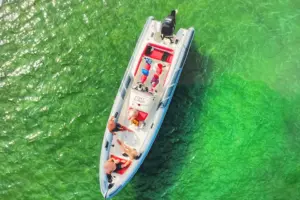
Architectural Breakdown: Outboard vs. Inboard Propulsion Systems
Marine propulsion is broadly categorized into two distinct architectural typologies: outboard systems and inboard systems. Each presents unique mechanical advantages, vulnerabilities, and maintenance profiles.
[Outboard System]  --> External Transom Mount --> Vertical Power Transfer  --> Compact, Serviceable
[Inboard System]   --> Internal Hull Mount    --> Horizontal Power Transfer --> High Torque, Enclosed
Outboard Motors: Self-Contained Versatility
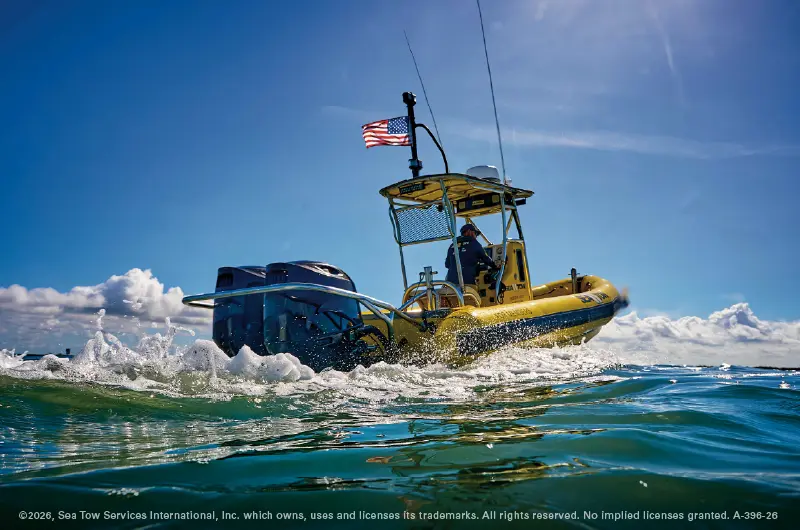
Outboard motors represent an all-in-one engineering marvel. Mounted directly to the vessel’s transom, an outboard integrates the powerhead (engine block), the midsection, the gearbox, and the propeller into a single, cohesive, self-contained unit positioned entirely outside the hull.
The operational sequence of an outboard is remarkably direct:
- Fuel and air combust within the powerhead to generate rotational mechanical energy.
- This energy is transferred downward through a vertical drive shaft housed in the midsection.
- The driveshaft engages a bevel gear set in the lower unit, which changes the axis of rotation by 90 degrees.
- The propeller shaft spins, turning the propeller blades, which act as hydrofoils to push water backward and propel the boat forward.
Because the entire propulsion assembly sits outside the hull, outboards offer exceptional accessibility. Mechanics can easily tilt, service, or entirely replace an outboard motor without cutting into the vessel’s structural fiberglass. This accessibility has made outboards the dominant choice for modern center consoles, bay boats, and recreational day-cruisers.
Inboard Engines: Powerhouse Torque for Heavy Hulls
Conversely, inboard engines are permanently mounted inside the vessel’s hull, typically near the center of gravity to optimize weight distribution. Instead of transferring power vertically, an inboard engine connects to a transmission and a horizontal driveshaft that exits the hull through a watertight shaft log (or stuffing box), directly spinning a propeller suspended beneath the hull.
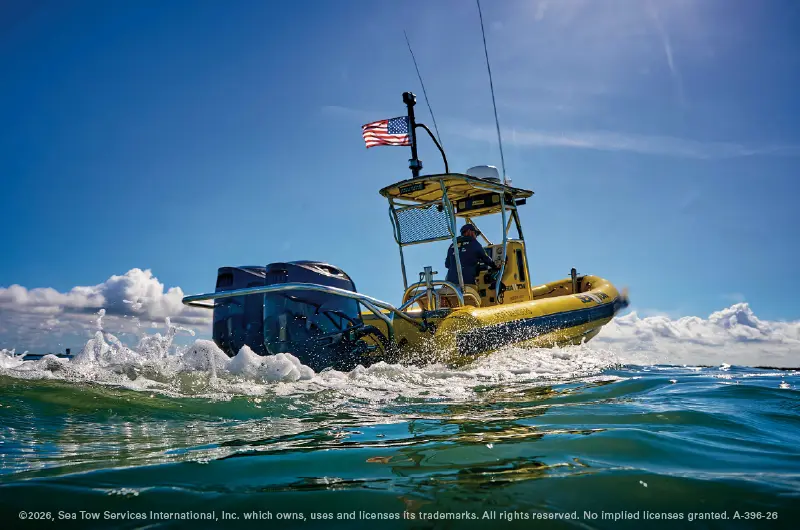
Key Inboard Characteristics:
- Fixed Thrust Vector: Unlike outboards that pivot to steer the vessel, many traditional inboards rely on independent rudders positioned in the propeller’s wash to direct the boat.
- Massive Torque Delivery: Because they are bolted directly to heavy structural stringers within the hull, inboards can accommodate massive displacement blocks, making them the preferred choice for large yachts, commercial vessels, and dedicated sportfishing boats.
- Ventilation Requirements: Because inboard engines reside within enclosed compartment spaces, they are inherently susceptible to the accumulation of volatile gasoline vapors or exhaust gases. Consequently, federal and international maritime regulations mandate active bilge blower ventilation cycles prior to engine ignition.
Supporting Context & Metrics: Cooling Systems and Thermal Physics
The thermal management of a marine engine is an engineering masterclass fraught with unique environmental hazards. While a car relies on a closed-loop radiator system utilizing a mixture of water and antifreeze, most marine engines leverage the infinite reservoir surrounding them: the body of water the boat is floating in.
Raw-Water vs. Closed-Loop Cooling Systems
Marine engines generally utilize one of two cooling architectures:
- Raw-Water Cooling: A belt- or crankshaft-driven water pump draws raw water directly from the lake, river, or ocean, routing it through the engine block and exhaust manifolds to absorb heat before expelling it overboard through the exhaust system.
- Closed-Loop (Freshwater) Cooling: Utilizing a heat exchanger, this system isolates the engine block with a traditional antifreeze coolant mixture. A secondary raw-water pump circulates external water through the heat exchanger to cool the antifreeze, preventing corrosive saltwater from ever entering the engine’s internal cooling passages.
Why Marine Engines Overheat
Despite these sophisticated cooling designs, overheating remains the leading cause of mechanical failure on the water. The primary culprits include:
- Impeller Degradation: Raw-water pumps utilize flexible rubber impellers. Over time, these impellers dry out, crack, or shed vanes, severely restricting water flow.
- Ingestion of Debris: Operating in shallow waters, sandy bottoms, or weed beds can quickly clog raw-water intake grates, sea strainers, or heat exchangers.
- Thermostat Failures: Salt crystallization and mineral scaling can cause marine thermostats to seize in the closed position, trapping heat within the powerhead.
When a cooling system fails, internal temperatures skyrocket within seconds, leading to warped cylinder heads, blown head gaskets, and catastrophic engine seizure.
Official Insights & On-Water Vulnerabilities
Even meticulously maintained propulsion systems can fall victim to the unforgiving nature of the marine environment. Understanding the root causes of on-water breakdowns is essential for risk mitigation.
Primary Drivers of Engine Failure
- Fuel Contamination: Ethanol-blended fuels are notoriously hygroscopic—meaning they attract moisture from the atmosphere. Phase separation occurs when water accumulates in the fuel tank, leading to choked fuel injectors, varnished carburetors, and sudden engine stalling.
- Electrical System Corrosive Failures: Humidity, salt spray, and vibration create a hostile environment for marine wiring. Corroded battery terminals, failing ignition switches, and compromised grounding straps frequently manifest as intermittent or dead-start conditions.
- Mechanical Fatigue: Belts, hoses, and seals degrade rapidly under high thermal loads and UV exposure. A ruptured cooling hose or a snapped serpentine belt can neutralize an engine in moments.
The Offshore Escalation Factor
When mechanical failure occurs offshore, the severity of the situation compounds exponentially. Unlike a stranded motorist on a highway who can safely wait on the shoulder, an offshore boater is subjected to shifting tides, unpredictable winds, sea state dynamics, and navigational hazards.
Without propulsion, a vessel loses steerage way, making it vulnerable to broaching in heavy beam seas, drifting into shallow reefs, or colliding with other marine traffic. What begins as a minor mechanical inconvenience quickly transforms into a critical safety emergency, underscoring why preventive maintenance is a non-negotiable aspect of seamanship.
Future Outlook: Maintenance, Technology, and Professional Support
The longevity of a marine engine is directly proportional to the discipline of its maintenance schedule. Modern marine engineering has made significant strides in diagnostic computing, corrosion-resistant alloy integration, and electronic fuel injection (EFI) reliability. However, human diligence remains the ultimate safeguard.
The Lifecycle Maintenance Blueprint
- Seasonal Winterization: In regions subject to freezing temperatures, thorough winterization—including draining raw-water systems, fogging cylinders with anti-corrosion oil, and stabilizing fuel—prevents ice-expansion fractures and internal oxidation.
- Spring Commissioning: A rigorous pre-season shakedown cruise validates fuel systems, steering actuators, battery charging capacity, and cooling flow before venturing far from port.
- Routine Anode Management: Sacrificial zinc or aluminum anodes must be inspected and replaced regularly to divert galvanic corrosion away from critical engine components like driveshafts, gimbals, and outdrives.
When Knowledge Meets Professional Assistance
While mastering the mechanical fundamentals of a marine engine empowers boaters to make informed operational decisions, mechanical acumen has clear limitations. Field repairs on the open water are frequently constrained by safety considerations, lack of specialized tools, and environmental volatility.
When an engine fails offshore, relying on professional on-water assistance is the hallmark of a prepared captain. Programs offering 24/7 marine dispatch, professional towing, and soft-ground ungrounding—such as a dedicated Sea Tow membership—provide an essential safety net. By pairing a thorough understanding of engine mechanics with proactive maintenance and reliable emergency backup plans, boaters can navigate with confidence, ensuring that their time on the water remains safe, memorable, and stress-free.