










Executive Overview
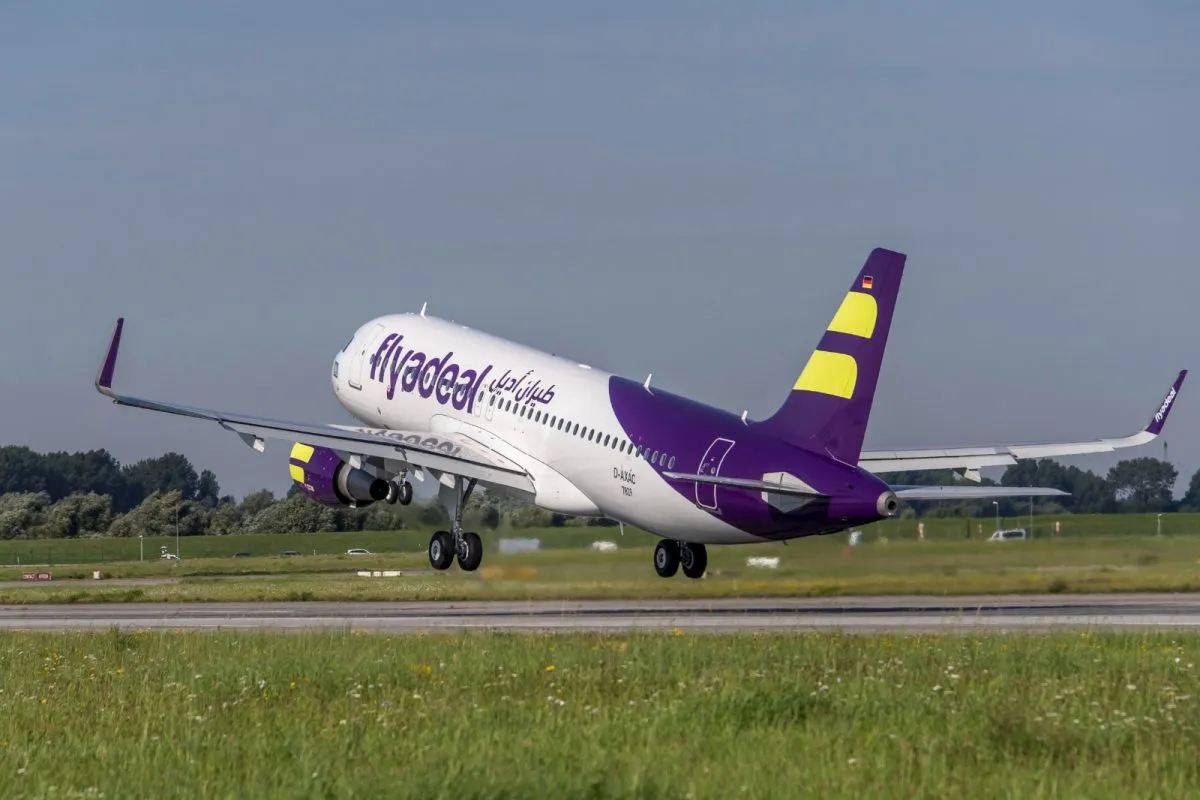
In a decisive strategic departure from its foundational business model, Flyadeal—the low-cost subsidiary of Saudi Arabian national carrier Saudia—is preparing to introduce connecting flights across its route network. According to Acting CEO Sanjiv Kapoor, the airline is poised to move past pure point-to-point operations, introducing origin-and-destination (O&D) fare structures and seamless transit itineraries in the coming weeks.
This operational pivot represents a watershed moment for the Riyadh-headquartered carrier, which has operated strictly as a low-cost, point-to-point (P2P) operator since its inception in 2017. By embracing hub-and-spoke or structured transfer capabilities, Flyadeal intends to capture higher-yielding connecting traffic, optimize aircraft utilization, and feed into the burgeoning ambitions of the Saudi aviation ecosystem.
Simultaneously, the carrier is managing a major fleet evolution. Flyadeal is scheduled to take delivery of its first single-aisle Airbus A321neo aircraft in the second half of next year, followed by widebody Airbus A330neo aircraft in the fourth quarter of 2027. These additions are designed to expand the airline’s geographic reach and seating capacity significantly.
However, this ambitious trajectory unfolds against a complex backdrop of global supply chain disruptions and aerospace manufacturing bottlenecks. Across the industry, airlines from Air India to new Saudi market entrant Riyadh Air have faced severe delivery delays, forcing executive leadership teams to constantly recalibrate their network expansion timelines. Flyadeal’s ability to execute this transition will serve as a critical case study in how agile, low-cost carriers adapt to macroeconomic pressures while scaling to meet the demands of Vision 2030.
Detailed Chronology: From Point-to-Point Pioneer to Network Operator
To fully appreciate the magnitude of Flyadeal’s current strategic pivot, it is necessary to examine the chronological progression of the airline and the broader regional aviation landscape that birthed it.
1. Inception and the Pure Low-Cost Era (2016–2019)
Announced in early 2016 by Saudia Group, Flyadeal was created to capture the burgeoning domestic travel demand driven by Saudi Arabia’s youthful, tech-savvy population and to effectively compete against foreign and domestic low-cost carriers. Commencing operations in September 2017 with a flight between Jeddah and Riyadh, the airline adopted an unbundled, low-cost model.
For the first several years of its existence, Flyadeal maintained a strict point-to-point network strategy. Passengers booked individual sectors; the airline did not interline, code-share, or offer protected connecting itineraries. This operational simplicity kept overhead low, turnaround times minimal, and IT infrastructure straightforward. By focusing exclusively on high-density domestic routes, Flyadeal rapidly established itself as a formidable low-cost brand within the Kingdom.

2. Regional Expansion and Pandemic Resilience (2020–2022)
The onset of the COVID-19 pandemic in 2020 presented unprecedented challenges to global aviation, yet Flyadeal utilized the period to selectively expand its footprint. As Saudi Arabia began gradually lifting travel restrictions, the airline launched its first international services, expanding beyond domestic hops into regional Gulf Cooperation Council (GCC) markets, the broader Middle East, and North Africa.
Despite crossing international borders, the airline maintained its point-to-point ethos. A flight from Riyadh to Dubai operated independently of a flight from Cairo to Riyadh. While this simplified fleet scheduling during a volatile era, it ultimately capped the airline’s ability to feed traffic into longer-haul corridors or offer competitive journey times for cross-border travelers seeking multi-leg itineraries.
3. The Fleet Transition and Strategic Pivot (2023–Present)
As air travel demand rebounded past pre-pandemic levels, fueled heavily by Saudi Arabia’s National Tourism Strategy—which aims to attract 150 million visitors annually by 2030—Flyadeal recognized the limitations of a pure point-to-point model. With new airport infrastructure scaling up across the Kingdom, particularly at King Abdulaziz International Airport in Jeddah and King Khalid International Airport in Riyadh, the conditions were ripe for network integration.
Under the leadership of Acting CEO Sanjiv Kapoor, the airline began laying the groundwork for connecting operations. Speaking to industry analysts, Kapoor confirmed that the structural shift away from pure point-to-point models is imminent: "Until now, the model for Flyadeal has been a point-to-point airline where connections were not part of our strategy. But in the coming weeks, we’re going to introduce connecting flights with origin and destination fares and seamless connections."
This shift coincides with a massive fleet modernization program. Flyadeal’s upcoming intake of Airbus A321neo aircraft will provide the extended range and operational efficiency required for longer regional sectors, while the introduction of Airbus A330neo widebody aircraft in late 2027 will mark the airline’s formal entry into the widebody operating space, unlocking high-density regional and medium-haul trunk routes.
Supporting Context & Metrics: The Saudi Aviation Renaissance
Flyadeal’s strategic evolution cannot be viewed in isolation; it is a vital component of the National Aviation Strategy (NAS), a cornerstone of Saudi Arabia’s Vision 2030 economic transformation program.
The Macroeconomic Framework: Vision 2030
Saudi Arabia has committed billions of dollars to transform the Kingdom into a global logistics and aviation powerhouse. The NAS aims to turn the country into a global hub connecting Asia, Europe, and Africa, targeting 330 million passengers and 4.5 million tons of air cargo by 2030. To achieve this, the Kingdom has established a multi-hub strategy involving:
- Saudia: The traditional flag carrier focusing on full-service global connectivity.
- Riyadh Air: The newly established premium international airline designed to rival major global network carriers.
- Flyadeal: The agile, low-cost engine capturing price-sensitive leisure and VFR (Visiting Friends and Relatives) traffic, while now expanding its network reach to feed regional hubs.
Fleet Dynamics and Supply Chain Realities
The success of Flyadeal’s network expansion relies heavily on aircraft availability. However, the global aviation industry continues to grapple with severe supply chain bottlenecks, engine manufacturing delays, and regulatory certification backlogs.
These headwinds have affected carriers worldwide:
- Air India: The airline has faced ongoing frustration waiting for large narrowbody and widebody orderbooks to be fulfilled, delaying its aggressive network restructuring and cabin refurbishment schedules.
- Riyadh Air: The ambitious greenfield carrier has had to carefully manage its launch timeline as global supply chain friction impacts aircraft and component deliveries.
- Flyadeal: While the carrier has secured delivery slots for single-aisle Airbus A321neos in the second half of next year and widebody A330neos in the fourth quarter of 2027, executive leadership remains acutely aware of the vulnerability of these schedules to broader manufacturing ecosystem delays.
Despite these external pressures, Flyadeal’s order book reflects a clear commitment to scale. The introduction of the A321neo offers superior fuel efficiency and extended range compared to current baseline models, enabling the carrier to open thinner international markets that were previously economically unviable under a pure point-to-point structure. Furthermore, the 2027 arrival of the A330neo widebody fleet will provide the cargo capacity and passenger volume required to service peak-season surges, particularly during the Hajj and Umrah pilgrimages.
Official Statements and Industry Perspective
The decision to introduce connecting flights is more than an operational adjustment; it is a fundamental philosophical shift in how Flyadeal manages yield, capacity, and market share.
In his interview with Skift, Acting CEO Sanjiv Kapoor elaborated on the mechanics of the transition:
"Until now, the model for Flyadeal has been a point-to-point airline where connections were not part of our strategy. But in the coming weeks, we’re going to introduce connecting flights with origin and destination fares and seamless connections."
Market analysts note that introducing O&D (Origin and Destination) pricing requires sophisticated revenue management systems (RMS) and robust passenger service system (PSS) integration. Unlike point-to-point carriers that price each flight leg independently based on local supply and demand, network carriers must calculate the value of a passenger across multiple legs, accounting for baggage transfer, minimum connection times (MCT), and irregular operations (IRROPS) handling.
Aviation consultants suggest that Flyadeal’s move will allow it to better compete with established regional legacy carriers. By stitching together domestic feeder routes with newly established international corridors, Flyadeal can offer passengers highly competitive through-fares. This strategy maximizes aircraft seat factors—ensuring that empty seats on secondary domestic legs can be filled by connecting international travelers.
Furthermore, industry observers point out that this hybrid model—often referred to as "low-cost network carrier" (LCNC) evolution—mirrors the successful trajectories of global low-cost giants like Europe’s easyJet or Asia’s AirAsia X, both of which eventually incorporated connections, interline partnerships, or virtual interlining to capture higher-yielding traffic segments.
Future Outlook: Challenges and Opportunities Ahead
As Flyadeal prepares to launch its connecting flight network and integrate next-generation Airbus aircraft, the airline faces a distinct set of operational and strategic imperatives over the next three to five years.
1. Operational Complexity and IT Infrastructure
Moving from a point-to-point model to a connected network exponentially increases operational complexity. Flyadeal must ensure that its baggage reconciliation systems, ground handling partnerships, and customer service protocols are fully synchronized to handle tight connection windows. Passengers accustomed to the simplicity of low-cost direct flights will expect seamless baggage transfers and clear communication in the event of flight delays. Upgrading digital touchpoints and mobile apps to support multi-leg booking management will be critical.
2. Revenue Management and Yield Optimization
The implementation of O&D pricing demands advanced analytical capabilities. Flyadeal’s commercial team must accurately forecast demand across complex network topologies rather than isolated city pairs. Balancing the needs of local point-to-point passengers—who typically book closer to departure at higher yields—with connecting passengers—who often book further in advance at lower promotional fares—will test the airline’s revenue management sophistication.
3. Navigating Supply Chain and Fleet Milestones
With Airbus A321neo deliveries slated for the second half of next year and A330neo widebodies arriving in late 2027, fleet availability remains the ultimate variable in Flyadeal’s growth equation. Management must maintain close alignment with Airbus and engine manufacturers to mitigate potential delivery slips. Any unexpected delays could constrain network growth, forcing the airline to sweat existing assets harder to maintain newly established connecting schedules.
4. Synergy Within the Saudia Group
Ultimately, Flyadeal’s evolution does not happen in a vacuum. As part of the Saudia Group, the low-cost carrier must find the optimal operational equilibrium with its parent airline, Saudia, and the nascent Riyadh Air. While Saudia handles premium global traffic and Riyadh Air targets high-end luxury and business segments, Flyadeal is uniquely positioned to capture the value-conscious traveler while providing essential domestic and regional feed to the Kingdom’s broader aviation hubs.
Conclusion
Flyadeal’s imminent transition from a pure point-to-point low-cost carrier to a network operator offering seamless connecting flights marks a mature turning point in the airline’s history. Guided by Acting CEO Sanjiv Kapoor, the carrier is systematically dismantling its old operational boundaries to capture higher-yielding traffic and support Saudi Arabia’s Vision 2030 tourism and aviation goals.
Though external headwinds—including global supply chain bottlenecks and aircraft delivery delays—present ongoing challenges, Flyadeal’s upcoming intake of Airbus A321neo and A330neo aircraft provides a clear roadmap for capacity expansion. By successfully marrying low-cost operational efficiency with network connectivity, Flyadeal is redefining its market position, setting a new benchmark for low-cost agility in the Middle East, and securing its place in the future of global aviation.