






Executive Overview
The global transition toward sustainable maritime transport has long grappled with a formidable bottleneck: the scarcity of widespread, reliable, and high-capacity charging infrastructure. While marine propulsion technology has advanced in leaps and bounds—yielding high-performance electric outboards, sleek recreational watercraft, and zero-emission commercial vessels—the consumer and commercial markets have faced a persistent "chicken-and-egg" dilemma. Users are hesitant to invest in electric watercraft without a robust network of charging stations, while energy providers and investors have historically hesitated to build networks without a guaranteed, scaled user base.
This critical impasse is now giving way to a new paradigm. In a landmark strategic maneuver, NatPower Marine—a division of the international green energy titan NatPower Group—has announced a major strategic agreement to incorporate Aqua superPower, a pioneer in marine charging networks, into its rapidly expanding ecosystem. This alliance marries NatPower’s staggering 24-gigawatt (GW) green energy pipeline and vast financial backing with Aqua superPower’s specialized marine expertise, operational know-how, and established international footprint spanning over 80 ports and marinas across Europe and North America.
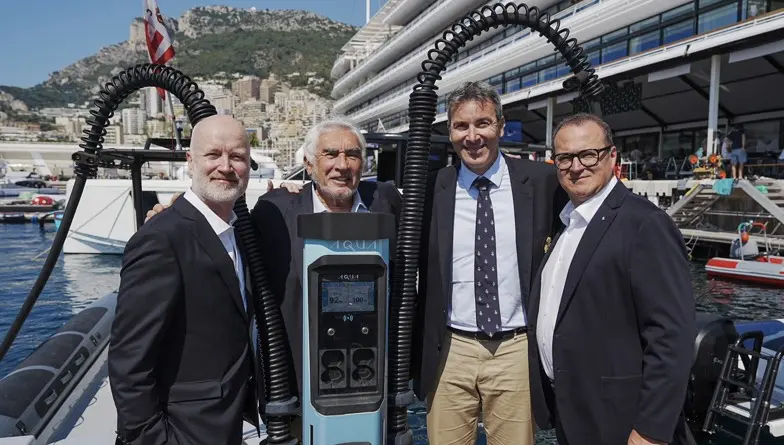
Unveiled fittingly at the E-dock of the prestigious Yacht Club de Monaco during the Monaco Energy Boat Challenge, this acquisition transcends a standard corporate buyout. It represents the unification of the missing links in the electric maritime puzzle: energy supply, grid access, advanced engineering, complex regulatory permitting, and day-to-day operations. By bringing institutional scale to marine charging, the partnership aims to replicate the explosive growth curve witnessed in the electric vehicle (EV) sector, laying the groundwork for a fully decarbonized blue economy that encompasses recreational boating, commercial shipping, and major maritime hubs.
Detailed Chronology: From Garage Innovation to Global Infrastructure
To understand the magnitude of the NatPower Marine and Aqua superPower transaction, it is essential to trace the developmental trajectories of both entities and the broader evolution of marine electrification.
The story of marine charging infrastructure truly broke ground in 2019, when Aqua superPower installed its first high-speed AC/DC marine charger at the Yacht Club de Monaco. That initial installation served as a proof-of-concept, quickly evolving into the linchpin of a burgeoning charging corridor along the French and Italian Riviera. Recognizing that range anxiety was the single greatest deterrent to electric boat adoption, Aqua superPower methodically expanded its footprint. Over the ensuing years, the network crept outward, establishing vital nodes along the southern coast of the United Kingdom, throughout Sweden’s intricate waterways, and across the Great Lakes region in Michigan, USA.
Operating under ATV Power—a parent company dedicated to decarbonizing water transport by uniting top-tier marine tech companies such as Taiga (electric jetskis), along with Vita and Evoy (leaders in high-power electric powertrains)—Aqua superPower proved that the technology for marine charging was not only viable but durable in harsh saltwater and freshwater environments. However, scaling an infrastructure network across international waters requires far more than engineering prowess; it demands immense capital, sophisticated grid integration, and navigation through a labyrinth of maritime regulations.
Enter NatPower. Founded in 2019 by seasoned entrepreneurs in the global green energy sector, NatPower rapidly built a reputation as one of the world’s most prominent independent developers of renewable energy infrastructure. Operating across seven countries—including Italy, the UK, Kazakhstan, the US, and Canada—the firm amassed a massive 24 GW green energy portfolio supporting over 200 projects.
Recognizing the untapped potential of the maritime sector, NatPower established NatPower Marine with a singular, audacious mission: to build the world’s first global onshore power supply network for clean shipping. Rather than building chargers in isolation, NatPower Marine set out to deliver fully integrated energy solutions, encompassing everything from grid connection and localized renewable generation to advanced battery energy storage systems (BESS) and smart-charging software.
The convergence of these two trajectories culminated at the Monaco Energy Boat Challenge. Gathered before an international audience of over 400 university students and industry innovators—the very minds accelerating the marine energy transition—executives from NatPower, ATV Power, and the Yacht Club de Monaco formally announced the strategic agreement. This integration positions Aqua superPower as the operational spearhead for NatPower Marine, transforming a boutique network of marine chargers into an enterprise-grade, globally scalable platform.
Supporting Context & Metrics: The Scale of the Transition
The alignment of NatPower and Aqua superPower is underpinned by hard metrics and macroeconomic trends that signal a fundamental shift in how the maritime industry approaches energy.
The primary barrier to expanding electric boating infrastructure has never been a lack of technological capability or venture capital. Instead, the sticking point lies in the intricate choreography required to align disparate elements: securing stable energy supply, negotiating access to overloaded electrical grids, executing complex marine engineering projects, navigating stringent environmental permitting, ensuring regulatory compliance, and managing seamless day-to-day operations.
NatPower’s entry into the space completely alters this equation. In addition to its majority stake acquisition of Aqua superPower, NatPower recently secured a landmark multi-year supply and execution agreement with Tesla. This partnership covers more than 25 gigawatt-hours (GWh) of Battery Energy Storage Systems (BESS) deployed across European markets.
This represents a watershed moment for the energy storage sector. For the first time, BESS technology is being deployed at a multi-gigawatt scale through a coordinated framework that directly links green energy production, institutional financing, and localized execution across multiple countries. By integrating these massive energy reserves into its maritime strategy, NatPower Marine can bypass the traditional grid bottlenecks that plague fast-charging stations, ensuring that ports and marinas can deliver high-power DC fast-charging to electric vessels without destabilizing local electrical grids.

To contextualize this growth, industry analysts frequently draw parallels to the automotive sector. When internal combustion engine (ICE) vehicles first began replacing horse-drawn carriages at the turn of the 20th century, no unified fuel delivery network existed. Early motorists frequently had to carry auxiliary tanks of gasoline, purchasing fuel precariously from pharmacies or hardware stores. It required decades of coordinated industrial investment to build the global network of fossil fuel service stations we take for granted today.
The electric vehicle (EV) revolution of the past decade followed a similar trajectory, where vehicle adoption scaled in direct proportion to the deployment of DC fast-charging networks like Tesla’s Supercharger network. The electric boat industry is currently mirroring this exact historical curve. Recreational boaters and commercial fleet operators are unwilling to cast off without absolute certainty that they can "fill up" as conveniently as they do with diesel or gasoline. With NatPower Marine providing institutional energy backing and Aqua superPower providing the dockside touchpoints, the marine sector is compressing decades of infrastructural evolution into a fraction of the time.
Official Statements & Industry Perspectives
The partnership has elicited profound enthusiasm from leadership across the renewable energy and marine sectors, highlighting the strategic importance of the consolidation.
Fabrizio Zago, CEO of NatPower, emphasized the transformative nature of the transaction during the announcement at the Monaco Energy Boat Challenge:
"This transaction marks a decisive step forward for us: we are no longer just developing infrastructure, but building a platform capable of operating on an international scale. The addition of Aqua superPower to our ecosystem provides us with an immediate operational presence in key markets and strengthens our ability to deliver projects effectively and at scale on a global level."
Zago’s comments underscore NatPower’s evolution from an independent renewable energy developer into a vertically integrated energy utility for the blue economy. By acquiring Aqua superPower, NatPower avoids the lengthy, costly process of building a marine-specific operational brand from scratch, acquiring instant market credibility and an existing network of high-performance chargers.
Echoing this sentiment, Stewart Wilkinson, CEO of ATV Power, highlighted the acceleration opportunities afforded by the backing of the NatPower Group:
"Joining NatPower Marine enables us to scale our platform faster and extend our reach, building on the network we have already developed."
The transition also drew praise from maritime leadership. Bernard d’Alessandri, Managing Director of the Yacht Club de Monaco, and Jérémie Lagarrigue, President of the Monaco Energy Boat Challenge International Jury, both pointed to the symbolic and practical significance of hosting the announcement at the E-dock. Surrounded by hundreds of international engineering students designing the next generation of zero-emission vessels, the venue served as a living laboratory for what the future of boating holds.
Future Outlook: Building the Blue Ecosystem of Tomorrow
As the dust settles on this strategic acquisition, the roadmap ahead for NatPower Marine and Aqua superPower is remarkably ambitious. The immediate objective is clear: scale the network wider and faster.
However, the vision extends far beyond recreational marinas along the Mediterranean and North American coastlines. NatPower Marine is systematically constructing a comprehensive electrification ecosystem that caters to three distinct tiers of the maritime market:
- Recreational Boating: Providing seamless, high-speed AC/DC charging for private day-boats, sailboats, and luxury yachts, effectively eliminating range anxiety for weekend mariners and tourism operators.
- Commercial Ports: Delivering high-capacity shore power and charging solutions for commercial workboats, ferries, and harbor logistics vessels, helping municipal and private operators meet stringent decarbonization mandates.
- Large Maritime Hubs: Integrating utility-scale battery storage (leveraging the Tesla BESS supply agreement) and on-site renewable generation to support heavy marine traffic and large-scale shipping operations without straining local municipal power grids.
The implications for the broader marine industry are profound. For decades, electric boating has been viewed as a niche market—constrained by high battery costs, limited range, and, above all, a dearth of charging infrastructure. By injecting billions of dollars of renewable energy resources, grid-balancing technology, and world-class operational expertise into the equation, NatPower Marine and Aqua superPower are dismantling the infrastructural barriers that have held the sector back.
When the history of maritime decarbonization is written, the strategic alignment forged on the E-dock in Monaco will likely be remembered as the moment the electric boating industry turned the corner from experimental promise to unstoppable global reality. The green wave is no longer coming; it has docked, plugged in, and is ready to set sail.